
Finding the right property manager isn't just about filling a vacancy; it's about finding a long-term partner who will protect your investment and keep the returns flowing. The process really begins before you even type a single search query. It starts with building a shortlist of qualified, local experts who have a solid reputation and transparent way of doing business.
Starting Your Search for a Property Manager

Jumping into the search for a property manager can feel like a huge task, but a little structure goes a long way. The goal here is to find someone who not only gets the rental market but also clicks with your long-term investment goals. For most owners, that means stability and consistent income are far more valuable than the rollercoaster of short-term rental models.
One of the first things to nail down is exactly what you need. At AIM Property Management, for instance, we’ve intentionally focused exclusively on long-term leases of six months or longer. This approach gives property owners a much more predictable and secure revenue stream compared to the constant turnover and hands-on demands of short-term rentals.
Why Experience and Local Focus Matter
A company’s track record and roots in the community say a lot. A firm that’s been in business since 1997, for example, has seen it all—market booms, downturns, and everything in between. They've built up a network of reliable local vendors and know the ins and outs of the community. That kind of deep-seated experience is something you just can't fake.
Always look for a manager with proven expertise in your specific area. A Yucaipa property management expert will have a handle on local tenant demographics and realistic rental rates that a generic national chain simply won't. In the same way, a specialist in Redlands property management will have insights into neighborhood trends that can give your property a serious competitive edge.
When you partner with a manager who has deep roots in communities like Redlands, Beaumont, Calimesa, Yucaipa, Loma Linda, Mentone, Highland, and Banning, you gain more than just a service provider—you gain a local advocate for your investment.
Building Your Initial Shortlist
Today, finding a property manager is easier than ever, but you need to know how to cut through the noise. The U.S. property management industry is a massive $134.2 billion market, with over 325,000 businesses vying for your attention. That means plenty of options, but also plenty of duds. While a referral from a friend is a great start, you should always back it up with your own digital legwork. (You can check out some market size data on IBISWorld).
Here’s a practical game plan for building your initial list:
- Dig into Online Reviews: Don't just skim the star ratings on Google and Yelp. Look for patterns in the feedback and, more importantly, see how the company responds to negative comments. That tells you a lot about their professionalism.
- Check Professional Directories: Websites for organizations like the National Association of Residential Property Managers (NARPM) are a great place to find credentialed professionals who take their business seriously.
- Judge Their Digital Presence: A professional, easy-to-use website is a good sign of a well-run operation. It should clearly spell out their services and fee structure without making you hunt for the details. For more tips on this crucial step, feel free to check out our guide on hiring a property manager.
Why a Long-Term Rental Strategy Is a Smarter Investment
https://www.youtube.com/embed/iQZ7wo3mg6g
Before you even think about who will manage your property, you need to lock down your strategy. While the high nightly rates of short-term rentals on platforms like Airbnb and Vrbo can look incredibly tempting on paper, a long-term leasing approach offers the kind of stability and predictability that serious investors thrive on.
It's precisely for this reason that AIM Property Management exclusively focuses on leases of 6 months or longer. We've found this is the most secure and profitable path for our clients.
The biggest win with long-term rentals is financial consistency. Simple as that. Instead of riding the rollercoaster of seasonal bookings and unpredictable vacancies, you get a reliable rent check every single month. That steady stream of revenue makes it infinitely easier to budget for your mortgage, plan for maintenance, and reinvest in your portfolio. If you want to dive deeper into maximizing your returns, check out our guide to improving your rental property cash flow.
The Hidden Costs of Constant Turnover
Sure, short-term rentals can generate higher revenue per night, but they also bring significantly higher operational costs and a much bigger time commitment. The constant cycle of guests means more frequent and intensive cleanings, higher utility bills (which you're often covering), and accelerated wear and tear on your furniture and appliances.
Just think about the operational differences:
- Marketing and Booking: Short-term rentals demand constant attention. You’re managing listings on multiple platforms, fielding endless inquiries, and juggling a complex booking calendar.
- Turnover Costs: Between every single guest, you’re paying for professional cleaning, restocking supplies like soap and paper towels, and fixing minor damages. These costs add up fast.
- Wear and Tear: A revolving door of different occupants inevitably leads to faster deterioration of your property. A long-term tenant, on the other hand, treats it like their home.
A long-term rental strategy cuts through these headaches. With tenants staying for a year or more, you slash turnover costs and eliminate the administrative burden of constantly finding new occupants. It creates a much more passive and profitable investment.
A Tale of Two Rental Models
To really see the difference, it helps to lay it all out side-by-side. The daily grind and financial reality of managing a short-term rental is worlds away from the stability of a long-term lease.
Here's a breakdown of what landlords can expect from each approach:
Long-Term vs Short-Term Rentals A Landlord's Perspective
| Feature | Long-Term Rentals (6+ Months) | Short-Term Rentals |
|---|---|---|
| Income Stream | Consistent, predictable monthly payments. | High potential nightly rates but prone to seasonal voids and vacancies. |
| Tenant Screening | In-depth screening for one tenant who stays for an extended period. | Minimal screening for a constant flow of different guests. |
| Management Effort | Lower day-to-day involvement once a tenant is placed. | High-intensity management: daily communication, booking, and scheduling. |
| Operational Costs | Lower. Minimal turnover costs, tenants often pay utilities. | Higher. Frequent professional cleaning, restocking supplies, higher utility bills. |
| Wear and Tear | Slower, as tenants treat the property as their home. | Accelerated due to constant turnover and varied guest usage. |
| Regulations | Governed by standard, well-established landlord-tenant laws. | Subject to complex, often changing local ordinances, taxes, and licenses. |
| Community Impact | Fosters neighborhood stability and long-term residency. | Can lead to noise complaints and disrupt community feel. |
Choosing the right model comes down to your goals. If you're looking for a stable, lower-effort investment that builds wealth over time, the advantages of a long-term strategy are clear.
Simplicity in Regulations and Community Stability
Navigating the regulatory maze for short-term rentals can be a full-time job in itself. Many cities, including several in the Inland Empire, have enacted strict ordinances, special taxes, and licensing requirements that are constantly in flux. Long-term rentals, thankfully, are governed by more established and straightforward landlord-tenant laws.
By focusing on long-term leases, you're not just simplifying legal compliance—you're also contributing positively to the community. Long-term tenants become part of the neighborhood fabric in areas like Yucaipa or Beaumont, creating a sense of stability that the transient nature of short-term rentals often disrupts.
Ultimately, partnering with a management company that prioritizes this model means choosing a path of lower risk, greater consistency, and a healthier investment for the long haul.
Digging Into a Manager’s Services and Technology
A property manager's job today goes way beyond just collecting rent checks. They need to be using the right technology to run things smoothly and protect your investment. When you're trying to find a property manager, you have to look past their sales pitch and see what tools they're actually using to make your life easier.
The right tech isn't just a nice-to-have; it's what attracts better tenants and keeps your property running efficiently. Today’s renters expect more. In fact, 74% of renters are looking for energy-efficient properties, and 54% want smart home features. A manager who gets these trends will do a much better job marketing your property. You can see more insights like this from these property management statistics on RESimpli.
Core Services and Communication Tools
First, let's look at the basics. Does the company have an online portal where tenants can pay rent and put in maintenance requests 24/7? In today's market, this is a non-negotiable. A clunky, outdated system will only frustrate tenants and could easily lead to them leaving.
Just as important is their maintenance process. When you’re vetting a manager, ask how they handle common property maintenance tasks like handyman services. An established firm with years of experience, like one operational since 1997, will have a solid network of vetted, local contractors ready to go, which means repairs get done quickly and without breaking the bank.
A manager’s investment in technology is a direct investment in your property's efficiency and profitability. Seamless digital tools for rent collection, maintenance, and communication are now the standard for high-quality service.
Tenant Screening and Security Protocols
Placing a qualified, long-term tenant is probably the most critical thing a property manager does. With rental application fraud on the rise, their screening process has to be rock-solid and backed by good technology. Make sure to ask potential managers what software they use for background and credit checks.
The best systems now use AI to spot fake documents, which is huge when 70% of property managers say they're seeing more application fraud. A company still doing manual checks is just falling behind and putting your investment at risk. For a closer look at the software that drives these operations, check out our property management software comparison.
Finally, don't overlook data security. Your property manager will be handling sensitive financial information for both you and your tenants. Ask them about their security protocols to make sure everyone's personal data is protected from breaches. Any professional firm will have clear policies in place to keep this information safe. This is a crucial step in finding a property manager you can truly trust with your asset.
Decoding Fee Structures to Find the Best Value
Don't let a low advertised price fool you; the real value is always buried in the fine print. When you're figuring out how to find a property manager, understanding their fee structure is one of the most critical steps you'll take.
That rock-bottom monthly fee you see advertised? It’s often a hook. Many companies will lure you in with a low number, only to hit you with a dozen other charges for things like inspections, marketing, administrative work, and even routine maintenance calls. This nickel-and-diming is a fast track to frustration and eroded profits.
Finding Value in Transparent Pricing
A much better approach is to find a partner who offers a clear, all-inclusive structure. For example, a competitive 7.9% monthly management fee paired with a straightforward $750 tenant placement fee can offer far greater value in the long run. Why? Because you know exactly what you're paying for, without any surprise add-ons popping up on your monthly statement.
This kind of clarity is usually a hallmark of a company that’s been around the block. A firm with deep roots in communities like Redlands, Beaumont, and Yucaipa—and has been in business since 1997—knows that good, long-term relationships are built on trust, not confusing fee models.
When you're comparing your options, always ask for a complete list of every single potential charge. A reputable manager will be upfront about their costs and happy to walk you through what's included. You can learn more about how to evaluate a property management fee structure to make sure you're not leaving money on the table.
To help you compare different offers and spot hidden costs, here’s a quick breakdown of common fees you’ll encounter.
Decoding Property Management Fee Structures
| Fee Type | Industry Average | What to Look For in a Valuable Partner |
|---|---|---|
| Monthly Management Fee | 8-12% of collected rent | Look for a clear, flat-rate percentage like 7.9%. Avoid partners who charge on "scheduled" rent, even if the unit is vacant. |
| Tenant Placement Fee | 50-100% of the first month's rent | A flat fee (like $750) can be more cost-effective, especially on higher-rent properties. |
| Lease Renewal Fee | Varies widely; sometimes a flat fee or % | Many top-tier managers don't charge this, as retaining good tenants is part of the job. |
| Maintenance Markups | 10-20% on top of vendor invoices | A transparent manager will pass along vendor invoices with no markup. This aligns their interests with yours—finding quality, affordable repairs. |
| Vacancy Fee | Varies; can be a flat monthly fee | The best managers don't charge you when your property is empty. Their incentive should be to get it filled, not to profit from vacancies. |
| Eviction Fee | $200-$500 plus court costs | Look for a company that includes eviction coordination in their services, charging only for direct legal costs. |
Ultimately, you want a fee structure that makes sense and feels fair. A partner who hides costs in the fine print is likely to be a headache in other areas, too.
Aligning Fees with Long-Term Goals
The goal is to find a manager whose fees are directly tied to exceptional service that fits your investment strategy. Since we exclusively manage long-term rentals (leases of six months or more), our entire fee structure is built to support stable, lasting tenancies—not the high-turnover model that comes with short-term rentals.
This focus allows us to offer more competitive rates because our resources aren't constantly being drained by frequent marketing campaigns and turnovers. For property owners in communities from Loma Linda to Banning, this approach fosters stability and predictable income.
The infographic below shows what today's long-term renters are really looking for, which directly impacts your ability to attract high-quality applicants who will treat your property like their own.
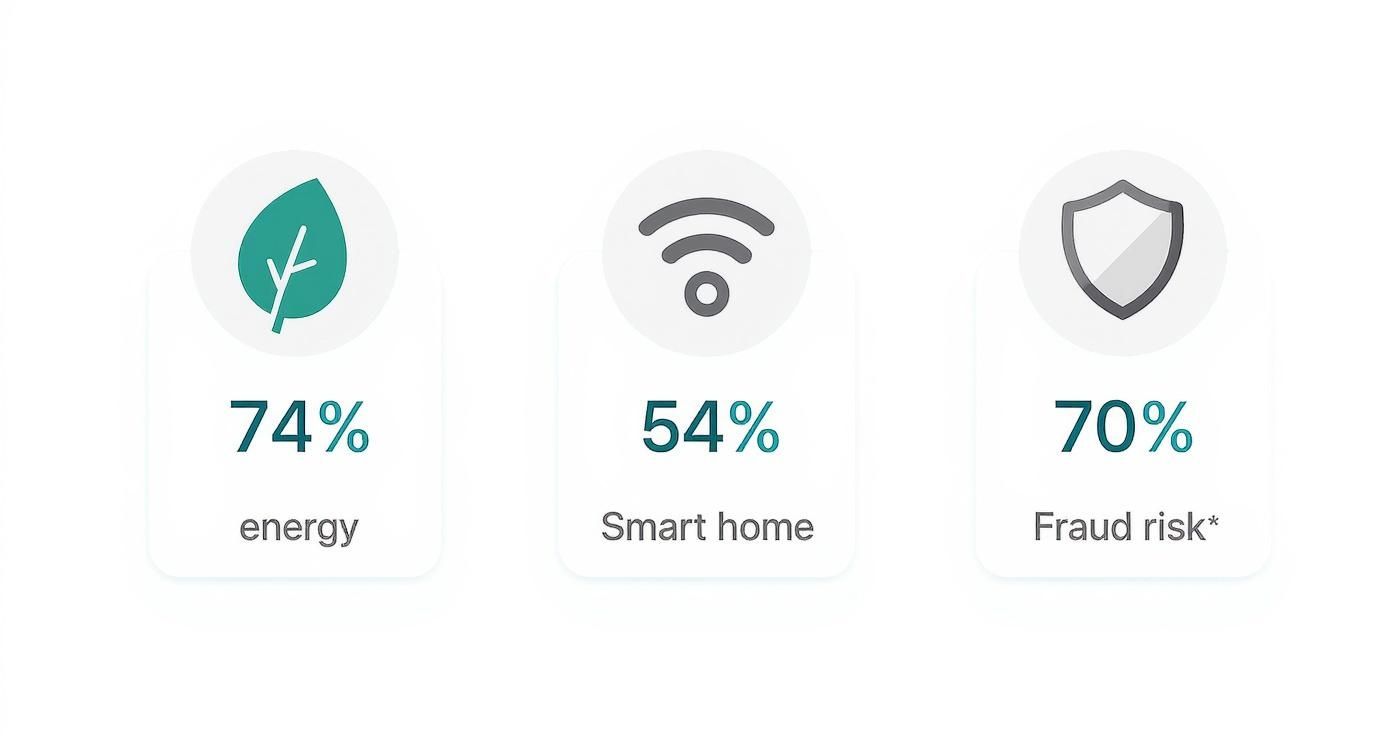
As you can see, renters care about efficiency, modern features, and security. A good manager invests in these areas, making their transparent fee a worthwhile investment in attracting and keeping the best tenants.
Key Interview Questions to Ask Potential Managers

This is where the rubber meets the road. The interview is your chance to get past the glossy brochures and website promises to see if a manager really has the chops to handle your property. Forget the generic questions—asking sharp, targeted ones is the only way to truly vet their experience and make sure their management style fits your investment goals.
Probing Their Local and Strategic Expertise
First things first, you need to dig into their experience right here in our local market. A great property manager isn't just a rent collector; they're a strategic partner who understands the nuances of the area and shares your vision for a stable, profitable investment. This is especially true if you’re focused on long-term rentals, not the chaotic churn of short-term stays.
A great opener is: "What types of properties do you specialize in, and do you manage long-term or short-term rentals?"
Their answer will immediately tell you if you're on the same page. At AIM, for instance, we only manage leases of six months or longer. We’ve found this strategy delivers far more stability and better returns for our owners. A manager focused on vacation rentals operates on a completely different wavelength, and their model likely won't align with your goals for consistent income.
A firm with deep roots in the community, operational since 1997, brings a level of maturity and established relationships that newer companies simply can't match. Their longevity is a testament to their ability to adapt and succeed.
Here are a few other essential questions to get the conversation rolling:
- "How long have you been managing properties in this specific area, like Yucaipa or Loma Linda?"
- "What do you see as the biggest challenges and opportunities in the local rental market right now?"
- "Describe your ideal property owner client. What are your expectations for our working relationship?"
Uncovering Their Operational Processes
Once you've gauged their strategic fit, it's time to get into the nitty-gritty of their day-to-day operations. How a company handles tenant screening, maintenance calls, and legal issues will directly impact your bottom line and your stress levels. You’re looking for someone with transparent, battle-tested systems.
Tenant placement is a huge one. Ask them: "Walk me through your entire tenant screening process, from marketing the property to signing the lease."
A solid answer will be detailed, covering everything from their marketing plan to the specific criteria they use for credit checks, background screening, and income verification. If you get a vague, hand-wavy response, consider it a major red flag. For a deeper dive into what a top-tier process looks like, you can learn more about how to choose a property management company and what sets the best apart.
https://aim-properties.com/how-to-choose-property-management-company/
Don't stop there. Follow up with pointed questions about maintenance and those dreaded middle-of-the-night emergencies:
- "How do you handle routine maintenance requests versus after-hours emergencies?"
- "What's your process for approving repair costs? Do I get a say in the vendors you use?"
- "Have you ever had to handle an eviction? If so, talk me through the process you followed."
These questions reveal a ton about their real-world experience. You want to hear that they have robust procedures in place to protect your asset while strictly adhering to fair housing laws. Finding a manager with these time-tested processes is one of the most important steps you can take to secure your investment’s future.
As you get closer to picking a property manager, a few common questions always seem to surface. Getting clear, honest answers to these is the key to choosing a partner you can trust with your investment for the long haul.
Your Top Questions Answered
How Much Should Property Management Really Cost?
This is usually the first thing on every owner's mind, and for good reason. You'll see rates all over the place, but it's a huge mistake to just look at the headline number. A suspiciously low monthly fee is often a smokescreen for a dozen other hidden charges that pop up later.
What you really want is transparent, all-in-one pricing. For instance, a competitive fee like 7.9% per month paired with a flat $750 tenant placement fee is simple and predictable. This kind of structure means you won't get nickel-and-dimed for things like marketing, inspections, or random administrative tasks.
Always, always ask for a complete fee schedule before you sign anything. It’s the only way to know the true cost of the service.
What’s Better: Long-Term or Short-Term Rentals?
The type of rental you focus on completely changes the game—both for your returns and your management needs. Sure, short-term rentals can bring in high nightly rates, but they also bring constant turnover, more wear and tear, and a tangled web of local regulations.
On the other hand, long-term rentals (think leases of six months or more) offer stability and a predictable income stream month after month. This is the strategy most savvy investors prefer because it cuts down on vacancies and makes for a genuinely more passive investment. At AIM, we focus exclusively on long-term leases, helping our clients in places like Redlands and Beaumont build consistent, hassle-free wealth without the operational chaos of the vacation rental market.
Choosing a manager who specializes in long-term rentals aligns your property with a strategy built for stability and sustained growth, rather than the volatility of the vacation market. A company with deep local roots, operational since 1997, understands how to cultivate these lasting tenant relationships.
How Do You Handle Maintenance and Emergencies?
How a manager deals with maintenance is a dead giveaway of their professionalism. You need a team with a rock-solid system for everything from a leaky faucet to a middle-of-the-night emergency call. A well-established company with a trusted network of local vendors who do quality work at fair prices.
Ask them directly: How do you communicate with owners about repairs? What does the approval process look like? A true partner will keep you in the loop and get your sign-off for any significant expenses, so you're never blindsided by your financial statements. Their ability to react quickly not only protects your property's value but also keeps good tenants happy.
What Happens if a Tenant Needs to Be Evicted?
Nobody wants to even think about eviction, but you absolutely need a manager who knows how to handle it legally and efficiently if it comes to that. An experienced property manager knows landlord-tenant law like the back of their hand and will follow a strict, by-the-book procedure.
This isn't something you can wing. The process involves precise legal notices, court filings, and sometimes, coordination with law enforcement. A manager who has been in the business for decades, since 1997, has been through this before and can navigate the process with the professionalism required to get your property back as quickly as possible. The property management market is growing fast, and this industry expansion means that expertise in local laws is more critical than ever.
Ready to partner with an experienced, transparent, and dedicated property management team? AIM PROPERTY MANAGEMENT COMPANY has been serving the Redlands, Beaumont, Calimesa, Yucaipa, Loma Linda, Mentone, Highland, and Banning communities since 1997. Let us protect your investment and maximize your returns.