When you start comparing property management software, you’ll quickly notice a fork in the road. One path leads to platforms built for the high-turnover world of short-term rentals, and the other is paved for the stability of long-term leases. For serious investors, the choice is clear. The best software isn't about managing bookings; it's about supporting predictable income and tenant retention with robust financial and compliance tools. This guide is built for that second path, focusing only on solutions that fit a long-term rental strategy.
Choosing the Right Software for Your Rental Portfolio
Picking the right property management software is a huge decision for any landlord focused on building a stable, profitable portfolio. The real goal isn't just to automate a few tasks. It's to find a system that fundamentally supports your business model—one centered on long-term leases of six months or more. This means we're deliberately sidestepping the chaotic, high-maintenance world of the short-term rental market.
The move toward digital tools in real estate is undeniable. The global property management software market is valued at roughly USD 27.95 billion as of 2025 and is on track to nearly double by 2032. This explosion shows just how critical operational efficiency has become for managing residential properties.
Aligning Technology With a Long-Term Strategy
Software designed for vacation rentals just won't cut it for long-term holds. The priorities are completely different. Instead of juggling daily check-ins, the focus shifts to building solid landlord-tenant relationships and ensuring your cash flow is consistent and reliable.
For a long-term rental strategy, your software must deliver on these key fronts:
- Robust Financial Management: You need tools for detailed expense tracking, seamless rent collection, and clear owner statements. This is the foundation of profitability.
- Compliant Tenant Screening: Integrated background and credit checks that follow fair housing laws are non-negotiable for finding and placing reliable tenants.
- Streamlined Maintenance Coordination: An efficient system for tracking requests from tenants to vendors is crucial for protecting your asset and keeping tenants happy.
- Transparent Owner Communication: A central portal for sharing updates, reports, and documents builds trust and keeps everyone on the same page.
A classic mistake is getting wowed by a long list of features instead of focusing on what actually fits your strategy. For long-term rentals, stability and tenant retention tools are infinitely more valuable than a flashy booking calendar.
Long-Term vs. Short-Term Rental Focus
The difference really comes down to your primary goal. Short-term rental software is built for high volume and constant turnover. A long-term approach, like the one we’ve been refining at AIM Property Management since 1997, is all about finding and keeping great tenants to guarantee predictable income and minimize wear and tear on the property. For landlords looking to take efficiency even further, it’s worth checking out dedicated AI solutions for property management that can enhance these processes.
Ultimately, the right software is just an extension of a sound management philosophy. For owners in communities like Redlands, Beaumont, Calimesa, Yucaipa, Loma Linda, Mentone, Highland, and Banning, California, combining smart technology with experienced, local oversight is the surest path to success. Now, let’s dive into a comparison of the specific platforms that best serve this sustainable investment model.
Why Long-Term Rentals Offer Superior Stability
Before you can compare property management software, you need to be clear on your investment strategy. The rental world is really split into two camps: high-turnover, short-term rentals and stable, long-term leases. While short-term rentals get a lot of attention, we’ve found that long-term leases provide the foundation for predictable growth with far less operational stress.
At AIM Property Management, we exclusively manage long-term leases of six months or longer. This isn't an accident; it's a deliberate choice we've honed since 1997. Our extensive experience has shown us this model offers unmatched financial and operational advantages, turning a rental property from a revolving door into a consistent, income-generating asset.
The Financial Case for Long-Term Tenancies
The most obvious win with a long-term rental strategy is predictable monthly income. A signed lease for six, twelve, or even twenty-four months guarantees a steady cash flow that the up-and-down nature of short-term bookings just can't match. This consistency makes it much easier to plan for mortgage payments, save for repairs, and strategize your next investment.
But it goes beyond steady income—the cost savings are huge. Tenant turnover is one of the single biggest expenses a landlord faces. Just think about the costs baked into the short-term model:
- Constant Marketing: You're always listing the property, managing inquiries, and worrying about the next booking.
- Intensive Cleaning: Professional cleaning isn't a once-in-a-while thing; it's required after every single guest leaves.
- Higher Wear and Tear: The constant shuffling of people and luggage takes a toll on your furniture, appliances, and floors.
- Administrative Overload: Managing dozens of bookings, answering endless questions, and responding to reviews is practically a full-time job.
A long-term lease all but eliminates these headaches. You incur these costs once a year or even less, not multiple times every month.
The core philosophy behind long-term rentals is asset preservation and predictable returns. It's about building a sustainable business, not just chasing the next booking. This approach minimizes risk and maximizes long-term profitability.
Building Community and Reducing Headaches
A long-term rental model does more than just save you money; it creates a sense of stability for everyone involved. When tenants see a property as their home, not just a temporary pit stop, they’re far more likely to take good care of it. That translates to fewer maintenance calls and better overall upkeep.
This is the kind of stability we've cultivated for decades in communities like Redlands, Beaumont, Calimesa, Yucaipa, Loma Linda, Mentone, Highland, and Banning, California. Strong landlord-tenant relationships are built on trust and communication, two things that are almost impossible to establish in a short-term rental. A happy, long-term tenant is your greatest asset—they provide reliable income and genuine peace of mind.
That's why our fee structure is so straightforward. A highly competitive 7.9% monthly management fee keeps your operational costs low, while a simple $750 placement fee—with no hidden add-on fees—covers the critical work of finding a qualified, long-term resident. By sticking to this model, property owners sidestep the volatility and hidden costs of the short-term market, securing a more stable and profitable investment. The right property management software should be designed to support this exact vision.
A Practical Comparison of Leading Rental Software
Choosing the right property management software isn’t about finding the one with the most bells and whistles. It’s about finding a system that actually fits how you manage your long-term rentals. This comparison goes beyond generic lists of pros and cons to look at top platforms like Buildium, AppFolio, and TenantCloud from the perspective of a serious, hands-on investor.
The property management software space is booming. The market was valued at USD 24.18 billion in 2024 and is on track to hit USD 52.21 billion by 2032. This explosion in growth is driven by landlords and managers ditching spreadsheets for cloud-based tools, with North America leading the charge, holding a massive 35.53% market share.
More options are great, but it also makes the choice harder. We’ll cut through the noise and focus on what truly matters for managing long-term rentals: handling the money, screening tenants, and coordinating maintenance.
This snapshot breaks down the average monthly costs you can expect from typical property management software.
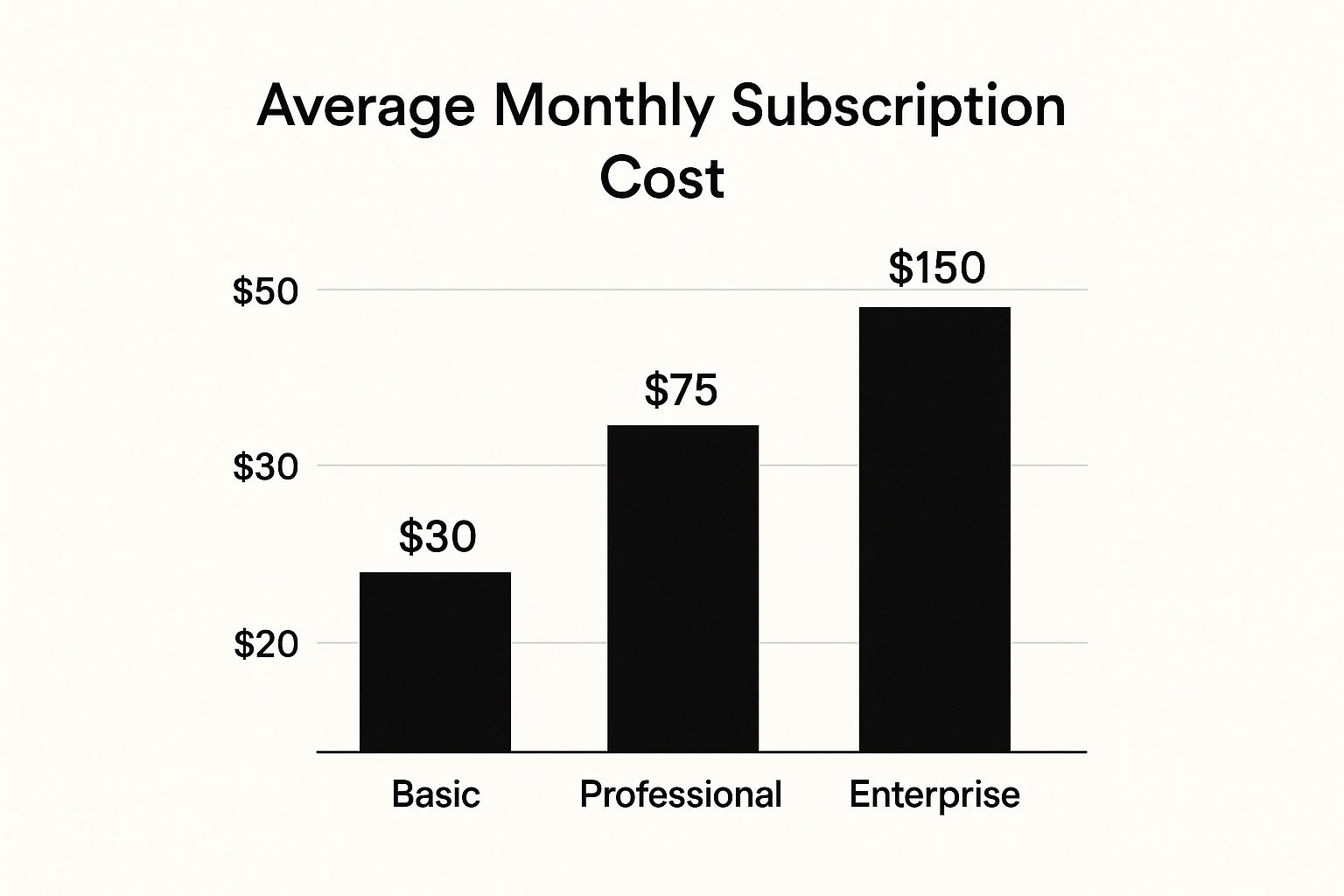
As you can see, while basic plans seem affordable, the costs for professional features can climb quickly. It’s at that point where an all-in-one management service often becomes a more competitive and stress-free alternative.
Core Function 1: Accounting and Rent Collection
Financial management is the backbone of a successful rental business. The software you pick has to be rock-solid at tracking income and expenses, since that data fuels everything from daily decisions to filing your taxes at the end of the year. Getting those numbers right is essential, a topic we explore further in our guide to https://aim-properties.com/rental-property-tax-deductions/.
Buildium really shines with its comprehensive, all-in-one accounting suite. It’s built for property managers with larger or more complex portfolios who need fine-tuned control, offering things like bank reconciliations and deep reporting. It’s the platform you grow into.
AppFolio, on the other hand, is known for its clean, user-friendly interface that makes complicated accounting feel simple. Its biggest strength is its smooth workflow, which is a huge plus for owners who value efficiency and don't want to get bogged down in settings.
Then there’s TenantCloud, the go-to budget option. It offers a free (or very cheap) tier that handles the basics of rent collection and expense tracking. It won't give you the advanced reports of its bigger competitors, but it’s a perfect starting point for new landlords with just a handful of properties.
Core Function 2: Tenant Screening Workflows
For long-term rentals, getting the right tenant in the door is everything. Your software absolutely must have an integrated, compliant screening process to protect your investment. This isn't a "nice-to-have" feature; it's a must.
For landlords managing a diverse portfolio who need granular financial controls, Buildium’s robust accounting suite is a clear advantage. However, for those prioritizing a simple, intuitive user experience, AppFolio's streamlined design is often a better fit.
Both AppFolio and Buildium offer thorough screening services baked right into their platforms, covering credit checks, background reports, and eviction history. This integration makes the entire journey from application to lease signing seamless and helps keep you compliant with Fair Housing laws.
Hemlane is another name that pops up, but its focus is a bit different. It’s great for connecting landlords with local agents for showings and has solid screening tools, but it’s often geared more toward short-term rentals, making it a less ideal fit for a portfolio of long-term leases like those in Redlands or Loma Linda.
Core Function 3: Maintenance Request Tracking
Handling maintenance efficiently keeps tenants happy and protects your property's value. A good software platform centralizes the whole process, letting tenants submit requests, allowing you to assign vendors, and giving you a way to track the job from start to finish.
- Buildium: Features a powerful work order system where you can manage maintenance from the initial request to paying vendors and even billing tenants for damages.
- AppFolio: Delivers a similarly effective system but puts a strong emphasis on its mobile app, letting you and your vendors handle requests on the go.
- TenantCloud: Includes basic maintenance tracking in its free plan. Tenants can even submit requests with photos, which is a fantastic feature for a no-cost tool.
The real difference often comes down to how well you can manage your vendors. The more advanced platforms let you store vendor documents like insurance certificates and licenses, giving you an extra layer of protection. For another excellent breakdown and to see more options, check out this detailed property management software comparison.
Feature Comparison of Leading Property Management Software
To make the decision easier, here’s a straightforward breakdown of how these platforms stack up for long-term rental owners. This table highlights their core strengths and helps identify which one aligns best with your specific portfolio and management style.
| Software | Core Features | Pricing Model | Best For (User Profile) |
|---|---|---|---|
| Buildium | Robust accounting, integrated screening, advanced maintenance tracking, and owner portals. | Per-unit monthly subscription with tiered pricing based on features and portfolio size. | Property managers and owners with growing or large portfolios needing deep financial control. |
| AppFolio | User-friendly interface, online leasing, strong mobile app, and excellent customer support. | Per-unit monthly subscription with a minimum monthly fee, making it better for larger portfolios. | Owners who prioritize ease of use, streamlined workflows, and top-tier mobile access. |
| TenantCloud | Online rent collection, basic maintenance requests, and tenant communication tools. | Freemium model with a free basic plan and affordable paid tiers for more features. | New landlords or owners with a small number of properties who need essential tools without a large investment. |
Ultimately, the best software is the one that simplifies your daily tasks and scales with your investment goals. Whether you need the deep financial tools of Buildium, the streamlined experience of AppFolio, or the budget-friendly start of TenantCloud, aligning the platform's strengths with your needs is the key to making the right choice.
How Software Manages Compliance and Reduces Risk

Sure, property management software is great for collecting rent and tracking maintenance tickets. But its most critical—and often overlooked—role is reducing your legal risk. For landlords, especially in California, navigating the web of federal, state, and local regulations can feel like a full-time job. The right platform acts as your digital guardrail, making sure every step you take is the right one.
This is particularly true in a state with notoriously complex rental laws. Understanding your obligations is just the first step; we cover this in detail when reviewing your landlord responsibilities in California. Software is what puts that knowledge into practice, creating standardized workflows that leave little room for costly human error.
Modern platforms are built with compliance baked in. They create a clear, digital paper trail for nearly every interaction, which is invaluable if a dispute ever arises. These features aren't just for convenience—they are essential tools for protecting your investment.
Core Features for Legal Protection
When you’re comparing software options, you have to look past the flashy dashboards. Several key features are specifically designed to keep you compliant and minimize risk.
- Integrated Tenant Screening: Top-tier software includes screening processes that are fully compliant with Fair Housing laws. By standardizing the criteria used for every single applicant, these tools are your first line of defense against accusations of discrimination.
- Secure Digital Document Storage: Lease agreements, addendums, inspection reports, and official notices are all kept in one centralized, secure place. This means you can pull up critical documents in seconds and prove compliance whenever you need to.
- Automated Communication Logs: Every email, text, or portal notification sent through the software is automatically time-stamped and saved. This creates a rock-solid, indisputable record of your communication with tenants.
For many landlords, the greatest risk isn’t a leaky faucet; it’s a compliance oversight. Software turns abstract legal rules into automated, repeatable processes, building a powerful defense against potential disputes.
Managing Third-Party and Vendor Risk
Managing a property means relying on a network of vendors—plumbers, electricians, landscapers, you name it. Each one introduces a new layer of potential risk if you're not careful. This has become a huge factor in software development, with a growing focus on third-party risk management as more landlords outsource maintenance. The best platforms now include vendor evaluation and risk-assessment tools to mitigate these financial and compliance risks.
For example, good software allows you to store and track vendor licenses, insurance certificates, and service agreements. You can monitor their performance and ensure they meet your standards before they ever step foot on your property. It's about protecting both you and your tenants from day one.
The Irreplaceable Value of Local Experience
While software is an incredible tool for standardization and record-keeping, it can’t replace deep, local expertise. Technology doesn’t understand the specific nuances of municipal codes in Redlands or Yucaipa, California. It can't leverage the long-standing, mature relationships we've built with trusted local contractors in Banning or Beaumont since 1997.
This is where a hybrid approach becomes so powerful. Since 1997, we’ve been on the ground in these communities, building a level of compliance knowledge that goes far beyond what any software can offer. We use technology to execute processes flawlessly, but we lean on decades of experience to make the right strategic calls. This combination ensures your investment is protected by both modern efficiency and seasoned, local oversight.
When to Combine Technology with Local Expertise
While the right property management software offers incredible automation, it’s crucial to recognize its limits. A powerful platform can track rent payments and log maintenance requests with flawless efficiency, but it can't replace the nuanced judgment and deep-seated local knowledge of a seasoned professional.
The most successful property owners understand that the best approach is a hybrid one, combining smart technology with hands-on, expert management.
This becomes crystal clear when you look at real-world scenarios where software inevitably falls short. Technology is a tool, not a strategist. It can’t mediate a complex tenant dispute, interpret a vaguely worded local ordinance, or know which plumber in Highland is the most reliable for a late-night emergency. These situations demand human experience, problem-solving skills, and relationships built over years.
The Limits of Automation in Real-World Scenarios
Even the most advanced software runs on data and algorithms, not intuition. It can process an application, but it can't sit down with a prospective tenant to gauge their responsibility. It can send an automated late notice, but it can’t have a tactful conversation to understand and resolve a payment issue before it escalates.
Here are a few specific situations where human expertise is simply irreplaceable:
- Complex Tenant Negotiations: When a delicate issue pops up between tenants or with a landlord, software is useless. An experienced manager can mediate, find common ground, and preserve a positive tenancy.
- Navigating Local Ordinances: Municipal codes in communities like Redlands, Yucaipa, and Loma Linda have their own unique quirks. A manager with local experience knows these rules inside and out, preventing costly compliance mistakes that software might miss.
- Vendor Management and Quality Control: A platform can give you a list of vendors, but it can’t vouch for their quality. Since 1997, we've built a network of trusted, vetted local contractors who provide quality work at fair prices—a benefit no software can replicate.
Technology is excellent at managing the predictable. An experienced property manager excels at handling the unpredictable. The peace of mind that comes from having an expert in your corner is something no software subscription can provide.
This is why, at AIM, we focus exclusively on long-term leases of six months or longer. Our strategy is built on stability and relationships—two areas where human oversight is paramount. We do not deal with the high-turnover, impersonal nature of short-term rentals because our true value lies in building and maintaining lasting, successful tenancies.
Why Long-Term Rentals Require a Human Touch
The long-term rental model offers superior stability and profitability precisely because it’s relationship-driven. Unlike the transactional nature of short-term stays, long-term leasing creates a partnership between the landlord, tenant, and manager. This model thrives on good communication, trust, and proactive problem-solving.
Consider the advantages that a hands-on approach brings to a long-term strategy:
- Lower Tenant Turnover: By fostering positive relationships and addressing concerns promptly, a manager can significantly increase tenant retention. This reduces the costs and vacancies tied to frequent turnover.
- Better Asset Protection: A manager who regularly visits properties in Beaumont or Banning can spot minor issues before they become major problems, protecting your investment in a way remote software never could.
- Consistent Income: Proactive management ensures rent is collected consistently and vacancies are filled quickly with qualified tenants, leading to a much more reliable revenue stream.
Finding the Optimal Blend of Efficiency and Experience
The ultimate solution for a property owner isn’t choosing between technology and a manager—it’s finding a manager who uses technology effectively. This hybrid model truly offers the best of both worlds. You get the efficiency of automated rent collection and digital maintenance tracking, backed by the strategic oversight of a professional who has been serving the community for over two decades.
This is where our approach stands out. We provide this expert oversight with a straightforward and highly competitive fee structure: a low 7.9% monthly management fee and a simple $750 placement fee with no hidden add-on fees. You're not just paying for a service; you're investing in decades of experience in Calimesa, Mentone, and the surrounding California areas.
For a deeper look into selecting the right partner, our guide on how to choose a property management company offers valuable insights. Ultimately, combining smart technology with proven local expertise is the most effective way to secure and grow your real estate investment.
Frequently Asked Questions About Landlord Software
Diving into the world of property management software can bring up a lot of questions. We get it. To help you make a confident decision for your rental portfolio, here are some straightforward answers to the queries we hear most often.
What Is The Most Important Software Feature for Long-Term Rentals?
For long-term rentals, it's all about financial stability and strong tenant relationships. Forget the fancy bells and whistles you see in short-term rental software. Your focus should be on the core functions that keep your investment running smoothly.
This means prioritizing robust accounting for tracking every dollar, legally compliant tenant screening to find reliable renters, and a streamlined system for handling maintenance requests. These features are the foundation of a healthy, long-term landlord-tenant relationship, ensuring consistent income and reducing costly turnover. We do not provide services for short-term rentals, as our expertise is in fostering these stable, long-term tenancies.
Can Property Management Software Replace a Property Manager?
Absolutely not. While software is a fantastic tool for automating repetitive tasks like rent collection or logging a maintenance ticket, it can’t replace the critical thinking and hands-on expertise of a seasoned property manager.
A professional manager handles complex tenant disputes, navigates the nuances of local regulations, and has a network of trusted vendors for emergencies. Software can't do that.
The best solution isn't an "either/or" choice. It's a management company that uses powerful software to become even more efficient, giving you the best of both worlds: modern convenience and expert human oversight.
This hybrid approach is what we've perfected. Since 1997, our team has served communities like Redlands, Beaumont, Calimesa, Yucaipa, Loma Linda, Mentone, Highland, and Banning, California, pairing deep local knowledge with the best technology available.
How Much Does Property Management Software Typically Cost?
The costs really vary. You'll find free plans for landlords with just one or two properties, but most advanced systems use a monthly per-unit subscription. This can run anywhere from $1 to over $3 per door, and some platforms tack on setup or onboarding fees.
It's crucial to weigh this cost against the all-inclusive fee of a professional management company. A service with a competitive rate, like our low 7.9% monthly management fee, often bundles the cost of their high-end software with full management services. This almost always delivers better value and peace of mind. Our straightforward $750 placement fee, with no hidden add-on fees, keeps your expenses predictable. For a deeper look at the legal requirements that can influence your costs, it's worth reviewing the essential landlord-tenant laws in California.
How Difficult Is It to Switch Between Software Platforms?
Switching software can be a real headache, mostly because of the data migration. Trying to move years of tenant ledgers, lease documents, maintenance histories, and financial records from one system to another is a complicated process. It requires careful planning to avoid losing critical data or making costly errors.
Frankly, most property owners find it far more efficient to partner with a professional management company that handles all the software setup and data management from day one. This way, you skip the implementation nightmare and trust that your data is being managed correctly by professionals who use these systems every single day.
Ready to combine powerful technology with decades of local expertise? AIM PROPERTY MANAGEMENT COMPANY offers a stable, long-term management solution designed to protect your investment and maximize your returns. Let us handle the details so you can enjoy the benefits.