

Hiring a property manager is a major step. It’s the moment you decide to shift from being a hands-on landlord to a hands-off investor, trusting a professional to protect your asset. This decision really boils down to weighing the monthly management fee against the very real benefits of having an expert in your corner, especially if your goal is stable, long-term income.
Why Professional Management Is a Game-Changer
So, is hiring a property manager worth the cost? Ask yourself this: What is your time worth? What about your peace of mind? For most property owners, the tipping point comes after one too many late-night maintenance calls, a difficult eviction, or the headache of trying to keep up with California's complex rental laws.
That’s when you realize a good manager isn’t just an expense—they’re a strategic partner.
A professional doesn't just collect rent; they protect and grow the value of your investment. This is especially true in local communities like Redlands, Beaumont, Calimesa, Yucaipa, Loma Linda, Mentone, Highland, and Banning California. A management company with deep local roots brings advantages you just can't get otherwise. Having been in this business since 1997, we've built lasting, mature relationships with trusted local vendors, which means getting quality work done at fair prices.

Our Focus: Long-Term Stability
One of the first big decisions you'll make as a rental owner is your strategy: short-term or long-term? We made our choice a long time ago. We specialize exclusively in long-term leases of six months or longer, and we intentionally do not handle the short-term rental market. The reasons are simple, and they all circle back to protecting your bottom line.
Long-term rentals bring a level of stability that’s hard to beat:
- A Consistent Income Stream: A signed lease means predictable monthly income. You don't have to worry about the seasonal ups and downs that come with vacation rentals.
- Less Tenant Turnover: Fewer move-ins and move-outs mean lower costs. You’re not constantly paying for marketing, deep cleans, and new tenant placement. Our placement fee is a straightforward $750 with no surprise add-ons.
- Reduced Wear and Tear: It's just a fact. Long-term tenants treat a property more like their own home. This leads to less damage and fewer maintenance calls compared to the constant churn of short-term guests.
To help you visualize the difference, here’s a quick breakdown of the two rental models.
Long-Term vs Short-Term Rentals A Quick Comparison
| Feature | Long-Term Rentals (6+ Months) | Short-Term Rentals |
|---|---|---|
| Income Stream | Consistent, predictable monthly payments | Variable, seasonal, and often unpredictable |
| Tenant Turnover | Low; tenants often stay for years | Extremely high; constant guest check-ins |
| Wear and Tear | Lower; tenants treat it as their home | Higher due to frequent use by different guests |
| Management | Less intensive day-to-day involvement | Very hands-on; requires daily management |
| Regulatory Risk | Generally stable and well-understood laws | Often subject to strict local regulations and bans |
| Vacancy Costs | Lower marketing and placement costs | Higher costs for cleaning, restocking, and marketing |
As you can see, the long-term approach aligns perfectly with investors who are looking for reliable, steady growth without the operational chaos of the short-term market. A good manager also brings operational efficiency, often using the best accounting software for rental property to keep finances organized and transparent.
A Growing Industry for a Reason
The property management industry isn't just growing; it's booming. Projections show industry revenues hitting $123.5 billion in 2025, and the residential sector makes up a massive 85% of that market.
Why? Because more and more owners are realizing its value. Hiring a manager means you're tapping into a professional network dedicated to making your asset as profitable and hassle-free as possible. You can read more about our approach to property management to see exactly how we structure our services to put owners first.
What Makes a Great Property Management Partner?
When you’re looking to hire a property manager, you’re not just outsourcing tasks. You’re searching for a genuine partner—someone who will protect your asset with the same care they’d give their own. It’s all about focusing on long-term value, not just quick fixes. This kind of partnership is built on trust, total transparency, and, most importantly, deep local expertise.
Think about the difference that local knowledge really makes. A company that’s been operating in the Inland Empire since 1997 has an undeniable advantage. They don't just know the rental markets in Redlands, Beaumont, Calimesa, and Yucaipa; they know them inside and out.
Even better, they’ve spent decades building a solid network of reliable, affordable local vendors—from plumbers in Loma Linda to electricians in Banning. When a pipe bursts, you’re not just getting a quick repair. You’re getting a trusted professional who shows up on time and charges a fair price.
Deep Roots Mean Proactive Solutions
Experience isn't just about how many years a company has been around. It’s about the quality of the relationships they've built. Those mature connections in the community translate directly into better service and real cost savings for you. A seasoned manager can spot potential issues long before they become expensive emergencies, all thanks to proactive maintenance plans and a thorough understanding of common local property challenges.
This proactive approach is a game-changer, especially for owners who want a hands-off investment. We stick exclusively to long-term leases (over 6 months) because it encourages tenant stability and cuts down on the wear and tear that comes with the high turnover of short-term rentals. A top-tier manager will also use advanced software to keep operations running smoothly. It’s always a good idea to understand the tools they’re using, so checking out the best short-term rental property management software solutions can give you some insight, even if your focus is on long-term stability.
A great property manager doesn't just react to problems; they build a management strategy that prevents them from happening in the first place. That means a rock-solid tenant screening process, clear communication, and a total commitment to the long-term health of your investment.
The Value of Experience in Numbers
This chart breaks down how an established manager’s experience directly impacts your bottom line. It’s all about their vendor relationships, efficient maintenance, and lower tenant turnover.
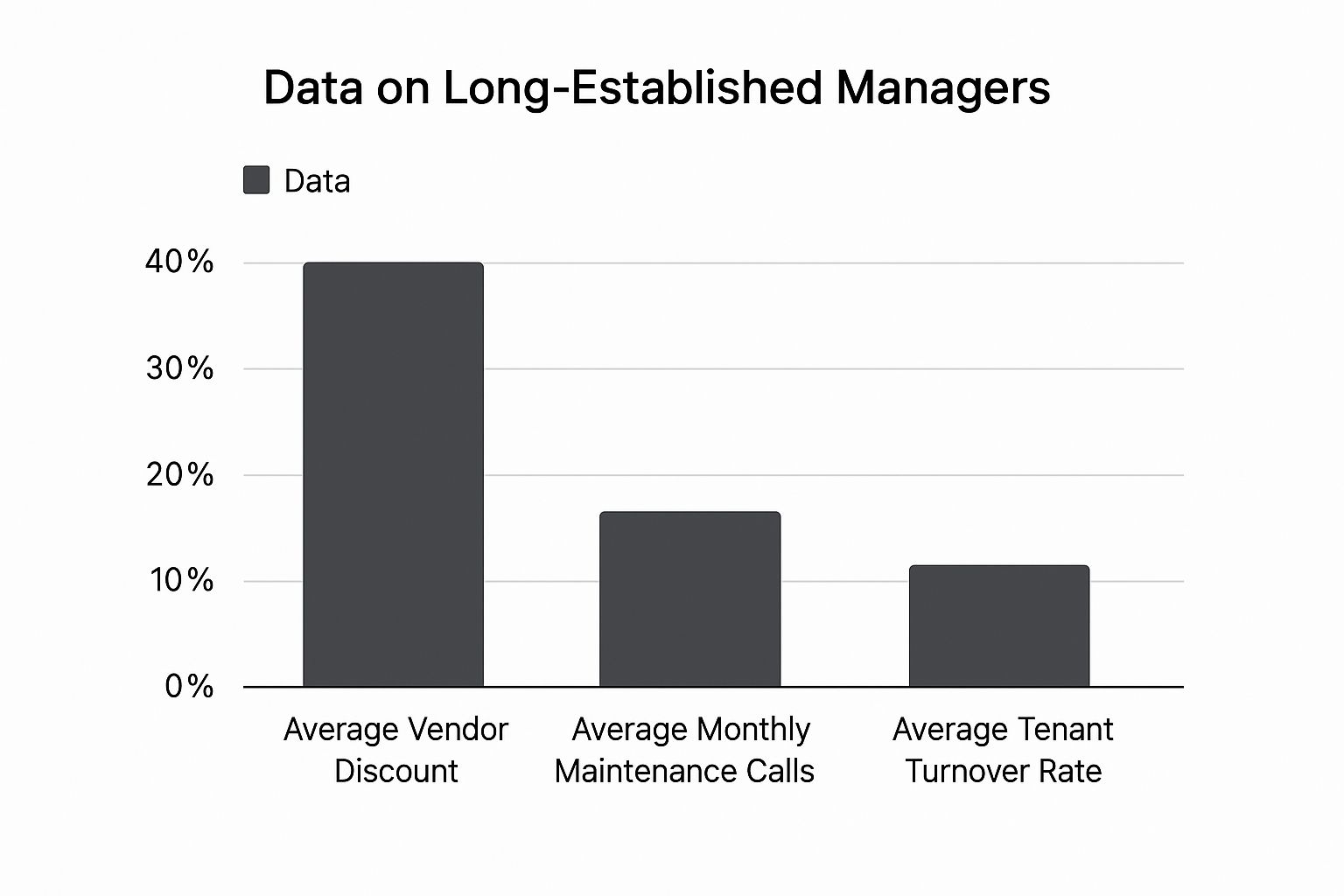
As you can see, long-standing relationships and efficient systems create significant advantages and save you money. With over 304,000 property management businesses in the U.S., finding a partner with a proven track record has never been more critical. Choosing a company with a long history ensures they have the experience to adapt and thrive, protecting your asset no matter what the market throws at it.
How Property Management Fees Actually Work
Let's talk about the money side of things. Understanding the costs of hiring a property manager is a huge piece of the puzzle, but it’s really easy to get lost in a sea of percentages and hidden charges.
The goal isn't just to find the cheapest option. It’s about understanding the value you're getting for your dollar. Honestly, the first sign of a trustworthy property manager is a fee structure that’s clear, simple, and upfront.
Most companies in this business rely on two main fees: the monthly management fee and the tenant placement fee. The management fee is usually a percentage of the rent we collect for you each month, while the placement fee is a one-time cost for finding and screening a new tenant.

Unpacking the Monthly Management Fee
This is the fee that covers all the day-to-day work of looking after your rental. Think of it as the engine that keeps your investment running smoothly—rent collection, handling tenant calls, coordinating maintenance, and sending you financial statements.
Across the industry, you'll typically see this fee hover somewhere between 8% to 12% of the monthly rent.
A lower percentage, especially from a company that’s been around the block, can be a sign of great value. For instance, our management fee at AIM is a straightforward and highly competitive 7.9%. We can offer this low rate because our operations are efficient, and we're committed to making professional management accessible for property owners in our local communities like Redlands, Yucaipa, and Loma Linda.
Understanding the Tenant Placement Fee
The other key cost is the tenant placement fee, which you might also hear called a "leasing fee." This covers the entire, labor-intensive process of finding a fantastic, qualified tenant for your property. Getting this step right is absolutely critical for your long-term success.
This isn't just putting an ad online. It involves:
- Marketing Your Property: We create professional listings, take high-quality photos, and advertise across all the platforms where renters are looking.
- Conducting Showings: Our team schedules and manages all the viewings with people who are interested.
- Thorough Tenant Screening: This is where the real work happens. We run background checks, pull credit reports, and verify income and employment.
- Lease Preparation and Signing: We draft a solid, legally compliant lease and handle the entire signing process.
While some companies will charge you a full month's rent for this service, we keep it simple with a flat $750 placement fee. More importantly, we don't nickel-and-dime you with surprise add-ons. That transparency means you know exactly what to budget for right from the start.
To help you compare apples to apples, here’s a look at what you can generally expect to see when it comes to property management fees.
Typical Property Management Fee Structures
| Fee Type | Industry Average Range | AIM's Transparent Model | What It Typically Covers |
|---|---|---|---|
| Monthly Management Fee | 8% – 12% of collected rent | 7.9% (minimum $90/unit) | Rent collection, tenant communication, maintenance coordination, financial reporting. |
| Tenant Placement Fee | 50% – 100% of one month's rent | $750 (flat fee) | Marketing, showings, comprehensive tenant screening, and lease execution. |
| Lease Renewal Fee | Varies (often $100 – $300) | $0 (Included) | Preparing and signing a new lease with an existing tenant. |
| Maintenance Markup | 10% – 20% on vendor invoices | $0 (We pass through the direct cost) | A surcharge some companies add to maintenance and repair bills. |
| Inspection Fees | $50 – $200 per inspection | $0 (Included) | Fees for conducting move-in, move-out, or routine property inspections. |
This table illustrates why it’s so important to ask for a full fee schedule. A low monthly percentage can look great on the surface, but it can be quickly offset by a dozen other small charges.
When you're comparing companies, always ask for a complete fee schedule in writing. Some firms offer a low monthly rate but make up for it with extra charges for inspections, lease renewals, or administrative tasks. A true partner puts all the costs on the table right from the get-go.
At AIM, our focus is exclusively on long-term leases—six months or more. This strategy provides you with stable, consistent income and attracts tenants who are more likely to treat your property like it’s their own home. It helps you avoid the high turnover and increased wear-and-tear that comes with short-term rentals, which ultimately protects your investment.
Having been a part of this community since 1997, we bring mature relationships and time-tested processes to the table. For a complete breakdown, you can learn more about our simple and clear property management fee structure on our website. This kind of clarity is essential when you’re hiring someone to be a true partner in your investment journey.
Asking the Right Questions in Your Interview
This is where the rubber meets the road. The interview is your chance to get past the slick sales pitch and really understand how a property management company operates day-to-day. You're not just hiring a vendor; you’re choosing a long-term business partner who will be in charge of one of your biggest assets.
The secret is to ask specific, operational, and scenario-based questions that reveal their real-world processes.
Generic questions will only get you generic, rehearsed answers. Don't ask, "Are you experienced?" Instead, try something much more direct, like, "How many years have you been managing properties specifically in the Highland and Calimesa communities?" This immediately tests their local knowledge and how relevant their experience is to your property’s location.
Probing Their Processes
Your main goal here is to get a crystal-clear picture of their standard operating procedures for the situations that matter most. Don't be shy about digging into the nitty-gritty details.
Here are the crucial areas you absolutely need to explore:
- Tenant Screening: Ask for a step-by-step walkthrough of their entire screening process. What’s their minimum credit score? What specific income-to-rent ratio do they require? If they can't give you hard numbers, that's a major red flag.
- Late Rent Protocol: You need to know exactly how they handle late payments. A great question is, "On what day of the month is rent officially considered late, and what is the very first action you take when that happens?"
- Maintenance Handling: How do they manage both routine requests and middle-of-the-night emergencies? A fantastic follow-up is, "Walk me through your exact protocol for an after-hours emergency call, like a burst pipe at 2 a.m."
A truly professional property manager will have clear, documented procedures for every common scenario. Their ability to answer these questions confidently and specifically is a strong indicator of their organizational skills and experience.
Focusing on Long-Term Value
Here at AIM, our focus is exclusively on long-term rentals—leases of six months or longer. We've built our business on this model because we believe it fosters stability, reduces wear-and-tear on the property, and creates a much more consistent income stream for our owners.
It's vital to make sure any manager you consider shares this philosophy.
Ask questions that reveal their commitment to this strategy. You could try, "What do you see as the biggest advantages of managing long-term rentals versus short-term vacation properties?" Their answer will tell you volumes about their priorities. Are they geared toward protecting your asset for the long haul, or are they focused on high-turnover management? This is also the perfect time to confirm they do not deal with short-term rentals, ensuring their business model aligns with your investment goals.
Understanding Tenant Relations
Happy tenants are good for business. They stay longer, which means less vacancy, less turnover, and fewer costs for you. This is why resident satisfaction has become a top priority for successful managers.
To get a feel for their approach, ask something like, "What specific steps do you take to build a positive relationship with the tenants you manage?" For a deeper dive, our article on how to find a good property manager offers even more tips on what to look for.
A proactive manager knows that good communication is everything. The industry has seen a massive shift toward using technology to improve the tenant experience and make operations more efficient, a trend highlighted in these property management insights from Second Nature.
By asking the right questions, you can find a partner who will not only manage your property but also protect and grow its value for years to come.
Sealing the Deal: Final Steps to Hire Your Manager
You’ve done the hard work of interviewing and have a front-runner in mind. Now it's time to seal the deal and kick off a successful partnership. This final stage is all about locking in the details and making sure the transition is seamless.
Before you put pen to paper, there's a little more homework to do. It’s crucial to verify the credentials of the company you've chosen. A quick online search to confirm their state license is a must—it ensures they're legally allowed to manage properties in California. Don't skip this.
Next, actually call the references they gave you. Go beyond a simple "Were they good?" Ask pointed questions about how they handled maintenance requests, how clear their communication was, and if there were ever any surprise fees.

Unpacking the Property Management Agreement
The property management agreement is the rulebook for your entire relationship. It’s a legally binding contract, so take your time and read every word. If something feels fuzzy or unclear, ask for an explanation. It’s much easier to clarify things now than to argue about them later.
There are a few key clauses you'll want to pay extra close attention to:
- Scope of Authority: This defines what the manager can do without calling you first. For instance, can they approve repairs up to a certain amount? Make sure you're comfortable with that limit.
- Fee Structure: The agreement should spell out every single fee with no ambiguity. It needs to clearly state the 7.9% monthly management fee and the $750 tenant placement fee, confirming there are no hidden extras lurking in the fine print.
- Termination Clause: How do you part ways if things don't work out? The contract should detail the notice period required and specify if there are any penalties for ending the agreement early.
This document is there to protect both of you. It should provide total transparency on everyone's responsibilities.
A clear, detailed management agreement is the foundation of a strong partnership. It eliminates ambiguity and ensures everyone is on the same page regarding expectations, responsibilities, and financial matters.
Kicking Off a Smooth Transition
Once the agreement is signed, the final step is getting them up and running. A smooth onboarding process is essential, especially if you have existing tenants. The goal is to avoid any disruption and maintain continuity.
To get started, your new manager will need a complete package of information from you. Be prepared to hand over:
- All keys for the property, including mailboxes, gates, or storage units.
- Copies of the current lease agreements and all tenant contact info.
- A summary of any recent maintenance or repair work.
- Contact information for any preferred vendors you like to use.
A truly professional company will have a streamlined system to make this handover painless. To get a better idea of what this looks like in practice, you can learn about the typical transition process when hiring a manager and see how an expert handles it.
Getting this right ensures your property is managed effectively from day one. It lets you confidently step back and finally start enjoying the passive income you worked so hard for.
Common Questions We Hear from Property Owners
Even after doing your homework, it’s natural to have a few more questions before handing over the keys. We get it. Here are some of the most common things we discuss with property owners across Redlands, Beaumont, and Yucaipa to make sure you have complete clarity.
What Is a Typical Property Management Fee?
Cost is always top of mind, and for good reason. In our industry, it’s pretty standard to see monthly management fees fall somewhere between 8% and 12% of the rent collected. On top of that, many companies will charge a separate tenant placement fee, which can often be as much as a full month's rent.
We like to keep things simple and transparent. At AIM, our monthly management fee is a competitive 7.9%. We also charge a flat $750 tenant placement fee, and that's it—no hidden charges or surprise add-ons. You'll always know exactly what to expect.
Why Do You Only Handle Long-Term Rentals?
We made a strategic decision years ago to focus exclusively on long-term leases of six months or longer. We only provide services for long term leases and do not deal with short-term or vacation rentals. This isn't an accident; it's a deliberate choice that creates a more stable, predictable, and ultimately more profitable experience for our owners.
Think about it: long-term tenants treat a property like their own home. This leads to significantly less wear and tear over time. It also gives you a consistent, reliable income stream, freeing you from the headaches of seasonal vacancies and the high turnover costs that plague the short-term market.
How Do You Handle Maintenance and Repairs?
We’ve been serving the Inland Empire since 1997, and that experience has helped us build an incredible network of trusted, affordable local vendors. From Loma Linda to Banning, we have mature, established relationships with the best people for the job.
When a tenant submits a maintenance request, we coordinate with these proven professionals to get the work done right, and always at a fair price. We also have a clear protocol for after-hours emergencies to address urgent issues immediately, protecting both your property and your tenants.
An experienced manager's local vendor network is one of their most valuable assets. It translates directly into faster response times, quality workmanship, and cost savings that are passed on to you, the property owner.
What Happens if a Tenant Doesn't Pay Rent?
This is where a professional manager truly proves their worth. We have a firm but fair process for handling late rent that is fully compliant with all state and local regulations. As soon as rent becomes past due, our team is on it, handling all communication with the tenant.
If the situation escalates, we manage the entire legal process, from serving the correct notices to proceeding with an eviction. Navigating these waters correctly is critical, as one wrong step can be incredibly costly. You can learn more about the complexities by reviewing California's landlord-tenant laws—it quickly becomes clear why having an expert handle this is so important.
Ready to experience the peace of mind that comes with professional, transparent, and experienced property management? Let AIM PROPERTY MANAGEMENT COMPANY protect your investment and maximize your returns.
Contact us today to get started!