Deciding to form an LLC for property management is a major milestone for any landlord in California. For many, it’s the smartest way to build a legal firewall between their rental business and their personal life. Think of it as a protective bubble around your home, savings, and other assets, shielding them from any lawsuits that might arise from your properties.
Is an LLC Right for Your California Rental Property?

Investing in real estate in communities like Redlands, Beaumont, Calimesa, Yucaipa, Loma Linda, Mentone, Highland and Banning California is a fantastic way to build wealth, but it doesn't come without risks. A Limited Liability Company (LLC) is simply a business structure designed to wall off those risks by creating a separate legal entity just for your rental activities.
Here’s a real-world scenario: a tenant dispute gets ugly, or a visitor has an accident on your property, and it escalates to a lawsuit. If you own the property in your own name, your personal assets could be on the line to satisfy a judgment. But by placing that property inside an LLC, you limit the exposure. In most cases, only the assets owned by the LLC—meaning the rental property itself—are at risk.
Weighing the Pros and Cons
So, is an LLC the right move for you? It really comes down to balancing that powerful asset protection against the costs and administrative upkeep. Setting up an LLC isn't a "set it and forget it" task; it requires ongoing attention to maintain its protective "corporate veil."
Before you jump in, consider these key factors:
- Asset Protection: This is the number one reason landlords form an LLC. It creates a clean, legal separation between your business and personal finances.
- Administrative Tasks: You’ll need to keep everything separate. That means a dedicated bank account for the LLC, meticulous records, and staying on top of state filing requirements.
- Associated Costs: Here in California, LLCs come with an annual $800 franchise tax, plus potential fees based on gross receipts. You have to bake these costs into your budget.
For many investors, the peace of mind that comes from shielding personal wealth far outweighs the annual costs and administrative responsibilities of maintaining an LLC. It professionalizes your operation and provides a crucial layer of security.
However, an LLC isn't a magic wand for all your landlord problems. It’s designed to handle legal liability, not the day-to-day grind of managing tenants, coordinating maintenance, and keeping up with California’s ever-changing regulations. You can learn more about key California landlord-tenant laws in our detailed guide. This is especially true for landlords juggling multiple properties across areas like Calimesa, Loma Linda, and Highland.
LLC vs Sole Proprietorship: A Quick Comparison for Landlords
To put it in perspective, let's look at how holding a property in an LLC stacks up against simply owning it as an individual (a sole proprietor). This table breaks down the core differences for California landlords.
| Feature | Holding Property as a Sole Proprietor | Holding Property in an LLC |
|---|---|---|
| Liability | No separation. Your personal assets are at risk in a lawsuit. | Limited liability. Personal assets are generally protected from business debts/lawsuits. |
| Taxation | Pass-through. Income/losses reported on your personal tax return. | Flexible. Usually pass-through, but can elect corporate taxation. |
| Administrative Burden | Minimal. No formal setup or ongoing state compliance required. | Higher. Requires formal setup, annual fees ($800 in CA), and separate record-keeping. |
Ultimately, while the LLC offers robust protection, it doesn't eliminate the actual work of being a landlord.
The Growing Need for Professional Management
The property management industry is booming for a reason. Projections show the U.S. market is expected to grow to $98.88 billion by 2029. This isn't just a random statistic; it points to a clear trend where more investors are choosing to hire a property manager to protect their investment and handle the operational side of things.
For those seeking Beaumont property management or Yucaipa property management, partnering with a local expert brings huge advantages. An experienced firm handles everything from tenant screening and rent collection to legal compliance, reducing your direct risk and freeing up your valuable time. We serve the following communities, Redlands, Beaumont, Calimesa, Yucaipa, Loma Linda, Mentone, Highland and Banning California.
How an LLC Creates a Liability Shield for Landlords

The number one reason landlords create an LLC for property management is for its powerful liability shield. But what does that actually mean day-to-day? Think of it as a legal fortress you build around your rental property, designed to keep business problems from spilling over into your personal life.
Let's walk through a real-world scenario. Imagine a tenant in your Highland rental property has a nasty slip-and-fall because of a hidden maintenance issue. If you own that property in your own name, their lawsuit targets you directly. Suddenly, your personal assets—your family home in Loma Linda, your savings account, your car—are all on the line.
Now, let's rewind. If that same rental is owned by a properly managed LLC, the lawsuit is filed against the business, not you. Any potential damages are generally limited to the assets held inside the LLC, which is usually just the property itself and its business bank account. That clear separation is the entire point of "limited liability."
Understanding the Corporate Veil
This protective barrier separating your business and personal finances is what lawyers call the "corporate veil." It’s a legal concept that treats the LLC as a totally separate entity from its owners (who are called "members"). As long as you keep that veil intact, your personal assets stay safely on your side of the wall.
The corporate veil is the single most important feature of an LLC for a real estate investor. It transforms a personal investment into a professional business, providing the legal separation necessary for true asset protection.
But this veil isn't magic—it can be broken. Certain actions can weaken or even "pierce" it, leaving you personally exposed. While an LLC is fantastic for protecting assets from lawsuits, it only works if you maintain it correctly.
Keeping Your Liability Shield Strong
To keep that corporate veil strong, you have to treat the LLC like the separate business it is. This isn't just about filing paperwork once; it's about disciplined, consistent habits. If you get lazy, a court could decide to ignore the LLC structure and hold you personally liable anyway.
Here are the non-negotiable habits you need to adopt:
- Maintain Separate Finances: This is the big one. Your LLC must have its own business bank account. All rental income is deposited there, and all property expenses are paid from it. No exceptions. Never use the LLC debit card for groceries or deposit a rent check into your personal account.
- Avoid Commingling Funds: Mixing business and personal money is called commingling, and it's the fastest way to pierce the corporate veil. By keeping every transaction clean and separate, you prove the LLC isn't just a personal piggy bank.
- Sign Documents Correctly: When you sign a lease, a vendor contract, or anything else, you must sign as a representative of the LLC. For example, sign as "John Doe, Member, XYZ Rentals LLC," never just "John Doe." This small detail constantly reinforces the company's separate legal identity.
- Keep Meticulous Records: Maintain clear, organized records of all income, expenses, and important business decisions. This paper trail is your proof that you're running a legitimate business.
How to Pierce the Corporate Veil
Ignoring these rules can have serious consequences. A judge might decide to pierce the corporate veil if they see an owner has:
- Commingled Business and Personal Assets: Using the LLC bank account as a personal ATM.
- Failed to Follow Corporate Formalities: Not keeping records or acting like a distinct entity.
- Engaged in Fraudulent Behavior: Using the LLC to mislead creditors or tenants.
An LLC is a powerful tool, but it doesn't replace responsible business practices or good insurance. It should work alongside other layers of protection. Your LLC protects your personal assets from the business, while a solid insurance policy protects the business's assets. You can see how different policies fit together in this detailed landlord insurance comparison to build a complete defensive strategy. For landlords in Banning or Mentone, a well-run LLC combined with the right insurance is the ultimate peace of mind.
Understanding California LLC Taxes and Fees

While an LLC gives you a powerful shield against liability, that protection isn't free—especially here in California. It's really important to get a handle on the costs before you jump in, so let's break down exactly what you should expect to pay for your LLC for property management. This way, you can budget properly and avoid any nasty surprises come tax time.
One of the biggest perks of an LLC is its pass-through taxation model. This just means the LLC itself doesn't pay federal income taxes. Instead, the profits (and losses) from your rental properties "pass through" the business directly to you. You'll report this rental income on your personal tax return, just like you would any other income.
This is a huge advantage because it dodges the "double taxation" that hits corporations, where the business pays tax, and then shareholders pay tax again on their dividends. For a landlord, it keeps things much simpler. If you want to dive deeper into financial strategies, take a look at our guide on the top rental property tax deductions available to California landlords.
The California Annual Franchise Tax
Now for the part that's unique to our state. Every single LLC registered in California has to pay an annual $800 franchise tax. It doesn't matter if your properties made a million dollars or sat vacant—this fee is mandatory.
Think of it as the annual subscription fee for keeping your liability protection active. Whether your rental is in Beaumont or Redlands, you have to factor this $800 into your yearly budget. It’s a fixed, predictable cost of doing business.
This mandatory $800 annual tax is the most significant recurring cost of a California LLC. It’s a non-negotiable expense that underscores the importance of ensuring your rental income can comfortably cover this administrative overhead.
The California Gross Receipts Fee
On top of the franchise tax, California adds another fee based on your LLC's total annual gross receipts. This is a critical point: it's based on the total income your LLC brings in before you deduct any expenses. The fee is tiered, so the more your rentals earn, the more you pay.
This is especially relevant for investors who own several properties or have high-end rentals in communities like Yucaipa property management or Highland. Knowing which tier your income falls into is key to forecasting your costs accurately.
Here are the official tiers for the LLC fee:
- $250,000 to $499,999: $900 fee
- $500,000 to $999,999: $2,500 fee
- $1,000,000 to $4,999,999: $6,000 fee
- $5,000,000 or more: $11,790 fee
A Practical Example for Landlords
Let's make this real. Imagine you own a couple of rental properties in the Yucaipa area, and you hold them all in one LLC. Last year, your total rental income was $300,000.
Here's how to calculate your total California LLC costs for the year:
- Annual Franchise Tax: Right off the bat, you owe the flat $800. No getting around it.
- Gross Receipts Fee: Your $300,000 income places you in the first tier ($250,000 – $499,999), which adds a $900 fee.
- Total Annual Cost: Your total bill to the state would be $1,700 for the year ($800 + $900).
As you can see, the costs are tangible. For property owners, it's a balancing act. You have to weigh these fees against the invaluable peace of mind that comes from knowing your personal assets are safe and sound.
Forming and Maintaining Your Property Management LLC
Setting up an LLC for property management can feel like navigating a legal maze, but it’s actually a straightforward process once you break it down. Think of this as your practical checklist for getting your LLC off the ground and, more importantly, keeping it in good standing with the state of California.
Following these steps correctly from day one is what builds that strong liability shield you’re after. This isn't just about paperwork; it's about officially bringing your new business entity to life.
Kicking Off the Formation Process
Before you can even think about managing properties under your new company, you have to register it with the California Secretary of State. This involves a few key steps that give your company its legal existence.
Choose a Unique Business Name: Your LLC’s name can't be a copy of another registered business in California—it has to be distinct. It also must end with "Limited Liability Company," "LLC," or "L.L.C." to make its status clear.
File the Articles of Organization (Form LLC-1): This is the birth certificate of your LLC. It’s the official document where you’ll provide the basics: your LLC’s name, its purpose, its address, and the name and address of your registered agent.
Appoint a Registered Agent: Every LLC in California needs a registered agent. This is simply a person or company designated to receive official legal mail and government notices on your behalf. The only catch is they must have a physical address in California—no P.O. boxes allowed.
Creating Your Company Rulebook
Once the state says your LLC is official, your next move is to draft an Operating Agreement. While California doesn’t legally require one for single-member LLCs, skipping this step is a huge mistake. Think of it as the official rulebook for your rental business.
This internal document maps out how your LLC will be run, covering things like:
- How profits and losses are split among the members.
- The management structure and who is responsible for what.
- The process for adding or removing members down the road.
- A plan for how to dissolve the LLC if it ever comes to that.
An Operating Agreement is your best defense against future disputes. It also adds another layer of legitimacy, showing that you’re treating the LLC as a separate, professional business and strengthening that all-important liability shield.
Staying Compliant and Maintaining Protection
Getting your LLC formed is just the first step. The real work is in the ongoing maintenance that keeps your liability protection intact. If you let these duties slide, you could put your personal assets right back on the line.
In California, there are two big responsibilities you absolutely can't miss.
First, you have to file a Statement of Information (Form LLC-12) within 90 days of forming your LLC, and then file an update every two years after that. This form just keeps the state in the loop with your LLC’s current basic information.
Second, don’t forget to pay your annual $800 franchise tax and any other applicable fees on time, every single year. Failing to meet these compliance deadlines can lead to hefty penalties or even get your LLC suspended by the state. These tasks are just a small piece of the puzzle when you consider all the responsibilities a property management company handles to keep things running smoothly.
After forming your LLC, managing your rentals efficiently is the next priority. Many landlords find that using tools like rental property inventory software for landlords is a game-changer for keeping track of assets and property conditions.
Choosing When to Hire a Professional Property Manager
Forming an LLC for property management is a fantastic first step for protecting your assets, but it's important to be crystal clear on what it doesn't do. Think of your LLC as a legal fortress—it protects you from financial attacks. It does not, however, answer a 3 AM call about a burst pipe, chase down late rent, or keep you updated on California's ever-changing landlord-tenant laws.
That's where you hit a fork in the road. Is your time best spent acting as a landlord, or should you hand the operational keys to an expert? For most investors, the lightbulb moment comes when the day-to-day grind of management starts to outweigh the benefits of owning the property in the first place.
Scenarios That Signal It’s Time to Hire Help
Your LLC shields your personal finances, but a great property manager protects your time and your sanity. If any of the following situations sound familiar, bringing in a firm that specializes in Yucaipa property management or Beaumont property management is probably the smartest investment you can make.
Here are a few tell-tale signs:
- You Live Out of the Area: Trying to manage a rental in Highland while you live hours away is a recipe for disaster. A local manager is your eyes and ears on the ground, ready to respond instantly.
- You Value Your Time: The hours spent on tenant calls, scheduling vendors, and showing the property add up fast. Outsourcing these tasks frees you up to find your next deal or simply enjoy your life.
- You're Drowning in Legal Jargon: California’s rental laws are notoriously complicated and constantly shifting. A professional manager lives and breathes this stuff, ensuring you stay compliant and avoid costly legal missteps.
- You Want to Avoid Tenant Headaches: From late rent and disputes to the stress of an eviction, dealing with tenant issues is draining. A good manager acts as a professional buffer, handling these tough situations for you.
To help clarify this decision, let's compare the two paths side-by-side.
Decision Matrix: Self-Management With an LLC vs. Hiring a Property Manager
This table breaks down what's really involved in each approach, helping you see where your time and resources are best spent.
| Consideration | Self-Managing with an LLC | Hiring AIM Property Management |
|---|---|---|
| Time Commitment | High; requires handling all tenant communication, maintenance, and administrative tasks. A part-time job. | Low; we handle all daily operations, freeing up your time for other priorities. |
| Cost | No management fee, but you bear all costs for marketing, vacancies, and your own time. | A predictable management fee (7.9%), often offset by reduced vacancy and maintenance savings. |
| Liability Management | LLC provides legal separation, but you are still responsible for operational compliance and tenant law. | We manage legal compliance, from leases to evictions, adding a layer of operational protection. |
| Expertise Required | You must become an expert in local laws, marketing, tenant screening, and maintenance. | You gain immediate access to our team's specialized local market and legal knowledge. |
Ultimately, the choice depends on your goals. If you're looking for a hands-on business, self-managing can work. But if you want a more passive, scalable investment, professional management is the clear winner.
More Than Just Rent Collection
A top-tier property manager does so much more than just cash rent checks. We build a complete system to protect your asset, ensure consistent cash flow, and navigate the landlord-tenant minefield in communities from Calimesa to Banning. Comprehensive services include everything from rigorous tenant screening and 24/7 maintenance coordination to detailed financial reporting.
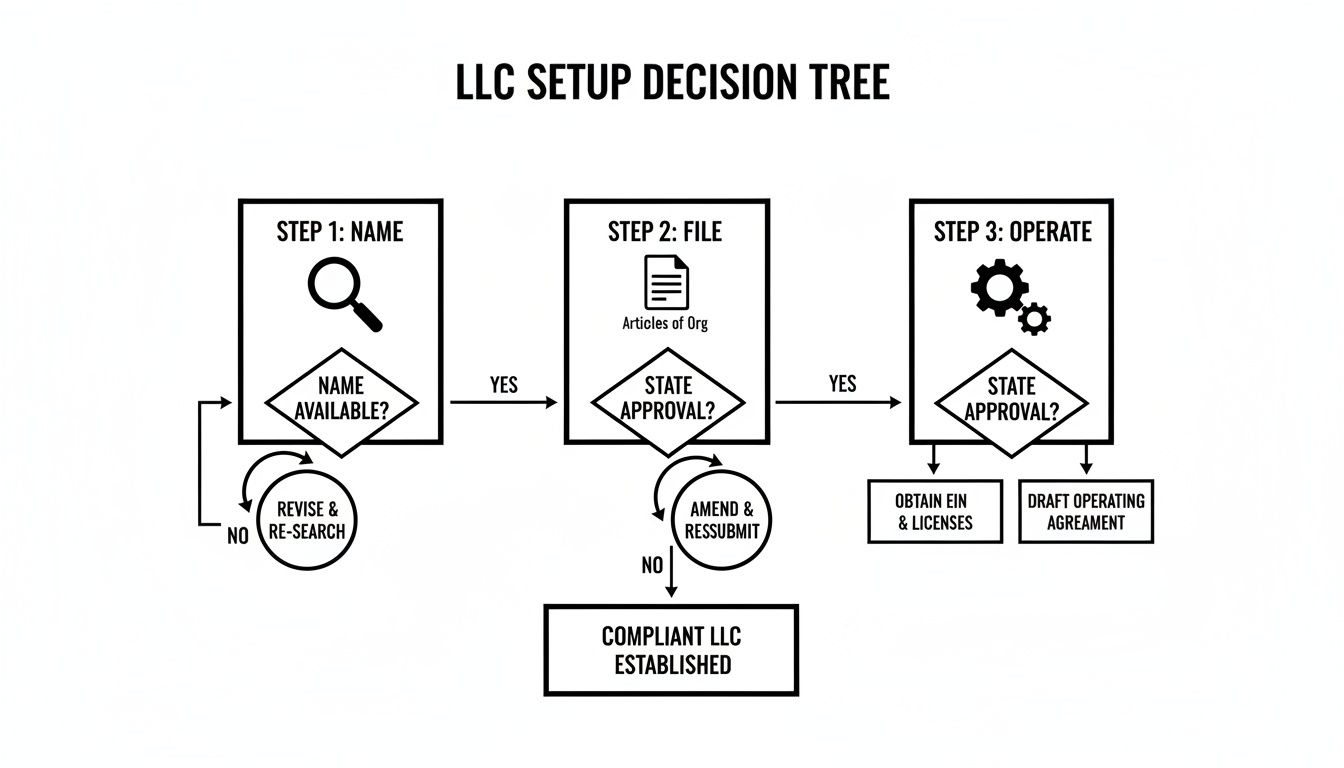
While setting up the LLC is a three-step legal process, running the property day-to-day is a full-time operational job.
Hiring a professional property manager isn't an expense; it's an investment in efficiency, compliance, and peace of mind. They handle the operational risks so you can focus on your long-term investment goals.
When you pair the legal shield of an LLC with the operational expertise of a management firm, you create a truly passive and secure investment. Before you decide, we recommend reading our full guide on the benefits of hiring a property manager to see the complete picture. For many investors, this partnership is the key to unlocking their property's full potential without all the stress.
Common Questions We Hear About LLCs for Rental Properties
When you're exploring an LLC for property management, it’s natural to have a lot of questions. As you weigh the pros and cons of setting up your own legal structure versus hiring a full-service manager, getting straight answers is the only way to move forward with confidence. Here are a few of the most common questions we get from landlords in Redlands, Beaumont, and the surrounding areas.
Our goal is to cut through the noise and give you the practical information you need to build a solid asset protection strategy.
Can I Put Multiple Rental Properties Into a Single LLC?
Yes, you definitely can. In fact, many landlords in communities like Calimesa and Banning start this way because it’s simpler and keeps annual filing costs down. You only have one entity to worry about.
The trade-off, however, is risk. When all your properties are bundled into one LLC, they're all connected. If a tenant files a major lawsuit over an incident at Property A, the equity in Properties B and C could be on the line. For this reason, many seasoned investors eventually create a separate LLC for each property, building a legal firewall between each asset.
Do I Still Need Landlord Insurance if I Have an LLC?
Absolutely. You need both. An LLC and landlord insurance are two different tools that work together to give you a complete safety net.
Think of it this way: Your LLC is the legal shield that protects your personal assets from the business. Your insurance is the financial shield that protects the business's assets from a disaster.
An LLC stops a lawsuit related to your rental from threatening your family home or personal savings. Landlord insurance steps in to cover the actual costs of things like a fire, a storm, or a liability claim for an accident that happens on the property. And just be sure the insurance policy is held in the LLC's name, not yours.
When Is the Best Time to Form an LLC for a Rental?
Ideally, you should form the LLC before you close on the property. This is the cleanest approach because you can take the title directly in the LLC’s name from day one, avoiding a lot of extra paperwork and potential headaches down the road.
That said, you can still transfer a property you already own into a new LLC. This is usually done with a quitclaim deed, but you have to be careful. Transferring the title could trigger a "due-on-sale" clause in your mortgage, meaning your lender could demand the entire loan balance be paid immediately. It’s a move you absolutely want to discuss with your attorney and CPA first.
Does Hiring a Property Manager Mean I Don’t Need an LLC?
Not really. Hiring a professional property manager in a place like Yucaipa or Beaumont is one of the smartest things you can do to lower your day-to-day risks. A great manager handles tenant screening, maintenance, and compliance, which stops most problems before they even start.
But even the best manager can’t predict a freak accident or a determined litigant. An LLC is that final, critical layer of defense that separates your business liabilities from your personal life. The most successful investors we see use both: professional Yucaipa property management to minimize the chances of something going wrong, and an LLC to protect their personal wealth if it does.
Protecting your investment is all about building smart layers of security. Whether you're setting up an LLC or looking for an expert team to manage your properties in the Inland Empire, making an informed choice is what matters most. AIM PROPERTY MANAGEMENT COMPANY offers comprehensive services designed to safeguard your assets and maximize your returns. We serve the following communities, Redlands, Beaumont, Calimesa, Yucaipa, Loma Linda, Mentone, Highland and Banning California.
Learn more about our professional property management services today.