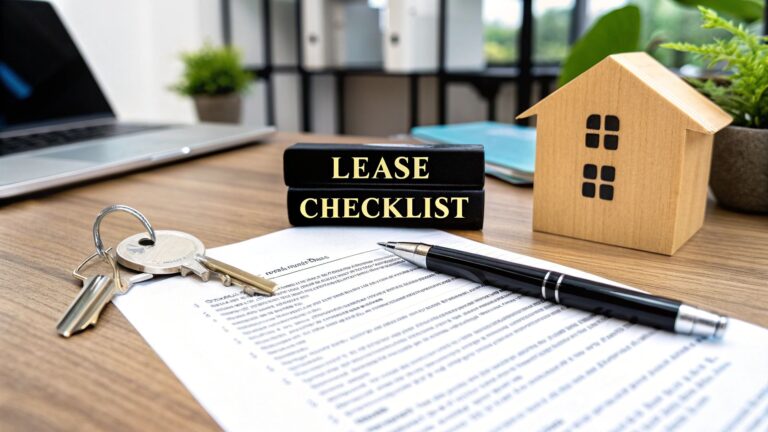
A solid lease agreement isn't just a formality; it's a legally binding contract that lays down the law for your rental property. This is where you clearly define all the rules for tenants. It needs to cover the essentials like the rent amount, security deposit details, lease duration, and maintenance responsibilities. Getting these things in writing is the single best way to prevent future headaches and protect your investment.
Why Your Lease Agreement Is Your Most Important Asset
You've invested a lot in your California rental property, but it's the piece of paper—the lease agreement—that truly protects its value. Think of it as the foundational blueprint for your entire relationship with a tenant. It’s far more than a simple document; it's a critical legal tool that sets crystal-clear expectations, defines who is responsible for what, and gives you a roadmap for handling issues before they blow up.
A well-written lease is your first and best line of defense. In a state with notoriously detailed landlord-tenant laws, vagueness is your worst enemy. A strong agreement cuts down on misunderstandings, secures your rental income, and ultimately shields you from costly legal battles. This is especially true for property owners in communities we serve, like Redlands, Beaumont, Calimesa, Yucaipa, Loma Linda, Mentone, Highland and Banning California, where a rock-solid contract is the bedrock of successful property management.
The Foundation of a Stable Tenancy
The main goal here is to create a stable, predictable, and profitable tenancy. Your lease does this by spelling out the specific terms both you and your tenant agree to follow while they live there. This covers everything from the simple things, like when rent is due, to the more complex, like how repair requests should be handled.
A well-drafted lease is more than a list of rules; it's a tool for communication. It ensures both parties are on the same page from day one, which is the cornerstone of a positive and long-lasting landlord-tenant relationship.
A truly effective lease isn't just comprehensive—it's also easy to understand. Using techniques for legal writing in plain English ensures your tenants actually get what they're signing, which makes the whole agreement stronger. That clarity is absolutely essential for enforcing the terms and keeping things professional. For a deeper dive into your specific duties, check out our guide on landlord responsibilities in California.
Reducing Disputes and Vacancies
It's a simple formula: a detailed lease leads to fewer fights. When everything is spelled out, there's less room for disagreement. This can drastically cut down on both disputes and vacancies, which is a huge advantage in today's rental market. While some real estate sectors have high vacancy rates, 62% of renters are planning to stay in their current home for at least a year, making a clear lease essential for keeping good tenants around.
Getting specific on rent collection, maintenance protocols, and eviction procedures can prevent the 20-30% of disputes that arise from fuzzy or unwritten terms. This is a vital strategy for property owners in areas like Beaumont and Yucaipa, where professional Yucaipa property management is in high demand because landlords know how important it is to get these details right from the start.
The Non-Negotiable Clauses for Every California Lease
Think of your lease agreement as the blueprint for your rental property. Just like you wouldn't build a house on a shaky foundation, you can't build a successful tenancy without a rock-solid lease. This section covers the absolute essentials—the foundational clauses that form the backbone of a legally sound and effective California lease.
Getting these core components right from the start is the key to a smooth, dispute-free landlord-tenant relationship. These aren't just suggestions; they are the non-negotiables that define everyone's rights and responsibilities, leaving no room for guesswork. For property owners in communities like Redlands, Beaumont, and Loma Linda, mastering these basics is a must.
For a quick overview, here's a checklist of the core elements every California lease needs.
Essential California Lease Agreement Checklist
| Clause Category | What to Specify | Why It's Critical for Landlords |
|---|---|---|
| Parties & Property | Full legal names of all adult tenants, landlord/management, and the complete property address (including unit #, parking spots). | Legally binds all adult occupants to the lease terms and prevents any confusion about who is responsible or what is being rented. |
| Lease Term | The exact start and end dates for a fixed-term lease, or the start date and notice period for a month-to-month agreement. | Eliminates ambiguity about when the tenancy begins and ends, providing stability and clear expectations for both parties. |
| Rent Details | The monthly rent amount, due date, accepted payment methods, grace period (if any), and late fee policy. | Ensures timely and consistent payments by clearly outlining all financial obligations. This is the financial heart of your agreement. |
| Security Deposit | The exact deposit amount, conditions for deductions, and the procedure for its return (within California's 21-day limit). | Guarantees compliance with strict state laws, protecting you from significant financial penalties for mishandling tenant funds. |
Now, let's break down why each of these is so critical.
Identifying All Parties and the Property
This first step seems simple, but getting it wrong can cause major headaches down the line. Your lease must clearly list the full legal names of every adult who will be living in the property, along with the name of the landlord or the property management company. No nicknames or partial names.
This ensures that every adult resident is legally on the hook for upholding the lease, including paying the rent. Just as important is a precise description of the property. Don't just list the street address—include the unit number, any assigned parking spaces, or specific storage areas that come with the rental. Crystal clarity here prevents future disputes.
Defining the Lease Term
Next up is the lease term. This clause locks in the duration of the agreement. Are you offering a fixed-term lease, usually for a year, or a more flexible month-to-month tenancy?
- Fixed-Term Lease: This has a specific start and end date. It provides stability for both you and the tenant, as the rules and rent are set for that entire period.
- Month-to-Month Agreement: This rolls over each month until either party gives proper written notice to end it. It offers more flexibility but less long-term security.
No matter which you choose, the lease must state the exact start date. If it's a fixed-term lease, it also needs an exact end date. This simple detail prevents any confusion about when the agreement officially begins and concludes.
The image below shows how a well-built lease—starting with these foundational clauses—protects your investment.
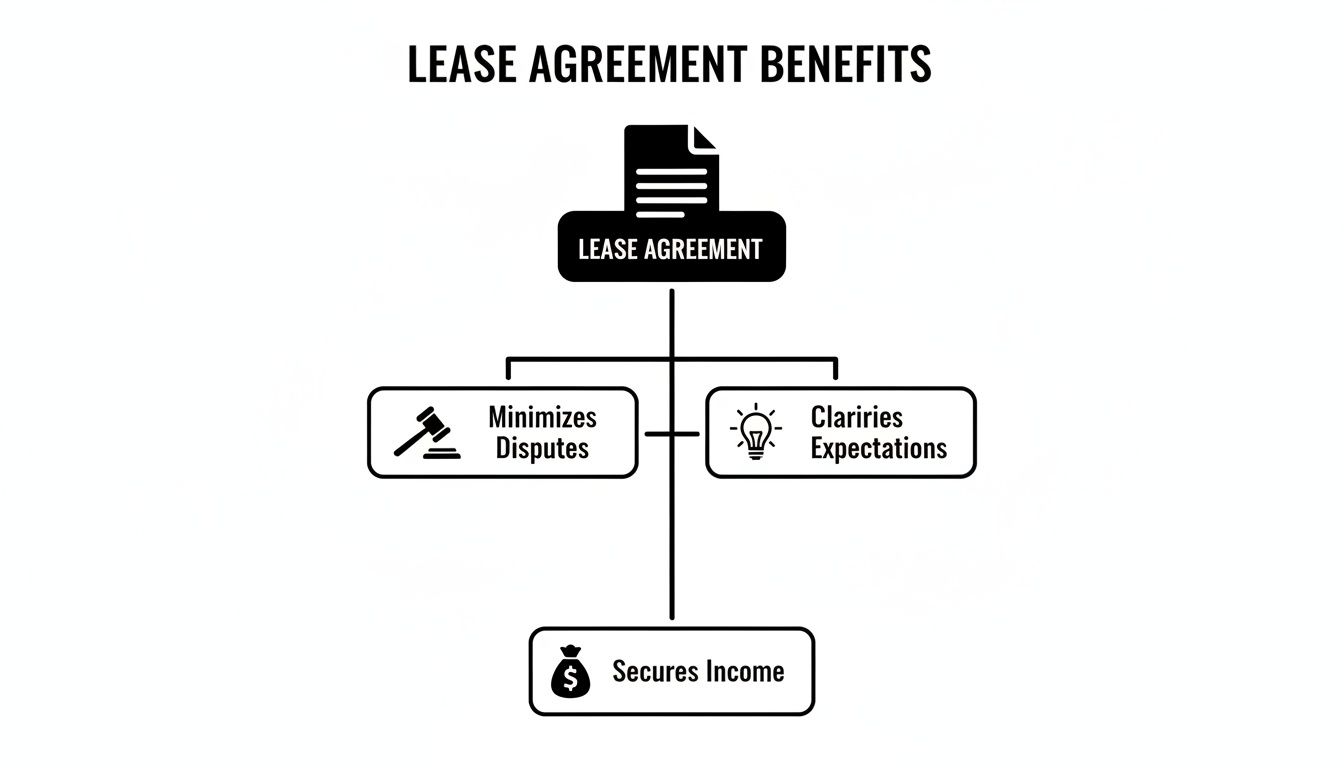
As you can see, a solid lease agreement minimizes disputes and clarifies expectations, which directly secures your rental income.
Outlining Rent and Payment Details
The rent clause is the financial engine of your lease. To avoid payment headaches, this section needs to be airtight. Just listing the monthly rent amount is not enough. A professional lease, like the ones used by Beaumont property management experts, leaves no stone unturned.
Your rent clause must clearly spell out:
- The exact dollar amount of rent due each month.
- The specific due date (e.g., the 1st of the month).
- How tenants can pay (e.g., online portal, check, money order).
- Where and to whom the payment should be sent.
- Details on your grace period and any late fees, if applicable.
Being explicit with these financial terms makes sure tenants know what's expected and helps streamline your collections—a cornerstone of effective Redlands property management.
Managing the Security Deposit
In California, the laws governing security deposits are incredibly strict, making this one of the most critical clauses to get right. A single misstep here can result in costly penalties. Your lease has to state the security deposit amount, which, under current law, cannot be more than one month's rent for an unfurnished unit.
A common mistake is for landlords to see the security deposit as their own money. It's not. In California, it always remains the tenant's property, which you hold in trust as security. Your lease must reflect this and clearly outline the specific reasons you can make deductions, like for unpaid rent or damages beyond normal wear and tear.
The agreement must also detail the return process, including the legal deadline—you have 21 days after the tenant moves out to return the deposit. You're also required to provide an itemized statement for any deductions, complete with receipts. Since these rules can be a minefield, it’s smart to read up on California's tenant security deposit laws for full compliance. For landlords in Yucaipa, having a property management Yucaipa professional handle this ensures it's done perfectly every time.
Once you've nailed down the essentials like rent and the lease term, it's time to think about protecting your investment for the long haul. A solid lease agreement doesn't just set the basic rules; it anticipates the real-world situations that pop up when you're renting out a property. This is where you get strategic.
These next clauses—covering finances and maintenance—are the engine that keeps your rental business running smoothly. They're designed to protect your cash flow and the physical condition of your property, preventing small issues from turning into expensive headaches.
For property owners here in California, especially in communities like Beaumont, Calimesa, or Mentone, leaving these details vague is a recipe for disaster. Clear, legally sound rules for late rent, repairs, and property access aren't just a good idea—they're absolutely essential for a strong lease agreement. Let's break down how to frame these clauses to truly safeguard your investment.

Structuring Late Fees in California
Late rent is probably the most common headache landlords deal with. But here in California, you can't just pick a number out of thin air for a late fee. State law is very specific: any late fee must be a "reasonable estimate" of the actual costs you incur because the payment was late.
Think of it this way: the fee isn't a penalty to punish the tenant. It’s a pre-agreed reimbursement for the extra work and financial disruption a late payment causes you.
So what's "reasonable"? While there’s no magic number written into law, a common and generally defensible amount is around 5% of the monthly rent. The key is that you have to be able to justify it if you're ever challenged.
Your lease needs to spell this out clearly:
- The exact date rent is officially considered late.
- The specific dollar amount of the late fee.
- A statement that the fee is considered "additional rent."
This simple clarity heads off arguments before they start and makes sure your policy will hold up. For anyone working with a Yucaipa property management team, getting these financial details right is non-negotiable. It's how you protect your income and keep things professional.
Defining Maintenance and Repair Responsibilities
Nothing creates friction between a landlord and tenant faster than a disagreement over who is supposed to fix what. A detailed maintenance clause is your best friend here. The goal is to draw a clear line in the sand, outlining who is responsible for routine upkeep versus unexpected repairs.
Your lease should break it down:
- Tenant Responsibilities: This covers the small stuff. Think replacing light bulbs and smoke detector batteries, changing HVAC filters, and keeping the place clean. Crucially, it also includes their duty to report any major problems to you right away.
- Landlord Responsibilities: This is the big picture. You are legally required to keep the property habitable. That means ensuring the plumbing, electrical, and heating systems work correctly and handling any major structural issues.
When you spell this out, you empower tenants to take care of minor things themselves while making sure you're looped in immediately on serious issues that could cause major damage. A professional Redlands property management firm will tell you this clause is fundamental to protecting the long-term value of your home. And speaking of protection, make sure you have the right insurance coverage in place by checking out our guide on comparing landlord insurance for California rentals.
Establishing Rules for Landlord Entry
Even though you own the property, your tenant has a legal right to privacy. California law is very strict about when and how a landlord can enter a rented home, and your lease needs to reflect these laws perfectly to avoid trouble.
Legally, you can enter for specific reasons, like making repairs, showing the property to potential renters, or in an emergency. For anything other than a true emergency, you are required to give "reasonable written notice," which the law presumes to be 24 hours.
Your "Right of Entry" clause should clearly state:
- The valid, legally permitted reasons for entry.
- The requirement for you to provide 24-hour written notice.
- That entry will happen during normal business hours, unless you and the tenant agree otherwise.
Including this clause isn't just about following the law; it shows respect for your tenant and builds trust. It ensures you have the access you need while making it clear you value their privacy. For landlords anywhere from Highland to Banning, having a clear entry policy managed by an expert like AIM PROPERTY MANAGEMENT COMPANY is the best way to ensure compliance and avoid unnecessary conflict.
Defining Property Use and Tenant Conduct

How your property is used day-to-day is a huge factor in its long-term value and your peace of mind. A solid lease agreement goes way beyond just collecting rent; it clearly lays out the ground rules for how a tenant lives in the space. Think of these rules less as restrictions and more as a roadmap for preventing common headaches and protecting your investment.
This is where you spell out the lifestyle you expect for the property. You need crystal-clear rules on pets, guests, subletting, and any illegal activities. For landlords with properties in communities governed by homeowner associations (HOAs), like many in Highland and Loma Linda, getting these clauses right is non-negotiable if you want to avoid violations and fines.
By clearly defining the rules of conduct, you’re not just protecting your property—you’re creating a stable, respectful environment. That’s what attracts the kind of responsible tenants who see a well-managed property as a major plus.
Crafting a Comprehensive Pet Policy
"Can I bring my dog?" It’s one of the first questions landlords get. Whether you decide to allow pets or not, your lease absolutely must have a clear, specific pet policy. Just saying "no pets allowed" often isn't enough to prevent misunderstandings down the road.
A rock-solid pet clause or addendum leaves no room for guesswork. If you do allow pets, your policy should detail:
- Allowed Types and Sizes: Get specific. Mention breeds, sizes (e.g., "dogs under 40 pounds"), and how many pets are permitted.
- Pet Rent and Deposits: Spell out any extra monthly pet rent or a separate, refundable pet deposit meant to cover potential damages.
- Tenant Responsibilities: Make it clear the tenant is on the hook for cleaning up after their pet, keeping noise down, and paying for any damage the animal causes.
Even if you have a strict no-pet rule, your lease needs to state it explicitly. This stops tenants from assuming they can add a furry friend later. A well-defined policy is a cornerstone of professional Redlands property management and one of the best ways to avoid future arguments.
Controlling Subletting and Long-Term Guests
You spent time and money screening your tenants for a reason—you need to know exactly who is living in your property. That’s why clauses controlling subletting, lease assignments, and long-term guests are so critical. Without them, your approved tenant could simply move out and let someone else take over without you ever knowing.
Your lease should explicitly state that subletting or assigning the lease is prohibited without the landlord's prior written consent. This single sentence is one of the most powerful tools you have to protect your property from surprise occupants.
In the same vein, a guest policy helps you draw a line between a weekend visitor and an unauthorized tenant. It's perfectly reasonable to set a limit, like stating that any guest staying for more than 14 consecutive days—or 30 days total in a six-month period—must be formally added to the lease. This ensures anyone living there long-term has to pass your screening process, just like the original tenants.
Upholding HOA Rules and Prohibiting Illegal Activity
If your property is part of an HOA, like many homes in Yucaipa and Beaumont, your lease must require tenants to follow all community rules. The best practice is to attach a copy of the HOA covenants directly to the lease and have the tenant sign an acknowledgment that they've received them and agree to abide by them.
This simple step makes the tenant directly responsible for any violations or fines their actions might cause, protecting you from penalties over noise, parking, or landscaping issues.
Finally, every single lease needs a clause that flat-out prohibits any illegal activity on the premises. It seems obvious, but this clause gives you clear and immediate grounds for eviction if a problem arises. It reinforces the expectation of a safe and lawful home, which is a standard and non-negotiable part of any lease managed by a professional Beaumont property management firm like AIM PROPERTY MANAGEMENT.
Navigating California's Mandatory Legal Disclosures
Think of a standard lease agreement as the main rulebook for your rental property. But in California, there's another critical layer you can't ignore: mandatory legal disclosures. These are essentially state-mandated "warning labels" and information bulletins that must be included. Failing to provide them isn't a minor oversight—it can lead to serious legal blowback, potentially even voiding your lease and landing you with hefty fines.
For property owners in the communities we serve, from Redlands to Beaumont and Calimesa, getting these disclosures right is a non-negotiable part of being a compliant landlord. These rules are in place to ensure tenant safety and transparency. Staying on top of them protects you from liability, builds trust, and solidifies your reputation as a responsible property owner.
Key Disclosures Every California Landlord Must Know
California law gets very specific about what you have to tell a tenant before they sign on the dotted line. While the complete list is extensive, a few disclosures pop up on nearly every rental property. Getting these right is a huge focus for any professional Beaumont property management firm worth its salt.
Here are some of the most important ones you’ll encounter:
- Lead-Based Paint: If your property was built before 1978, federal law is crystal clear. You must give tenants a specific informational pamphlet and include a lead warning statement directly in the lease. Any known lead hazards must be disclosed, no exceptions.
- Pest Control Treatments: Do you use a regular pest control service? If so, you're required to give new tenants a copy of the notice provided to you by the pest control company.
- Demolition Permits: Planning a major overhaul? If you've applied for a permit to demolish the rental unit, you have to inform prospective tenants in writing before you accept a single dollar from them.
- Military Ordnance Location: It sounds unusual, but if the property is within one mile of a former military training ground that could contain explosive munitions, this must be disclosed.
These aren't just "good ideas" or optional extras. They are legally required parts of a rental agreement in California. Overlooking just one can put your entire lease—and your investment—in jeopardy.
This is exactly why meticulous documentation is so vital. It’s a cornerstone service that expert Redlands property management teams provide to ensure every single legal box is checked.
The Role of Lease Addenda
So, where do you put rules that are specific to your property but aren't universal legal requirements? Things like your policy on smoking or having a barbecue on the balcony? That's what a lease addendum is for. An addendum is simply a separate document that you attach to the main lease, and it becomes a legally binding part of the agreement.
Using addenda is a smart way to keep your primary lease agreement clean and focused on the core terms. You can create specific addenda for things like:
- Pet Policies: Detailing allowed breeds, extra fees, and ground rules.
- No-Smoking Policies: Clearly stating that smoking is banned inside the unit and on the property.
- Satellite Dish or Antenna Rules: Outlining installation requirements to prevent property damage.
- Mold Notification: Informing tenants about mold prevention and their responsibility to report moisture issues immediately.
Just like the main lease, each addendum needs to be signed and dated by both you and the tenant. This creates a clear paper trail proving they have read, understood, and agreed to the extra terms.
Keeping Your Lease Compliant and Current
California's rental laws are anything but static; they're constantly changing. A lease that was perfectly compliant last year might be out of date today. This is where the real work begins for a DIY landlord—and where the value of professional management becomes impossible to ignore. Staying current requires ongoing education and a sharp eye for legislative updates.
For instance, recent laws have completely changed the rules for handling security deposits and what counts as a "just cause" eviction. Using an old lease template that doesn’t reflect these modern changes is a massive risk.
At AIM PROPERTY MANAGEMENT, our job is to stay ahead of these legal shifts. We make sure the lease agreements for properties in Yucaipa, Banning, and across our service area are always current and fully compliant. This proactive approach to property management Yucaipa residents trust is what protects our clients from the legal nightmares of an outdated contract, giving them peace of mind that their investment is secure.
Simplify Your Leases with Professional Management
Putting together a solid, legally sound lease agreement isn't a one-and-done task. It’s a complicated and ongoing challenge for any landlord. While this guide breaks down the must-have clauses for your lease, the reality is that California laws are always changing, and every tenant situation brings its own unique curveballs.
This is exactly where having a professional in your corner makes all the difference.
When you partner with a property management expert, you offload the endless legal research, the tedious document drafting, and the stress of enforcement. Instead of losing your nights and weekends trying to make sense of new regulations, you can have a dedicated team handle it all.
Your Expert Partner in Lease Management
At AIM PROPERTY MANAGEMENT, we live and breathe this stuff. We specialize in crafting ironclad lease agreements specifically for properties in communities like Redlands, Beaumont, or Banning. We don't just hand you a generic template; we build a lease that protects your investment while following every state and local law to the letter. That’s a cornerstone of effective Beaumont property management.
We’re with you for the entire journey—from drafting the initial agreement and finding highly qualified tenants to managing the day-to-day operations and handling renewals. Our expertise means your investment is secure, your cash flow stays consistent, and you can actually enjoy owning your property without all the headaches.
Think of a professional property manager as your shield. They stand between you and the legal pitfalls and administrative nightmares that can derail an investment. They don't just collect rent; they protect the value of your asset by making sure every detail, especially the lease, is handled with absolute precision.
For quick questions about California leases, a resource like a legal chatbot can be a helpful starting point. But for true peace of mind and complete management, nothing beats having a professional watching your back.
Our team ensures every lease we write is a powerful tool working in your favor. If you’re ready to secure your property with a professionally managed lease and want to see how it can benefit you, check out our in-depth guide on hiring a property manager. Let's connect and talk about what you need.
Frequently Asked Questions About California Leases
We get a lot of questions from property owners across the communities we serve, from Calimesa to Mentone, about California lease agreements. Getting these details right is the first step in building a rental agreement that truly protects you and your investment.
Here are a few of the most common questions we hear.
What Is the Main Difference Between a Lease and a Rental Agreement in California?
The biggest difference boils down to one thing: time. A lease agreement is for a fixed term, usually a year, which gives both you and the tenant a sense of stability. No surprise moves, no sudden rent changes.
A rental agreement, on the other hand, is typically a month-to-month arrangement. This offers a ton of flexibility if you or your tenant aren't ready to commit long-term, but it also means either party can end the tenancy with proper notice.
How Much Can I Legally Charge for a Security Deposit in California?
This is a big one, and the law has changed recently. As of now, for an unfurnished home, you can only charge up to one month's rent for the security deposit. If your property is furnished, you can go up to two months' rent.
These limits can and do change, so it's critical to stay on top of the current laws to avoid any legal trouble.
What Happens If a Tenant Breaks Their Lease Early?
It’s a situation no landlord wants to face. If a tenant moves out before the lease is up without a legally sound reason (like military orders), they are still on the hook for the rent until the lease expires or until you find a new tenant.
The key here is that California law requires you to actively try to re-rent the property. You can't just sit back and collect rent on an empty unit; you have to make a reasonable effort to "mitigate damages" by finding a replacement tenant.
Can I Use a Generic Online Lease Template for My California Property?
You can, but we would never recommend it. It's incredibly risky. Those one-size-fits-all templates you find online almost never include the specific disclosures and clauses required by California law.
A boilerplate document might miss a crucial local ordinance in Redlands or a state-mandated disclosure for Yucaipa. A custom lease drafted by a professional who knows the local landscape offers infinitely better protection. You can find more answers to common landlord questions on our comprehensive FAQ page.
Drafting and managing a legally sound lease takes more than a template—it demands expertise and constant attention. At AIM PROPERTY MANAGEMENT COMPANY, we live and breathe these details. We build ironclad agreements and manage every aspect of the landlord-tenant relationship, ensuring your investment is always secure.