

Navigating California's complex tenant security deposit laws can feel like a maze. For landlords in areas needing Beaumont Property Management, that security deposit is a critical financial safety net. When asking, "should I hire a property manager for my house?", understanding these rules is the first step to protecting your investment. Getting the laws right from the start is key to a lawful, positive tenant relationship. AIM Property Management has provided expert property management Beaumont services since 1997, ensuring owners in communities like Redlands, Calimesa, Yucaipa, and Loma Linda stay compliant and profitable by focusing on stable, long-term rentals.
Understanding California Security Deposit Basics

Whether you’re looking into Beaumont Property Management or just wondering, "should I hire a property manager for my house?", you have to get the fundamentals of security deposits down cold. Think of it less like extra rent and more like a trust fund you hold for the duration of the tenancy. Its purpose is strictly defined by law, and stepping outside those lines can lead to some serious financial penalties. For property owners in communities like Redlands, Beaumont, Calimesa, Yucaipa, Loma Linda, Mentone, Highland, and Banning, California, staying compliant isn’t just a good idea—it’s the law.
The Legal Purpose of a Security Deposit
California law is very clear about the only four reasons a landlord can use a tenant's security deposit. Knowing these boundaries is essential.
- Covering Unpaid Rent: If a tenant skips out on their last month's rent, you can use the deposit to cover that shortfall.
- Cleaning the Unit: This allows you to bring the property back to the same level of cleanliness it was in when the tenant moved in.
- Repairing Damages: This is for fixing damages caused by the tenant or their guests that go beyond "normal wear and tear."
- Replacing or Restoring Personal Property: If your lease agreement specifically allows for it, this can cover things like lost keys or damaged furniture that you provided.
A classic rookie mistake for landlords is mixing up "damage" with "normal wear and tear." Faded paint from years of sunlight is wear and tear. A giant, permanent wine stain on the carpet from a party? That's damage, and you can likely deduct the cost of cleaning or repair.
To help you keep track, here's a quick rundown of the essential rules every California landlord needs to know.
California Security Deposit Laws At a Glance
| Regulation Area | Key Requirement |
|---|---|
| Deposit Limit | Unfurnished: 2 months' rent. Furnished: 3 months' rent. |
| Allowable Deductions | Unpaid rent, cleaning, tenant-caused damage, restoring property. |
| Return Deadline | Within 21 days of the tenant moving out. |
| Itemized Statement | Required if any deductions are made. Must include receipts/invoices. |
| "Normal Wear and Tear" | Cannot be deducted. Includes minor issues like faded paint or worn carpets. |
| Pre-Move-Out Inspection | Landlord must offer an initial inspection before the final move-out. |
| Interest | Not required statewide, but some local ordinances may mandate it. |
| Non-Refundable Deposits | Illegal in California. All deposits are considered refundable. |
This table is a great starting point, but remember that the specifics can get complicated. Always refer to the latest state and local laws to ensure you’re fully compliant.
Why Long-Term Rentals Provide More Security
At AIM Property Management, we’ve built our business around long-term leases of six months or longer. This isn't just a preference; it's a strategy that aligns perfectly with the stability a properly managed deposit provides. Short-term rentals mean constant turnover and a higher rate of wear and tear, but long-term tenancies create a much more predictable and stable investment.
This long-term focus benefits you by slashing vacancy costs, cutting down on administrative headaches, and attracting tenants who are genuinely invested in caring for your property. It’s a core part of our philosophy and a key reason we’ve been a trusted community partner since 1997.
You can dive deeper into the broader legal landscape by exploring our overview of the 2025 California landlord laws. And as you put it all together, don't forget that a rock-solid rental agreement is your foundation. Using a Free Rental Agreement Template can help you clearly define the terms from day one.
Setting the Right Security deposit Amount
Figuring out how much you can legally charge for a security deposit is the first hurdle every landlord needs to clear. California’s tenant security deposit laws aren't just suggestions; they set firm caps to prevent landlords from overcharging. Following these rules isn’t just good practice—it’s a legal requirement that protects both you and your tenants from day one.
The limits are actually pretty straightforward. For an unfurnished rental, you can ask for up to two times the monthly rent. If you're providing furniture, that ceiling rises to three times the monthly rent. These caps give you a fair safety net for potential damages without putting an impossible financial strain on new tenants.
Calculating Deposit Limits With Real-World Examples
Let's put this into practice. Say you have a single-family home in Yucaipa that you’re renting out for $2,500 a month. How much can you collect?
- Unfurnished Scenario: The absolute maximum you could charge for the security deposit is $5,000 ($2,500 x 2).
- Furnished Scenario: If you’ve fully furnished the home, you can legally collect up to $7,500 ($2,500 x 3).
It’s crucial to get these numbers right. Charging even a dollar over the limit can land you in serious legal trouble, potentially forcing you to return the extra amount plus pay additional damages to the tenant.
A common mistake is forgetting that "last month's rent" counts toward the total deposit. If you collect one month's rent as a security deposit and also ask for the last month's rent upfront for an unfurnished place, you've already hit the two-month maximum. Be careful not to double-dip.
There’s also a quirky exception for waterbeds. If your tenant has a waterbed, California Civil Code lets you increase the deposit by an extra half-month's rent. This is specifically to cover the higher risk of water damage, and it’s one of the few times you can exceed the standard limits.
These regulations are nothing new; they’re part of a broader trend across the country. Most states now cap security deposits at one to two months’ rent. With the national average for a one-bedroom apartment hovering around $1,980 as of 2025, a typical deposit falls in that same range. As Wise.com highlights, violating these state-specific limits almost always comes with fines and legal penalties, so staying compliant is non-negotiable.
Keeping up with rental laws is the key to protecting your investment. For a deeper dive into what’s changing, be sure to read our guide on 2025 California landlord laws.
Making Lawful Deductions from a Deposit
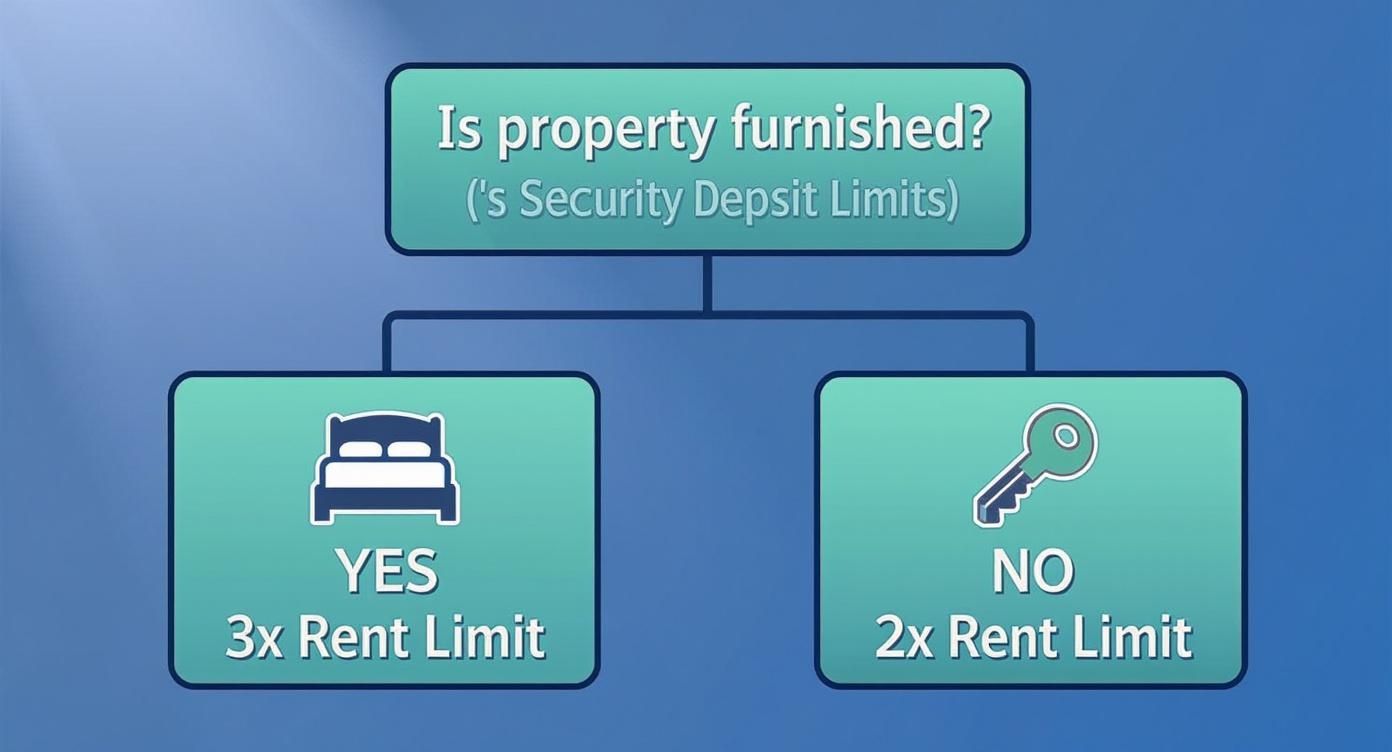
This infographic gives you a quick visual guide to the legal caps on security deposits, but that's just the first step. The real test comes when a tenant moves out and you need to figure out what, if anything, you can rightfully deduct.
Once your tenant vacates the property, California law gets very specific about what you can legally take from their security deposit. Getting this right is absolutely essential if you want to avoid ugly disputes and potential legal trouble.
It helps to think of the deposit not as your money, but as the tenant's money held in trust. You can only touch it for four very specific reasons.
The Four Valid Reasons for Deductions
Under California Civil Code Section 1950.5, a landlord can only make deductions from a security deposit for these four things. Memorize them.
-
To Cover Unpaid Rent: This one is pretty straightforward. If a tenant moves out still owing rent, you can use the deposit to cover the balance.
-
For Cleaning the Unit: You can deduct the cost to get the unit back to the same level of cleanliness it was in when the tenancy started. This doesn't mean you get a free professional cleaning on the tenant's dime every time. It only applies if the unit was left exceptionally dirty.
-
To Repair Damages: This is for fixing damage caused by the tenant or their guests that goes beyond "normal wear and tear." This is easily the most contentious area and where most disputes happen.
-
To Replace or Restore Personal Property: If your lease allows it, you can deduct the cost to replace things like lost keys, garage door openers, or any furnished items that were damaged or went missing.
Damage vs. Normal Wear and Tear
Understanding the difference between actual damage and normal wear and tear is one of the most critical skills for a landlord. You cannot legally charge a tenant for the expected decline in a property's condition from everyday living.
A classic example is paint. A few scuffs on the wall or paint that has faded from sunlight is almost always considered normal wear and tear. But if your tenant decided to paint a bedroom bright purple without permission, you can absolutely deduct the cost to repaint it back to the original neutral color.
Sorting this out can feel a bit subjective, but there are some clear lines. Here’s a table to help you distinguish between what’s deductible and what’s just the cost of doing business.
Allowable Deductions vs Normal Wear and Tear
| Issue | Considered Damage (Deductible) | Considered Normal Wear and Tear (Not Deductible) |
|---|---|---|
| Walls | Large holes, unapproved paint jobs, significant gouges. | Faded paint, minor scuffs from furniture, small nail holes. |
| Flooring | Large stains on carpet, broken tiles, deep scratches in wood. | Faded carpet from foot traffic, minor scuffs on hardwood. |
| Fixtures | Broken windows, cracked countertops, missing light fixtures. | Worn-out blind cords, loose faucet handles from regular use. |
| Cleanliness | Excessive dirt, trash left behind, stained appliances. | Minor dust or a need for light surface cleaning. |
When you correctly categorize these issues, you ensure that any deductions you make are fair, reasonable, and legally defensible. For a deeper look into your obligations, check out this guide on landlord responsibilities in California.
Mastering the 21-Day Return Rule

When it comes to California tenant security deposit laws, there’s one number that every landlord absolutely must know: 21.
The moment a tenant officially moves out and hands back the keys, a 21-calendar-day clock starts ticking. It’s a firm deadline, not a friendly suggestion. Within this window, you have a legal duty to do one of two things: return the entire security deposit, or provide an itemized statement of deductions along with any remaining balance.
The Anatomy of an Itemized Statement
Simply sending a list of charges isn’t going to cut it. California law is very specific about the level of detail required to justify keeping any portion of a tenant's deposit. Think of it as building a case—you need evidence.
Your itemized statement must clearly lay out:
- A specific list of every single deduction.
- The exact dollar amount for each item.
- Copies of invoices, receipts, or contracts if you hired a third party (like a plumber or painter).
- If you or your staff did the work, you need to describe what was done, state how much time it took, and list the reasonable hourly rate you charged.
This documentation is your shield in a dispute. Failing to provide proper receipts or a detailed breakdown can completely invalidate your deductions, even if the damages were legitimate. Transparency isn't just good practice; it's your best defense.
The High Cost of Missing the Deadline
So, what happens if you blow past that 21-day window? The consequences are steep and can turn a simple administrative task into a costly legal nightmare.
If you fail to comply on time, a court can rule that you’ve forfeited your right to make any deductions from the deposit at all. That means you could be on the hook for the full amount, even if the tenant left significant damage.
It gets worse. If a judge finds you acted in "bad faith"—meaning you intentionally and unfairly withheld the deposit—you could be ordered to pay the tenant the full deposit plus a penalty of up to twice the deposit amount. Suddenly, that $2,000 deposit dispute has the potential to become a $6,000 judgment against you. There is zero wiggle room here.
Understanding the tenant's side of this is just as important. For more on their expectations, check out our FAQ page to see when a tenant expects to receive their security deposit back after moving out. Mastering this rule is non-negotiable for protecting your finances and staying compliant.
The Strategic Advantage of Long-Term Rentals
Navigating the complexities of tenant security deposit laws really highlights a bigger truth about owning rental property: your rental strategy is directly tied to your financial security and peace of mind. Here at AIM, our entire approach is built on a foundation of stability. It’s why we exclusively manage long-term leases of six months or longer.
This isn’t just a random business preference; it's a strategic decision we’ve honed over decades to protect your investment and maximize your returns. We don’t handle short-term or vacation rentals, because our focus has always been on building lasting value for our clients.
Short-term rentals often come with a high price tag that’s hidden in the constant turnover. Every time a short-term tenant leaves, you’re on the hook for another round of cleaning fees, marketing costs, and the administrative headache of finding the next person. That revolving door of vacancies can eat into your profits surprisingly fast.
The Financial Benefits of Stability
Long-term rentals, on the other hand, create something every property owner wants: a reliable and predictable income stream. When tenants stay for extended periods, you dramatically reduce the costs and uncertainty that come with constant turnover.
- Consistent Cash Flow: A long-term lease means guaranteed monthly income you can actually count on, which makes financial planning a whole lot simpler.
- Lower Vacancy Rates: Fewer move-outs directly translate to less time your property sits empty and unprofitable.
- Reduced Wear and Tear: Tenants who truly see a property as their home are far more likely to take good care of it. This means less damage and fewer repair bills for you over time.
- Stronger Tenant Relationships: Longer tenancies create a real sense of community and responsibility, which leads to a more positive and stable rental experience for everyone involved.
The core advantage is simple: predictability. A revolving door of short-term guests creates constant risk, while a long-term tenant provides a consistent, reliable partnership that protects your asset. This is the model our company has successfully used since 1997.
Avoiding Regulatory Headaches
There's another huge benefit to focusing on long-term rentals: you get to avoid the complex and constantly changing local regulations that govern short-term lets. Many cities, including our service areas of Redlands, Beaumont, and Highland, have put strict rules, permits, and taxes in place for short-term rentals.
These regulations can be a nightmare to navigate and often come with steep penalties if you slip up.
By sticking to long-term leases, you sidestep these regulatory hurdles completely. This approach not only saves you from potential fines but also gives you a much more straightforward and less stressful ownership experience. You can feel confident that your investment is secure, profitable, and fully compliant—without having to constantly monitor shifting local laws.
Partner with an Experienced Property Manager
Navigating California’s dense web of tenant security deposit laws isn't for the faint of heart. It demands absolute precision. One simple mistake—like missing that strict 21-day return deadline or making a deduction that isn't allowed—can spiral into costly penalties. This is exactly where a seasoned property manager becomes your most valuable asset.
Since 1997, AIM has been the trusted partner for property owners across Redlands, Beaumont, Calimesa, Yucaipa, Loma Linda, Mentone, Highland and Banning, California. With decades of hands-on experience and mature community relationships, we manage every detail of the security deposit process with meticulous care, protecting you from avoidable legal and financial headaches.
Why Experience Matters in Property Management
We take the entire process off your plate. This starts with collecting the legally correct deposit amount and flows all the way through to conducting thorough move-out inspections and drafting legally sound itemized statements. We don’t just manage rentals; we manage your risk, ensuring every step we take is fully compliant with state law.
Our competitive 7.9% monthly management fee is low compared to many other companies, and our straightforward $750 placement fee means you get exceptional value without any hidden add-on fees. We also focus on securing long-term leases of six months or more, which creates stability and reduces the kind of frequent turnover that often leads to deposit disputes.
By entrusting your property to experts, you’re not just hiring someone to collect rent. You are investing in peace of mind, knowing that a team with decades of local experience is protecting your asset and your financial interests.
This professional oversight goes beyond just handling paperwork. A great manager also ensures the property is kept in excellent shape, which naturally minimizes the kinds of problems that lead to deposit deductions in the first place. You can get a sense of the detail involved by reviewing this essential rental property maintenance checklist.
Choosing the right partner is one of the biggest decisions you'll make as an investor. To see just how much of a difference it can make, read our guide on the reasons for hiring a property manager. We handle all the details so you can enjoy the rewards of your investment without the day-to-day stress.
Your Top Questions About California Security Deposits Answered
Even when you feel like you've got a handle on California's tenant security deposit laws, tricky situations always pop up. Property owners often run into unique scenarios that the general guides just don't cover. Here are some clear, straightforward answers to the questions we hear most often.
Can I Charge a Non-Refundable Security Deposit?
That’s a hard no. In California, every dollar of a security deposit is considered fully refundable by law. You can't just slap a "non-refundable" label on it in your lease agreement and call it a day.
You can only make deductions for four specific reasons: covering unpaid rent, professional cleaning, fixing damage caused by the tenant, or replacing personal property. Everything left over must go back to the tenant.
What Happens If I Miss the 21-Day Deadline to Return the Deposit?
Blowing past the 21-day return deadline can have some pretty serious financial sting. If you miss it, a judge can order you to return the entire deposit to the tenant—even if there were legitimate damages.
Worse yet, if the court decides you held back the deposit in "bad faith," you could be hit with penalties of up to twice the amount of the original deposit, on top of court costs. This is one deadline you absolutely can’t afford to miss.
Do I Have to Pay Interest on a Security Deposit?
At the state level, California law doesn't require landlords to pay interest on security deposits.
However, some cities with their own rent control rules do have this requirement. For the local communities we serve—including Redlands, Beaumont, and Highland—there is currently no local mandate to pay interest. It's always a good idea to double-check your city's specific ordinances.
What's the New Security Deposit Limit in California?
This is a big one. A major change kicked in on July 1, 2024. The new law caps security deposits at no more than one month's rent, regardless of whether the property is furnished or unfurnished.
An Important Exception for Small Landlords: There's a carve-out for landlords who own no more than two residential rental properties with a combined total of four units or fewer. If you fit this description, you may still be able to charge up to two months' rent, as long as the tenant is not an active servicemember.
This new legislation makes staying on top of the latest regulations more critical than ever to ensure you're fully compliant.
Navigating the fine print of security deposit laws takes diligence and experience. At AIM PROPERTY MANAGEMENT COMPANY, we’ve been helping property owners manage their investments with care and legal compliance since 1997. We handle the complexities so you can enjoy the stability and returns of your rental property. Learn more about our property management services.