
A property management agreement is the official game plan for the relationship between you and your property manager. Think of it as a legally binding contract that lays out every single responsibility, from who collects rent to how those 3 a.m. maintenance emergencies get handled. This document isn't just paperwork; it’s what turns vague assumptions into crystal-clear expectations, ultimately protecting your investment.
Your Blueprint for a Successful Landlord-Manager Partnership

Hiring a property manager without a formal agreement is like trying to build a house without a blueprint. Sure, you both might have a general idea of what the finished product should look like, but all the crucial details are left up to chance. This approach almost always leads to costly misunderstandings and a whole lot of frustration.
A well-drafted property management agreement stops these problems before they start. It’s the foundational document that defines the scope of your manager’s duties, making sure everyone is on the same page from day one. Whether you own a rental in Redlands, a family home in Beaumont, or an investment property in Highland, this agreement provides the clarity you need for true peace of mind.
The Importance of a Written Contract
Let's be blunt: verbal agreements are a recipe for disaster in the property management world. A written contract is your single most important tool for managing risk and ensuring things run smoothly. It spells out exactly what your manager will do, from screening tenants in Calimesa to coordinating repairs in Yucaipa.
The market for professional management is booming. In fact, the U.S. property management sector is projected to jump from $81.52 billion in 2025 to $98.88 billion by 2029. This growth shows why a formal agreement is now standard practice for any serious investor who wants to protect their assets.
A property management agreement is more than just paperwork; it's a strategic tool that aligns the property owner's goals with the manager's actions, ensuring a profitable and stress-free relationship from day one.
What Does the Agreement Cover?
A solid agreement acts as the operational playbook for your property. It outlines several key areas that are absolutely critical for a smooth and effective partnership. Understanding these components is the first step in learning how to find a property manager who truly fits your investment goals.
Key functions defined in the agreement almost always include:
- Rent Collection and Financials: Sets up clear procedures for collecting rent, handling late fees, and providing you with regular, easy-to-understand financial statements.
- Maintenance and Repairs: Defines the manager's authority to handle maintenance requests, including pre-approved spending limits for repairs in areas like Loma Linda and Banning. No surprise bills!
- Tenant Management: Covers the entire tenant lifecycle—from marketing the property and screening applicants to managing lease renewals and, if necessary, handling evictions.
- Marketing and Leasing: A great property manager's role includes marketing your property effectively and implementing strategies to increase rental bookings, especially for short-term or high-demand rentals.
To make it even clearer, here’s a quick rundown of what every good agreement should have.
Key Components of a Property Management Agreement at a Glance
This table breaks down the essential elements every owner should look for in their agreement, giving you a quick reference guide to review before you sign.
| Component | What It Covers | Why It's Critical |
|---|---|---|
| Services & Responsibilities | Detailed list of duties (rent collection, marketing, maintenance, tenant screening). | Eliminates confusion about who does what, preventing tasks from falling through the cracks. |
| Fee Structure | How the manager gets paid (e.g., percentage of rent, flat fees, leasing fees). | Ensures total transparency on costs and protects you from hidden charges. |
| Term & Termination | The length of the contract and the specific conditions for ending it by either party. | Provides a clear exit strategy if the partnership isn't working out. |
| Owner's Obligations | Your responsibilities, like maintaining insurance and funding a reserve account. | Clarifies your role and ensures you're holding up your end of the deal. |
| Liability & Insurance | Who is responsible for what, and the insurance coverage both parties must carry. | Protects both you and your manager from lawsuits and unforeseen damages. |
Having these components clearly defined is non-negotiable. It’s the bedrock of a professional relationship built on trust and mutual understanding.
Breaking Down the Core Clauses of Your Agreement
Trying to read a property management agreement can feel a lot like trying to decipher a foreign language. All that legal jargon and those dense paragraphs can be pretty intimidating, but getting a handle on these core clauses is the key to protecting your investment. Think of this section as your translator—we’re turning that complex language into plain English so you know exactly what you’re signing.
At its core, the agreement is all about setting the boundaries of your partnership. It spells out what your manager can do on their own and when they need to pick up the phone and get your approval. These clauses are the nuts and bolts holding the relationship together, ensuring your properties run smoothly, whether they're in Mentone or Highland.
Defining the Manager's Scope of Authority
One of the absolute most critical sections in any property management agreement is the clause that outlines the scope of authority. This part of the contract is basically the operating manual, giving your manager the power to handle the daily grind while making sure you’re still in the driver's seat for the big decisions. It’s a balancing act between empowerment and oversight.
Here’s a simple way to think about it: you don’t want your manager calling you at midnight because a tenant’s sink is clogged. But you definitely don’t want them green-lighting a $10,000 roof replacement without your say-so. This clause draws those lines in the sand.
A key piece of this is the repair authority and spending limit. This is a pre-approved dollar amount that lets your manager tackle routine maintenance and small emergencies without having to track you down for permission.
Real-World Scenario: Picture this: the water heater in your Loma Linda rental property gives out on a cold Saturday morning. With a clear repair authority of, say, $500, your property manager can get a plumber out there immediately. This stops the problem from getting worse and keeps your tenant happy—all without a frantic weekend call to you.
This pre-approved limit is a cornerstone of efficient management. Without it, tiny issues can snowball into expensive disasters while your manager is stuck waiting for your go-ahead.
Outlining Responsibilities for Both Parties
While the manager is busy with the day-to-day stuff, the agreement also details your obligations as the property owner. A good partnership is a two-way street, and this clause makes sure everyone knows what’s expected of them. It's a huge part of what a property management company's responsibilities truly are, covering both sides of the coin.
Typically, an owner’s responsibilities include things like:
- Maintaining Adequate Insurance: You’re responsible for carrying the right landlord and liability insurance to protect the property and everyone involved.
- Funding a Reserve Account: Most agreements require you to keep a minimum balance in a reserve fund. This is the pot of money the manager pulls from for approved expenses and emergencies.
- Providing Necessary Documents: It's on you to provide all the important paperwork, like existing leases, property records, and any HOA rules.
The manager’s list of duties is much longer—after all, that’s what you’re paying for. This usually covers tenant screening, rent collection, coordinating maintenance, and making sure everything is legally compliant. These are all critical aspects of professional Yucaipa property management and services in nearby areas.
Duration of the Agreement and Termination
Every contract needs a beginning and an end. The duration or term clause specifies how long the agreement lasts, which is typically one year. It also explains how renewals work; often, they're automatic unless one of you gives notice.
Just as important is the termination clause. Life happens, and sometimes a partnership just doesn't pan out. This section is your exit strategy, laying out the exact steps for ending the contract.
It usually covers two situations:
- Termination for Cause: This is for when someone drops the ball—like a manager being negligent or an owner failing to pay their fees.
- Termination Without Cause: This lets either party end the agreement for any reason, as long as they give proper written notice—usually 30 to 60 days.
Pay close attention to any fees tied to ending the contract early. A fair agreement will have clear, reasonable terms that protect both you and your manager from a messy or sudden split. Understanding this clause from day one gives you some much-needed peace of mind.
Understanding The Fee Structures And Financials
Let’s talk about the money. Financial transparency isn't just a nice-to-have; it's the absolute bedrock of a healthy relationship between a property owner and a manager. A well-written property management agreement lays out exactly how your manager gets paid and what your monthly statements will look like, leaving no room for unpleasant surprises.
For property owners in communities like Yucaipa and Beaumont focused on maximizing their return on investment, this clarity is everything. Think of the fee structure as the engine that powers the management company. You need to know how it works—how it’s fueled and what it costs to run—to accurately forecast your net income and know you're getting good value.
Common Management Fee Models
Property management companies generally lean on one of two main fee structures. Each one calculates costs differently, and the right one for you will likely depend on your property's rent and your own financial preferences. The agreement must state, without a doubt, which model is being used.
The most common approach is the percentage-based fee. With this model, your manager earns a percentage of the monthly rent that's actually collected, typically falling between 8% and 12%. This is a popular model because it aligns their success directly with yours. If you don't get paid, they don't get paid. It keeps them motivated to find and keep great, paying tenants.
The alternative is a flat-fee model. Here, you pay a fixed amount every month, no matter what the rent is. This can be very appealing if you own higher-rent properties, as your management cost stays predictable and doesn't climb with your rental income. Getting familiar with the pros and cons of each is a huge part of evaluating any property management fee structure.
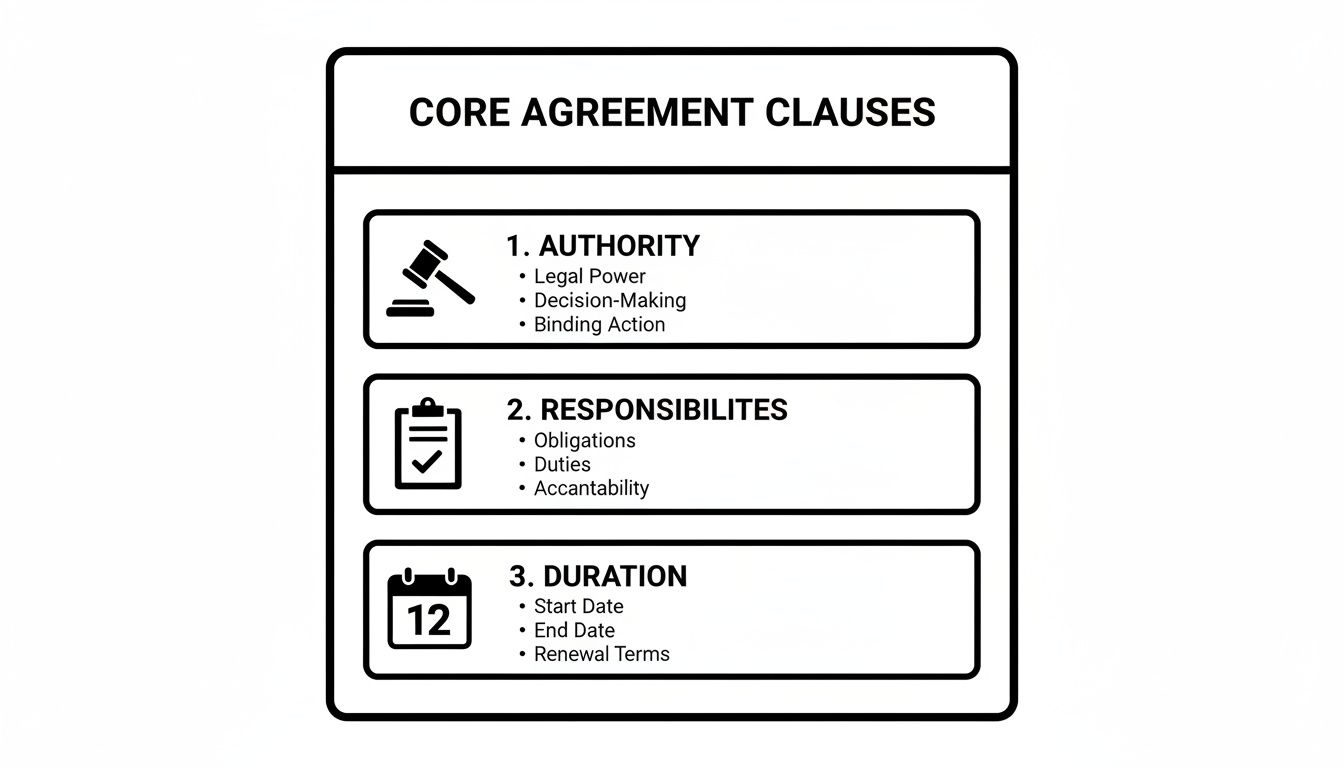
As you can see, the manager's authority, their responsibilities, and the agreement's term are all interconnected pillars supporting a clear and effective partnership.
Beyond The Monthly Management Fee
While the management fee is the headline act, it’s rarely a solo performance. A thorough agreement will break down every potential charge so you can build a complete financial picture. Hidden fees are profit killers, so you need to hunt for the clause that details these extra costs.
Here are a few other common fees you should expect to see:
- Leasing or Tenant Placement Fee: This is a one-time charge for the heavy lifting of finding and screening a new tenant. It’s often equal to a portion of the first month's rent.
- Lease Renewal Fee: A smaller fee for when a great tenant renews their lease. It’s a fair way to compensate the manager for retaining a quality renter and avoiding turnover costs.
- Maintenance Markup: Some companies add a small percentage (often 10%) to vendor invoices to cover the administrative work of coordinating repairs.
- Eviction Fee: A flat fee for the unpleasant but sometimes necessary process of managing an eviction.
A truly transparent agreement doesn’t just list these fees—it explains why they exist. This kind of financial clarity is the hallmark of a professional you can trust.
A quick look at different ways property managers charge for their services can help you decide what works best for your bottom line.
Common Property Management Fee Structures Compared
| Fee Type | Typical Structure | Best For |
|---|---|---|
| Percentage-Based Fee | A percentage (e.g., 8-12%) of the monthly collected rent. | Owners of mid-range properties who want to directly tie the manager's income to their own rental success. |
| Flat Fee | A fixed monthly dollar amount, regardless of rent collected. | Owners of high-rent properties or those who prioritize predictable monthly expenses. |
| Leasing Fee | A one-time fee, often 50-100% of the first month's rent. | A standard charge for the work involved in finding and placing a new, qualified tenant. |
| Hybrid Model | A combination of a lower flat fee plus performance-based bonuses. | Owners who want a predictable base cost but are willing to reward excellent performance like quick turnovers or lease renewals. |
Ultimately, the best structure depends on your property's value, your local market, and your personal risk tolerance.
Financial Reporting And Transparency
The financial clauses in your agreement are what connect your investment returns to your manager’s performance. The global real estate property management market is projected to hit about $41.17 billion by 2032, which shows just how many owners are seeking professional oversight. As more people decide to hire a property manager, these agreements have become more specific, clearly defining everything from management fees to renewal charges.
For owners in local markets like Beaumont property management or Yucaipa property management, a solid agreement will even specify inspection schedules and the level of detail in financial reports, making sure everyone is aligned on the long-term goals.
A crucial piece of this is the financial reporting clause. Your agreement should spell out how often you’ll get financial statements (it should be monthly) and exactly what they’ll include. At a bare minimum, you need a detailed breakdown of all income and expenses—a clear paper trail for your investment.
Navigating California's Unique Legal Requirements
California is known for many things, but for property owners, its complex web of landlord-tenant laws is one of the most important. These aren't just suggestions—they are strict, detailed rules that come with heavy penalties if you ignore them. A generic, one-size-fits-all property management agreement just won’t do the job here. Your contract needs to be specifically built to navigate the Golden State's legal landscape.
This is where your agreement becomes more than just a document outlining services. It’s your first and most important line of defense against legal trouble. For owners with properties in places like Calimesa, Banning, and Mentone, a California-specific contract ensures your manager is operating completely by the book, protecting your investment from costly fines and potential lawsuits.
Security Deposits and Disclosures
California has very specific rules about how security deposits must be handled, and your agreement needs to reflect them perfectly. The law dictates not only the maximum amount you can charge but also the exact timeline for returning the deposit and the specific reasons deductions can be made. Your agreement should explicitly state that your manager will follow these state-mandated procedures to the letter.
On top of that, California law requires a number of property-specific disclosures to be made to tenants before they sign a lease. These can range from a property's location in a flood zone or fire hazard area to the presence of lead-based paint. A solid property management agreement will assign the responsibility of providing these disclosures to your manager, ensuring you stay compliant and transparent.
A well-crafted property management agreement is your shield in California's legal landscape. It ensures your manager's actions are aligned not just with your goals, but with the state's strict regulations on everything from security deposits to fair housing.
Fair Housing and Eviction Procedures
California's fair housing laws are among the strictest in the nation, outlawing discrimination against a wide range of protected classes. Your agreement must contain a clause that obligates your property manager to adhere strictly to all federal, state, and local fair housing regulations during marketing, tenant screening, and day-to-day management. This is a non-negotiable clause that protects you from serious legal and financial headaches.
Similarly, the eviction process in California is highly regulated. It requires precise steps and legal notices that must be followed perfectly. Your agreement must empower your manager to handle this process correctly on your behalf, ensuring every "i" is dotted and "t" is crossed according to state law. This includes:
- Serving Proper Notice: Using the correct legal notices (like a 3-Day Notice to Pay Rent or Quit) and delivering them in the legally required manner.
- Adhering to Timelines: Following the strict deadlines that govern the eviction process from start to finish.
- Legal Compliance: Ensuring all actions are fully compliant to avoid having an eviction case thrown out of court, which can cost you months of lost rent.
For a deeper dive into the specifics, you can learn more about the complexities of California landlord-tenant laws in our detailed guide. This knowledge is essential for every property owner in the state. The agreement ensures that the professionals you hire are held accountable for navigating these legal waters correctly, safeguarding your investment and giving you true peace of mind.
Your Exit Strategy: Termination and Dispute Clauses

Even the best business relationships can hit a rough patch. That's why a rock-solid property management agreement always includes a clear exit plan. Think of these termination and dispute clauses as your safety net, making sure you’re never locked into a partnership that’s no longer working for your investment.
Talking about how to end a contract before you even start might feel a bit pessimistic, but it's just smart business. A well-defined exit strategy gives you the peace of mind that there’s a professional, legally sound way to part ways if things go south. Let's break down these critical clauses so you can sign your next agreement with total confidence.
Understanding Termination: For Cause vs. Without Cause
This clause is your roadmap for ending the agreement. It almost always spells out two very different ways to say goodbye, each with its own set of rules.
First, there’s termination for cause. This kicks in when one side simply isn't holding up their end of the deal. For a manager, that could be gross negligence, failing to find tenants, or mismanaging your money. For an owner, it might be failing to keep the reserve account funded. Because this is a response to a breach of contract, it usually requires less notice.
The second, and more common, path is termination without cause. This lets either you or the management company end the relationship for any reason at all—no questions asked. The key here is giving proper written notice, which is usually 30 to 60 days. Make sure you look closely for any early termination fees that might pop up if you decide to end the contract before the initial term is up.
A Path Forward: Dispute Resolution
What happens when you have a disagreement that doesn't quite justify ending the entire contract? That's where the dispute resolution clause saves the day. Instead of immediately lawyering up for an expensive court battle, this clause typically forces both parties to try a more collaborative approach first.
Most modern agreements outline a step-by-step process for working through conflicts:
- Direct Negotiation: The first stop is usually a formal chat to hash out the issue and find a solution you can both live with.
- Mediation: If talking it out doesn't work, a neutral third-party mediator steps in to help guide the conversation. It's not legally binding, but it’s surprisingly effective at finding common ground.
- Arbitration: This is a more formal step where an arbitrator listens to both sides and makes a final, legally binding decision. It’s almost always faster and cheaper than going to court.
A clear dispute resolution clause is the hallmark of a professional agreement. It shows a commitment to solving problems constructively, saving everyone a ton of time, money, and stress down the line.
Property management has come a long way from handshake deals to the detailed contracts we use today. This evolution was driven by massive industry growth—the global property management market is expected to hit between $28 billion and $53 billion by 2032. As the industry grew, so did the need for clear clauses on everything from digital rent collection (now preferred by 80% of U.S. tenants) to handling disagreements.
Here in Southern California, owners looking for Beaumont property management or Yucaipa property management expect sophisticated contracts with clear performance goals and service commitments. It’s just part of today’s rental market. Learn more about the global property management market trends. Understanding these clauses is just as vital as knowing the landlord eviction process in California when more serious problems arise.
Why a Professional Agreement Is Your Best Protection
We've spent this guide breaking down the property management agreement piece by piece, from its core clauses to the money and legal side of things. Now, let's pull it all together. A professionally drafted agreement isn't just a piece of paper; it's your single best tool for managing risk and protecting your rental property.
Think of this contract as the foundation for a partnership, one built on trust and shared success. It creates the financial clarity, legal protection, and operational peace of mind every property owner truly deserves. For landlords right here in communities like Redlands, Beaumont, and Yucaipa, a solid agreement is what lets you step away from the daily fire drills and focus on the bigger picture of your investment.
The Hallmark of a True Professional
When a manager hands you a clear, detailed, and fair agreement, they're showing you their professionalism from day one. It’s a signal that they get the complexities of this business and are committed to running a transparent operation. This document turns vague promises into solid, legally binding duties, making sure your asset is managed exactly how you expect and in full compliance with California law.
A great property management agreement doesn't just list services; it builds a framework of accountability. It ensures your manager's actions align perfectly with your financial goals and legal obligations, creating a true partnership.
The agreement is the bridge connecting your goals as an owner to your manager’s day-to-day actions. It ensures that every decision, whether it's handling a late-night maintenance call in Loma Linda or screening a new tenant in Highland, is guided by a set of rules you've already approved. This alignment is what separates relaxed, passive property ownership from stressful, hands-on management.
Your Shield Against Uncertainty
Ultimately, this agreement is your shield. It protects you from confusion over money by clearly spelling out every single fee and cost. It defends you from legal trouble by making sure everything is done by the book, according to California’s complex landlord-tenant laws. And it gives you a clear path forward—and even a way out—if the partnership doesn't go as planned.
Choosing to work with a professional who insists on a comprehensive what is a property management agreement is the most important step you can take to protect your investment. It’s the cornerstone of a successful, profitable, and stress-free experience as a landlord.
Answering Your Questions About Property Management Agreements
As you get closer to signing on the dotted line, it’s completely normal to have a few questions. A well-written property management agreement should clear things up, but certain concerns pop up for almost every property owner. Let's walk through the most common questions to give you that final bit of confidence.
What Are The Biggest Red Flags In An Agreement?
Knowing how to spot a bad agreement before you sign is one of the most critical skills an investor can have. A contract loaded with red flags isn't a partnership; it's a one-sided deal that will almost certainly end in frustration.
First, be on high alert for vague language, especially around fees. If you can’t tell exactly what you’ll be charged for and when, that’s a massive warning sign. A professional will be upfront and transparent about their fee structure.
Another major red flag is an iron-clad termination clause. If the contract makes it nearly impossible or incredibly expensive for you to walk away, think twice. It’s designed to lock you into a relationship, even if the service is terrible. A fair agreement provides a clear and reasonable exit strategy for both you and the manager.
Finally, look out for a lack of specifics on the manager’s duties. An agreement that just says "property management services" without detailing what that actually includes is far too ambiguous. You want a contract that is comprehensive and clear, leaving no room for misunderstanding.
How Much Authority Should I Give A Property Manager?
This is all about striking the right balance. You need to empower your manager to be effective, but you don't want to completely hand over the keys to your most valuable asset. The goal is to grant them enough autonomy to handle the day-to-day stuff without blowing up your phone for every little thing.
A great way to do this is by setting a pre-approved spending limit for repairs, usually between $300 and $500. This lets them fix a leaky faucet or a broken garbage disposal immediately, preventing small issues from becoming big, expensive problems. It's a simple move that keeps your tenants happy and your property in great shape.
However, you should always keep the final say on the big decisions. This includes:
- Final Tenant Approval: Your manager does the legwork of screening and recommending, but you give the ultimate green light.
- Large Capital Improvements: Any major expense, like replacing a roof or an HVAC system, should always require your direct approval.
- Setting or Changing Rent: You should always have control over the rental rate for your property.
Can I Use A Generic Agreement Template From The Internet?
Pulling a generic template from the internet is a huge risk, especially in a state with landlord-tenant laws as specific as California's. These one-size-fits-all documents often miss the unique legal requirements of our state, like the strict rules around security deposits and tenant disclosures. That kind of oversight can leave you legally exposed and vulnerable to costly lawsuits.
On top of that, a generic template won't account for local ordinances in communities like Redlands or Highland, which can have their own unique set of rules. A professional, localized contract is your best defense for ensuring full compliance and protecting your investment.
Does The Agreement Cover Everything A Local Manager Does?
While the agreement is the legal backbone of your partnership, it can't possibly capture the full, intangible value that a great local manager brings to the table. The contract outlines the 'what'—the specific services and responsibilities. But a top-tier manager provides the 'how,' and that makes all the difference.
The agreement defines the job, but local expertise is what gets the job done right. It's the difference between a manager who just follows a checklist and one who actively enhances the value of your property.
For example, the contract won't specify knowing the perfect rental price for a specific Yucaipa property management neighborhood or having a trusted, affordable plumber on speed dial for an emergency in Beaumont. That deep local knowledge and established network of vendors are invaluable assets that a piece of paper simply can't quantify.
Ready to protect your investment with a professional partnership built on clarity and trust? AIM PROPERTY MANAGEMENT COMPANY offers expert residential property management in Redlands, Beaumont, Calimesa, Yucaipa, Loma Linda, Mentone, Highland, and Banning California. We handle the details so you can enjoy the rewards. Learn more about our services.