
If you own a rental in Redlands, you may already know the strange split feeling that comes with it. On paper, you’re holding a strong asset in a market that has real pricing power. In real life, you’re also dealing with lease questions, maintenance coordination, tenant communication, vendor follow-up, and the steady background worry that one avoidable mistake could eat into your return.
That’s where redlands ca property management becomes less about convenience and more about asset discipline. A well-run property doesn’t just collect rent. It protects condition, controls risk, supports renewal decisions, and keeps the owner from making reactive choices under pressure.
Owners across Redlands, Beaumont, Calimesa, Yucaipa, Loma Linda, Mentone, Highland, and Banning usually reach the same conclusion at some point. They didn’t buy the property to become an after-hours call center. They bought it to create income, preserve equity, and keep options open.
Your Redlands Property A Valuable Asset or a Daily Headache
A lot of owners start with good intentions. They think self-managing will be straightforward because it’s only one house, one condo, or one townhome. Then the small problems stack up. A tenant pays late. A repair request comes in on a weekend. A lease renewal needs the right paperwork. A vendor says they’ll show up and doesn’t. Suddenly the property is running your schedule instead of serving your financial goals.
That problem matters more in Redlands because the asset itself is worth protecting. As of late 2025, the median home sale price in Redlands stood at approximately $665,000, reflecting around 8.9% year-over-year appreciation, according to Mesa Properties on the Redlands market. When values rise like that, poor management gets expensive fast. Neglect doesn’t just create inconvenience. It can undermine a growing asset.

The work owners underestimate
The daily grind usually isn’t one catastrophic event. It’s repetition.
- Tenant communication: Questions about repairs, access, renewals, and expectations never arrive on a perfect schedule.
- Decision timing: Waiting too long on a maintenance issue can turn a manageable repair into a larger bill.
- Documentation: Notices, leases, inspection records, and vendor invoices need to be handled cleanly and stored correctly.
- Pricing judgment: Owners often either overprice and sit vacant or underprice and leave money on the table.
That’s why experienced owners stop thinking in terms of tasks and start thinking in terms of systems.
Practical rule: The property that feels “mostly fine” is often the one quietly drifting off track.
In a market like Redlands, management should support value growth, not interfere with it. That means setting standards, enforcing the lease consistently, responding to issues before they spread, and keeping the property positioned for long-term return. Owners who want to preserve and improve asset quality often benefit from reviewing practical strategies like ways to increase property value as part of a broader management plan.
What changes when the property is managed correctly
The biggest shift is mental. The home stops being a recurring source of friction and starts behaving more like an investment should. You still own the decisions that matter. You just aren’t carrying the operational burden alone.
That’s the difference between owning a valuable Redlands rental and managing a daily headache. The building may be the same. The outcome usually isn’t.
Why Smart Investors Choose Professional Redlands Property Management
In Redlands, professional management isn’t just about saving time. It’s about making better financial decisions under local market conditions.
The rental side of the market has enough strength that sloppy execution gets punished. Average rents in Redlands are about $2,250 to $2,307 per month across property types, which is a 13% premium over the national average, and well-priced rentals typically lease within 30 days, according to Zillow’s Redlands rental market data. That combination tells you something important. Demand is there, but owners still need precision on pricing, presentation, and leasing.
Management fees versus money left on the table
Some owners focus only on the management fee. That’s understandable, but it’s incomplete math.
A property manager functions a lot like an operating advisor for a real estate asset. The goal isn’t to “do landlord chores.” The goal is to reduce expensive mistakes.
Common owner mistakes in Redlands usually look like this:
- Overpricing the listing: The property sits, good applicants move on, and vacancy stretches longer than necessary.
- Underpricing out of caution: The unit leases quickly, but the owner locks in less income than the market would support.
- Weak marketing: Poor photos, incomplete descriptions, and slow follow-up attract weaker inquiries.
- Loose qualification standards: A fast placement feels good until payment issues or lease violations begin.
Why local execution matters
Redlands property management works best when the manager understands the city at a practical level. Tenant expectations for a single-family home near established neighborhoods aren’t the same as expectations for a condo or townhome in another pocket of the Inland Empire. Rent strategy, showing strategy, and maintenance planning should reflect that.
That’s also why many owners who start broad with “property management near me” end up choosing a company with direct local operating experience. A regional team that knows Redlands, while also understanding neighboring markets, can make cleaner decisions across leasing, renewals, and maintenance planning. Owners comparing options often start with firms that focus on hometown property management because local knowledge tends to show up in the details.
A rental performs best when pricing, leasing, maintenance, and communication all work together. Most self-managed properties break down at the handoff points.
Professional management also improves consistency. Tenants get a clearer process. Vendors get direction. Owners get reporting instead of surprises. That consistency protects income far more effectively than occasional bursts of attention after a problem appears.
For serious investors, that’s the primary reason to hire help. Not because the property is impossible to manage, but because disciplined management usually produces a cleaner return.
AIM’s Five Pillars of Property Management Success
Owners don’t need a vague promise that someone will “handle everything.” They need a reliable operating model. Good redlands ca property management comes down to a few core disciplines done consistently, not occasional heroics after a problem surfaces.
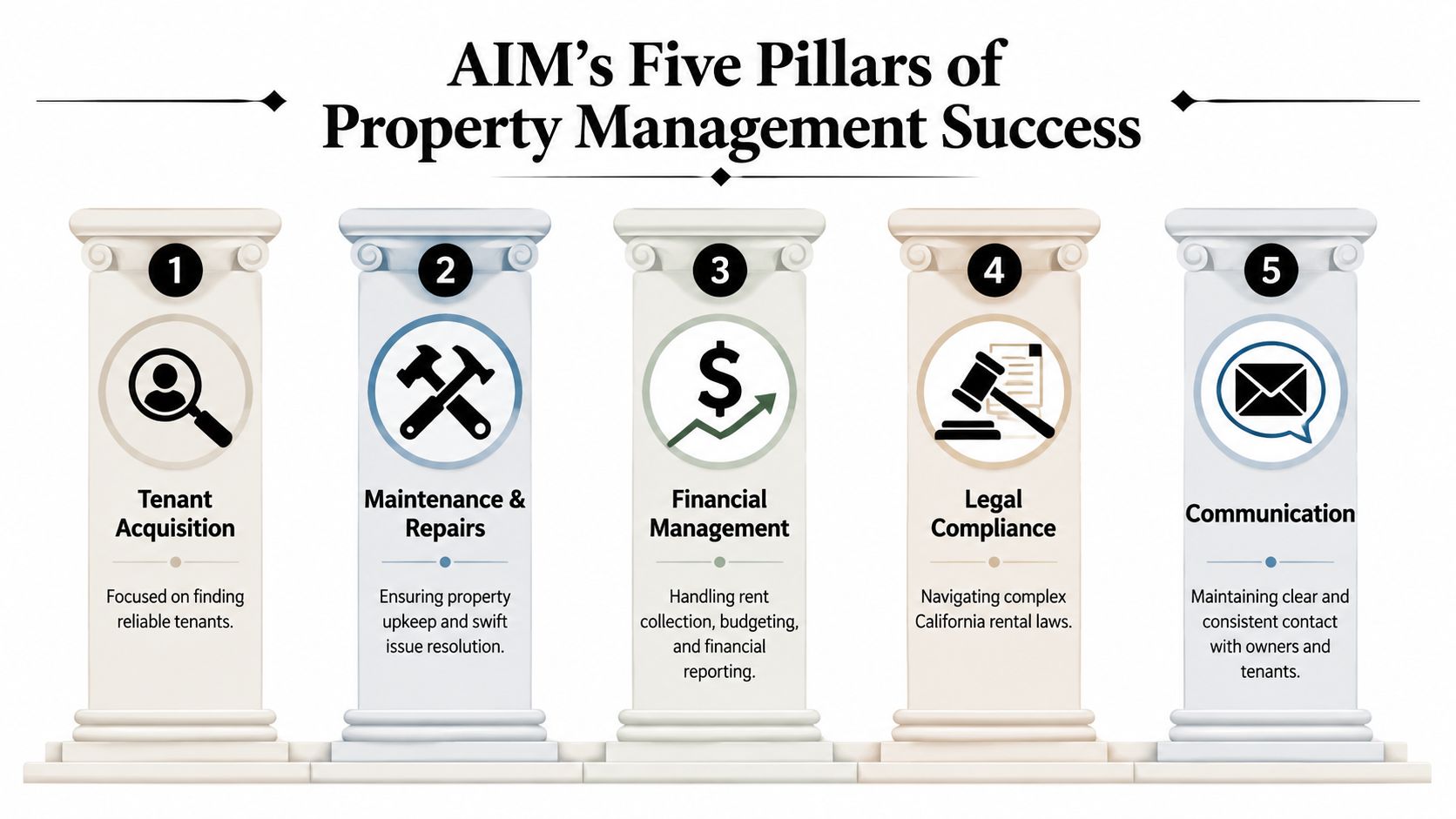
Tenant acquisition and placement
Much of the year is won or lost here.
Rigorous screening that includes credit benchmarks around 650+ FICO and income verification at 3x rent can lower eviction rates by 40% to 60%, and properly screened tenants show 85% on-time rent payment adherence, which can boost NOI by 10% to 15% annually, based on TrueDoor’s Redlands property management benchmarks.
That doesn’t mean screening should be rigid for the sake of appearing tough. It means the process should be consistent, documented, and tied to risk. The right placement is rarely just the first applicant who seems pleasant during a showing.
Owner note: A vacancy hurts. A bad placement usually hurts longer.
Financial management and rent collection
Rent collection sounds simple until it isn’t. The issue isn’t just receiving payment. It’s having a process that handles due dates, late communication, ledger accuracy, and owner reporting without confusion.
A structured system does three things well:
- Creates predictable cash flow through consistent collection procedures.
- Documents everything so there’s a clear record if a dispute appears later.
- Helps owners read performance through organized statements instead of scattered receipts and text messages.
This is one area where technology matters. Owner portals, payment tracking, and digital records aren’t luxuries anymore. They’re basic infrastructure.
Maintenance and tenant support
Deferred maintenance is one of the fastest ways to shrink returns. Not every request is urgent, but every request needs triage, communication, and follow-through. Good maintenance coordination protects the property and reduces friction with residents.
The key is balance. Owners don’t want over-repairing. They also don’t want the false savings that come from delay. A disciplined manager knows the difference between a cosmetic complaint, a habitability issue, and a repair that should be bundled into a smarter scope of work.
For owners who want to understand how inspection-driven upkeep fits into long-term asset protection, A to Z inspections is a useful reference point.
Inspections and condition control
A property should never go long stretches without objective eyes on it. Inspections create a factual record of condition, lease compliance, and emerging issues that the owner may never see firsthand.
That matters most when the property looks fine on the surface. Leaks, unauthorized changes, neglected filters, and exterior wear often become obvious only after they’ve become more expensive.
Legal compliance and communication
The final pillar is less visible but just as important. Lease documents, notices, fair process, recordkeeping, and communication standards all affect risk.
This is also where one operational partner can make life much easier. AIM PROPERTY MANAGEMENT COMPANY provides residential management for individually owned condominiums, townhomes, single-family homes, and investment properties, including tenant screening, rent collection, maintenance coordination, inspections, and document management across Inland Empire communities. For owners, the practical value is having those moving parts handled inside one process instead of scattered across separate vendors and ad hoc decisions.
When these five pillars work together, the property runs cleaner. That’s what owners are really paying for.
Navigating California’s Complex Rental Laws for Your Protection
California law turns casual landlording into a risky approach very quickly. Owners can have a solid property, a decent tenant, and good intentions, then still create problems by using the wrong notice, misapplying a rent increase, or relying on an outdated lease form.

The compliance risk most owners feel too late
One of the clearest examples is AB 1482. In the Inland Empire, navigating the cap structure matters because rent caps are set at 5% plus CPI, with a maximum of 8.8%, and a single violation can lead to fines up to $2,500. Redlands also has a 4.2% vacancy rate, according to Utopia Management’s Redlands compliance overview. In practice, that means owners need to balance legal limits with market timing and documentation.
Mistakes often occur in these areas:
- Improper rent increases: The number itself may be the issue, or the notice process may be wrong.
- Bad exemption assumptions: Owners sometimes assume a property is exempt without verifying the details.
- Notice errors: Timing, language, and delivery all matter.
- Informal decisions: A text message or verbal conversation doesn’t replace compliant documentation.
Owners who want a broader plain-English reference can review essential California rental laws for landlords, then compare that overview against the documents and procedures in use on their property.
What protection looks like in practice
Legal protection isn’t a dramatic event. It’s a routine operating habit.
A sound management process includes current lease language, compliant notices, documented communication, and organized records. It also means knowing when not to improvise. If a resident issue moves toward enforcement, the worst time to discover a paperwork gap is after the conflict starts.
For owners in Redlands, Beaumont, and Yucaipa, this matters because local operations still sit inside California’s broader legal framework. The city may feel familiar. The law still requires precision. A practical resource on California landlord tenant laws can help owners understand how many moving parts need to line up.
A short overview can help frame the issue:
The cheapest legal mistake is the one you prevent before a notice ever goes out.
That’s why legal compliance is part of management, not a separate topic to worry about later. Owners don’t need to become housing-law specialists. They do need systems that keep the property from drifting into avoidable exposure.
How to Choose the Right Redlands Property Manager
Most owners don’t need more sales language. They need a useful filter.
If you’re comparing companies, ask a simple question first. Does this manager make the property easier to own and safer to operate, or do they just promise to answer the phone? In redlands ca property management, the difference shows up in process, reporting, and condition control.
What to ask before you hire anyone
A solid screening conversation should cover these points:
- Local market fluency: Ask how they approach Redlands differently from Beaumont or Yucaipa. If every answer sounds interchangeable, that’s a warning sign.
- Inspection discipline: Ask how often they inspect, what they document, and how findings are reported.
- Maintenance philosophy: Ask how they decide between repair, monitoring, and replacement.
- Communication standards: Ask who answers owner questions, how quickly, and what reporting looks like.
- Fee transparency: Ask what is included, what is separate, and where owners usually get surprised.
Why inspections deserve extra attention
Many owners focus heavily on leasing and barely ask about inspections. That’s backward. Over time, inspections are one of the clearest indicators of whether a manager is protecting the asset or only keeping the property occupied.
Regular inspections can prevent 20% to 30% of major repair costs through early detection. For Redlands’ aging housing stock, proactive protocols can extend component life by 25% and maintain property values 10% to 12% above market due to superior condition, according to WSR’s Redlands property management analysis.
That single category tells you a lot about management quality. A manager who can’t clearly explain their inspection process usually won’t be strong on documentation, maintenance planning, or lease enforcement either.
The difference between a vendor and a manager
A vendor completes tasks. A manager makes judgment calls that protect return.
That means you should expect more than simple coordination. You should expect someone who can spot a leasing issue before it becomes vacancy, identify a maintenance pattern before it becomes capital loss, and communicate clearly enough that you can make decisions without chasing information.
If you’re building a shortlist, a practical checklist on how to choose a property management company can help you compare options in a more disciplined way.
Don’t choose the company with the smoothest pitch. Choose the one with the clearest operating process.
That standard applies whether you’re looking for Redlands property management, property management Redlands, Beaumont property management, or Yucaipa property management. The zip code changes. The evaluation logic doesn’t.
Serving Investors Across the Inland Empire in Beaumont and Yucaipa
A lot of owners don’t stop at one city. They buy in Redlands, then add a home in Beaumont, or hold a condo in Yucaipa while keeping another rental in Highland or Calimesa. That’s where regional consistency starts to matter.
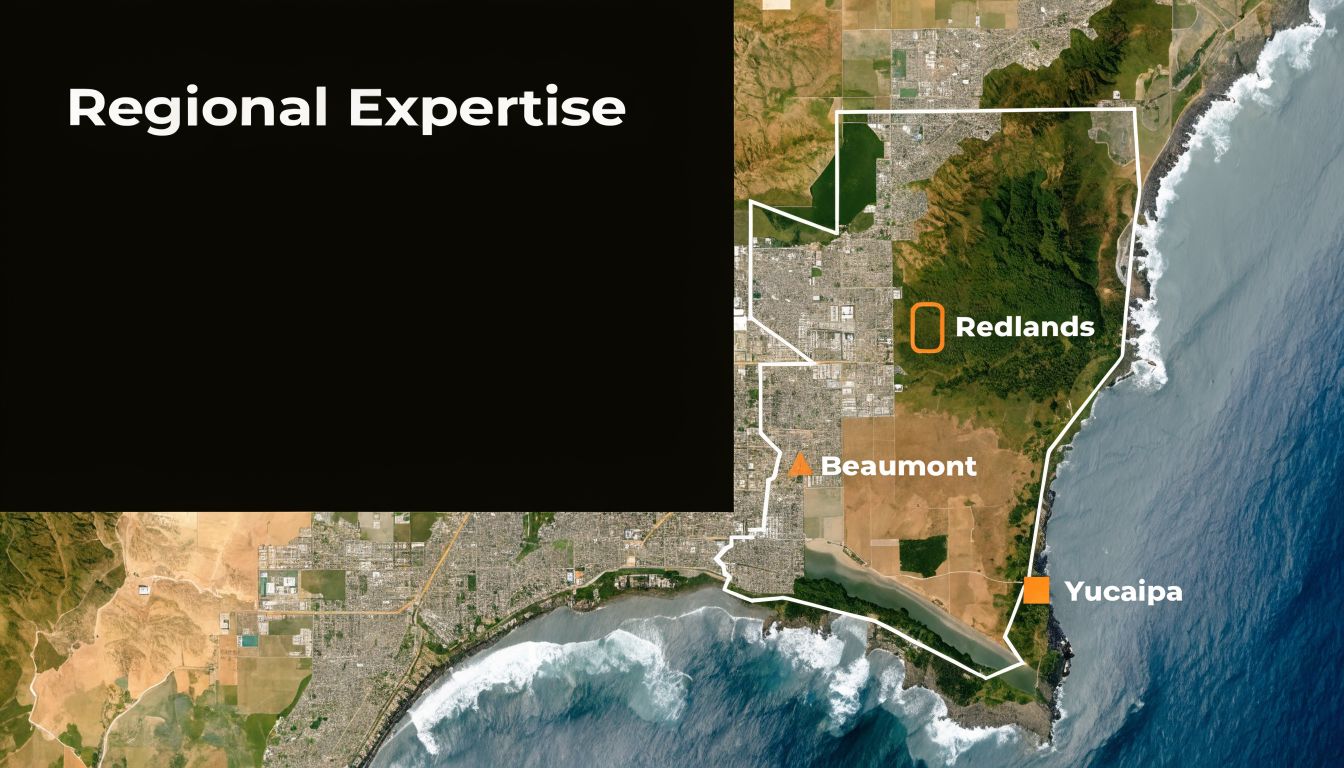
One portfolio, different local realities
Property Management Beaumont and Beaumont property management often require a different leasing conversation than Redlands. The same goes for Yucaipa property management and property management Yucaipa, where owner expectations, tenant profiles, and property types can feel different from one neighborhood to the next.
The mistake some firms make is applying one standard script to every market. That tends to create mismatched pricing, generic marketing, and maintenance decisions that ignore local context.
A regional approach works better when it stays operationally consistent but locally aware. That means:
- Leasing standards stay consistent so owners get a repeatable process.
- Pricing strategy adjusts locally based on the property and submarket.
- Maintenance coordination scales across cities without feeling disconnected.
- Owner reporting stays centralized even when properties are spread out.
Communities AIM serves
The practical benefit for owners is that one management relationship can cover multiple holdings across nearby markets, including:
| Service Area | Key Benefit |
|---|---|
| Redlands | Strong local market handling for individually owned rentals |
| Beaumont | Regional support for growing portfolios |
| Yucaipa | Tailored management for single-family homes, condos, and townhomes |
| Calimesa | Consistent oversight without juggling multiple vendors |
| Loma Linda | Organized communication and compliance support |
| Highland | Scalable management for cross-city owners |
| Banning | Day-to-day operations handled under one system |
| Mentone | Local coverage for owners who want nearby support |
For owners expanding across the Inland Empire, that consistency matters. You want one operating standard, not a different set of surprises in every city.
Answers to Your Property Management Questions
Owners usually ask practical questions near the end of the search. That’s a good sign. It means you’re not looking for vague reassurance anymore. You’re trying to decide whether to keep carrying the workload yourself or hire a property manager and put a real system around the asset.
How do I compare property management near me without wasting time
Start with process, not personality. Ask each company how they handle screening, maintenance coordination, inspections, legal notices, and owner reporting. If the answers stay broad, keep looking.
A reliable company should be able to explain how they run the property on an ordinary Tuesday, not just how they solve a crisis.
Is professional management only for large investors
No. It often matters just as much for individual homeowners who have one rental and no time for errors. A single self-managed property can still involve compliance issues, resident communication, repair oversight, and leasing risk.
That’s especially true if the home is a former residence, an inherited property, or a condo that needs closer documentation and follow-up.
What if I own property in more than one city
That’s where a regional operator becomes useful. If you own in Redlands and also need Property Management Beaumont, Beaumont property management, Yucaipa property management, or property management Yucaipa support, it’s usually easier to work with one team that can apply a consistent process across the portfolio.
What should I expect from reporting
You should expect clear income and expense reporting, organized records, and straightforward communication about repairs, renewals, and tenant issues. You shouldn’t have to reconstruct the story of your own property from scattered emails and invoices.
What services should be included in a management relationship
At minimum, owners usually want help with leasing, tenant screening, rent collection, maintenance coordination, inspections, and document handling. The exact structure can vary, but the operating basics shouldn’t.
Here’s a simple summary:
| Service Area | Key Benefit |
|---|---|
| Tenant Screening | Better resident selection and lower placement risk |
| Rent Collection | More consistent cash flow and cleaner records |
| Maintenance Coordination | Faster issue handling and better property protection |
| Inspections | Early problem detection and lease compliance visibility |
| Legal Documentation | Better process control and reduced owner exposure |
| Owner Communication | Clear updates without daily operational burden |
What’s the first step if I’m ready to hire a property manager
Start with a direct review of the property, your current lease status, and your ownership goals. A good first conversation should clarify the home type, tenant situation, condition concerns, and whether you want help with placement only or full ongoing management.
If you’re ready to stop managing late-night calls, repair follow-up, and compliance details yourself, contact AIM PROPERTY MANAGEMENT COMPANY to discuss your rental in Redlands, Beaumont, Calimesa, Yucaipa, Loma Linda, Mentone, Highland, or Banning. A straightforward consultation can show you where income is being protected, where risk is hiding, and what a cleaner management system would look like for your property.