As a landlord, your property is more than just a building; it's a critical financial asset. The big question we always get is, how to increase property value in a way that actually makes sense for your bottom line. I've found the most proven path is a smart mix of strategic physical upgrades, boosting that all-important curb appeal, staying on top of maintenance, and cultivating stable, long-term tenancies. When these pieces work together, they don't just attract higher-quality tenants—they directly boost your investment's potential.
A Landlord's Guide to Smart Property Investments
In a competitive market like California, especially in communities like Redlands, Beaumont, and Yucaipa, just owning a property isn't enough to guarantee a great return. To really maximize its value, you need a game plan that goes way beyond basic upkeep. Since we started back in 1997, we've seen a clear pattern: the most successful landlords treat their properties like a business. They're laser-focused on improvements that deliver a tangible return on investment (ROI).
This means you have to prioritize projects that don't just look good, but also improve the home's functionality and durability. After all, what good is a beautiful upgrade if it can't handle the wear and tear of daily life?
For any landlord or investor, understanding the financial side of upgrades is everything. A great place to start is knowing the kitchen renovation return on investment to boost home value, as this is often a major expense. Making smart financial decisions is really the foundation of a profitable rental. If you're looking for more on this, we've put together some thoughts on what makes a good rental property to help you build a stronger investment strategy from the ground up.
Prioritizing High-ROI Upgrades
Let's be clear: not all renovations are created equal. The trick is to zero in on changes that tenants truly value and that have a proven track record of increasing a home's worth. While a full gut-and-remodel can be a huge financial drain, I've seen smaller, targeted updates yield some seriously impressive results.
For rental properties, you're always trying to strike a balance between aesthetics and durability. An upgrade that looks incredible on day one but can't withstand a year of tenant living is a poor investment, plain and simple.
To put this into perspective, let's look at the numbers.
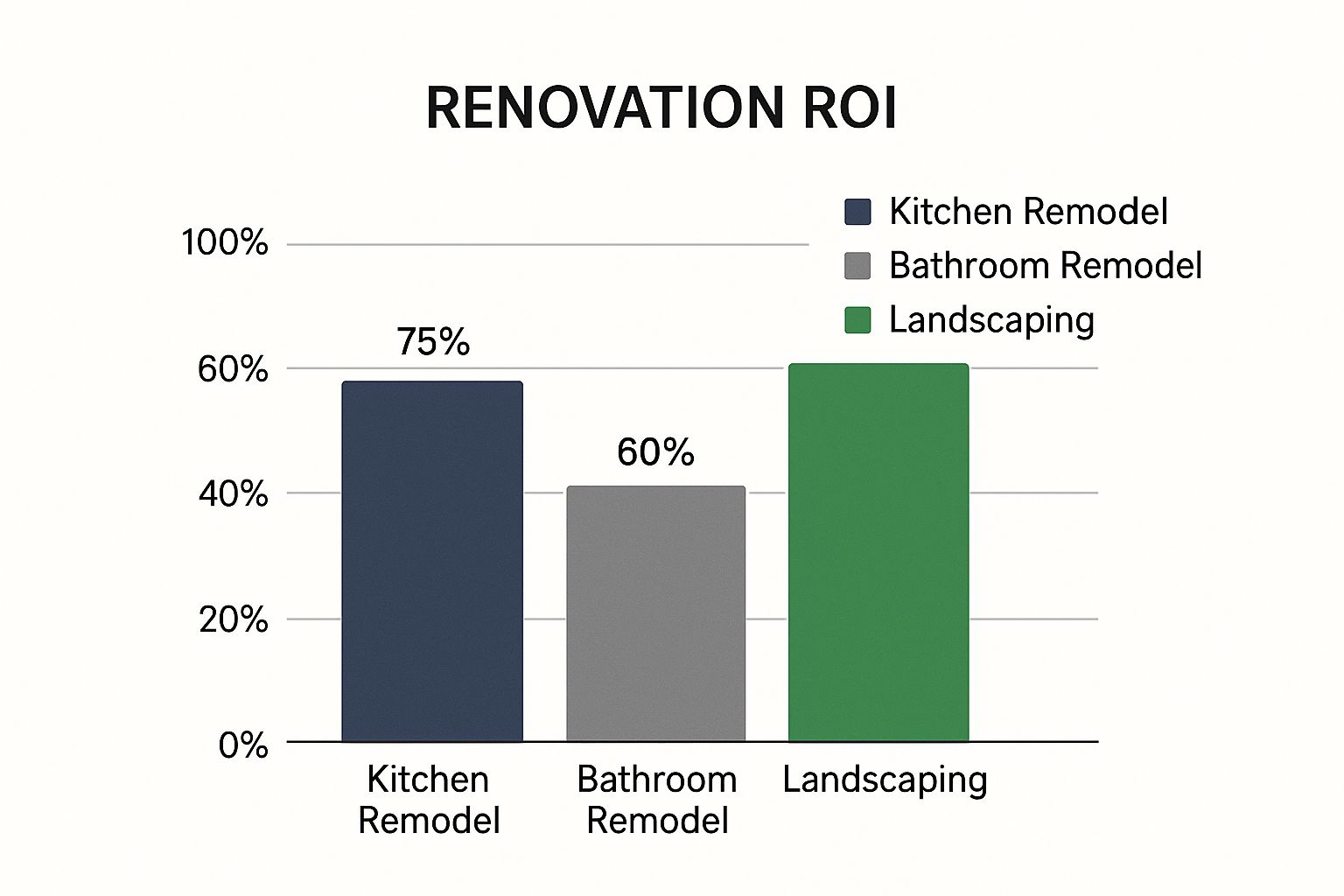
The data speaks for itself. While kitchen and bathroom remodels are solid performers, landscaping often provides the highest ROI. It just goes to show how powerful that first impression—the curb appeal—really is.
To help you plan your next move, here's a quick breakdown of where your money can make the biggest impact.
Key Strategies for Increasing Property Value at a Glance
| Strategy Area | Focus | Typical Cost | Potential Impact on Value |
|---|---|---|---|
| Curb Appeal | Landscaping, exterior paint, new front door | $500 – $7,000+ | High ROI, attracts quality tenants |
| Kitchen Updates | New countertops, refaced cabinets, modern appliances | $5,000 – $25,000+ | Strong ROI (70-80%), a major tenant draw |
| Bathroom Remodel | Updated fixtures, new vanity, re-glazed tub | $3,000 – $15,000+ | Good ROI (60-70%), improves tenant experience |
| System Maintenance | HVAC servicing, roof inspection, plumbing checks | $200 – $2,000 (annual) | Prevents costly repairs, shows pride of ownership |
These are the areas where a thoughtful investment can pay you back multiple times over, both in monthly rent and in the long-term value of your property.
Maximizing Curb Appeal for a Powerful First Impression
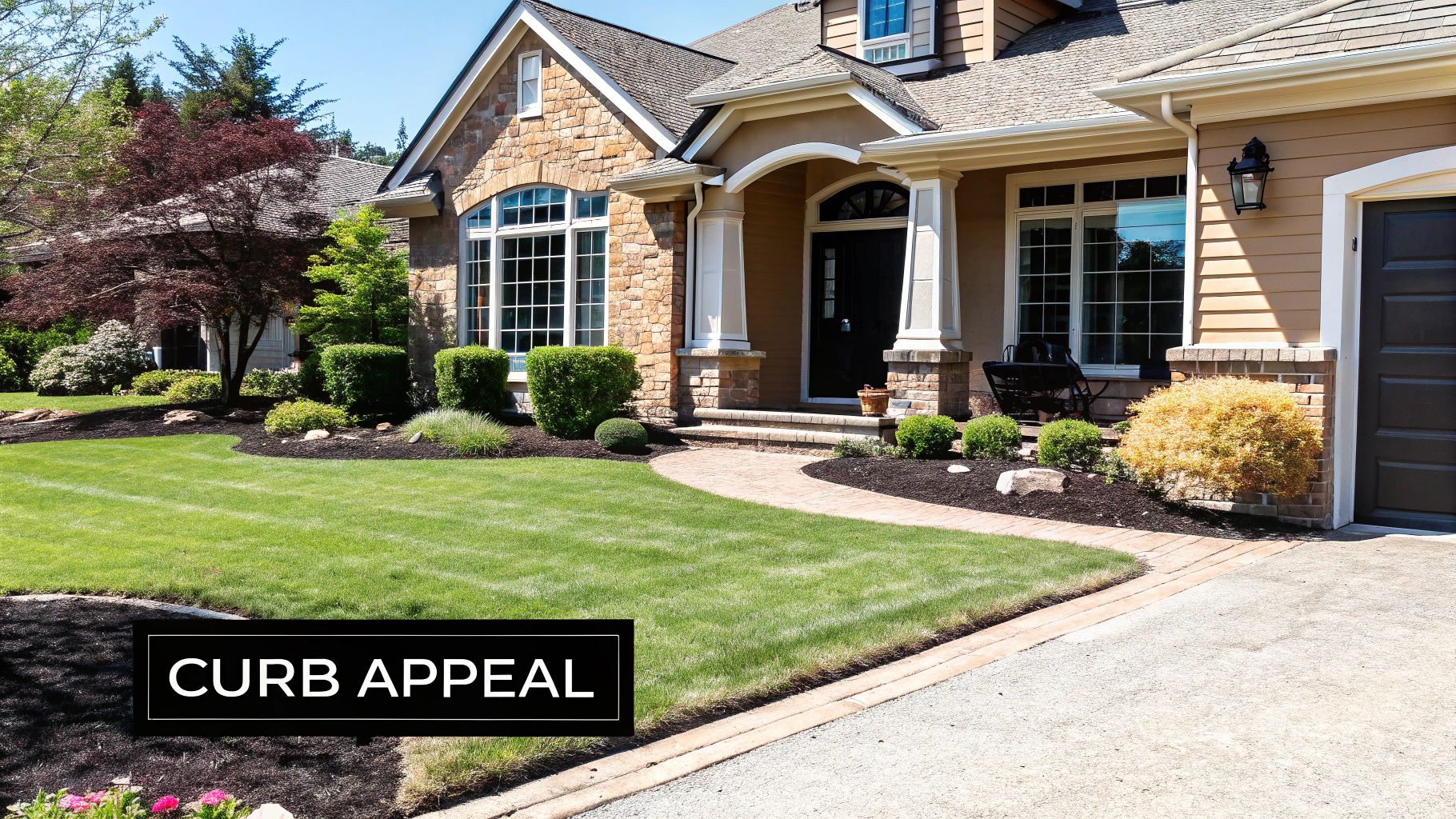
The moment a potential tenant pulls up to your property, a decision is already forming in their mind. A welcoming, clean exterior doesn't just attract better tenants; it directly boosts your property's value—both perceived and actual. That first glance is everything. It can signal a well-cared-for home or a neglected rental, making curb appeal a critical piece of your investment strategy.
This judgment happens in seconds. A tidy lawn, fresh paint, and clean walkways communicate a standard of care that tenants assume extends to the inside. In competitive rental markets like Redlands and Loma Linda, that first impression can be the deciding factor.
Start with Smart Landscaping
For landlords in Southern California communities like Yucaipa and Beaumont, landscaping has to be strategic. Sky-high water bills and constant upkeep can eat into your profits, so the goal is to create something both beautiful and practical.
Drought-tolerant plants are your best friend here. Think vibrant, hardy options like lavender, agave, or bougainvillea. These plants thrive in our local climate, need very little water once they're established, and add incredible color and texture to the property.
Consider these low-maintenance landscaping ideas:
- Ditch thirsty lawns: Replace grass with attractive decomposed granite or river rocks for pathways and ground cover.
- Incorporate native plants: They’re already adapted to the environment, which means less watering and less work for you or your tenants.
- Add fresh mulch: A new layer of mulch in flower beds is a fast way to make a yard look polished. It also helps the soil retain moisture and keeps weeds down.
This approach doesn't just save you money; it also appeals to eco-conscious tenants who prefer a sustainable, low-maintenance yard. It's a true win-win that adds value without adding a constant maintenance headache.
The Power of Small Details
You don't need a huge budget to make a real impact. In my experience, some of the most effective curb appeal projects are surprisingly affordable and can easily be done over a weekend.
A fresh coat of paint on the front door, for example, is one of the fastest ways to completely change the feel of your property's entrance. A bold color can make the home pop, while a classic, glossy black or a deep navy adds a touch of class. It’s a tiny investment for a massive visual payoff.
Your property's exterior is its business card. Simple updates like a modern mailbox, updated house numbers, and clean, functional exterior lighting not only improve aesthetics but also enhance safety and functionality—qualities that every tenant values.
These details, when added together, send a clear message: you, the landlord, care about this property. That attention to detail is often what convinces a high-quality, long-term tenant to choose your property over another.
Elevate with Exterior Fixtures and Repairs
Nothing drags down a property's look faster than outdated or broken elements. Take a walk around your property with a critical eye. Is the fence leaning or stained? Is the welcome mat falling apart? Do the light fixtures look like they’re from the past?
Updating exterior light fixtures is a perfect example of a project with a double benefit. Modern fixtures improve the home's style during the day and provide crucial safety and security at night. In the same way, repairing a damaged fence or pressure washing a grimy driveway instantly elevates the property’s condition.
While focusing on your specific property is key, it's also smart to keep an eye on broader market trends. For instance, house prices in the European Union have shown incredible growth, jumping by 57.9% between 2010 and early 2025. This data shows how larger economic forces and location can dramatically affect a property's long-term value, reinforcing why it's so important to maintain your asset to capitalize on these market upswings. You can read the full analysis on European housing trends to see just how much geography plays a role.
These small, consistent improvements ensure your investment is always polished and ready to command top dollar in any market.
Smart Interior Upgrades That Deliver High ROI
Once a potential tenant steps inside, the interior has to seal the deal. This is where they start picturing their life in your property. But when it comes to upgrades, not all improvements are created equal—especially in a rental. Your goal isn't just to make it look nice; it's to make smart, durable choices that give you a real return on your investment.
Forget about sinking a ton of cash into a full-scale gut job. The real secret is focusing on cost-effective updates that pack a major visual punch. This is particularly true for the kitchen and bathrooms, which are always the two rooms tenants scrutinize the most. A small, strategic investment here can dramatically lift the entire feel of the property, making it far more desirable and justifying that higher rent you're aiming for.
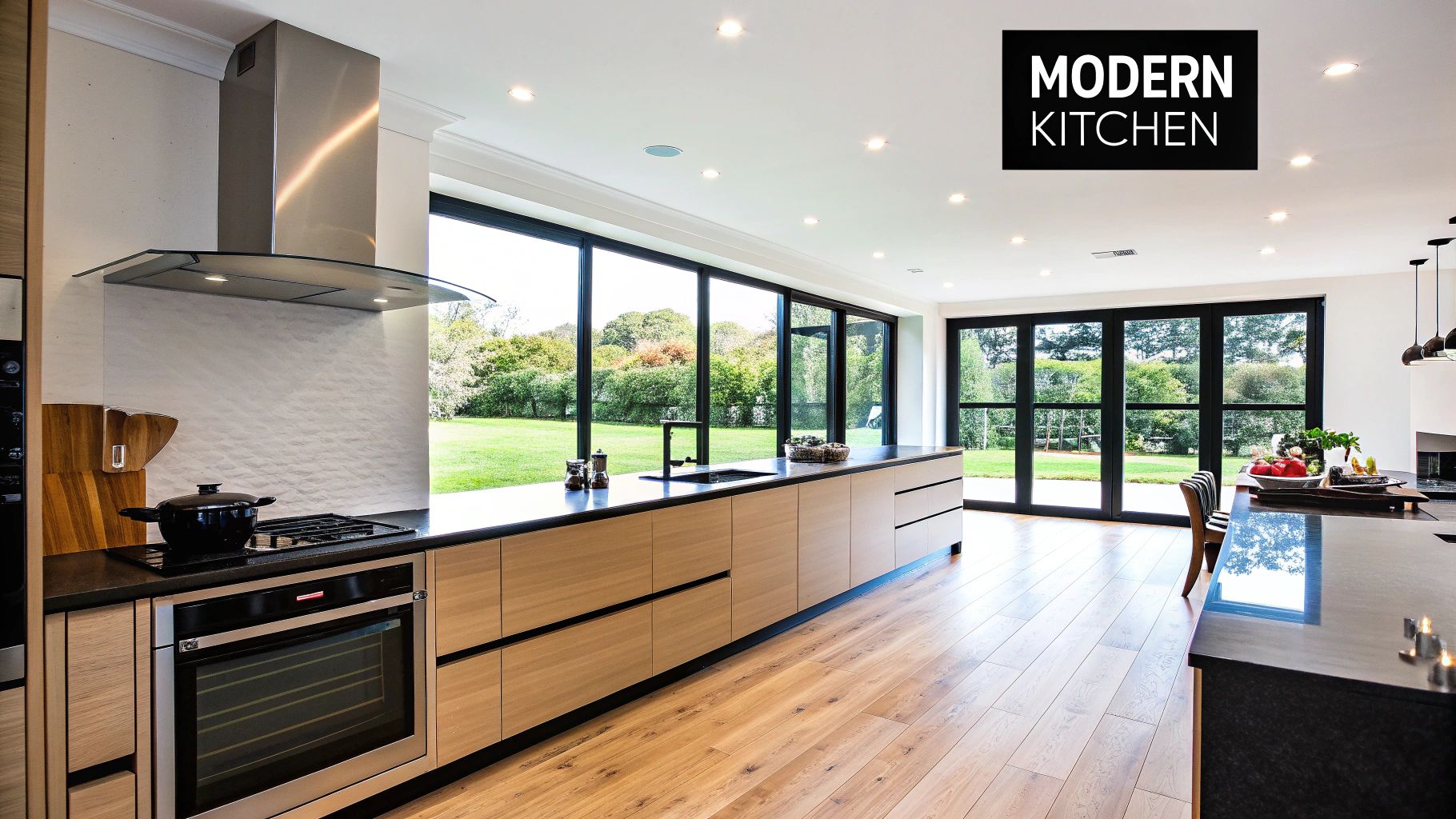
Target the Kitchen for Maximum Impact
There's a reason they call the kitchen the heart of the home. It’s where your tenants will spend a huge chunk of their time, and an outdated, dingy kitchen can be an instant deal-breaker. The good news? You don't need to tear everything out to create a modern, appealing space.
A few strategic, smaller updates can completely transform the room:
- Cabinet Refacing or Painting: A full cabinet replacement is a budget-killer. Instead, consider refacing the doors or giving them a professional paint job. A clean, modern neutral like white or light gray works wonders.
- Update Hardware: This is one of the fastest, cheapest fixes. Swap those old, dated knobs and pulls for sleek, modern hardware in matte black or brushed nickel. It instantly modernizes the entire look.
- Install Durable Countertops: Laminate often looks cheap, and granite can stain. I've found that quartz is the perfect middle ground—it’s incredibly durable, non-porous, and delivers that high-end look tenants love without the maintenance headache.
- Replace the Faucet: A leaky, corroded faucet just looks terrible. A new, high-arc model is an inexpensive upgrade that boosts both function and style.
These targeted improvements refresh the most important room in the house without the massive cost of a gut renovation. And once you've made these updates, it's crucial to showcase them properly. Knowing how to advertise your rental property effectively is key to attracting tenants who will appreciate—and pay for—these new features.
Refresh Bathrooms for a Clean, Modern Feel
Right after the kitchen, the bathroom is the other space that can make or break a tenant's decision. A clean, updated bathroom sends a clear signal that the property is well-maintained. Just like the kitchen, you can get a high-end look with just a few key changes.
Start by replacing the vanity if it's old and worn. You can find a simple, modern one for just a few hundred dollars, and it makes a massive difference. While you're at it, update the mirror and light fixture above it to something more contemporary. Another fantastic trick is re-glazing an old tub. It’s far cheaper than a full replacement and can make a stained, yellowed tub look brand new.
Focus on fixtures and finishes. A new showerhead, modern faucets, and updated towel racks are small details that, together, create a polished, hotel-like feel. It's an appeal that adds real, tangible value.
Choose Flooring That Lasts
Flooring takes an absolute beating in a rental property, so durability is non-negotiable. Carpet might feel cozy at first, but it stains easily, holds odors, and often needs to be replaced between every single tenant. That's a recurring expense you really want to avoid.
The smartest investment for rental flooring right now is Luxury Vinyl Plank (LVP). It's waterproof, scratch-resistant, and does an amazing job of mimicking the look of real hardwood. It's also relatively easy to install and maintain, making it the perfect choice for landlords who need an attractive, long-lasting solution that can handle the rigors of rental life.
Beyond the big stuff, even smaller touches can boost your property's appeal. Think about window treatments. The right coverings offer privacy, control light, and can even help lower energy bills—a major selling point for tenants. If you want some ideas, you can discover why plantation shutters are a smart upgrade that bring a timeless look to any room.
The Hidden Value of Proactive Maintenance
Let's talk about the unsung hero of not just preserving, but actively increasing your property's value: preventative maintenance. Putting off the small stuff—a dripping faucet, a loose shingle, a struggling AC unit—is a guaranteed way to find yourself facing costly emergency repairs that eat away at your investment.
A proactive approach, on the other hand, sends a powerful message to both tenants and appraisers. It says, "this property is a well-cared-for asset." Think of it this way: a sudden plumbing leak can easily cause thousands in water damage, a cost that dwarfs what you would have spent on a simple annual inspection. By catching issues early, you protect your property and keep it in peak condition, which is a cornerstone of knowing how to increase property value for the long haul.
Establishing a Routine Maintenance Schedule
A solid maintenance plan isn't about scrambling to fix what's broken; it's about consistency and preventing things from breaking in the first place. This means creating a schedule to regularly inspect and service the core systems of your property.
Here are the essential systems I always tell my clients to focus on:
- HVAC Systems: Get these professionally serviced twice a year—once in the spring for the AC and again in the fall for the heat. This is non-negotiable in places like Banning or Beaumont. It keeps the unit efficient, extends its lifespan, and prevents failures when your tenants need it most.
- Plumbing: You need annual checks for slow leaks, inspections of water heaters for sediment buildup, and main drains snaked to prevent clogs. A tiny, unnoticed leak under a sink can fester for months, leading to mold and rot.
- Roof and Gutters: Inspect the roof twice a year and after any major storm. Gutters need to be cleaned every fall and spring to stop water from damaging the roof, siding, and even the foundation.
- Electrical Systems: Periodically check outlets and test GFCI receptacles. While you'll need a pro for the big stuff, these simple checks can spot potential fire hazards before they become a disaster.
To really get ahead of the game, I recommend using an essential home maintenance checklist to keep you organized and on track throughout the year.
The Financial Power of Proactive Care
Keeping up with maintenance does more than just sidestep big repair bills; it directly boosts your bottom line. A well-maintained property justifies higher rent. It's simple, really. When tenants see that you invest in the property's upkeep, they are more willing to pay a premium and are often more inclined to care for the home themselves.
This level of care is also a huge factor in fostering long-term tenancies. Happy tenants in well-kept homes are far more likely to renew their leases, which is a core strategy for building stable, predictable value. This approach helps you avoid the high costs and income gaps that come with frequent turnover.
Pro Tip: Document every single repair and service visit. This creates a comprehensive history of care that is invaluable when it's time to sell or refinance. It's concrete proof that the property has been diligently maintained, justifying a higher valuation.
At AIM, we focus exclusively on these valuable long-term relationships. You can learn more about why regular property maintenance is key for Highland and Mentone rentals right here on our blog.
Ultimately, proactive maintenance is an investment, not an expense. When you partner with an experienced property manager who has established relationships with trusted vendors—like we have since 1997 in communities from Redlands to Calimesa—you ensure this work gets done efficiently and cost-effectively. It’s a foundational strategy for protecting your asset and maximizing its long-term financial growth.
Why Long-Term Rentals Build Sustainable Value
When you’re investing in property, it’s easy to get fixated on chasing the highest possible monthly income. That siren song often pulls landlords toward the short-term rental market, with its promise of high nightly rates. But here’s something I’ve learned over our many years in business: knowing how to increase property value is less about quick cash and more about building a foundation of consistency and stability. Those are the real drivers of long-term financial health.
The reality of short-term rentals is a frantic cycle of constant marketing, cleaning, and unpredictable occupancy. It’s a huge operational burden. More than that, it introduces a level of risk and wear and tear that can actually chip away at your property's value over time. A long-term rental strategy, on the other hand, is all about predictable income, reduced expenses, and preserving the asset you’ve worked so hard for.
The Financial Advantage of Stability
One of the biggest wins with a long-term tenant is the massive reduction in turnover costs. Think about it: every time a short-term guest checks out, the meter starts running again. You're paying for professional cleaning, restocking supplies, marketing for the next booking, and managing the constant check-ins. Those expenses pile up fast.
With a long-term tenant, you might deal with a turnover once every few years, not dozens of times a year. This creates a predictable income stream that appraisers and potential buyers absolutely love. A property with a solid, documented rental history is always seen as a less risky, more valuable asset.
This stability is even more critical in the current economic climate. Real estate markets globally are showing that properties with strong, consistent rental income are in the best position to appreciate. For instance, despite some market pressures, experts project that a mix of moderate capital growth and dependable rental income will be the key drivers for rising property valuations, with global property prices expected to see a steady 3.25% year-on-year growth by the end of 2024. This trend just highlights why a stable, income-producing asset is so valuable.
Reduced Wear and Tear
Picture the difference between how someone treats a hotel room for a weekend versus how they treat their own home. It’s night and day. Short-term guests are usually in a vacation mindset and are just less invested in the property’s upkeep. This naturally leads to more frequent wear on everything from appliances and flooring to furniture.
Long-term tenants are different. They have a real interest in maintaining the space they call home.
- Pride of Ownership: They’re far more likely to report maintenance issues right away, which stops small problems from snowballing into expensive repairs.
- Less Movement: You don't have luggage being dragged across floors every few days or a revolving door of guests who don’t know how to use the appliances properly.
- Personal Investment: They often contribute to the home's care through their own cleaning and minor upkeep, treating the property with a level of respect you just don't get from temporary guests.
When you build a positive relationship with your tenants, you encourage them to see the property as their own. That sense of ownership is priceless for preserving the condition—and ultimately, the value—of your investment.
A Smarter Strategy for Local Markets
In communities like Redlands, Beaumont, and Loma Linda, the demand for quality long-term housing is always strong. Here at AIM, we've focused exclusively on this market since 1997 because we’ve seen it work time and time again. Our experience has shown us that the most successful investments are the ones that prioritize stability over the promise of a quick buck.
Choosing the long-term path not only simplifies your role as a landlord but also strengthens your asset's financial standing for the future. For a deeper look at this, you can read our guide on short-term vs. long-term rentals and what works best in Redlands. It’s a strategic choice that truly pays dividends for years to come.
Partner with AIM to Maximize Your Property's Value
Knowing all the ways to increase your property's value is one thing. Actually finding the time, local expertise, and trusted vendors to make it happen is a completely different ballgame.
This is exactly where having a dedicated partner makes all the difference for property owners in Redlands, Loma Linda, and the surrounding communities. It’s about turning good ideas into tangible results.
Executing upgrades, managing constant maintenance, and building solid tenant relationships takes a ton of effort. For busy investors, this hands-on work can quickly become overwhelming, pulling focus away from the bigger picture of growing your portfolio. We handle the day-to-day grind so you can get back to focusing on your investment strategy.
An Experienced Local Partner
Since 1997, AIM has been deeply rooted in the Inland Empire. We've been serving communities from Beaumont and Calimesa to Yucaipa and Highland for decades.
Over that time, we’ve built mature, trusted relationships with the most reliable and cost-effective vendors in the area. When a repair is needed or you're planning an upgrade, we know exactly who to call to get quality work done at a fair price—no guesswork involved.
This local experience means we understand the specific needs of properties in this region. We know what tenants are looking for in Mentone and Banning, and we apply that insight to every decision we make for your property. Our goal is to ensure your investment is always positioned to perform at its best.
A Transparent and Fair Financial Structure
We believe in a straightforward approach that directly benefits your bottom line. Our fee structure is designed for complete clarity and value, helping you improve your net operating income—a key driver of your property's overall valuation.
- Low Management Fee: We charge a competitive 7.9% monthly management fee, which is significantly lower than many other companies in the area.
- Simple Placement Fee: Our tenant placement fee is a flat $750. There are no hidden add-on costs or surprise charges.
This transparent pricing model ensures more of your rental income stays right where it belongs: in your pocket. That cash flow directly contributes to a healthier, more valuable asset.
By aligning our success with yours through a fair and simple fee structure, we help you maximize profitability and long-term appreciation. Your financial goals are our primary focus.
Our dedicated focus on long-term rentals is a perfect match for a strategy built on stable, sustainable growth. We handle the complexities of tenant screening, rent collection, and maintenance, allowing you to reap the rewards of your investment without the hands-on stress.
Choosing the right partner is a critical step. Our guide on how to find a good property manager can provide some valuable insights to help you make that decision. Let AIM put our decades of experience to work for you.
Landlord FAQs: Smart Ways to Boost Your Property's Value
When you're focused on how to increase your property's value, it's normal to have a few questions pop up. After all, making the right call is what protects and grows your investment. Here are some of the most common questions we get from landlords right here in our local communities.
What’s the Single Best Bang-for-Your-Buck Upgrade I Can Make?
Hands down, a fresh coat of neutral paint paired with modern lighting fixtures gives you the biggest return. It's a relatively low-cost project that can make a rental feel brighter, cleaner, and more current almost overnight.
That initial impression has a huge psychological impact on prospective tenants and can absolutely justify a higher rent—all for a pretty minimal investment on your part.
How Much Do Long-Term Tenants Really Affect My Property's Value?
They're absolutely critical for building real, sustainable value. A stable, long-term tenant means fewer turnover costs, less wear and tear from constant move-ins and move-outs, and a predictable income stream you can count on.
Appraisers and potential buyers love to see that kind of stability. It signals lower risk and reliable cash flow, which directly boosts your property's overall valuation. This is a big reason why AIM does not manage short-term rentals; the volatility and higher operational costs of that model can actually work against a property's worth.
The stability a long-term tenant provides isn't just about getting rent on time. It's about turning your property into a predictable financial asset that’s far more attractive to lenders and future buyers, ultimately increasing its market value.
If I Have to Choose, Should I Upgrade the Kitchen or the Bathroom First?
Both are huge draws, but if you can only tackle one, start with the kitchen. For most people, it's the heart of the home and a major factor when they're deciding where to live.
You don't even have to do a full gut-and-remodel. Simple kitchen upgrades like new cabinet hardware, a modern faucet, or a clean, new backsplash can deliver a significant visual and functional punch for a modest cost. An updated kitchen is one of your most powerful marketing tools.
What's a Realistic Maintenance Budget to Protect My Property's Value?
A good rule of thumb we've relied on for years is to set aside 1-2% of the property's value for annual maintenance.
So, for a $500,000 property in a city like Redlands or Loma Linda, you're looking at a budget of $5,000 to $10,000 a year. This fund should cover routine upkeep—think HVAC servicing and gutter cleaning—while also giving you a cushion for those unexpected repairs. Staying ahead of maintenance is the best way to stop small issues from snowballing into big, value-killing problems. It’s a cornerstone of how we manage properties.
The most effective way to protect and grow your asset is to have an experienced team in your corner. At AIM PROPERTY MANAGEMENT COMPANY, we’ve been helping landlords maximize their investments in Redlands, Beaumont, Calimesa, Yucaipa, Loma Linda, Mentone, Highland, and Banning since 1997. With our straightforward low 7.9% management fee and $750 placement fee with no add-on fees, we deliver transparent service that’s focused on your bottom line.