Raising your rent is about more than just picking a new number. It’s a delicate process, and getting it wrong can cost you a great tenant. The right way to do it involves a smart mix of market research, legal know-how, and clear communication. This guide will show you how to increase rent responsibly in California's competitive Inland Empire market.
Your Guide to Strategic Rent Increases in the Inland Empire
Boosting your rental income is a key part of maximizing your property's return, but landlords in areas like Redlands, Beaumont, and Yucaipa know it’s a careful balancing act. A clumsy, out-of-the-blue rent hike can lead to costly vacancies and sour tenant relationships. A well-planned increase, on the other hand, can significantly improve your bottom line without driving good tenants away.
Success really comes down to three things. It all starts with analyzing what similar properties are actually renting for. Then, you need to make smart, value-adding upgrades that tenants will notice and appreciate. Finally, you have to navigate California’s complex rent cap laws, like AB 1482, and handle all communication professionally and legally.
This simple flow chart breaks down the process.
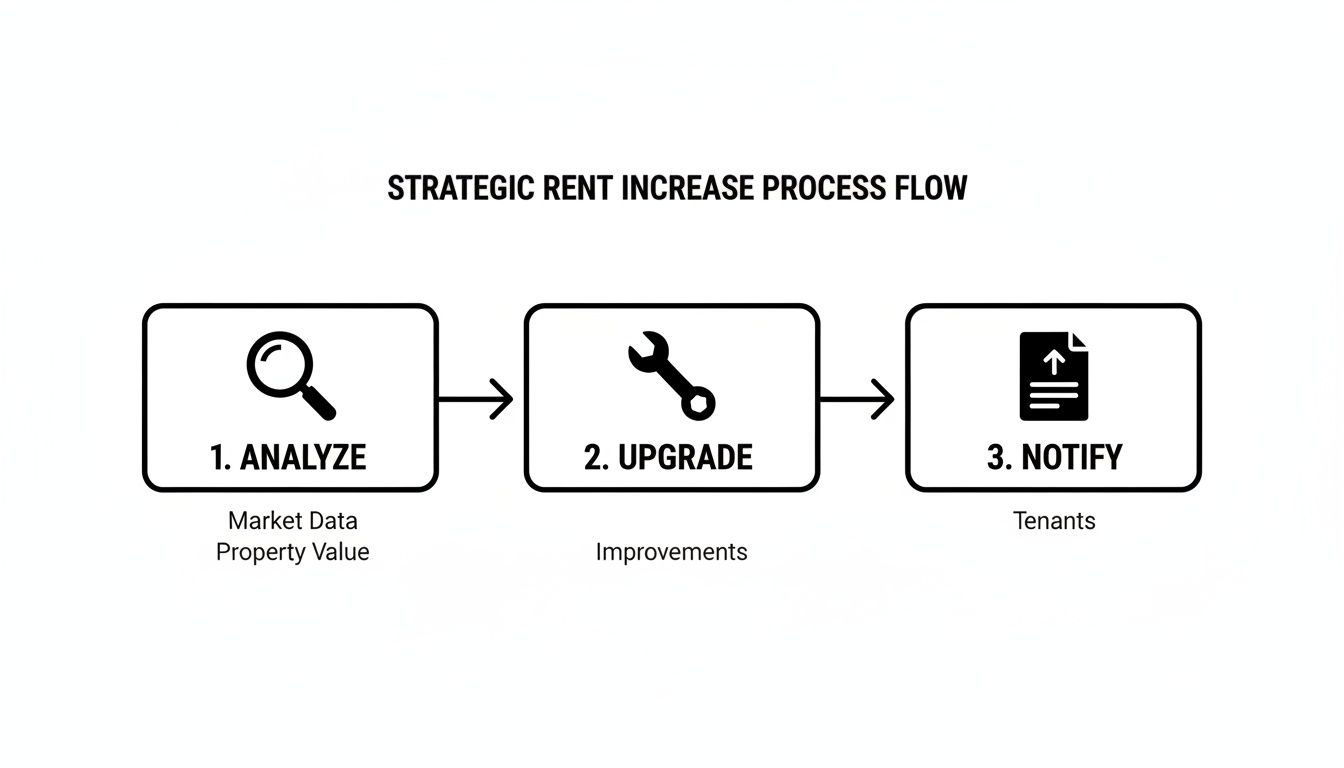
As you can see, it's a straightforward journey: first you analyze the market, then you upgrade the property, and finally, you give your tenant proper legal notice.
The Foundation of a Fair Increase
The goal here is to improve your ROI while keeping the great tenants you already have. This is where a methodical approach really pays off. Instead of just surprising a tenant with a higher bill, a strategic increase is backed by clear, justifiable reasons.
A successful rent increase feels fair to the tenant because it's supported by visible improvements, market realities, and respectful communication. It transforms a potentially negative interaction into a professional business transaction.
For owners with properties in competitive markets like Banning or Highland, getting these details right is everything. It's a lot to handle—researching comps, coordinating contractors, and making sure every legal notice is perfect. Frankly, it's a huge time commitment.
This is exactly why so many owners turn to a property manager. Partnering with a local expert like AIM Properties takes the entire burden off your shoulders. We ensure every step is compliant, expert-led, and designed to protect your investment. We serve the following communities: Redlands, Beaumont, Calimesa, Yucaipa, Loma Linda, Mentone, Highland, and Banning, California. If you're weighing your options, learning more about how our Inland Empire property management services can benefit your specific property is a great first step.
Justifying the New Rate
To make your increase feel reasonable and justified, it needs to be tied to tangible value. The table below outlines a few key factors and the actions you can take to support a higher rent.
Quick Guide to Justifying Your Rent Increase
| Factor | Landlord Action | Why It Matters |
|---|---|---|
| Market Rates | Conduct a thorough Comparative Market Analysis (CMA) of similar local properties. | Shows your new rate is aligned with the current market, not an arbitrary number. |
| Property Condition | Invest in meaningful upgrades like new flooring, modern appliances, or fresh paint. | Tenants are more willing to pay more when they see direct improvements to their home. |
| Legal Compliance | Adhere strictly to state and local rent cap laws (e.g., AB 1482) and notice periods. | Following the rules builds trust and avoids costly legal disputes. |
| Tenant Relationship | Provide clear, professional, and early communication about the upcoming change. | Respectful communication helps retain good tenants and prevents misunderstandings. |
By connecting your rent increase to these concrete actions, you're not just raising a price—you're demonstrating the value your tenant receives in return. This guide will walk you through the essential steps, whether you decide to manage it yourself or seek professional support from our team.
Get the Price Right: How to Master Your Market Analysis
Before you even think about raising the rent, you have to do your homework. Justifying an increase isn't about what you feel the property is worth; it's about what the market data says it's worth. This is where a solid market analysis comes in, ensuring your new rate is both competitive enough to keep good tenants and profitable for you.
For property owners in the Inland Empire, from Redlands to Loma Linda, this isn't just a step—it's the foundation of a smart rent strategy.

Finding True Rental Comparables
The heart of your analysis is finding true "comps"—comparable properties that have recently rented. You can't just pull up any three-bedroom house in Yucaipa and call it a day. You need to find its direct competitors.
Focus on rentals that are a close match in these key areas:
- Location: Stick to the same neighborhood, if not the same street. A property's rental value can shift dramatically just a few blocks over.
- Property Type: Compare your single-family home to other single-family homes, not duplexes or condos. The tenant pools are completely different.
- Size and Layout: Look for similar square footage and the same number of bedrooms and bathrooms. A sprawling 2,500 sq. ft. 3-bed isn't a fair comp for a cozy 1,500 sq. ft. one.
- Condition and Age: Is your place freshly renovated or showing its age? Find comps that are in a similar state of repair.
- Amenities: Don't forget the extras that tenants pay for, like a two-car garage, a fenced yard, central AC, or an in-unit washer and dryer.
A common mistake we see is landlords comparing their beautifully updated rental to a dated property that needs work. To set an accurate price, you need an apples-to-apples comparison of what a tenant truly gets for their money.
While it's geared toward sales, understanding the core principles in guides like Mastering Real Estate Pricing Strategies is incredibly useful, as the same logic applies to renting.
Gathering and Making Sense of the Data
Once you know what you’re looking for, you have to find it. Zillow and Realtor.com are decent starting points, but they don't give you the full picture. A listed price isn't always the rented price.
Our team digs deeper with a multi-pronged approach:
- Analyze Active Listings: We check what your current competition is asking. A key detail is how long a property has been on the market. If it’s been sitting for over 30 days, it’s a good sign it’s overpriced.
- Look at Rented Listings: This is the goldmine. Finding what properties actually rented for shows you what local tenants are willing to pay right now.
- Drive the Neighborhood: We get a feel for the area on the ground. Driving through communities from Banning to Highland and spotting "For Rent" signs gives us intel on what independent landlords are asking.
This research helps you zero in on a realistic price range. For instance, in a tight market, having reliable, long-term tenants means you can confidently align with higher market rates without the risk of long vacancies.
Local Economic Factors That Drive Rent
Your property doesn't exist in a bubble. The bigger economic picture in communities like Calimesa or Mentone has a huge impact on rental demand and what people can afford.
We always keep an eye on these local indicators:
- Local Job Growth: A booming job market brings new people to town, and they all need a place to live. This drives up demand for rentals.
- Vacancy Rates: A low vacancy rate (anything below 5%) signals high demand and gives landlords more pricing power. High vacancy means the market is saturated, and you’ll need to be more competitive.
- New Construction: A wave of new apartment complexes or housing developments can increase supply, which can put a damper on how much you can raise rents.
A professional approach to Beaumont property management means we are constantly tracking these moving parts. It’s a lot to juggle, but this data-first method is the only way to be certain your new rent is both fair and achievable. This analysis is also the first step in properly assessing your investment’s financial health, which you can learn more about in our guide on how to calculate the cap rate on a rental property.
Boosting Property Value to Justify a Higher Rent
Once you’ve done your market homework, it’s time to look at your own property. It’s a simple truth: tenants are much more willing to accept a rent increase when they can see tangible improvements in their home. Investing in your property isn't just an expense; it’s a powerful way to justify higher rent and protect your asset for the long haul.

This isn’t about just fixing what’s broken. We’re talking about smart, strategic upgrades that boost your property's appeal and make a higher rent feel completely fair. For landlords in competitive areas like Highland, Banning, and Calimesa, these improvements are what will make your property stand out from the rest.
Focusing on High-ROI Cosmetic Updates
You don’t have to tear down walls to make a huge impact. Quick, cost-effective cosmetic touches can dramatically shift how a property feels, giving you solid ground to stand on when adjusting the rent.
Think about that all-important first impression. These smaller projects pack a serious punch:
- A Fresh Coat of Paint: Never, ever underestimate the power of paint. Modern, neutral colors like greige, a soft white, or a light gray can instantly make a room feel bigger, cleaner, and more up-to-date.
- Modern Fixtures: This is a weekend project with immediate payoff. Swap out dated brass doorknobs, cabinet pulls, and light fixtures for modern brushed nickel or matte black alternatives. The difference is night and day.
- Updated Window Treatments: Getting rid of old, yellowed plastic blinds and installing fresh cordless blinds or even simple, stylish curtains elevates a room’s entire look and feel.
These updates are relatively cheap but send a clear message: this property is modern and well-maintained. That small investment often provides the visual proof needed to make a rent increase much easier for a tenant to accept. To effectively justify a higher rent, you need to invest in improvements that boost your property's worth. For more ideas, you can learn how to increase property value through a variety of strategic renovations.
Investing in Functional Upgrades Tenants Demand
While cosmetic fixes are about looks, functional upgrades are about the living experience. These are the improvements that tenants in markets from Redlands to Loma Linda are actively looking for—and are willing to pay more for.
Think about upgrades that add real convenience to a tenant's daily life:
- New Appliances: An old, inefficient dishwasher or a tired-looking stove can be a daily frustration. Upgrading to a matching set of stainless steel kitchen appliances or a new, energy-efficient washer and dryer is a huge selling point.
- Smart Home Features: You’d be surprised how much tenants appreciate modern tech. Adding a smart thermostat, a keyless entry lock, or a video doorbell makes your property feel more secure and sophisticated.
- Flooring Upgrades: Tearing out worn, stained carpet and installing durable Luxury Vinyl Plank (LVP) flooring is a complete game-changer. It’s attractive, incredibly easy to clean, and stands up to wear and tear, making it a favorite for tenants and landlords alike.
Proactive maintenance is part of this equation. Identifying and fixing small issues before they become major problems not only saves you money but also shows tenants you’re a responsive and responsible owner.
Even as some markets cool, proactive upkeep remains a key differentiator. While some data points to rent declines for smaller units, median rents are still way above pre-2020 levels. A professional Yucaipa property management firm knows that regular property inspections help catch issues early and strengthen the case for premium rent—a crucial factor in maximizing your returns.
Creating Desirable Amenities and Spaces
In today's rental market, lifestyle amenities can be the one thing that makes a great tenant choose your property over another. You want to think beyond just four walls and a roof—what makes your property a place someone would love to live?
Consider these high-impact amenity improvements:
- In-Unit Laundry: If your property doesn't have it, adding a washer and dryer hookup is one of the single best investments you can make. The convenience is a massive draw that almost always commands higher rent.
- Improved Outdoor Living: For single-family homes in Mentone or Beaumont, an inviting outdoor space is a huge plus. This could be as simple as adding a small patio, fixing up a deck, or making sure the backyard is fully and securely fenced.
- Enhanced Storage: You can never have too much storage. Adding built-in shelving in closets or even a small, secure storage shed in the backyard is a practical amenity that helps justify a bump in rent.
By making these thoughtful improvements, you are investing directly in your property’s income potential. For more in-depth strategies, check out our guide on how to increase property value for long-term growth.
Navigating California Rent Increase Laws and Notices
You’ve done the market research and made smart improvements to your property. Now comes the part where many landlords stumble: the legal paperwork. Getting this step wrong can unravel all your hard work, potentially voiding the rent increase, opening you up to legal challenges, and souring your relationship with an otherwise great tenant.
In California, knowing how to increase rent is really about knowing the law. The state’s rental landscape is a complex maze of statewide and local rules. A simple miscalculation or an incorrect notice period can create major headaches. This is one area where you absolutely have to get it right.
For most investment properties in California, the key piece of legislation to master is the Tenant Protection Act of 2019, better known as AB 1482. This law created a statewide rent cap, and understanding its nuances is your first step.
Understanding California's Rent Cap (AB 1482)
The Tenant Protection Act limits how much you can raise the rent each year on properties that qualify. Nail this calculation, and you’re on your way to a compliant increase.
The formula is 5% plus the percentage change in the regional Consumer Price Index (CPI). The crucial detail? The total increase can never go over a hard cap of 10% in any 12-month period. For example, if your region's CPI is 3.5%, your maximum increase would be 8.5% (5% + 3.5%). If the CPI was 6%, the 10% cap would kick in, preventing you from going higher.
It's absolutely critical to use the right CPI figure for your specific area. The CPI for the Riverside-San Bernardino-Ontario metro area—which covers cities like Redlands and Beaumont—is different from Los Angeles or San Francisco. Using the wrong one can make your increase illegal.
However, not all properties fall under AB 1482. Major exemptions include:
- Single-family homes and condos not owned by a corporation or REIT, but only if the tenant was properly notified in the lease that the property is exempt.
- Properties built within the last 15 years.
- Duplexes where the owner lives in one of the units.
Navigating these exemptions is tricky. A property might seem exempt, but if you didn't include the right disclosure in the original lease, it's not. Misinterpreting this is a common and costly mistake that can lead to an illegal rent increase.
This is where having an expert on your side becomes a game-changer. A Yucaipa property management firm, for instance, stays on top of these rules, knowing exactly which properties qualify and which don't. It completely removes the guesswork for you.
The Critical Importance of Proper Written Notice
Once you've figured out the legal rent increase amount, you must give your tenant a formal written notice. California law is extremely precise about this—a casual conversation or an email just won't cut it.
The notice period you must provide depends entirely on the size of the increase:
- 30-Day Written Notice: This is required if the rent increase, by itself or combined with other increases in the past year, is 10% or less of the lowest rent charged during that time.
- 90-Day Written Notice: You must provide this much longer notice if the increase, alone or combined with others in the last year, is more than 10%.
The notice has to be in writing and clearly state the new rent amount and the date it takes effect. It also has to be "served" correctly. This means either delivering it personally to the tenant, leaving it with a competent person at their home or work and then mailing a copy, or posting it on the property and then mailing a copy.
To add another layer of complexity, some California cities have their own local rent control rules that pile on top of AB 1482. Landlords with properties in Banning, Highland, or Loma Linda need to be absolutely sure there aren't stricter local ordinances that apply.
Ensuring every detail is perfect—from the CPI math to the exact wording and delivery of the notice—is non-negotiable. You can dig deeper into our overview of landlord-tenant laws in California for more context. But given how much is at stake, many savvy investors simply choose to hire a property manager to handle the entire legal process with professional precision.
Communicating the Rent Increase to Your Tenants

You’ve analyzed the market, run the numbers, and followed California law to the letter. Now for the most delicate part of the entire process: telling your tenant. How you handle this conversation can mean the difference between a smooth renewal and an unexpected, costly vacancy. This is where you shift from spreadsheets and legal codes to human relationships.
The goal is to deliver the news with empathy and professionalism. A well-written notice is more than just a legal document; it’s a tool for preserving a positive landlord-tenant relationship. It's a critical skill for property owners everywhere, from Beaumont to Yucaipa.
Crafting a Clear and Empathetic Notice
While the official notice has specific legal requirements, your tone makes all the difference. Your tenant is a person, not just a line item on a balance sheet, and the notice should reflect that. A cold, demanding letter will almost certainly put them on the defensive.
Instead, frame your notice with these elements to help your tenant understand the "why" behind the change:
- Be Direct and Professional: Get straight to the point. Clearly state that the rent is increasing, the new amount, and when it takes effect. Don't use apologetic or overly casual language.
- Provide Brief Context: A single, professional sentence can go a long way. For example, "This adjustment helps us keep pace with rising operational costs and current market rates in the area."
- Highlight Value: If you’ve made upgrades, this is the perfect time for a gentle reminder. A simple line like, "We hope you are enjoying the new appliances and flooring," connects the rent increase to tangible improvements.
This approach turns a demand into a professional business update. It shows you respect them enough to provide context, which is often key to gaining their acceptance.
A great rent increase notice accomplishes two things: it fulfills all legal obligations and it treats the tenant with respect. The first protects you from liability; the second protects your cash flow by helping you retain a good tenant.
Handling Tenant Questions and Negotiations
Even with the perfect notice, a great tenant might have questions or want to discuss the new rate. Being prepared for this conversation is crucial. Your response will set the tone for the rest of their tenancy.
Don't shut down the conversation. Instead, be open to a professional dialogue. A tenant who feels heard is far more likely to accept the new terms, even if they aren't thrilled about them.
Here are a few proven strategies we use:
- Offer a Longer Lease: One of the best tactics is offering to lock in the new rate for a longer term, like an 18- or 24-month lease. This gives your tenant stability and guarantees you a longer occupancy.
- Be Ready with Your Reasons: Have your market analysis handy. If a tenant pushes back, you can professionally state, "I understand your concern. We based this new rate on what similar three-bedroom homes in this Redlands neighborhood are currently renting for."
- Consider a Phased Increase: For an excellent, long-term tenant, you might consider a two-step increase over six months to ease the financial transition. While not always ideal, it can be a powerful tool for retention.
Ultimately, the goal is finding a solution that works for both parties. This is where the expertise of a Beaumont property management company truly shines, as we handle these sensitive negotiations every single day.
Effective rent collection and financial management are also key parts of the puzzle. They provide the data needed to justify adjustments and enforce timely payments. As national rent trends show, data-driven decisions are essential. Handling this communication and negotiation is a core service that helps owners in Calimesa, Mentone, and Highland maximize ROI while minimizing turnover. When you hire a property manager, you’re entrusting this critical human element to an experienced professional.
Partnering With a Property Manager to Maximize Your ROI
For many rental owners, the entire process of how to increase rent feels like a second job. It's a daunting, time-intensive task, especially when you're managing multiple properties or live out of the area. This is where handing the reins to a professional can transform your investment from a source of stress into a smoothly operating asset.
A dedicated property management team, like AIM, handles every step outlined in this guide with an expert's touch. They take on the complex and time-consuming work, allowing you to focus on your returns, not the day-to-day grind.
From Sharp Market Analysis to Smooth Tenant Communication
It all starts with a deep, hyper-local market analysis in communities like Beaumont, Yucaipa, and Redlands. We don’t just glance at online listings; we use proprietary data and years of on-the-ground knowledge to pinpoint the maximum rent your property can truly command.
This data-driven approach gives us a solid foundation for every decision that follows. We know which upgrades deliver the best return on investment and can coordinate with our network of trusted vendors to complete cost-effective improvements. This ensures any rent increase is backed by tangible value that tenants can see and appreciate.
Hiring a professional manager removes the emotional and administrative burden from the rent increase process. They act as a neutral third party, applying proven strategies to maximize your income while preserving positive tenant relationships.
This professional buffer is invaluable. When it's time to communicate the increase, a good manager handles those delicate tenant conversations with practiced skill, turning a potentially tense interaction into a standard, respectful business transaction.
Ensuring Legal Compliance and Your Peace of Mind
Navigating California’s complex rental laws is one of the biggest risks for DIY landlords. A professional Redlands property management firm eliminates this liability completely. They are experts in AB 1482, local city ordinances, and proper notice procedures, ensuring every action is fully compliant and legally sound.
This meticulous attention to detail protects you from costly mistakes and potential legal challenges down the road. The right team, like a seasoned Yucaipa property management company, manages all documentation—from drafting legally airtight notices to handling any negotiations that arise. Their expertise means you achieve your financial goals without the stress and risk.
By entrusting this process to a professional, you're not just offloading tasks; you're gaining a strategic partner dedicated to maximizing your rental income year after year. For many owners, this is simply the most effective way to improve ROI. If you're considering this step, learning more about what's involved when you hire a property manager is a smart move toward securing your investment's future.
Common Questions About Increasing Rent in California
Even with a solid plan, the "what ifs" can start to creep in. We get it. Raising rent brings up a lot of valid questions for property owners, especially with California's tricky and ever-changing laws.
Here are the straightforward answers to the questions we hear most often from landlords in Redlands, Yucaipa, and Beaumont.
How Much Can I Legally Increase Rent?
This is the big one. For most California properties covered by the Tenant Protection Act (AB 1482), the formula is 5% plus the local inflation rate (CPI). However, it’s capped at a total increase of 10% within a 12-month period.
But here's where it gets complicated. Not all properties fall under this law, and many cities have their own local rent control ordinances layered on top. An expert in Redlands property management can pinpoint the exact percentage allowed for your specific property, ensuring you stay compliant and avoid costly mistakes.
What if My Tenant Rejects the Increase?
Let's say you've done everything by the book—you've followed the legal notice requirements and served the documents correctly. At that point, the tenant has a choice to make: either agree to the new rent or provide notice to move out.
If they refuse to pay the new amount and also refuse to leave after the notice period ends, you may have to start the formal eviction process.
Before it ever gets to that point, a simple conversation can work wonders. Keeping a great, long-term tenant is almost always more profitable than the cost and time of finding a new one. A good property manager excels at navigating these sensitive discussions for you.
Why Should I Hire a Property Manager for This?
Handing off this process to a professional does more than just save you time. It ensures your rent increase is backed by solid market data, is 100% legally compliant, and is communicated in a way that preserves your relationship with good tenants.
A local manager who lives and breathes the Redlands, Beaumont, and Yucaipa markets removes the stress, liability, and guesswork from the equation. We handle the tough conversations and complex paperwork so you can focus on what matters: maximizing your return on investment.
Navigating rent increases demands a delicate balance of market expertise, legal precision, and thoughtful communication—all while protecting your bottom line. Let AIM PROPERTY MANAGEMENT COMPANY handle the complexities for you. We serve the following communities: Redlands, Beaumont, Calimesa, Yucaipa, Loma Linda, Mentone, Highland, and Banning, California. If this sounds like the right partnership for you, hire a property manager to secure your investment's future. Contact us today to learn how our professional property management services can help maximize your ROI.