

When you start asking, "how much do property managers charge?", you'll quickly find the common answer is a monthly fee somewhere between 7% and 10% of the rent collected. In competitive Southern California markets like Redlands, Beaumont, and Yucaipa, you should expect that fee to be on the higher side of that range, usually around 8-10%. But that quick number is really just the tip of the iceberg.
Why Your Management Fee Is An Investment, Not An Expense
For many property owners in the Inland Empire, from Loma Linda all the way to Banning, hiring a property management company can feel like just another expense. I get it. But it's far more helpful to see it as a direct investment in protecting your asset, boosting your income, and buying back your own valuable time.
A great manager does a lot more than just cash rent checks. They handle all the complex, time-consuming—and often frustrating—tasks that are absolutely essential to running a successful rental. This hands-on approach stops small issues from blowing up into costly emergencies, keeping your investment in top shape and your tenants happy.
Think of it this way: you wouldn't try to manage a multi-million dollar stock portfolio without a financial advisor. Your rental property is a massive asset, and professional management is the expertise you need to make it perform at its best.
Understanding The Standard Fee Structure
There’s a good reason the percentage-based fee is the industry standard: it puts your manager on the same team as you. Their goals are aligned with yours. They are motivated to place high-quality tenants who pay on time and to keep your property filled, because if you don't get paid, they don't either.
Across the country, this recurring monthly charge is the most common model, typically 7%–10% of collected rent for single-family homes. Here in higher-rent areas of Southern California, including the communities we serve like Redlands, Beaumont, Calimesa, Yucaipa, Loma Linda, Mentone, Highland and Banning California, those fees naturally land in the 8%–10% range. It simply costs more to do business here—wages, insurance, and vendor costs are all higher than the national average. You can discover more insights about national property management costs to see how our local market stacks up.
What That Percentage Typically Covers
While every company packages its services a little differently, that monthly percentage fee is designed to cover the core, day-to-day work of managing your rental.
These are the fundamentals:
- Rent Collection and Financial Reporting: Getting rent from tenants on time and giving you clean, easy-to-read financial statements.
- Tenant Communication and Relations: Being the go-to contact for every tenant question, request, or complaint. No more late-night calls for you.
- Maintenance Coordination: Taking care of routine fixes and emergency repairs by sending out trusted, pre-screened vendors.
- Lease Enforcement: Making sure tenants are actually following the rules laid out in the lease agreement to protect your property.
Getting a solid grasp of this basic fee structure is the first and most important step toward making a smart decision for your rental property.
Decoding The Full Property Management Fee Schedule
When you start asking, "how much do property managers charge?" you'll quickly hear about the monthly percentage. That's the headline number, but it’s far from the whole story.
Think of it like a subscription for your property. The monthly fee covers all the day-to-day work, but other one-off charges are needed for specific, labor-intensive events like finding a brand new tenant. Understanding the full fee schedule is the key to avoiding surprises and accurately budgeting for your investment.
A transparent fee structure should always align the property manager’s success with your own. You want a rented property with a high-quality tenant who pays on time, and so does your manager. Each fee is designed to cover the work required at different stages of the rental lifecycle.
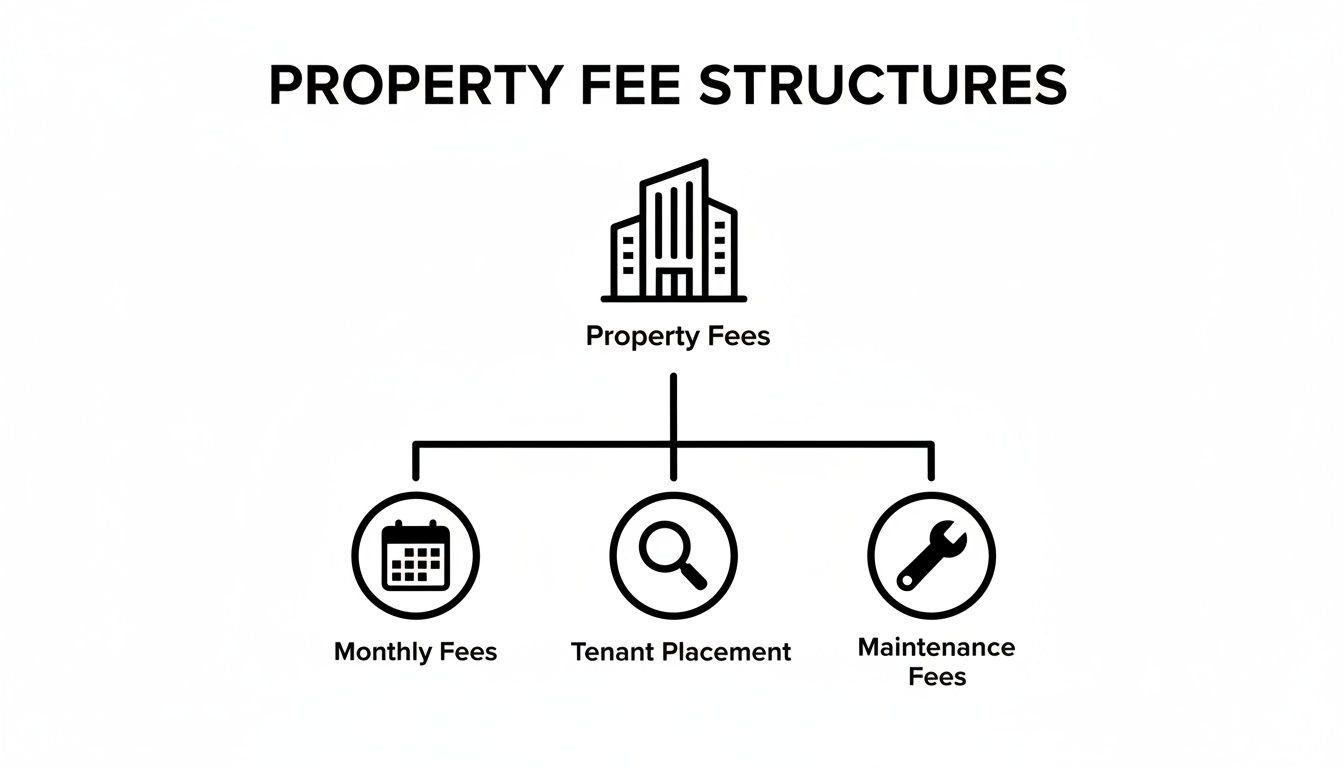
This breakdown shows how your total cost is built: a primary monthly fee, plus specific service fees for things like tenant placement and maintenance coordination. Let's break down each of these common charges you'll see in markets from Highland to Calimesa.
The Tenant Placement Or Leasing Fee
The first charge you'll probably encounter is the tenant placement fee, also known as a leasing fee. This is a one-time cost that covers the huge amount of work involved in finding, screening, and placing a new tenant in your empty property. It's usually the most significant single fee you'll pay outside of the monthly management cost.
So, why does this fee exist? Because finding the right tenant is one of the most critical parts of being a successful landlord. This isn't just about sticking a "For Rent" sign in the yard.
This fee covers a detailed, multi-step process:
- Professional Marketing: We're talking compelling listings with great photos, advertised across all the major platforms to attract a deep pool of qualified applicants.
- Property Showings: Coordinating and conducting showings for every interested person, which can be incredibly time-consuming.
- Rigorous Application Screening: This is the most crucial part. It involves running credit checks, verifying income and employment, digging into rental history, and performing background checks.
- Lease Preparation and Signing: Drafting a rock-solid lease agreement that complies with all California and local laws, then managing the signing process.
The tenant placement fee is an investment in preventing future problems. A thorough screening process dramatically reduces the chances of late payments, property damage, and costly evictions down the line.
The price for this service varies but is often a percentage of the first month's rent, typically ranging from 50% to 100%. For a property in Yucaipa or Mentone renting for $2,500 a month, a 75% placement fee would be $1,875. This fee is only charged when a new tenant moves in, directly rewarding the manager for filling your vacancy quickly with someone reliable.
Your Ongoing Monthly Management Fee
This is the core, recurring cost and the heart of the service. This fee, typically 8% to 10% in the Redlands and Beaumont property management markets, covers all the day-to-day operational tasks that keep your property running smoothly. It's the engine that keeps your investment performing without your constant attention.
This fee ensures your manager is handling rent collection, tenant communication, and enforcing the lease terms every single month. It’s what pays for the peace of mind that comes from knowing a professional is handling tenant requests and routine issues. For a deeper look, you can learn more about the complete breakdown of property management services cost and what to expect.
Lease Renewal And Maintenance Fees
Beyond finding new tenants and daily management, two other common fees pop up for specific events. They're often smaller, but it's important to know about them when you're comparing quotes.
1. Lease Renewal Fee
Keeping a great tenant is almost always more profitable than finding a new one. A lease renewal fee is a small, one-time charge for handling the negotiation and paperwork to extend the lease with your current tenant. This fee gives the manager an incentive to keep tenants happy, encouraging them to stay longer and reducing your turnover costs. It’s usually a flat fee (e.g., $200 – $300) or a tiny percentage of one month's rent.
2. Maintenance Coordination Fees
This is an area where you need to read the fine print. Most property managers don't charge extra to coordinate routine, everyday repairs—that’s considered part of the monthly fee. However, some companies might add a surcharge, often around 10%, to vendor invoices for larger projects. This fee covers the admin work of getting bids, scheduling contractors, and making sure the work is done right. Always ask a potential manager how they handle maintenance billing to ensure there are no hidden surprises.
Understanding these individual components gives you the power to properly analyze any quote you receive. You can now see beyond the monthly percentage and evaluate the total cost of ownership, making sure you partner with a management company whose fee structure is fair, transparent, and aligned with your goals as a property owner.
What Factors Influence Your Management Quote

If you've ever wondered why there isn't a single, flat answer to "how much do property managers charge," it's because every single property is different. A management quote should fit your property like a tailored suit, not an off-the-rack jacket. This ensures you only pay for what your investment actually needs.
Several key factors will always shape the final price you see on a proposal. Understanding them helps you set realistic expectations and spot a good manager. A company that fires back a generic quote without asking detailed questions is likely cutting corners—and a thoughtful quote is a sign of a detail-oriented partner.
Property Type And Location
The biggest driver behind your management fee is the property itself. A newer single-family home in a planned Beaumont community will have entirely different demands than a historic multi-unit building in Redlands. It just makes sense.
Here’s what we look at:
- Property Type: A single-family home is usually the most straightforward. Once you get into condos and townhomes, you're dealing with HOA rules, communications, and extra layers of complexity that can affect the cost.
- Property Age and Condition: Is it an older home that might need more frequent maintenance calls and proactive check-ins? Or is it a brand-new build that will likely coast for a while? An older property naturally requires more hands-on attention.
- Geographic Location: A property in a high-demand area like Loma Linda might lease faster, but it also takes sharp local expertise to price it right and maximize your return. The unique vibe of each community we serve—from Redlands, Beaumont, and Calimesa to Yucaipa, Loma Linda, Mentone, Highland, and Banning—shapes the entire management strategy.
Scope Of Services Required
After the property, the next biggest variable is you—and what you need us to handle. The level of service you choose directly impacts your monthly fee. A basic "rent collection only" package will, of course, cost far less than a full-service plan where we manage everything.
A comprehensive management agreement is more than a service—it's a shield. It protects your time, reduces your liability, and safeguards the long-term value of your asset by handling everything from 24/7 maintenance to complex legal compliance.
You need to think about how involved you want to be. Are you just looking for someone to find a great tenant and make sure the rent comes in? Or do you need a partner to manage every single detail of your investment property?
What A Full-Service Plan Includes
A higher management fee almost always reflects a more complete, hands-off experience for you. This is where you find the real value that protects your investment and, most importantly, frees up your time.
A typical full-service plan will cover:
- Comprehensive Tenant Management: This includes professional marketing, all property showings, rigorous screening, lease execution, and all ongoing tenant communication.
- Financial Oversight: You'll get detailed monthly statements, direct deposit of your funds, and organized year-end tax documentation to make life easy.
- Maintenance and Inspections: We provide 24/7 emergency response, coordinate with our network of vetted local vendors, and conduct regular property inspections to catch small issues before they become big problems.
- Legal Compliance: We ensure your property adheres to all California landlord-tenant laws, handle all required notices, and manage the eviction process if it ever becomes necessary.
When comparing quotes, dig into what a manager will actually do. For example, how will they attract top-tier tenants? Some actionable property management marketing ideas can show you what effective strategies look like. Defining your needs is the most critical first step, and our guide on hiring a property manager can walk you through exactly what to look for in a partnership.
Property Management Costs In Beaumont, California
If you own a rental property in Beaumont, you know this isn't just another sleepy town—it's a fast-growing community with a rental market all its own. That’s why a generic, one-size-fits-all approach to management just won't cut it here. To get the most out of your investment, you need to understand the real costs and what you’re paying for.
Local expertise isn't just a nice-to-have; it's what protects your bottom line. It all starts with setting the right rent. An experienced Beaumont property management team dives deep into local data to price your home perfectly—high enough to maximize your return, but competitive enough to attract great tenants fast. Misprice it, and you’re either leaving money on the table every month or watching your property sit empty while the bills pile up.
How Local Knowledge Protects Your Investment
Beyond just pricing, great local management means having a network of trusted, affordable vendors on speed dial. The last thing you want is a manager scrambling to find a plumber on a Saturday night when a pipe bursts. You need a team that already has solid relationships with Beaumont’s best electricians, handymen, and specialists—people known for quality work and fair prices.
This network is a huge part of what your management fee covers. It ensures maintenance is handled quickly and cost-effectively, keeping tenants happy and protecting your property's value. It’s the difference between a small, cheap fix and a major, budget-busting repair down the road.
In a dynamic area like Beaumont, effective property management is about more than just collecting rent. It's about proactive oversight, from rigorous tenant screening that reflects local expectations to regular inspections that preserve the long-term value of your asset.
A Sample Cost Breakdown For A Beaumont Home
Let's make this real. Imagine you own a single-family home in Beaumont that rents for $2,800 per month. When you ask, "how much do property managers charge?", you need to look at the whole picture.
Here’s a realistic breakdown of what you could expect:
- Monthly Management Fee (at 9%): That comes out to $252 per month. This covers all the day-to-day work: collecting rent, handling tenant calls, coordinating maintenance, and sending you clear financial reports.
- Tenant Placement Fee (one-time, at 75% of first month's rent): When it's time to find a new tenant, this fee would be $2,100. This is for the heavy lifting of marketing the property, showing it to prospective renters, and running in-depth background and credit checks to find someone reliable.
These numbers show you how a manager's fees are tied directly to your property’s success. The monthly fee is only paid when you get paid, and the placement fee is an investment in securing a great tenant who protects your income stream.
For owners looking for a true partner, finding specialized property management in Beaumont, CA is the key to hitting your financial goals. A skilled local manager knows how to navigate this unique market, turning your property into a genuinely passive investment.
Understanding Property Management Fees In Yucaipa
If you own a rental in Yucaipa, you already know it’s a unique place. The character of the community, from its rolling hills to its distinct neighborhoods, has a real impact on the rental market. This isn't the kind of town where a generic, one-size-fits-all strategy works. To succeed here, your approach needs to understand the local housing, what tenants expect, and the city's specific quirks.
So, when you ask, "how much do property managers charge?" the real answer depends on the level of local service you’re getting. Great Yucaipa property management is about so much more than just collecting a check. It’s about marketing your home to the right people, knowing the local rental trends inside and out, and navigating any city rules that might affect your property.
How Local Expertise Shapes Your Costs
Think of Yucaipa property management fees as an investment in hyper-local knowledge. This kind of expertise pays for itself in tangible ways, like setting the perfect rent price to attract quality applicants without delay. An experienced manager knows the subtle rent differences between one side of Yucaipa and another, making sure you don't undervalue your home or let it sit empty for weeks.
Plus, a local manager comes with a network of reliable, Yucaipa-based vendors. When a pipe bursts or the A/C goes out, you get access to their trusted plumbers, electricians, and handymen who do quality work at fair prices. That protects both your property and your wallet.
At its core, professional management in Yucaipa is about managing risk. Through regular inspections, thorough tenant screening, and firm lease enforcement, a good manager is actively protecting your investment from potential damage and legal headaches.
A Sample Cost Breakdown For A Yucaipa Home
Let's make this real. Imagine you have a typical single-family home in Yucaipa that rents for $2,600 per month. Here’s what a common fee structure might look like, so you can see exactly where your money goes and the value you get in return.
- Monthly Management Fee (at 9%): This comes out to $234 per month. This is the ongoing fee that covers all the day-to-day work that gives you your time back. It includes rent collection, handling all tenant communication, providing financial reports, and coordinating any routine maintenance.
- Tenant Placement Fee (one-time, at 75% of first month's rent): To find you a new, top-tier tenant, this one-time fee would be $1,950. This covers the intensive upfront work: professional marketing, showing the property, and running comprehensive background, credit, and income checks on every applicant.
This structure aligns the manager’s goals with yours. They are motivated to keep your property filled with a reliable tenant who pays on time because their success is tied directly to your success. The fee isn't just a cost—it's an investment in securing a steady income stream while protecting your property for the long haul.
For owners who want a true partner to handle the complexities of the local market, specialized property management in Yucaipa, CA, provides the detailed oversight your investment deserves. A dedicated local team can turn your rental into a genuinely hands-off asset, letting you enjoy the returns without any of the day-to-day stress.
Calculating The Real Return On Your Investment

It’s natural to get hung up on the question, "how much do property managers charge?" and see that fee as just another deduction from your monthly rental income. But smart investors know to flip that perspective on its head.
Think of the management fee not as a cost, but as a direct investment in your property's performance. The real value isn’t just about what you pay; it's about the return you get. A professional property manager does a lot more than just collect rent—they actively work to boost your net income through expertise, efficiency, and knowing how to sidestep common pitfalls.
Let's break down where the real financial gains come from.
The Financial Impact Of Expert Management
A skilled manager influences your bottom line in a few critical ways. They're focused on reducing your expenses while simultaneously increasing revenue, creating a powerful combo that often makes the management fee pay for itself. They do this through optimized operations that most self-managing owners just don't have the time or resources to replicate.
Here’s where you’ll really see the value:
- Shorter Vacancy Periods: Professionals have a marketing machine ready to go. They use targeted ads and efficient showing schedules to fill vacancies in weeks, not months. Every single day a property sits empty, it's money out of your pocket.
- Higher-Quality Tenants: A rigorous screening process is your best defense against future problems. It brings in tenants who pay on time, stay longer, and treat your property with respect. This dramatically cuts down on turnover costs and the risk of chasing late rent.
- Lower Maintenance Expenses: Established managers have a roster of vetted, reliable vendors they've worked with for years. This means they get better rates and faster service, saving you money on everything from a leaky faucet to landscaping.
A Tale Of Two Properties: A Financial Scenario
To see this ROI in action, let’s compare two identical single-family homes in Redlands. Both rent for $2,800 per month. One is self-managed by the owner, and the other is professionally managed for a 9% fee.
Scenario 1: The Self-Managed Property
The owner handles everything. Over a two-year period, they end up with 45 days of vacancy between tenants. They also get overcharged by a new vendor for a minor repair (a $300 loss) and spend about six hours every month on management tasks. If you value your time at $50/hour, that’s $300 of your own time gone each month.
The hidden costs of self-management—long vacancies, inflated repair bills, and your own lost time—can easily add up to more than a professional management fee. It’s an expense that rarely shows up on a spreadsheet but hits your actual return hard.
Scenario 2: The Professionally Managed Property
The property manager’s efficient process gets the home re-rented with only 14 days of vacancy over that same two-year period. Their network of trusted vendors handles all repairs at competitive rates, so there are no overcharges. The management fee is $252 per month.
When you run the numbers, the professionally managed property generates significantly more net income over two years. The minimized vacancy and controlled maintenance costs easily cover the management fee, leaving the owner with more profit and zero headaches.
Technology plays a huge role here. By 2021, the global property management software market had already grown to $3.04 billion, giving local operators in areas like Beaumont property management and Yucaipa property management access to enterprise-level tools. This modern approach, detailed in these property management industry trends and statistics, makes professional management more effective and valuable than ever before.
Common Questions About Hiring A Property Manager
Making that final call to bring in a professional is a big step, and it's natural to have a few last-minute questions. Think of this as your final checklist to give you the confidence you need to pick the right partner for your Inland Empire property.
How Do I Compare Quotes From Different Companies?
When you start getting proposals, it's tempting to just scan for the lowest monthly percentage. That's a classic mistake. To get the real picture of how much property managers charge, you have to look past that one number and dig into the entire fee schedule.
A lower monthly rate, maybe 7%, looks great on paper. But it can easily be wiped out by steep one-time fees for other essential services. For instance, one company might charge a full month's rent just to place a new tenant, while another adds a 10-15% markup on every single maintenance invoice. Suddenly, that 7% doesn't look so good.
To make a smart, apples-to-apples comparison, here’s what you do:
- Get the Full Fee Schedule: Don't just accept the summary. Ask for a complete list of every possible charge, from tenant placement and lease renewals to maintenance coordination and eviction services.
- Line Up the Services: Does one quote bundle in annual property inspections while another treats it as an add-on? A more inclusive service often delivers far better value over the long haul.
- Look Beyond the Price Tag: The cheapest option is almost never the best. What's the company's reputation in your community? How thorough is their tenant screening? A slightly higher fee is a small price to pay for the peace of mind that comes with truly professional service.
What Are The Most Important Questions To Ask?
Before your signature hits any contract, you need to ask the right questions to make sure a company's approach aligns with your investment goals. When you're ready to hire, knowing the essential questions to ask a property management company is non-negotiable, and that list should always include deep dives into their fee structure.
A professional manager will have confident, detailed answers to tough questions. Their responses should demonstrate deep local knowledge and a clear, systematic approach to protecting your investment.
Here are the critical questions you should ask every potential manager for your property in Redlands, Beaumont, or Yucaipa:
- Walk me through your tenant screening process, step-by-step. Get specific. Ask about their minimum credit scores, income verification methods, and how they check rental history.
- What's the plan for a 2 a.m. emergency? You need to know there’s a solid, tested system in place for after-hours maintenance disasters.
- What is your average vacancy rate right here in my neighborhood? This number tells you everything about their marketing muscle and local expertise.
- How do you keep my property compliant with California's tricky landlord-tenant laws? A good manager is your shield against costly legal missteps.
What Red Flags Should I Look For In A Contract?
That management agreement is a legally binding document, so treat it like one and read every word. Keep an eye out for vague language or clauses that seem stacked in the manager's favor.
Be especially wary of contracts with long-term lock-in periods and expensive cancellation penalties—these can trap you if you're unhappy with their service. Finally, make sure the agreement clearly states that the monthly management fee is based on rent collected, not just rent due. That's a crucial distinction.
Ready to see how professional management can maximize the return on your Inland Empire property? The team at AIM PROPERTY MANAGEMENT COMPANY offers transparent pricing and expert service tailored to the communities we serve, including Redlands, Beaumont, Calimesa, Yucaipa, Loma Linda, Mentone, Highland and Banning California. Get your personalized management quote today by visiting https://aim-properties.com.