Finding a property manager isn't just about offloading tasks—it's a strategic decision you make when self-management starts costing you more than just money. It's about trading the stress of late-night repair calls and navigating dense legal codes for the peace of mind that comes with having an expert on your side.
This guide will walk you through exactly when to make that call and why it’s one of the smartest moves you can make for your investment property.
Knowing When to Hire a Property Manager
Deciding to hand over the keys to your rental property is a big step for any investor. But let's be honest, it's more than just delegating tasks. It’s a calculated move to protect your investment, boost your returns, and get your valuable time back. For owners with properties in communities like Redlands, Beaumont, Calimesa, Yucaipa, Loma Linda, Mentone, Highland, and Banning, knowing the right moment to bring in a professional can be the difference between a thriving asset and a constant headache.
The reality of being a landlord often involves challenges that go way beyond just cashing a rent check. Most owners finally realize they need help when the day-to-day grind becomes completely overwhelming.

Key Signs It Is Time for Professional Help
Recognizing the warning signs is the first step toward finding a property manager who’s a perfect fit for your needs. You're probably ready for a change if any of these sound familiar:
- Constant Maintenance Demands: Tired of fielding late-night calls about a leaking faucet in Loma Linda or a broken AC unit in Banning? A property manager handles all maintenance coordination, tapping into a network of vetted pros to get issues fixed fast.
- Tenant Management Headaches: Screening applicants, mediating disputes, and handling lease renewals can feel like a full-time job. If high tenant turnover and endless back-and-forth communication are draining your energy, that’s a clear sign you need support.
- Complex Legal and Regulatory Hurdles: California's landlord-tenant laws are notoriously tricky and they're always changing. A professional manager stays on top of every update, protecting you from expensive legal mistakes and ensuring your property remains compliant.
This growing need for professional oversight is a nationwide trend. The U.S. property management market is expected to hit $136.9 billion by 2025, largely because the rental landscape is getting more and more complex. With over 304,000 property management businesses out there, owners have plenty of options.
Your rental property should be an asset that builds wealth, not a second job that steals your life. Hiring a manager is an investment in your efficiency, your legal protection, and ultimately, your own peace of mind.
This guide is your roadmap, whether your property is in Highland, Calimesa, or anywhere in between. Once you understand the real value a manager brings, you can start your search with confidence. We'll cover the essential steps, from figuring out what you need to asking the right interview questions, so you can partner with an expert who truly gets the local market. For a closer look, check out our article on the top reasons to hire a property management company.
Know What You Want, Then Find Your Local Pro
Before you jump into interviewing property managers, you need a clear picture of what you're actually looking for. The needs of a hands-off investor with a portfolio of homes in Redlands are completely different from someone renting out their first family home in Beaumont. Getting this right from the start saves a ton of time and helps you find a true partner, not just another vendor.
First things first, create a simple profile of your property and your expectations. Are you looking for a full-service team to handle absolutely everything, from marketing to midnight maintenance calls? Or do you just need help finding and screening a great tenant? Nailing down your non-negotiables is the key.
Create Your Property Management Wishlist
Think of this like a job description for the perfect property manager. A detailed list is your best tool for quickly weeding out companies that just aren't the right fit.
Your checklist should cover:
- Level of Service: Do you need full-service management (rent collection, maintenance, inspections) or just leasing services (tenant screening and placement)?
- Property Type: Is it a single-family home in Highland, a condo in Loma Linda, or a multi-unit building? You want a manager who has deep experience with properties exactly like yours.
- Communication Style: How often do you want updates? Are you happy with an online portal, or do you prefer a quick phone call now and then?
- Financial Goals: Is your priority maximizing monthly cash flow, or are you playing the long game for appreciation? Your manager’s strategy needs to sync up with your financial goals.
This little bit of homework will keep you from wasting hours interviewing managers who don't offer what you need, making your search much more efficient.
How to Find the Real Local Experts
With your wishlist in hand, it’s time to start building a shortlist of potential managers. A quick search for "property management near me" is a good place to start, but the real gems are often found through more focused, local digging. You need someone who understands the quirks of the Yucaipa rental market or knows what tenants in Calimesa are looking for.
Don't just stick to the first page of Google. The best local managers usually have a strong, professional online presence. Since property management is a home service, looking at a comprehensive guide to local SEO for home service companies can give you some clues about how the top firms market themselves and the properties they manage.
Here’s how to find the best candidates in our area:
- Tap into Local Real Estate Networks: Your best referrals will almost always come from other local pros. Talk to real estate agents, mortgage brokers, and other property investors in communities like Banning or Mentone. They work with these companies every day and know who’s reliable.
- Verify Professional Credentials: Look for managers who are members of professional organizations like the National Association of Residential Property Managers (NARPM). This usually signals a serious commitment to industry ethics and staying current on best practices.
- Analyze Community-Specific Reviews: Don’t just skim the reviews—dig into them. Look for patterns in feedback on Google, Yelp, and the Better Business Bureau. Are both tenants and owners consistently praising a company’s responsiveness in the specific cities you own property in?
The goal isn’t to find the most property managers, but the right ones. A well-vetted shortlist of three to five highly qualified, local experts is far more valuable than a long list of unknown companies.
By focusing your research on genuine local expertise and verifying credentials, you’re building a solid foundation for the next steps. This due diligence ensures that when you start making calls, you're talking to proven professionals with a track record of success right here in the Inland Empire. For a deeper dive into what a management company can do for you, check out our overview of property management services in the Inland Empire. This groundwork is what separates a good partnership from a frustrating one.
How to Properly Vet Potential Property Managers
You’ve done your homework and have a shortlist of local experts. Now comes the most important part: the real evaluation. This is where you dig deeper than the polished websites and marketing promises to see which company truly has the chops to protect your investment in Redlands, Beaumont, or Yucaipa.
Properly vetting your candidates is the single most critical step in finding a long-term partner for your rental property. It’s a mix of verifying their credentials, stress-testing their processes, and making sure their communication style is a good fit for you. Think of it this way: a little due diligence now will save you from massive headaches down the road.
This simple process helps you narrow down the field before you even start making calls.
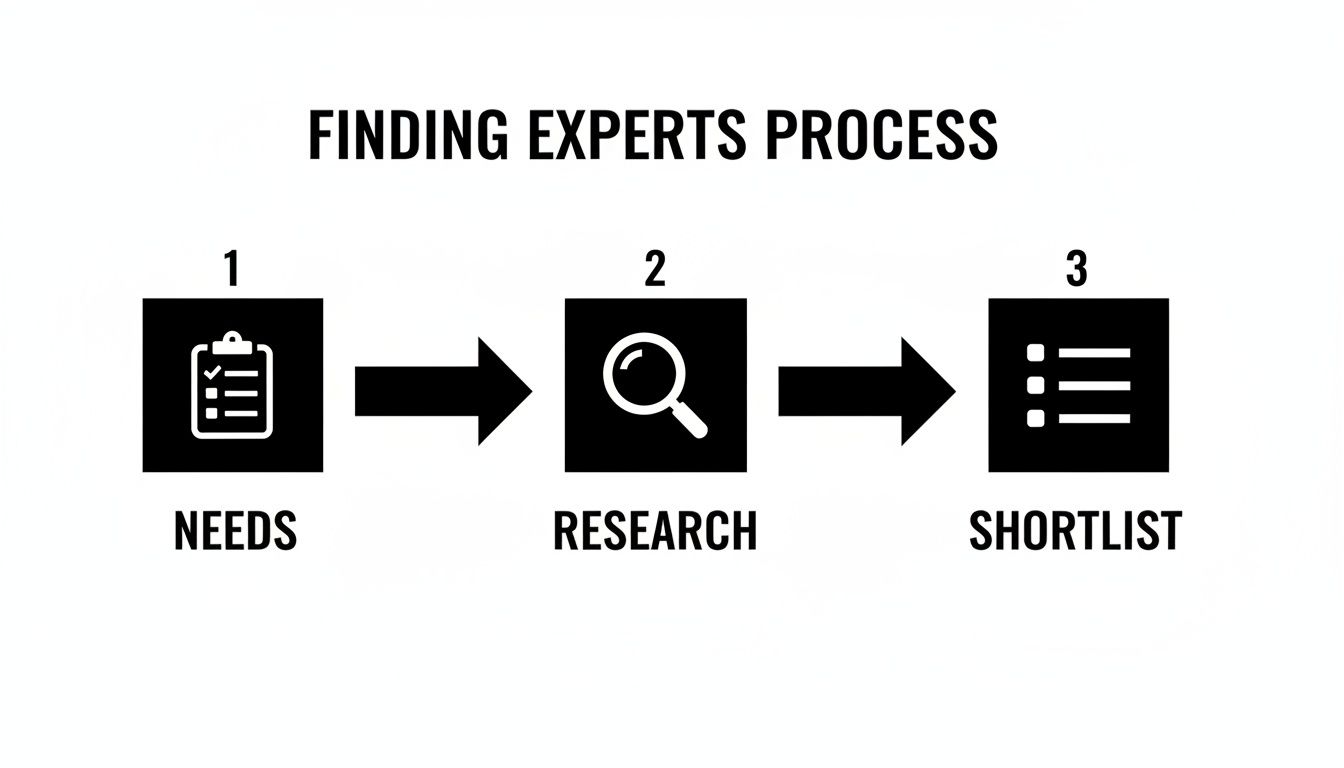
By following this workflow, you ensure every company you interview is already a strong potential fit, making the final decision much easier.
Verifying Licenses and Professional Standing
First things first, let’s talk about the non-negotiables. In California, any person or company managing property for others must have a real estate broker's license from the Department of Real Estate (DRE). This isn't optional. You can—and absolutely should—verify their license status using the DRE’s public lookup tool online.
Beyond the legal minimum, look for professional affiliations. Are they members of organizations like the National Association of Residential Property Managers (NARPM)? Membership signals a serious commitment to higher ethical standards and continuous education. Companies that invest in these groups are typically more dedicated to their craft and stay on top of industry best practices.
It’s a simple check, but it speaks volumes about their professionalism and helps you weed out the casual operators from the dedicated experts.
Evaluating Their Technology and Systems
In today's rental market, a property manager’s tech stack says everything about their efficiency. Old-school, paper-based systems are a recipe for slow communication, lost maintenance requests, and unhappy tenants—all things that directly hit your bottom line. You need a manager who uses modern tools to make life easier for both you and your residents.
The adoption of technology is no longer a luxury; it’s a necessity. The rent collection industry alone is projected to grow at a CAGR of 6.9% from 2025 to 2033, driven entirely by digital payment platforms and online portals. When you hire a property manager, you should look for firms that embrace these tools to improve the tenant experience while cutting down on operational drag.
Here are a few key things to look for:
- An Online Owner Portal: This is your command center. It should give you 24/7 access to financial statements, inspection reports, and maintenance updates. No more waiting for a call back.
- A Tenant Portal: This is a game-changer for tenant retention. It lets them pay rent online, submit maintenance requests (with pictures!), and communicate easily with the management team.
- Modern Marketing Tools: Ask how they fill vacancies. A good firm will have a professional website and syndicate your listing across all the major rental platforms to get it in front of as many qualified eyes as possible, fast.
A property manager who invests in good technology is investing in efficiency and transparency. This isn't just a "nice-to-have"; it's essential for managing properties effectively in competitive markets like Redlands or Highland.
A company's systems give you a clear window into their operational maturity and their ability to handle all the property management company responsibilities. A tech-forward, organized firm is simply better equipped to give your property the level of service it deserves.
Property Manager Evaluation Checklist
To keep your thoughts organized, use a simple checklist like the one below. It helps you make an apples-to-apples comparison between your top contenders after you’ve had a chance to speak with them.
| Evaluation Criteria | Company A | Company B | Company C |
|---|---|---|---|
| DRE License Verified | |||
| Professional Memberships (e.g., NARPM) | |||
| Years of Local Experience | |||
| Manages Similar Properties | |||
| Online Owner Portal Available | |||
| Online Tenant Portal Available | |||
| Positive Online Reviews (Avg. Rating) | |||
| Clear Fee Structure | |||
| Responsive Communication | |||
| Handles Evictions In-House |
Jot down notes during your calls and fill this out immediately afterward. It will make your final decision much clearer and more objective. Once you've completed this initial vetting, you're ready for the most revealing step: the interview.
Key Interview Questions That Reveal True Expertise
The interview is your chance to get past the slick sales pitch and see how a property management company actually operates. This is where you dig in, test their real-world knowledge, and see if they can handle the curveballs that rental properties inevitably throw. Asking the right questions is the only way to find a manager who will protect your investment, not just collect a check.
Your goal here isn't just to talk about fees. It's to understand how they perform under pressure, solve problems, and communicate when things go sideways. This is especially true when managing properties in unique local markets like Beaumont, Yucaipa, and Redlands.
Questions About Tenant Management And Screening
The quality of your tenants has a direct line to your profitability and your peace of mind. A manager’s screening process is their first and best defense against late payments, property damage, and eviction headaches. Their answers here show you just how seriously they take protecting your asset.
Start with these direct questions:
- "Walk me through your tenant screening process from start to finish." A vague answer is a huge red flag. A pro will confidently detail every step: credit checks, criminal background checks, income verification (look for 3x the rent as a baseline), and calling previous landlords.
- "What's your average vacancy rate for properties like mine in Redlands or the surrounding areas?" A good manager knows their numbers cold. They should give you a realistic figure and explain the marketing strategies they use to keep that number low.
- "How do you handle a tenant who is consistently late with rent?" This reveals their approach to enforcement. You want to hear about a firm but fair process that follows California law, starting with formal notices and escalating systematically if the problem continues.
A manager who can’t clearly explain their screening and rent collection policies is a manager who will probably struggle to enforce them. Their process should be documented, consistent, and legally airtight.
These questions give you a good feel for their day-to-day discipline. For an even deeper dive into the vetting process, our guide on how to choose the right property management company offers some extra insights you might find helpful.
Probing Their Maintenance And Repair Protocols
Maintenance is going to happen—that's a guarantee. Chaos, however, is optional. A prepared manager has solid protocols for everything from a leaky faucet to a middle-of-the-night emergency. How they handle maintenance tells you everything about their organizational skills and their commitment to protecting your property's value.
Think about a real-world scenario. A tenant in Banning calls at 2 AM with a burst pipe. What happens next? A great manager will have a 24/7 emergency line and a vetted list of local vendors ready to go at a moment's notice.
Ask these practical questions to see how ready they are:
- "Can you describe your process for a non-emergency maintenance request?" Look for a modern, streamlined system. An online portal where tenants can submit requests with photos is ideal because it creates a clear digital trail for everyone.
- "What's your protocol for after-hours emergencies in a town like Mentone?" They need a concrete plan. Who takes the call? Which plumbers or electricians are on their emergency list? At what dollar amount do they need your approval before proceeding?
- "How do you stay on top of proactive maintenance to prevent bigger, more expensive repairs later?" The best managers don’t just react; they get ahead of problems. Their answer should include things like routine property inspections, gutter cleaning schedules, and regular HVAC servicing.
A manager who fumbles these questions probably doesn’t have the experience to handle the daily grind of property ownership. You’re looking for clear, systematic answers that prove they have well-oiled procedures in place. Their ability to manage maintenance is one of the most critical parts of the job.
Decoding Management Fees and Contract Terms
A great partnership with a property manager is built on trust, and trust starts with a crystal-clear agreement. Before you even think about signing on the dotted line, you have to get comfortable with the financial side of the relationship. Taking the time to decode the fee structure and contract terms will save you from nasty surprises down the road and ensure the partnership truly serves your financial goals for your property, whether it's in Beaumont, Yucaipa, or anywhere else in the Inland Empire.
How a company gets paid tells you a lot about what they prioritize. Most of the time, you'll run into two main models: percentage-based fees and flat-rate fees. Each has its place, and the best fit for you often comes down to your property's monthly rent.

Unpacking the Common Fee Structures
Most property management companies in our local market, including Redlands and Loma Linda, charge a percentage of the monthly rent they collect. This usually falls somewhere between 8% and 12%. It’s a popular model for a reason—it ties your manager's income directly to yours. If you're not getting paid, they're not getting paid. This gives them a powerful incentive to find a fantastic tenant quickly and keep your property occupied.
The other option you might see is a flat-rate fee. This is exactly what it sounds like: you pay a set dollar amount every month, no matter what the rent is. This can be a great deal for owners with higher-end rental properties, since the flat fee could end up being less than a percentage-based charge. If you want to dive deeper into how these models stack up, check out our detailed guide on understanding a property management fee structure.
A word of caution: be very wary of companies that advertise rock-bottom management fees. They often make up the difference by piling on hidden charges for every little thing. This is often called "nickel-and-diming," and it's a huge headache. A transparent, straightforward fee structure is always the smarter choice.
Looking Beyond the Monthly Management Fee
The monthly management fee is just the starting point. To get the full picture, you need to look at the entire fee schedule for other potential costs. Finding a property manager who is completely upfront about these charges is a non-negotiable.
Here are some of the most common fees to ask about:
- Leasing or Tenant Placement Fee: A one-time fee for the work involved in finding and placing a new tenant. It’s often a percentage of the first month's rent and covers marketing, showings, and tenant screening.
- Maintenance Markups: Some firms will add a surcharge, often around 10%, to vendor invoices to cover their time coordinating repairs. Ask about this directly. You should also find out if they use an in-house maintenance crew or hire outside contractors.
- Lease Renewal Fee: A smaller fee for handling the paperwork and negotiation when a great tenant decides to stay for another year.
- Eviction Fee: A flat fee to cover the administrative work, court filings, and time required to legally handle an eviction.
Understanding these costs upfront is the only way to accurately project your net income and compare companies fairly.
Carefully Reviewing the Management Agreement
The property management agreement is your playbook. It's a legally binding contract that lays out every responsibility for both you and your manager. Don't just skim it—read every single clause. There are a few key areas that can cause massive headaches if you're not paying attention.
The termination clause is arguably the most important. It dictates how you can end the contract if things aren't working out. Look for a "without cause" termination clause that allows you to part ways with reasonable notice, usually 30 to 60 days. Steer clear of contracts that lock you in for a full year and hit you with huge penalties for leaving early.
You also need to be crystal clear on the manager's authority. The contract should set a specific spending limit for repairs—say, $300—that they cannot exceed without your direct approval. This is your protection against unexpectedly large repair bills.
Finally, make sure you understand your own obligations, like maintaining proper insurance and keeping a reserve fund for maintenance. A well-written agreement protects everyone involved and sets the stage for a successful, stress-free partnership.
Making Your Final Decision and Onboarding
You’ve done the hard work—the research, the interviews, and the contract reviews. Now comes the moment of truth. This final step isn't just about picking a company; it's about finding a true partner you can trust with your investment property in Redlands or Beaumont.
Before you send over a signed agreement, do one last round of due diligence. It's time to call the references they provided. Ask current and former clients the tough questions: How's their communication? Are financial reports on time and accurate? How did they handle that unexpected late-night maintenance call? This final check can either give you the green light you were hoping for or reveal a last-minute red flag you can't ignore.
Notifying Candidates and Finalizing the Agreement
Once you’ve settled on your top choice, the professional move is to let every candidate know your decision. A quick email thanking the other companies for their time is a courtesy that goes a long way. Then, you can reach out to your chosen manager to officially offer them the job.
Now, pull out that management agreement one more time. Make sure every verbal promise and point of clarification from your interviews is actually in writing. Double-check the start date, confirm the fee structure is what you agreed to, and understand the termination clause. A solid contract is the bedrock of a great long-term partnership.
A smooth transition is a crucial first impression for your tenants and sets the tone for your partnership. An organized, systematic onboarding process demonstrates the professionalism you hired them for.
From here, the focus shifts to a seamless handover. Your new manager should have a clear, structured onboarding plan ready to go. The goal is to get them up to speed quickly and efficiently, minimizing any disruption for you and your tenants.
The Onboarding Process: A First 90-Days Snapshot
The first three months are all about getting the operational details dialed in. While your new property manager will take the lead, your cooperation is key to making it all go smoothly—especially if you have existing tenants in a community like Yucaipa or Banning.
Expect the process to look something like this:
- Document and Key Transfer: This is the physical handover. You'll need to provide all the essentials, like current lease agreements, tenant contact info, maintenance records, and any appliance warranties. Of course, you’ll also hand over a full set of keys.
- Financial Setup and Owner Portal Access: Your manager will get your property set up in their accounting system and provide you with a login to your online owner portal. They should walk you through how to navigate it so you can see financial statements, track maintenance jobs, and send messages.
- Formal Tenant Notification: This is a big one. Your new manager should send a formal introductory letter or email to your current tenants. This notice explains the change, introduces the new team, and gives tenants clear instructions on how to pay rent and submit maintenance requests from now on.
- Initial Property Inspection: Any good manager will want to see the property for themselves. They'll conduct a thorough initial inspection to document the rental's current condition. This creates a baseline that’s critical for future inspections and handling security deposit returns down the line.
A well-executed onboarding process ensures nothing falls through the cracks. It immediately establishes a professional relationship with your tenants and gives you the confidence that your investment is finally in capable hands.
Questions We Hear All the Time About Hiring a Property Manager
Finding the right property manager can feel like a big step, and it’s natural to have questions. We’ve put together some of the most common ones we hear from property owners in California to give you clear, straightforward answers.
What Are the First Steps to Hire a Property Manager?
The very first thing you should do is get clear on what you need. Are you looking for someone to handle everything from start to finish, or do you just need help finding a great tenant? Make a list of what's important for your specific rental.
Once you know what you're looking for, start researching local companies with a solid reputation in your area. Think specific searches like "property management Beaumont" or "Yucaipa property management." From there, narrow it down to a shortlist of three to five strong contenders. This keeps the process focused so you can dive deeper with the best candidates.
How Do I Find the Best Property Management Near Me?
Finding the best local manager is a mix of smart online searching and good old-fashioned networking. Start with targeted searches like "Redlands property management" and spend some time reading reviews on Google and Yelp. But don't stop there—ask for referrals from local real estate agents or other investors in your network. Their inside knowledge is priceless.
A manager with deep, on-the-ground experience in hyper-local markets like Calimesa or Loma Linda will always have an edge over a big, generic firm. They know the right rental rates, have relationships with the best local vendors, and understand what tenants in your neighborhood really want.
What Key Qualities Should I Look for in a Property Manager?
I always tell owners to zero in on four critical things: deep local expertise, clear communication, financial transparency, and modern tech. A great manager doesn't just know the market; they keep you in the loop with regular, honest updates.
Their fee structure should be simple and easy to understand, with no surprise charges hidden in the fine print. And finally, they should be using technology that makes life easier for everyone—think online rent payments, easy maintenance requests, and streamlined communication for you and your tenants. For a closer look at what other landlords are asking, check out this great resource on the Top 7 FAQs Asked by Landlords.
Is Hiring a Property Manager Worth the Expense?
For most property owners, the answer is a resounding yes. A good manager frees up an incredible amount of your time and saves you from the stress of handling tenant screening, late-night maintenance calls, rent collection, and tricky legal issues.
More often than not, their expertise leads to better tenants who stay longer, which means shorter vacancies and more consistent income for you. They also help you avoid costly legal missteps. It’s an investment that not only protects your property but often boosts your overall profit while giving you invaluable peace of mind.
Ready to put your investment property in expert hands? At AIM PROPERTY MANAGEMENT COMPANY, we offer dedicated, personalized management services for owners throughout Redlands, Beaumont, Calimesa, Yucaipa, Loma Linda, Mentone, Highland and Banning. Let us handle the details so you can enjoy the benefits of your investment. Contact us today to learn more.