
To get the most out of your rental investment, you need more than just a property—you need a deep understanding of what's happening on the ground, right here in our local market. Effective East Valley property management is the key that unlocks the unique opportunities and navigates the challenges in communities from Redlands all the way to Banning. We proudly serve the communities of Redlands, Beaumont, Calimesa, Yucaipa, Loma Linda, Mentone, Highland, and Banning, California.
It all comes down to adapting to the ebb and flow of vacancy rates and capitalizing on our region's growth. Real success means turning that market knowledge into profit, and for property owners, protecting your asset has never been more critical.
Navigating The East Valley Rental Market: A Property Owner's Guide

Owning a rental property anywhere in the East Valley—whether it’s Beaumont, Calimesa, Yucaipa, Loma Linda, or Highland—puts you right in the middle of a dynamic and constantly evolving economic landscape.
Our region's growth is undeniable. It's fueled by a powerhouse logistics sector and a steady stream of new residents looking for more value and space than they can find closer to the coast. This presents some huge opportunities, but it also comes with its own set of challenges for landlords.
On one hand, that rising demand often means your property value is appreciating and you have the potential to earn higher rental income. But on the other hand, that same growth brings more competition from other landlords and new construction, along with tenants who expect more than ever before. Getting a handle on these undercurrents is the first step toward making smart decisions that protect and grow your investment.
Understanding Local Vacancy and Demand Dynamics
The Inland Empire rental market, which of course includes our East Valley communities, is in a really interesting phase right now. While demand is still strong, recent data shows a pretty significant shift happening.
In the third quarter of 2025, vacancy rates here in the Inland Empire hit 6.0%. That’s the highest in Southern California, and it's largely due to all the new construction and some population shifts. To put that in perspective, Orange County is sitting at a much tighter 3.6% rate, which tells you it’s a more competitive environment for us local landlords.
So what does this actually mean for your bank account? Every single percentage point of vacancy is lost income, period. A seemingly small 1% vacancy rate can easily translate to $2,400 in lost rent over a year for every ten units you own. If you have a larger portfolio, those numbers add up fast, driving home just how crucial it is to minimize the time your property sits empty.
For owners with properties in areas like Beaumont or Yucaipa, these rising vacancy rates should be a wake-up call. Proactive tenant screening, aggressive marketing, and fast, efficient turnovers aren't just "nice to have" anymore—they are absolutely essential for a profitable rental strategy.
Economic Drivers and Their Impact on Your Investment
The economic health of the East Valley is directly tied to the success of your rental property. The region’s reputation as a major hub for logistics and manufacturing continues to attract a steady stream of workers, which creates a consistent pool of potential tenants. This stability helps keep rental prices strong and ensures there's always demand. Take a city like Riverside, where average rents are hovering around $2,469 a month—when you pair that with local home prices, the potential for gross returns is very attractive.
But this economic strength can be a double-edged sword. It also encourages new development, which can sometimes lead to an oversupply in certain neighborhoods and push those vacancy rates higher. This is exactly where localized, on-the-ground expertise becomes so valuable.
A partner specializing in Yucaipa property management or Redlands property management understands the specific micro-trends that broad census data just can't show you. For example, knowing which neighborhoods are seeing a surge of young families versus young professionals can completely change how you market your property. For a deeper dive, our guide on https://aim-properties.com/property-management-inland-empire/ offers more strategies for maximizing your investment.
East Valley Rental Market Snapshot By Community
To give you a clearer picture, here’s a quick breakdown of what we’re seeing across our key service areas. This table helps illustrate the nuances from one community to the next.
| Community | Average Rent (Est.) | Key Demand Drivers | Management Priority |
|---|---|---|---|
| Beaumont | $2,500 – $3,200 | New housing developments, logistics jobs, family-oriented | Fast leasing cycles, quality tenant screening |
| Yucaipa | $2,300 – $2,900 | Small-town feel, good schools, proximity to mountains | Maintaining curb appeal, long-term tenant retention |
| Redlands | $2,400 – $3,100 | University of Redlands, historic downtown, ESRI | Targeting professionals & students, premium property care |
Each town has its own personality and its own tenant base. Understanding these differences is key to setting the right rent, finding the right tenant, and keeping your property occupied.
Finally, in a competitive market, small advantages make a big difference. Enhancing your property's curb appeal is one of the fastest ways to stand out. While it's a different market, the principles shared by professionals offering landscape design services in Phoenix can be a great source of inspiration for making your property more attractive. At the end of the day, success in this market is all about balancing the big-picture economic trends with smart, hyper-local management tactics.
The Core Services That Define Excellent Property Management

Knowing the local market is just the starting point. The real value of professional East Valley property management shines through in the day-to-day services that safeguard your investment and keep your rental income flowing. These core functions are the engine of a successful rental property, turning a hands-on headache into a reliable asset.
It’s about so much more than just finding someone to live in your house. It's about expertly managing the entire tenancy, from start to finish. From thorough tenant screening in Yucaipa to handling late-night maintenance calls in Beaumont, these pillars of service are what separate a stressed-out landlord from a confident, hands-off investor.
Let's break down exactly what you should demand from a top-tier management partner.
Meticulous Tenant Screening and Placement
The single biggest factor in your rental's success is the quality of the tenant you place. A tough screening process is your first and best defense against late rent, property damage, and the nightmare of eviction. This is where a company specializing in Yucaipa property management truly earns its keep, going way beyond a basic credit check.
An ironclad screening process should always include:
- Comprehensive Background Checks: This confirms an applicant's identity and flags any criminal history that could pose a risk to your property or the neighborhood.
- Credit History Review: A detailed credit report tells a story about an applicant's financial responsibility. It's a strong predictor of whether they'll pay rent on time.
- Income and Employment Verification: We need proof. This step confirms a stable, sufficient income—typically at least three times the monthly rent—to ensure they can comfortably afford the home.
- Past Landlord References: This is invaluable. We actually pick up the phone and talk to previous landlords to get the real story on payment history and how they treated the property.
This detailed process is designed to find reliable tenants who will treat your property like their own.
Streamlined Rent Collection and Financial Reporting
Consistent cash flow is everything. A professional property manager takes the hassle and awkwardness out of chasing rent by using a streamlined, professional collection system. For tenants in communities like Redlands or Loma Linda, this usually means a secure online portal where they can easily pay, set up auto-payments, and view their history.
But collecting the money is only half the job. You need total transparency. Expect detailed monthly statements that clearly break down all income and expenses. This clean record-keeping is essential for tracking your ROI and makes tax time a breeze.
Proactive Maintenance and 24/7 Support
A small leak or a faulty A/C unit can quickly spiral into a major expense and an unhappy tenant. That's why responsive maintenance is a cornerstone of great Beaumont property management. A pro manager will have a trusted network of vetted, insured, and reliable contractors ready to tackle repairs quickly and affordably.
24/7 support for maintenance emergencies isn’t a perk; it’s a must-have. A burst pipe in the middle of the night can cause thousands in damage. Fast action protects your property and shows tenants you care, which is a huge factor in getting them to renew their lease.
Good management also means overseeing routine upkeep. This can involve finding the right vendors for specialized jobs, like sourcing professional commercial window cleaning services for a multi-unit building, ensuring every part of your investment is well cared for.
Regular Inspections and Legal Compliance
Regular property inspections are vital for protecting your asset. We conduct these inspections, usually annually, for two main reasons. First, to catch small maintenance issues before they become big, expensive problems. Second, to ensure the tenant is following the lease terms—no unauthorized pets or occupants, and keeping the property in good shape.
Navigating California’s complex landlord-tenant laws is a minefield for DIY landlords. A skilled manager specializing in Redlands property management is always up-to-date on all local, state, and federal rules. The East Valley rental market is constantly evolving, with new tenant protections and regulations. Understanding these property management company’s responsibilities is critical.
From drafting compliant leases to handling legal notices and, if it ever comes to it, managing an eviction by the book, this expertise shields you from huge legal and financial risks. It’s the kind of peace of mind you can't put a price on.
Your Checklist For Interviewing Potential Property Managers
Choosing the right partner for your East Valley property management needs is one of the biggest decisions you’ll make as a landlord. You're not just hiring a company to collect rent; you’re trusting them with a massive asset. The interview is your chance to really dig in and find a team whose expertise and approach match your own goals.
To do this right, you have to ask more than just the basic questions. You need a checklist that cuts through the sales pitch and gets to the heart of how they operate, especially here in the unique markets of Beaumont, Yucaipa, and Redlands. This is about getting real answers, not just vague promises.
Experience and Local Market Knowledge
General property management experience is one thing, but on-the-ground knowledge of your community is everything. A strategy that works in a major city won't necessarily fly in Calimesa or Mentone. Your questions need to make them prove they actually know the area.
Start with these critical questions:
- How many properties do you currently manage in this specific city (e.g., Yucaipa, Beaumont, Redlands)? A big portfolio is fine, but a concentrated local presence tells you they are deeply invested in the community.
- Walk me through your process for a rental market analysis on a property in Highland or Loma Linda. You're listening for a data-driven answer. They should mention pulling comps, factoring in amenities, and understanding neighborhood-specific trends—not just plucking a number out of thin air.
- What are the biggest challenges landlords are facing in the Beaumont property management market right now? How are you helping owners navigate them? This is a great test of their real-world awareness. Are they seeing new construction competition? A shift in tenant demographics?
- Are you aware of any recent changes to local ordinances in Redlands or Yucaipa that impact rental properties? This is non-negotiable. A "no" or a hesitant answer is a massive red flag that they aren't on top of critical legal compliance.
A solid candidate will have confident, specific answers that show they live and breathe the local rental market.
Operations and Tenant Management
Next, you need to get into the nitty-gritty of how they do things. How do they handle the day-to-day work that keeps your property profitable and in good shape? This is where the pros separate themselves from the amateurs.
A key red flag to watch for is vagueness. If a potential manager can't clearly articulate their processes for marketing, screening, or maintenance, it often means they don't have solid systems in place. This can lead to longer vacancies and costly mistakes down the line.
Here are some essential operational questions:
- What is your average time-to-lease for a vacant property? This metric is a direct reflection of their marketing muscle and leasing efficiency.
- Can you walk me through your tenant screening process, step-by-step? They should immediately list specifics like credit checks, criminal background searches, income verification (look for a standard like 3x the rent), and actually calling previous landlords.
- How do you handle after-hours maintenance emergencies? The only right answer involves a dedicated 24/7 phone line and a roster of trusted, on-call vendors.
- Do you have an established network of licensed and insured vendors you work with in Banning and the surrounding areas? A pre-vetted list means repairs get done faster and by people you can trust.
The details are what matter here. A well-run company has these processes down cold. For an even deeper dive, our guide on how to find a property manager offers more insights into what separates a great partner from a good one.
Communication and Technology
Finally, you need to understand how they communicate and what tools they use to make life easier for everyone. Today, both owners and tenants expect quick, transparent communication, and that usually comes from good technology. A firm that invests in modern systems is almost always more organized.
Ask about their tech and reporting:
- What dedicated property management software do you use?
- Will I have an online portal to view financial statements, inspection reports, and maintenance updates?
- How often can I expect to hear from you, and who will be my main point of contact?
Clear, consistent communication is the bedrock of a good owner-manager relationship.
Making the Final Call: The Scorecard Method
After a few interviews, the details can start to blur together. To make an objective choice, I always recommend using a simple scorecard. It forces you to compare companies on the same criteria, moving beyond a "gut feeling" to a data-backed decision.
Here's a template you can use:
Property Manager Interview Scorecard
| Question Category | Company A Response/Score (1-5) | Company B Response/Score (1-5) | Key Considerations |
|---|---|---|---|
| Local Market Knowledge | Did they provide specific local data and examples? | ||
| Tenant Screening Process | How thorough is their process? Do they verify income and landlord references? | ||
| Maintenance & Emergencies | Do they have a 24/7 system and a vetted vendor list? | ||
| Marketing & Vacancy Rate | What's their average time-to-lease? Can they prove it? | ||
| Technology & Communication | Do they offer an owner portal? Is their communication plan clear? | ||
| Fees & Contract Terms | Are fees transparent? Are there hidden costs or restrictive contract clauses? | ||
| Overall Impression | How professional and organized did they seem? Do they align with your investment goals? |
By asking these targeted questions and scoring the answers, you empower yourself to make a smart, informed choice. You’ll be able to select an East Valley property management company that will truly be a partner in your investment journey.
Decoding Management Fees And Calculating Your True ROI
Figuring out the cost of hiring a property manager is a big step, but it’s all too easy to get tunnel vision and focus only on that monthly management fee. To make a truly smart financial decision for your East Valley property management needs, you have to look beyond a single percentage and understand the entire fee structure.
Let's be clear: the lowest price rarely equals the best value. This is especially true when you're talking about an asset as significant as your rental home. A cheaper firm might be cutting corners on things like marketing or tenant screening, which can lead to longer vacancies or costly maintenance mistakes that wipe out any of those initial savings.
Common Fee Structures Explained
In the property management world, you'll typically run into two main pricing models. The most common is a percentage-based fee, where the manager takes a slice—usually 8-12%—of the monthly rent collected. This model is popular for a good reason: it aligns the manager’s success with your own. They only make money when you make money.
The other option you might see is a flat-fee structure. Here, you pay a fixed dollar amount every month, no matter what the rent is. This can look pretty appealing at first, especially for higher-rent properties in places like Redlands, because the cost is so predictable.
But before you sign anything, you have to dig deeper and ask about all the other costs that aren't baked into that base fee. These can seriously impact your bottom line.
Beyond the Monthly Fee: Hidden Costs to Watch For
A low monthly management fee can be a bit of a Trojan horse if the contract is packed with extra charges. When you're interviewing a company for Yucaipa property management or in a nearby community, make sure you get clear answers on these common add-on fees:
- Leasing Fee: This is a one-time charge for the heavy lifting of finding and placing a new tenant. It’s often a percentage of the first month's rent (think 50-100%) and covers all the marketing, showings, and screening involved.
- Lease Renewal Fee: When you have a great tenant who wants to stay, some companies charge a smaller fee to handle the negotiation and paperwork for a new lease.
- Maintenance Markup: It's standard practice for managers to add a small percentage (usually around 10%) to vendor invoices to cover the cost of coordinating repairs. This should always be disclosed upfront.
- Eviction Fee: If you're unlucky enough to need an eviction, there will be legal costs. Ask how the company handles and bills for this unfortunate process.
Getting a handle on all potential charges gives you the complete picture of your total cost. You can get a better sense of this by looking at a detailed breakdown of a typical property management fee structure to see how everything adds up.
This chart shows what other property owners think is most important when hiring a manager, comparing experience, fees, and technology.
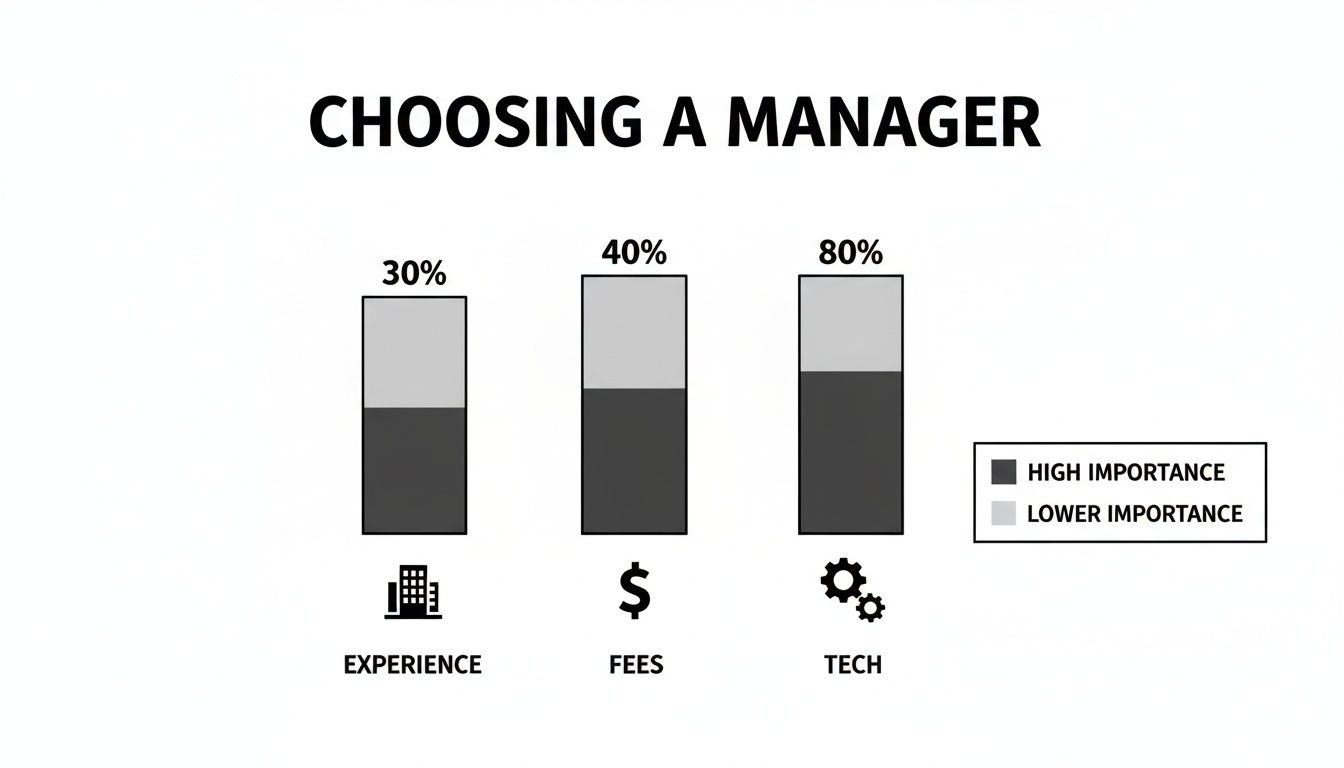
As you can see, while fees are a major factor, things like a manager’s experience and how they use technology are often just as—if not more—critical to owners.
Calculating Your Real Return on Investment
The real value of professional management isn’t just about the fees you pay; it's about the return you get on that investment. A top-notch manager saves you money in ways that can far outweigh their monthly cost.
Take a rental property in Beaumont, for example. Recent data shows the Inland Empire is seeing higher vacancy rates, around 6.0%, which is a direct hit to your cash flow. A professional Property Management Beaumont company can shrink that vacancy time by pricing the home perfectly, marketing it aggressively, and placing a high-quality tenant much faster.
Let's run the numbers. If your Beaumont property rents for $2,800/month, one month of vacancy costs you exactly that. If a professional manager, costing 8% ($224/month), can rent your property 30 days faster than you could on your own, you've already come out ahead by over $2,500 in the first year alone.
But the ROI doesn’t stop there. It's also about timely, cost-effective repairs that keep small problems from turning into budget-busting disasters. It’s about meticulous tenant screening that lowers your risk of property damage and agonizing evictions.
And for busy owners, the time you save from not having to field late-night emergency calls or deal with tenant disputes is priceless. When you factor in less vacancy, better tenant retention, and the protection of your asset, hiring a professional for Redlands property management becomes a clear financial win.
The Onboarding Process: What To Expect When You Hire A Manager

You’ve done the interviews, checked the references, and signed the management agreement. So, what happens now? The transition to a new property manager is a critical phase, and a smooth, well-organized onboarding process is the true mark of a professional East Valley property management company.
This isn’t just about handing over a set of keys. It's a systematic transfer of information and responsibility, designed to be completely seamless for both you and your tenants. A top-tier firm will guide you through every step, taking the anxiety out of the handover and setting the stage for a successful, long-term partnership. The goal is simple: zero disruption to your rental income and absolute continuity for your tenants.
The Initial Handover and Documentation Gathering
First things first, your new manager needs to get up to speed on your property. A proactive company will have a clear checklist ready for you, outlining every document and piece of information they need. The more organized you are on your end, the faster they can hit the ground running.
Think of this stage as building the master file for your property. Any gaps in information now can cause headaches or delays down the road, so being thorough is key.
To get the ball rolling, you’ll want to have these items ready:
- Existing Lease Agreements: A copy of the current, fully signed lease for each tenant is absolutely essential.
- Property Keys and Access: This means all the keys—for the unit, mailboxes, community gates, and any access codes.
- Tenant Contact Information: Full names, phone numbers, and email addresses for everyone living in the property.
- Security Deposit Details: You'll need documentation showing the exact amount collected and where that money is currently being held.
- Vendor and Contractor Contacts: If you have a trusted plumber or landscaper you'd like to keep using, share their contact info.
- Appliance Warranties: Gather any active warranties for the refrigerator, HVAC system, dishwasher, or other major appliances.
Property Inspection and Financial Setup
With the paperwork handled, your new manager will schedule a detailed inspection of the property. This is far more than a quick walkthrough. They’ll be documenting the property's current condition with extensive photos, identifying any immediate maintenance needs, and creating a baseline record. This initial report is crucial for accurately managing the security deposit when the tenant eventually moves out.
At the same time, the financial transition will get underway. Your manager will set up a dedicated trust account for your property's funds—this is where rent will be deposited and expenses paid from. You'll also provide your banking information so they can send your net rental income directly to you.
A professional property manager will introduce themselves to your tenants promptly and professionally. This introduction letter or email is vital. It informs the tenants about the change in management, explains the new rent payment procedures, and provides clear contact information for maintenance requests and other communications.
This step is huge for tenant retention. A clear, confident transition shows tenants their needs will continue to be met without interruption. For an owner in Redlands or Beaumont, this professional touch reinforces the value of having an expert team in charge and prevents you from getting calls from confused tenants.
Setting Expectations and Communication Protocols
The final piece of the onboarding puzzle is establishing exactly how you and your manager will communicate. A great company will want to understand your preferences right from the start. How involved do you want to be? Do you want to sign off on every repair, or are you comfortable setting a pre-approved spending limit for smaller issues?
This conversation should cover a few key points:
- Reporting Frequency: Clarify when you'll receive your monthly financial statements and what they include.
- Communication Channels: Do you prefer a quick phone call, an email, or updates through an online owner portal?
- Approval Thresholds: Decide on a dollar amount for maintenance or repairs that require your explicit approval before any work is done.
By getting these expectations squared away upfront, you build a transparent and effective working relationship from day one. This alignment is what makes hiring an expert for Yucaipa property management a true asset—it gives you the peace of mind that comes from knowing your investment is being handled exactly the way you want.
Questions We Hear All The Time From East Valley Landlords
If you own rental property around here, you've probably got questions. It's only natural. We've put together some quick answers to the most common things we get asked by property owners in our East Valley communities.
These are the real-world, rubber-meets-the-road concerns that owners face every day. We hope these clear, direct answers help you feel more confident about your investment.
What's The First Step To Hiring A Property Manager In Beaumont Or Yucaipa?
First things first, figure out what you really need. Then, start looking for local companies with a deep, proven track record right here in our area. You want a firm that lives and breathes Beaumont property management or has been a staple in the Yucaipa property management market for years.
Once you have a shortlist of two or three solid candidates, get them on the phone. Any reputable company will be happy to schedule a free, no-strings-attached consultation to talk about your property, listen to your goals, and walk you through how they can help. Be ready to share the basics about your rental, any current tenants, and what you expect from a partnership.
How Do You Handle Late Rent And Evictions?
As a professional East Valley property management company, we follow a strict, by-the-book process for late payments that’s 100% compliant with California law. The moment rent is past due, our process kicks in, starting with clear communication and official notices as outlined in the lease agreement.
We handle all the tenant conversations to resolve things professionally. If the rent still isn't paid, we move forward with the legally required notices and, if it comes to it, manage the entire eviction process with legal counsel. This shields you from massive legal risk and gets the situation resolved efficiently—it’s one of the most critical services a property owner can have.
The key is airtight adherence to California's landlord-tenant laws. One wrong move in the eviction process can lead to expensive legal battles and months of lost rent. That's exactly why you want an expert handling it.
Will I Still Be Involved In Decisions About My Property?
Of course. When you hire a property manager, you’re handing off the day-to-day grind, not signing away control of your investment. One of the first things we do is set up clear communication rules that fit how you want to work together.
You're the one who sets the boundaries. For instance:
- You might pre-approve any maintenance expense up to a certain limit, say $300.
- For anything bigger, you'll want to give direct approval before any work gets started.
You always have the final say on the big stuff, like approving new tenants, setting the rental rate, and authorizing major improvements.
How Do You Figure Out The Right Rent For My Redlands Property?
Setting the right rent for a home in a market like Redlands isn't guesswork—it's all about the data. A top-tier company providing Redlands property management will perform a detailed comparative market analysis (CMA).
This means we dig deep, comparing your property to similar homes that are currently available or were just leased in your immediate neighborhood. We look at everything: location, square footage, amenities, and overall condition. We also factor in local vacancy rates, broader market trends, and even seasonal demand to price your home where it needs to be—attracting great tenants quickly and putting more money in your pocket.
Have more questions? We've got you covered. Feel free to check out our full list of frequently asked questions.