
Typing "property management companies near me" into a search bar is the first move smart investors make when they're ready to turn a demanding rental into a truly passive asset. For property owners in communities like Redlands, Beaumont, Calimesa, Yucaipa, Loma Linda, Mentone, Highland, and Banning, California, hiring a local expert isn't just another expense—it's a strategic investment in your business.
Why Smart Investors Partner With Local Property Managers
Many owners start out managing their own properties, thinking they'll save a few bucks. It doesn't take long to realize that being a landlord is less of a passive side-gig and more of a demanding, high-risk second job. That's especially true here in California, where the maze of regulations is always changing.
Bringing a professional local firm into the picture completely changes the game. It’s about minimizing your risk while maximizing your returns.

From Hands-On Hassle to Passive Income
The biggest win? You get your time and peace of mind back. No more late-night calls about a broken water heater or awkward conversations chasing down rent. You hand off those operational headaches to someone else.
A professional manager handles the day-to-day grind, transforming your property from a source of constant stress into a source of consistent cash flow. This frees you up to focus on what really matters, whether that’s finding your next investment, growing your career, or just enjoying your life. To really get what these pros do, you can explore the detailed responsibilities in our guide on the role of a property manager.
The Tangible Benefits of Professional Management
Beyond saving you time, the advantages of professional oversight have a direct impact on your bottom line. Local experts come with proven systems and a deep understanding of the market that most individual landlords simply don't have.
- Higher-Quality Tenants: Our screening process goes way beyond a simple credit check. This leads to reliable tenants who pay on time and treat your property with respect.
- Lower Vacancy Rates: We know how to market properties effectively. A deep knowledge of the local rental market—from Beaumont property management to Redlands property management—gets your property filled fast.
- Efficient Maintenance: We have long-standing relationships with vetted, local contractors. That means repairs get done quickly and affordably, protecting the value of your asset.
- Legal Compliance and Risk Mitigation: Keeping up with California's landlord-tenant laws, Fair Housing rules, and local ordinances is a full-time job. A professional manager keeps you compliant and out of costly legal trouble.
The decision to hire a property manager is an investment in stability. It’s about creating a buffer between you and the complexities of tenancy, ensuring your asset is protected by legal expertise and operational excellence.
This professional approach is part of a massive, data-driven global industry. The U.S. property management sector is on track to grow from $81.52 billion in 2025 to $98.88 billion by 2029. This growth is driven by rising rents and tighter regulations, especially for the single-family homes and condos we manage right here in Yucaipa and Calimesa.
A key advantage of working with a local manager is their skill in marketing properties for full occupancy, which now includes mastering things like SEO strategies for property managers. With a staggering 60% of managers reporting an increased compliance workload, it’s easy to see why so many owners are choosing to delegate.
Defining Your Needs Before You Hire a Property Manager
Before you even start Googling "property management companies near me," the first—and most critical—step is to look inward. Finding the right property manager isn't about picking a generic service off a list. It’s about finding a strategic partner who gets your specific goals, understands your property type, and fits your personal style.
Skipping this self-assessment is like trying to hire an employee without a job description. You’re almost guaranteed to end up with a mismatch. Taking a few moments for this initial clarity is what separates a frustrating, costly partnership from a profitable, stress-free one. When you know exactly what you need, you can ask the right questions and instantly spot which companies are—and are not—a good fit for you.
Clarify Your Investment Goals and Property Type
First things first, what does success actually look like for you? Are you playing the long game, focused on aggressive appreciation, or is maximizing that monthly cash flow your number one priority? Your answer here really shapes the kind of management style you need.
An investor laser-focused on cash flow will want a manager who is a marketing powerhouse, someone who can slash vacancy days to the absolute minimum. On the other hand, an owner focused on appreciation might prioritize a partner who is obsessive about preventative maintenance to protect and enhance the property's long-term value.
The type of property you own is just as crucial. Managing a single-family home in Yucaipa is a completely different ballgame from overseeing a condo inside a Beaumont HOA.
- Single-Family Homes: These properties often demand more hands-on coordination for everything from landscaping and roof repairs to general upkeep. The manager's focus is on preserving the entire structure. For a deeper dive, check out our guide on property management for single-family homes.
- Condos or Townhomes: Here, the challenge is navigating the maze of HOA rules, shared amenities, and specific community regulations you find in places like Calimesa or Banning. Your manager must be skilled at handling this extra layer of bureaucracy.
Determine Your Desired Level of Involvement
This is where you need to be honest with yourself. There’s no right or wrong answer, only what works for you. How hands-on do you actually want to be? Setting clear expectations from day one is critical.
Are you the "set it and forget it" type of owner who just wants a monthly statement and a check? Or do you prefer to have the final say on all tenant applications and approve any maintenance request over, say, $300?
A great property management relationship is built on clearly defined boundaries and communication protocols. Knowing your preferred level of involvement helps you find a firm whose operational style matches yours, preventing future friction and misunderstandings.
Think about it this way: an emergency pipe bursts at your property in Highland. One owner might want a text message immediately, even if it's 2 AM. Another would rather the manager just handle it and put the details in the monthly report. Defining these preferences is absolutely essential.
Create Your Non-Negotiable Checklist
Once you have your goals and involvement level figured out, you can build a practical checklist. This list becomes your roadmap for interviewing potential companies. It helps you cut through the sales pitch and focus on the nitty-gritty operational details that truly matter for successful Yucaipa property management or Beaumont property management.
This simple exercise will help you clarify what a perfect partnership looks like for you, making it much easier to identify the right property management company.
Self-Assessment Checklist for Choosing a Property Manager
Use this checklist to clarify your needs and goals, ensuring you find a property management partner that aligns perfectly with your investment strategy.
| Assessment Area | Key Questions to Ask Yourself | What to Look for in a Partner's Response |
|---|---|---|
| Communication | How often do I want updates? What's my preferred method (email, phone, portal)? | A company offering an online owner portal and a single point of contact. |
| Financials | What level of detail do I need in my monthly reports? How quickly should funds be disbursed? | Clear, easy-to-read statements and a defined schedule for owner payments. |
| Maintenance | What is my spending approval threshold? Do I want to use my own vendors? | A transparent process for handling repairs and a network of vetted, insured contractors. |
| Tenant Screening | How strict do I want the screening criteria to be (credit score, income ratio)? | A documented, multi-step screening process that complies with all Fair Housing laws. |
Taking the time to define these needs upfront makes your search for a property manager far more targeted and efficient. It puts you in the driver's seat, ready to hire a true partner who will not only protect your asset but also help you crush your unique investment goals in the Inland Empire.
How to Vet Potential Property Management Companies
Okay, so you've done your initial search for "property management companies near me" and you've got a shortlist. Nice work. But now the real work begins—turning that list of names into a trusted partner who will protect your investment.
This is where you need to go beyond the glossy brochures and sales pitches. Generic questions just won't cut it. You have to dig into a company's day-to-day operations to see if they really have what it takes. Any truly professional firm will welcome your detailed questions; it’s their chance to show you they know their stuff.
Asking the Right Operational Questions
Your mission here is to uncover the "how" behind all their promises. It's easy for someone to say they do something, but a detailed, process-driven answer shows you they actually have the systems in place to deliver. I always tell owners to start with the two most critical functions: tenant screening and communication.
Instead of asking, "Do you screen tenants?" get specific. Try this:
"Walk me through your entire tenant screening process, beyond just pulling a credit score."
A solid answer won't be a one-liner. It should be a multi-step process. They should talk about verifying income (we look for pay stubs showing 2.5-3x the rent), calling previous landlords to check rental history, and running comprehensive background checks. This is the bedrock of good management for any firm offering quality Redlands property management or services in the surrounding areas.
Next, shift to technology and how they keep you in the loop:
"What kind of technology do you use for owner communication and financial reporting?"
The modern standard is a dedicated online owner portal, period. A great manager will immediately tell you about their portal and how you can use it to access financial statements, see inspection reports, and track maintenance requests anytime, day or night. That level of transparency is a huge green flag.
The image below shows the groundwork you should have already laid before you even start making these calls. Knowing your own goals makes this vetting stage so much more effective.
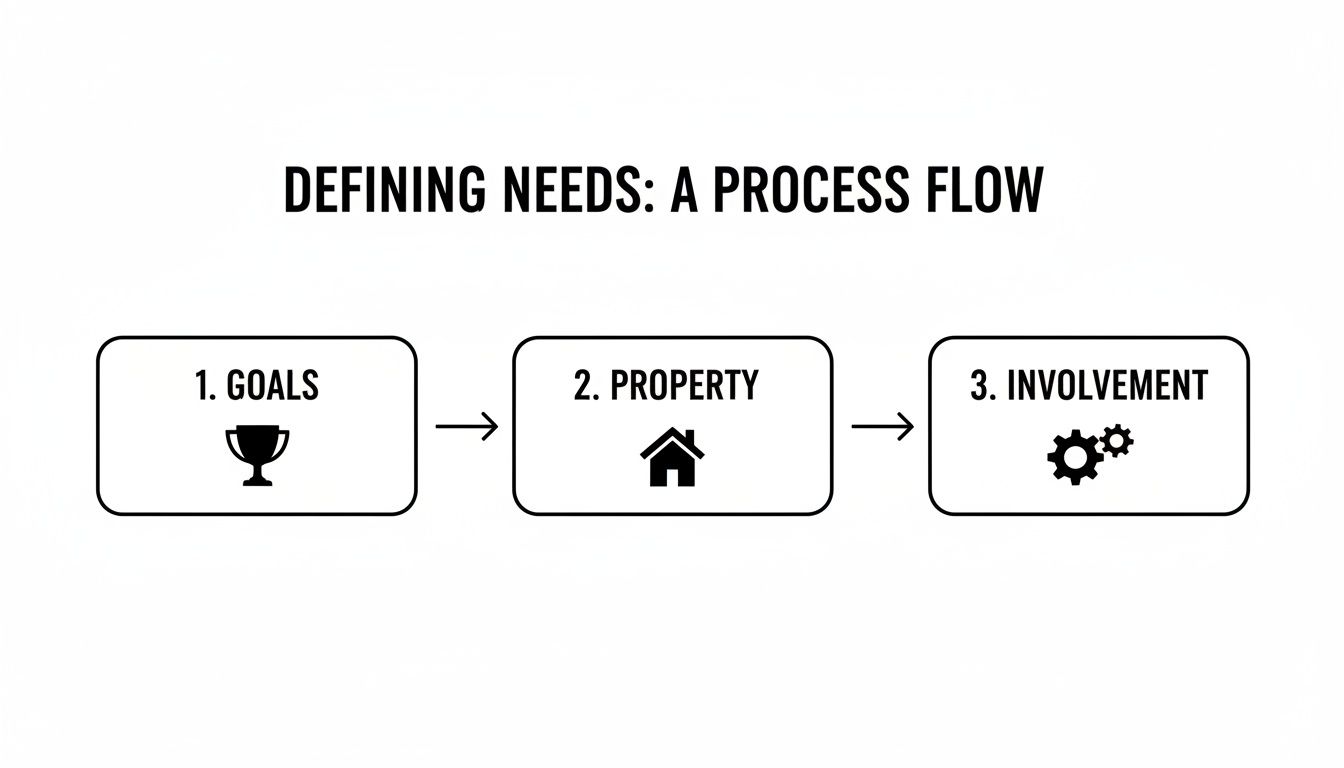
As you can see, figuring out your goals, property details, and how hands-on you want to be is the essential first step.
Test Their Expertise With Real-World Scenarios
Now, let's put them to the test. Real-world problems are what separate the pros from the amateurs. Posing a hypothetical situation forces them to think on their feet and reveals their practical problem-solving skills and local knowledge.
Throw them a curveball with a localized emergency:
"It's 2 AM on a Saturday. Your tenant in Highland calls with water pouring through their ceiling from a burst pipe. What happens next?"
A top-tier manager won't even hesitate. Their response should include having a 24/7 emergency line for tenants and, more importantly, a pre-vetted list of licensed and insured local plumbers they can dispatch immediately. They should also clearly explain how and when they would notify you, the owner, depending on the severity and estimated cost. If you're looking for more great questions like this, we have a complete guide on how to find a good property manager that you might find helpful.
Evaluate Their Tech Savvy and Local Knowledge
In today's rental market, technology isn't just a nice-to-have; it's a must-have for running things efficiently and keeping tenants happy. Digging into the tools they use, like some of the 12 Best Property Management Apps for 2025, tells you a lot about their commitment to quality service.
Technology is completely reshaping what it takes to provide effective Beaumont property management or property management Redlands services. Industry stats show that 80% of tenants now prefer to pay their rent online, and 72% want digital communication. It's no surprise that about 67% of property management companies are using specialized software to keep up.
This is exactly why we at AIM prioritize thorough tenant screening, secure online rent collection, and 24/7 maintenance coordination for owners seeking property management Yucaipa solutions. These systems mean fewer vacancies, less risk of late payments, and ironclad documentation for legal compliance—all non-negotiable here in California.
Understanding Management Fees and Contract Terms
The property management agreement isn't just another piece of paper to sign—it's the legal foundation of our partnership. Diving into the fine print is a step you can't afford to skip, as this document spells out every financial and legal detail of how we'll work together. Think of it as your best tool for choosing a partner who values transparency and is serious about protecting your investment.
A clear, well-written agreement from a reputable firm offering Beaumont property management or services in nearby communities like Redlands and Yucaipa won't leave you guessing. It empowers you to find a partner who truly aligns with your financial goals.
Decoding Common Fee Structures
As you search for "property management companies near me," you’ll quickly notice that fee structures are all over the map. The real trick is to look beyond the headline number and understand what you're actually paying for. A low monthly percentage can look tempting, but hidden charges can quickly turn a good deal sour.
Here are the most common fees you'll run into:
- Monthly Management Fee: This is the standard. It's typically a percentage of the collected monthly rent, usually between 8% and 12%. This covers the day-to-day work like collecting rent, talking to tenants, and sending you financial reports.
- Leasing or Tenant Placement Fee: This is a one-time fee for the heavy lifting of finding and placing a quality new tenant. It's often a portion of the first month's rent and pays for all the marketing, property showings, and deep-dive screening.
- Lease Renewal Fee: Some companies, including us, may charge a small flat fee when a great tenant decides to stay. This covers the administrative time spent negotiating terms and drafting the new lease documents.
- Maintenance Markup: Many managers coordinate repairs and might add a small percentage (around 10%) to vendor invoices. This simply covers the overhead of scheduling the work, supervising the job, and handling payments. A transparent company will always disclose this upfront.
The goal isn't to find the cheapest manager; it's to find the best value. A clear, straightforward fee structure often brings more peace of mind and better financial results than a low base fee loaded with surprise charges.
Always, always ask for a complete fee schedule in writing before you sign anything. This document should list every possible charge you could encounter, from eviction coordination to routine inspections. For a deeper dive, check out our guide on understanding the complete property management fee structure.
What to Look for in the Contract Fine Print
Beyond the fees, your management agreement is a powerful tool for managing risk. A professional contract is built to protect you, your tenant, and the management company. It defines everyone's responsibilities and sets clear procedures, which is absolutely essential in a state with regulations as complex as California's.
Your contract should clearly spell out:
- Scope of Authority: What decisions can the manager make on their own? This usually includes a pre-approved spending limit for maintenance, like $300, so we can fix small issues quickly without bothering you.
- Termination Clause: How do you or the manager end the partnership if things aren't working out? Look for reasonable notice periods and clear, fair conditions for termination.
- Owner Responsibilities: What are your obligations? This typically covers things like maintaining proper insurance, keeping the property in a safe condition, and funding a small reserve for repairs.
- Legal Compliance: The agreement should explicitly state the manager's commitment to upholding all Fair Housing laws and local rules in cities like Banning, Highland, or Loma Linda.
Behind every solid firm offering Yucaipa property management is a deep understanding of risk—something many DIY landlords underestimate. Industry data shows 39% of property managers spend over 20 hours a month just on maintenance, and 60% report a heavier workload due to compliance rules alone. This is particularly true in California, where safety codes and eviction laws are constantly changing.
It’s no surprise the global market for property management is projected to hit $31.87 billion by 2029 as more investors decide to hire a property manager for their expertise. A rock-solid contract is your first and best defense in this complex environment.
Making Your Final Decision and Starting Off Right
You’ve done the legwork. You’ve interviewed candidates, compared contracts, and now you have a short list of solid contenders. It’s time to make the final call, but this isn't just about picking the cheapest option. It’s about choosing a long-term partner who will protect your investment and help it grow.
After digging through all the details, the right choice often comes down to a few key things that numbers can't always capture. How did their communication style feel? Are they up-to-speed with technology? And how well do they really know your neighborhood? One company might have a slick online portal, but another might have deep connections with local vendors in Beaumont property management, which could save you a ton on repairs.

A Framework for Your Final Choice
To keep things clear, try making a simple decision chart. List your top two or three companies and score them based on what you decided was most important from the get-go.
Run through these final checks before you sign anything:
- Go with Your Gut: Who did you feel most comfortable talking to? Trust your instincts. You want a manager who feels approachable and is easy to get ahold of when you need them.
- Double-Check the References: Did the owners you spoke with back up what the company promised? Hearing it straight from a current client is one of the most reliable ways to gauge what your experience will be like.
- Test Their Local Knowledge: Which company really knew the specifics of your area, whether it’s Yucaipa property management or the rental scene in Redlands? Their insights into local rent trends are what will make you money.
Your final decision should feel less like a transaction and more like the beginning of a vital business relationship. Choose the partner who not only has the right systems but also gives you the most confidence in their ability to handle the unexpected.
Once you've made your choice, the next step is a smooth handover. This onboarding phase is absolutely critical for setting your partnership up for long-term success.
The Onboarding Process: A Smooth Handover
A truly professional property management company won’t just have you sign a paper and disappear. They'll walk you through a clear, structured onboarding process. This isn't just administrative busywork; it's about systematically transferring all the necessary information so they can take over without a single hiccup. A messy start almost always leads to a rocky relationship.
Here’s what a good onboarding process usually looks like:
- Signing the Management Agreement: This is the official document that locks in the partnership and details everyone's responsibilities.
- Handing Over Key Documents: You'll need to provide all the essential paperwork. This includes things like the current lease agreement (if the property is occupied), tenant contact info, and any move-in inspection reports.
- Providing Keys and Access: This one’s simple but crucial. You'll hand over all sets of keys, garage door openers, and any access codes they'll need.
- Setting Up the Financials: You'll provide your bank details for direct deposits and set up a small reserve fund. This is standard practice and is used for minor, pre-approved repairs so things can get fixed quickly.
Getting Communication Right from Day One
Finally, onboarding is the perfect time to set clear expectations for communication. Find out who your main point of contact will be and get logged into their owner portal. This is your chance to clarify how you prefer to be contacted and set your approval limit for maintenance expenses.
This final phase is more than just paperwork. It’s about building a strong foundation. When you choose your partner carefully and engage in the onboarding process, you're ensuring your property is in capable hands. That's how you get to enjoy the benefits of your investment without the daily headaches—the real reason you started looking for "property management companies near me" in the first place.
Common Questions About Hiring a Local Property Manager
Deciding to hand your property over to a professional is a big step. It’s a major business decision, and it's only natural to have a few questions as you weigh the costs and benefits.
To help you get the clarity you need, we've gathered some of the most common questions we hear from property owners in the Inland Empire when they start looking for "property management companies near me." Let's cut through the noise and give you some straight answers.
How Much Do Property Management Companies Near Me Typically Charge?
This is usually the first question on every owner's mind, and for good reason. The short answer is: it varies. Most companies in areas like Redlands or Beaumont will charge a monthly management fee that’s a percentage of the collected rent. You can typically expect this to be somewhere between 8% and 12%.
But that's not the full picture. You need to be aware of other potential one-time fees for specific services.
- Lease-Up or Tenant Placement Fee: This covers all the heavy lifting of marketing your rental, showing it to qualified prospects, and running a comprehensive screening process. It's often equal to a portion of the first month's rent.
- Lease Renewal Fee: When you've got a great tenant who wants to stay, there's a smaller fee for handling the new lease paperwork and negotiations.
- Maintenance Coordination: Some firms might add a small markup to vendor invoices. This covers their time and effort in coordinating repairs so you don't have to.
The real key here isn't just finding the lowest percentage—it's about finding the most transparent company. A rock-bottom management fee is no bargain if it comes with a laundry list of hidden charges. Always, always ask for a complete fee schedule in writing before you sign anything.
What's the Real Value of Hiring a Manager for Just One Rental Property?
If you only own a single rental property, you might be wondering if it's worth the cost. The value is immense, and it really comes down to two things: risk mitigation and time savings.
California's landlord-tenant laws are a minefield. They're notoriously complex and change all the time. For an independent owner, one small mistake—like mishandling a security deposit—can spiral into an incredibly expensive legal headache. A professional manager knows these laws inside and out, keeping you compliant and protected.
They also bring professional-grade marketing and a rigorous screening process to the table, which means less vacancy time and a higher chance of landing a reliable, long-term tenant.
Think of it this way: for your single rental in Yucaipa or Loma Linda, avoiding just one eviction or one extra month of vacancy can easily pay for an entire year's worth of management fees. The peace of mind alone is priceless.
How Involved Will I Need to Be After I Hire a Property Manager?
This is one of the best parts—your level of involvement is completely up to you. Most owners we work with are looking for a hands-off experience. They want to offload the day-to-day stress of tenant calls and maintenance issues and simply see the rent deposited into their account each month.
You can set these boundaries right in the management agreement. For example, you can authorize your manager to handle any repair under a certain amount, like $300, but require your approval for anything more expensive.
A great manager will also provide an online owner portal. This gives you 24/7 access to financial statements, maintenance records, and inspection reports. You can stay as informed as you want to be, without ever having to take a late-night call about a leaky faucet yourself.
How Do Local Managers Handle Maintenance and Repairs?
A reputable local firm offering Yucaipa property management or Beaumont property management isn't just finding a plumber on Google when something breaks. They have a built-in network of trusted, licensed, and insured local vendors they've worked with for years. These are the pros who can handle anything from a minor drip to a middle-of-the-night emergency.
This network saves you the headache and uncertainty of scrambling to find someone reliable. The manager handles everything—scheduling the visit, overseeing the work, and managing the invoice.
As we mentioned, your management agreement will specify a spending limit for repairs your manager can approve on their own. For bigger jobs, they’ll get multiple quotes and present them to you for a final decision. This system keeps your property in top shape while ensuring you always have control over major expenses.
We know you probably have more questions, and we've put together a ton of information to help. For a deeper dive, you can find detailed answers in our comprehensive FAQs section. It’s a great resource designed to give you the confidence to move forward.