
California's rental landscape isn't the Wild West. It’s a structured environment governed by a detailed set of landlord-tenant laws that spell out the rights and responsibilities for both property owners and renters.
These rules touch every part of the rental process, from signing a lease and paying a security deposit to ensuring the property is livable and navigating the eviction process. Getting a handle on these foundational rules is the first step to making sure your rental experience is a success—and stays on the right side of the law.
Understanding Your Foundational Rights and Duties
Think of the California rental market as a partnership. For the relationship to work, both landlords and tenants have specific roles they need to play. The lease agreement is the official rulebook for your specific property, but state law provides the bedrock legal structure that protects everyone involved.
At its core, it's simple. The landlord’s main job is to provide a safe, habitable home. The tenant’s primary duty is to pay rent on time and take care of the property.
A landlord's most critical responsibility is the implied warranty of habitability. This isn't just a friendly suggestion—it's a legal promise baked into every rental agreement in California. It means the unit must be fit for a person to live in from the moment the tenant gets the keys.
This warranty covers the basics that make a home livable, including:
- Effective waterproofing for the roof and exterior walls to keep the elements out.
- Plumbing and gas facilities that are in good working order.
- A reliable source of both hot and cold running water.
- A functioning heating system.
- Safe and operational electrical lighting.
- Clean and sanitary buildings and common areas, free of pests and garbage.
- Enough trash cans for the property.
The Tenant's Core Responsibilities
On the other side of the coin, tenants have their own clear-cut duties. Paying rent on time and in full is the most obvious one, but their obligations don't stop there. Tenants are also expected to keep their home clean, dispose of their trash properly, and not deliberately damage anything.
They also have to use appliances and fixtures the right way. For example, if a tenant’s own negligence leads to a major plumbing clog, they might be on the hook for the repair bill, not the landlord. This balance of duties is what keeps the property in good shape for everyone.
The Lease Agreement as Your Playbook
The lease agreement is the single most important document in any tenancy. It puts everything in writing, from the rent amount and due date to the rules on pets or guests. A solid, well-written lease is the best tool for preventing future arguments because it sets crystal-clear expectations from the start.
While you can have an oral agreement for a tenancy under one year, a written lease is always the smarter move for legal protection and clarity.
A strong lease agreement acts as a preventative measure, addressing potential points of conflict before they arise. It transforms abstract legal requirements into concrete, actionable rules that both parties can follow, reducing the likelihood of disputes over issues like security deposits or property alterations.
This legal framework didn't appear overnight. Much of California's fair housing protections grew out of the civil rights struggles of the 1960s, like the Rumford Fair Housing Act of 1963. After facing intense opposition and even being temporarily overturned, the California Supreme Court stepped in. These events paved the way for the robust Fair Employment and Housing Act (FEHA) in 1980, which outlaws discrimination and remains a cornerstone of landlord tenant laws California.
Long-Term Rentals Build Stability
For property owners in communities like Redlands, Beaumont, Calimesa, Yucaipa, Loma Linda, Mentone, Highland, and Banning, understanding these laws is especially important when mapping out a rental strategy. While short-term rentals might seem flexible, long-term leases deliver something far more valuable: stability, a predictable income stream, and a lower vacancy rate. Tenants who stay longer are more likely to treat the property like their own home, which translates to better care and fewer costly turnovers.
At AIM, we have focused exclusively on long-term rentals since our founding in 1997. This dedicated approach has allowed us to build mature, lasting relationships in the community, benefiting property owners by attracting responsible tenants who become part of the neighborhood fabric. We do not manage short-term rentals because our experience proves that a stable, long-term tenancy is the most effective way to protect your investment and maximize your returns.
If you’re thinking about renting out your property, it's worth understanding the powerful advantages of a long-term strategy. You can learn more by checking out our guide on renting your home in Yucaipa, Redlands, or Beaumont.
Mastering California Rent Control and Lease Agreements
Navigating the web of California's rent control laws can feel like one of the most intimidating tasks for a property owner. The best way to think about it is like a set of guardrails on the highway of rental pricing—they're there to keep things fair and predictable for tenants, while still giving you room to run your business. The trick is knowing exactly where those guardrails are.
At the center of it all is the California Tenant Protection Act (AB 1482). This major piece of legislation doesn’t freeze rents, but it does put a very clear ceiling on how much you can raise them each year. This is what stops sudden, massive price hikes that could push out good, long-term residents.
Understanding The Statewide Rent Increase Cap
Once you break it down, the formula from AB 1482 is pretty straightforward. For any property covered by the law, you can raise the rent annually by 5% plus the local inflation rate (which is measured by the Consumer Price Index, or CPI). But here's the key: the total increase can never go above 10% in any 12-month period.
This two-part cap creates a predictable system. Even if inflation goes through the roof, landlords know the absolute maximum increase is locked at that 10% ceiling. It’s a protection for tenants against wild market swings.
But one of the most critical parts of AB 1482 for landlords is knowing which properties are exempt. Not every rental in California falls under this statewide cap, and getting this right is essential for staying compliant.
- Newer Buildings: Properties that got their certificate of occupancy within the last 15 years are exempt. This is a rolling window, designed to encourage new housing construction.
- Single-Family Homes & Condos: Most are exempt, but there's a huge catch. The owner can't be a corporation, a real estate investment trust (REIT), or an LLC where one of the members is a corporation.
- Owner-Occupied Duplexes: If you own a duplex and live in one of the units, the other unit is exempt from the rent cap rules.
To give you a clearer picture, here’s a quick breakdown of how the statewide rent control law works.
Statewide Rent Control (AB 1482) At a Glance
| Feature | Provision Details | Common Exemptions |
|---|---|---|
| Annual Rent Cap | 5% + local CPI, not to exceed 10% total. | Buildings newer than 15 years. |
| "Just Cause" Eviction | Landlords need a valid, stated reason to terminate a tenancy after 12 months. | Most single-family homes and condos not owned by corporations. |
| Tenant Notification | Landlords must provide written notice if a property is exempt from the law. | Duplexes where the owner occupies one of the units. |
This table covers the basics, but AB 1482 was a massive shift in California's housing policy, designed to give tenants stronger footing in a tough market.
The Lease Agreement: Your Legal Blueprint
If AB 1482 sets the statewide rules, your lease agreement is the specific game plan for your property. It’s the legally binding contract that spells out every detail of the tenancy, from rent payments to house rules. The type of lease you use has a huge impact on how you manage your rental.
In California, you're generally working with two kinds of leases:
- Fixed-Term Lease: This is what most people think of—a lease for a set period, usually one year. The rent is locked in for the entire term, offering stability for both you and the tenant.
- Month-to-Month Lease: This agreement rolls over every month until either you or the tenant gives proper notice to end it. It offers a lot more flexibility but less long-term security.
For property owners in areas like Redlands, Loma Linda, and Highland, we almost always find that a stable, long-term lease is the smarter move. Good, long-term tenants mean consistent income and fewer headaches from constant turnover. That focus on stability has been a core part of our philosophy at AIM since we opened our doors in 1997.
Staying on top of new laws is just as important. You can read more about what's coming down the pipeline in our article on new California laws affecting landlords in 2025.
The Lawful California Eviction Process Step-by-Step
Let's be honest: eviction is one of the most difficult and legally complicated parts of being a landlord. It's not as simple as asking someone to leave. It's a formal legal process, and in California, the rules are ironclad. If you try to cut corners or handle things yourself, you can find yourself in serious legal and financial trouble.
The entire foundation of a legal eviction in California rests on one key concept: "just cause." Thanks to the Tenant Protection Act (AB 1482), you can't just end a tenancy on a whim after a tenant has lived in your property for 12 months or more. You need a legally valid reason, and those reasons are sorted into two distinct categories.
At-Fault vs. No-Fault Just Cause
Getting a handle on the difference between these two eviction types is your first, most important step. Each one has its own specific rules, notice requirements, and obligations for you as the landlord.
At-Fault Just Cause is exactly what it sounds like—the tenant has done something wrong. Common reasons include:
- Failing to pay rent.
- Violating a major term of the lease agreement.
- Creating a nuisance or causing serious damage to the property.
- Engaging in criminal activity on the premises.
In these cases, you're reacting to a tenant's breach of the agreement. The process usually kicks off with a formal written notice, like a 3-Day Notice to Pay Rent or Quit.
No-Fault Just Cause, on the other hand, is when you need to take back the property for reasons that have nothing to do with the tenant's behavior. This could be because:
- You or a close family member plan to move into the unit.
- You're pulling the property off the rental market entirely.
- The property needs substantial renovations that can't be done while it's occupied.
When it's a no-fault situation, landlords are typically required to provide the tenant with relocation assistance, which is usually one month's rent. This payment acknowledges that you're disrupting the life of a tenant who has followed all the rules.
The Formal Unlawful Detainer Process
So, what happens if you serve a valid notice—like a 3-Day Notice to Pay Rent—and the tenant doesn't comply? This is where many landlords make a critical mistake. You cannot, under any circumstances, change the locks, turn off the utilities, or move their belongings out. That's an illegal "self-help" eviction, and the penalties are severe.
Instead, you must file a lawsuit in court.
This specific type of lawsuit is called an unlawful detainer. It's the only legal way to reclaim possession of your property from a tenant who won't leave. Both sides will have a chance to present their case, and a judge will issue a ruling. If you win, the court will order a sheriff to legally and safely remove the tenant.
California's tenant protection laws have a long, storied history, representing a constant balance between a landlord's rights and a tenant's need for security. Laws like the Costa-Hawkins Rental Housing Act of 1995 and the Ellis Act of 1985 have shaped today's rental landscape into a system where following procedure is everything.
The infographic below breaks down a common point of confusion that can lead to disputes: calculating rent increases.
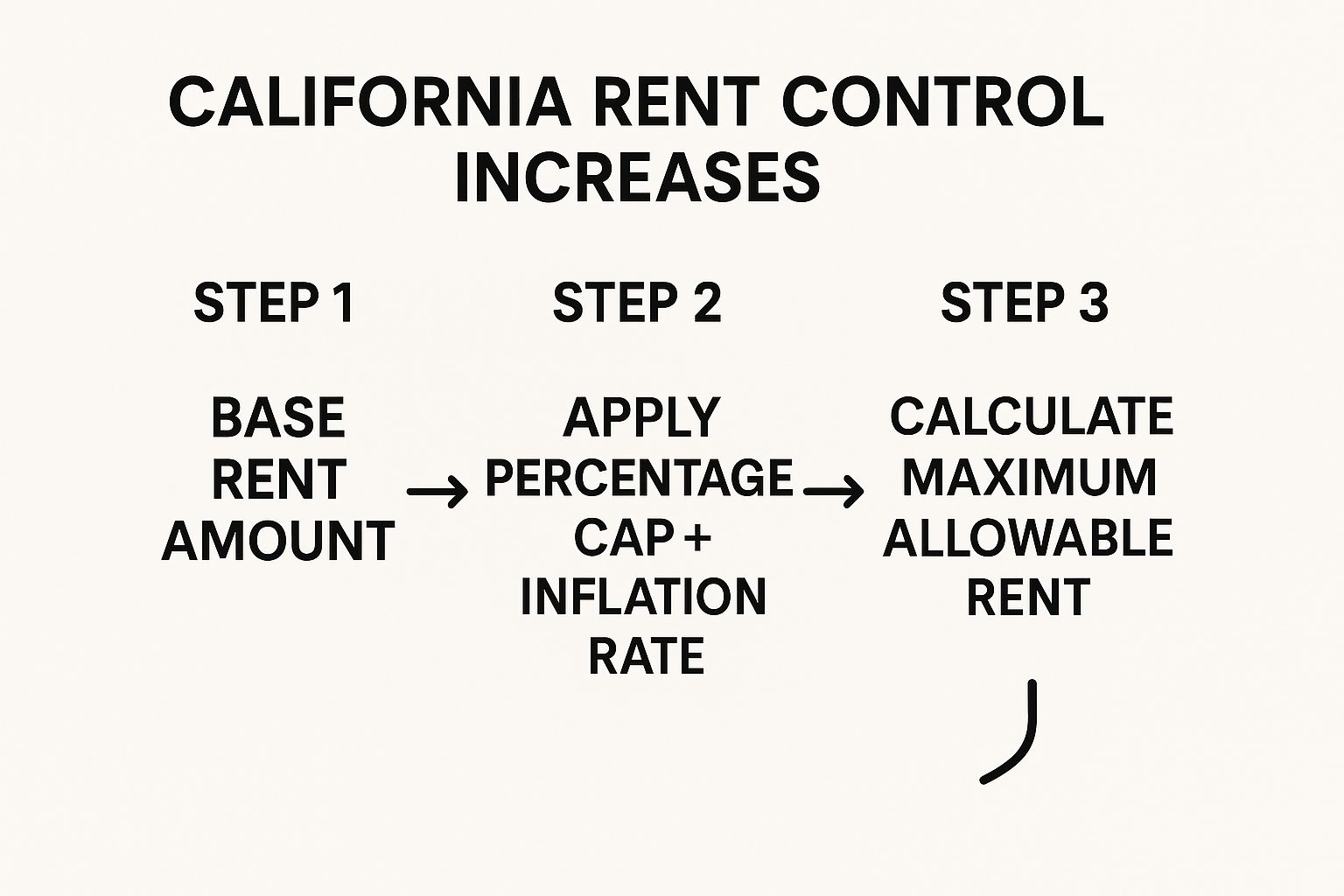
This simple, three-step formula under AB 1482 helps ensure that any rent hike is compliant with the statewide cap, preventing unlawful increases that could spark a conflict.
Crucial Takeaway: A landlord can never physically remove a tenant, lock them out, shut off utilities, or remove their belongings without a court order. These actions are illegal and will result in significant legal trouble for the property owner.
The sheer complexity of the eviction process is why so many property owners turn to professional management. At AIM, we’ve specialized in long-term rentals in communities like Redlands, Highland, and Banning since 1997. Our experience and mature relationships with the community allow us to manage tenancies proactively, often preventing the kinds of conflicts that lead to eviction in the first place. When a tough situation does arise, our experience ensures every legal step is handled meticulously, protecting you and your investment. If you're in a tough spot, it helps to know the right way of dealing with nightmare tenants.
Managing Security Deposits and Move-Out Procedures

Few areas of landlord tenant laws in California spark more arguments than the security deposit. It’s best to think of it as a financial handshake when a tenancy begins—a gesture of trust. But when the tenant moves out, that handshake has to be unwrapped with absolute legal precision.
Honestly, botching the security deposit return is one of the fastest ways to land yourself in a dispute. To protect your investment, you have to get the strict California rules right.
From day one, the law sets clear limits. For an unfurnished unit, the most you can ask for is two times the monthly rent. If the unit is furnished, that cap goes up to three times the rent. These aren't just guidelines; they're hard limits designed to keep deposits reasonable for tenants.
The Critical 21-Day Countdown
The moment a tenancy ends, a legal clock starts ticking. California law gives you exactly 21 calendar days from the tenant's move-out date to do one of two things: return the full security deposit, or provide an itemized list of deductions along with whatever balance is left.
This 21-day deadline is non-negotiable. Miss it, and you could be on the hook for returning the entire deposit, no matter how much damage was done.
That’s why having a smooth, organized move-out process is so important. You need to get inspections done and repair quotes lined up quickly so you never find yourself scrambling against that legal window.
Making Lawful Deductions
Of course, the whole point of a security deposit is to cover your costs if a tenant doesn't hold up their end of the bargain. But you can't just deduct for anything you feel like. The law is crystal clear about what’s allowed.
Here are the only legally valid reasons to make deductions:
- Unpaid Rent: This one's simple. If a tenant leaves while still owing rent, you can use the deposit to cover it.
- Cleaning Costs: You can deduct what it costs to get the unit back to the same level of cleanliness it was in when the tenant first moved in.
- Repairing Damages: This covers anything beyond normal wear and tear.
- Restoring or Replacing Property: If the lease allows it, you can also deduct costs for things like replacing missing furniture or other personal property.
The guiding principle here is restoration, not renovation. Your goal is to return the property to its original condition, minus the minor effects of someone actually living there. It’s not a chance to get a free upgrade on the tenant’s dime.
Damage vs. Normal Wear and Tear
This is the gray area where so many landlords get tripped up. The distinction is crucial. You can absolutely charge a tenant for that giant hole they punched in the wall (that's damage). But you can't charge them for paint that’s faded a bit after five years (that's normal wear and tear).
Think of it this way: a worn spot in the carpet from years of foot traffic is "wear and tear." A huge red wine stain is "damage." Scuff marks on the wall from moving a couch are expected, but a broken window is not. Making fair, legally sound deductions means you have to be honest about the difference.
This is where years of experience really pay off. Having managed rentals in communities like Redlands, Loma Linda, and Highland since 1997, we've seen it all. Our mature relationships with local vendors mean that if repairs are needed, they get done right, done fast, and documented perfectly—protecting you from any legal blowback. That deep community knowledge is how we make sure your property is cared for and your obligations are always met.
Why Smart Investors Choose Professional Property Management
For property owners in communities like Redlands, Beaumont, Yucaipa, and Loma Linda, navigating California's intricate web of rental laws can feel like a full-time job. Staying compliant isn't just about avoiding a few fines; it's about protecting your entire investment. This is where partnering with an experienced property manager stops being a simple convenience and becomes a powerful strategic decision.
Think of a seasoned property manager as a shield. They stand between you and the constant stream of legal complexities, operational headaches, and tenant-related challenges that come with owning rental property. With deep-rooted community relationships built since 1997, a professional team doesn't just manage your property—they safeguard your investment and, just as importantly, your peace of mind.
The Clear Advantage of Long-Term Stability
When you get into the rental market, you face a fundamental choice: long-term or short-term rentals? While the high nightly rates of short-term rentals can seem tempting, that strategy often comes with the hidden costs of high turnover, increased wear and tear, and relentless management demands. We believe a long-term rental strategy is the smarter, more sustainable path to building wealth.
Long-term rentals attract tenants looking for a home, not just a place to stay for a weekend. These are the people who are far more likely to care for your property as if it were their own, which means fewer maintenance calls for you and a more stable, predictable income stream. This stability is key, as it minimizes vacancies and all the costs that come with them, creating a healthier bottom line month after month.
The core difference really comes down to the tenant relationship. Long-term tenants become part of the community fabric, offering a consistency and reliability that the transient nature of short-term rentals simply cannot match. This is the secret to minimizing risk while maximizing your return on investment.
A long-term focus also allows a property manager to build strong, mature relationships with tenants and the local community, from Mentone to Highland to Banning. At AIM, we've exclusively managed long-term rentals since 1997 because our experience proves it's the most effective way to protect our clients' assets.
Long-Term Rentals vs Short-Term Rentals
The choice between a long-term and short-term strategy has significant implications for your income, workload, and overall investment health. Here’s a quick breakdown of why we focus exclusively on the former.
| Aspect | Long-Term Rentals (Our Focus) | Short-Term Rentals |
|---|---|---|
| Income Stream | Provides a consistent and predictable monthly income. | Generates fluctuating, seasonal income with no guarantees. |
| Tenant Quality | Attracts stable tenants who invest in caring for the property. | High tenant turnover often leads to increased wear and tear. |
| Vacancy Rates | Lower vacancy rates and minimal turnover costs. | Frequent vacancies between guests, plus constant marketing efforts. |
| Management | Simpler, more streamlined management and communication. | Demands intensive, daily management of bookings and cleanings. |
| Community Impact | Fosters community stability with residents who have local ties. | Can sometimes create friction with neighbors due to transient guests. |
This comparison highlights why we champion the long-term rental model. It aligns perfectly with the goals of serious investors who prioritize asset preservation and reliable growth over the high-risk, high-effort churn of the short-term market. We stick to what we know works, which is why we do not do short-term rentals for our customers—it keeps our expertise laser-focused.
A Cost-Effective Solution for California Landlords
Many property owners hesitate to hire a manager because they're worried about the cost. But the truth is, the right management partner saves you money by helping you avoid costly legal mistakes, minimizing vacancies through quick turnarounds, and securing reliable tenants who pay on time. Our pricing structure is designed to be both competitive and transparent, delivering exceptional value without hidden fees.
We offer a low monthly management fee of just 7.9%, which is highly competitive. This ensures you keep more of your rental income each month. On top of that, our tenant placement fee is a straightforward $750, with no other add-on fees. This simple, honest approach means you know exactly what to expect and can budget effectively.
For landlords juggling the ever-changing landscape of landlord tenant laws California, this kind of partnership is invaluable. By handing over the daily operations, you free yourself to focus on your bigger investment goals. Entrusting your property to a team with decades of local experience isn't an expense—it's one of the smartest investments you can make.
Discover more about how our dedicated approach can benefit you by exploring our professional property management services.
Common Questions About California Landlord Tenant Laws
Ever wonder what happens when a tenant’s heater dies during a January freeze? Or whether you can pop into the unit after giving a quick phone call? Even seasoned landlords bump into these curveballs.
California law demands precision. Below, we answer the questions you’ll face most often, so you can navigate repairs, inspections, and visitor policies without second-guessing.
What Are the Rules for a Landlord Entering a Rental Property in California
In California, your tenant’s home is sacrosanct. You need to hand over 24 hours of written notice—no exceptions, unless a fire breaks out or the roof caves in.
Entry Notices Should Include:
- Date of entry
- Approximate time window
- Clear purpose, like:
- Performing repairs
- Showing the unit to prospects
- Conducting a move-out walkthrough
Only these reasons pass muster; anything else risks breaching a tenant’s right to privacy.
What Happens if a Landlord Fails to Make Necessary Repairs
Picture a dripping ceiling that’s turned your tenant’s floor into a slip-and-slide. Once the tenant delivers a written notice, you have a reasonable time to fix it.
If you stall, tenants can:
- Use the “repair and deduct” option for smaller issues
- Withhold rent—but place it into escrow, not their pocket
Both paths come with legal hoops. When in doubt, it’s wise to consult a professional before things get messy.
Balancing property rights with tenant privacy and safety is a constant theme in California law. Adhering to notice requirements and repair timelines isn’t just good practice—it's a legal obligation that prevents disputes and protects your investment.
Can a Landlord Prohibit Guests in a Rental Property
Tenants have a right to entertain friends and family. You can’t impose a blanket ban on visitors.
Leases may limit stays to 14 consecutive days before labeling a guest an unauthorized occupant. Beyond that, you can work out an addendum or a new screening process.
This policy reflects the tenant’s right to “quiet enjoyment,” meaning everyday living—social gatherings included—shouldn't require your permission. For more on creating fair and appealing homes, check out our guide on identifying quality rental properties.
On the flip side, tenants should consider covering their own backs. Securing renters insurance is a smart move to protect against theft, fire, or water damage.
Over the years, property owners in Redlands, Beaumont, Calimesa, Yucaipa, Loma Linda, Mentone, Highland, and Banning, California have turned to AIM for guidance. Since 1997, we’ve fine-tuned our process: a straightforward 7.9% management fee and a one-time $750 placement fee with no other add-on fees. Our experience and mature community relationships speak for themselves. Let us handle the details—you reap the rewards. Visit https://aim-properties.com to learn more.