
The best way to resolve a landlord-tenant dispute is to stop it from ever happening. It all starts long before a conflict ever has a chance to bubble up, with a foundation built on clear expectations and rock-solid documentation. This proactive approach turns potential arguments into simple matters of referring back to the lease.
Your Proactive Playbook for Preventing Disputes
That old saying, "an ounce of prevention is worth a pound of cure," couldn't be more true in property management. The smartest strategy is to build a solid, legally-sound foundation for your rental from day one. It’s an approach that not only protects your investment but also helps foster a positive, professional relationship with your tenants. For landlords in communities like Redlands, Beaumont, Calimesa, Yucaipa, Loma Linda, Mentone, Highland, and Banning, this forward-thinking mindset is what separates successful property owners from struggling ones.

The Lease Agreement as Your First Line of Defense
Think of your lease agreement as more than just a formality—it's the single most important document in your landlord-tenant relationship. A generic template you download online just won't cut it. A strong lease is a detailed playbook that clearly lays out the rights and responsibilities for both you and your tenant, leaving absolutely no room for misinterpretation.
To be truly effective, your lease needs to be tailored to California law and your specific property. Make sure it includes crystal-clear clauses on:
- Maintenance Responsibilities: Spell out who handles what. For example, clarify that the tenant is responsible for small things like changing lightbulbs, while you're on the hook for major systems. Understanding the value of regular plumbing maintenance is a perfect example of how you can get ahead of issues before they become emergencies.
- Communication Protocols: Define how you'll officially communicate. Specify the required methods (like an online portal or email) for maintenance requests and other formal notices.
- Property Use and Rules: Get specific about rules for guests, quiet hours, pets, and any modifications to the property. The more detailed you are, the fewer disagreements you'll have later.
By setting these expectations in writing, you create an authoritative reference point that can shut down many potential disagreements before they even start. It’s all about clarity.
The Power of Meticulous Move-In Documentation
Disputes over security deposits are one of the most common headaches for landlords. The best way to neutralize them is with a thorough move-in inspection report, complete with tons of photos and even video. This process creates a time capsule of the property's exact condition before the tenant moves a single box in.
Do a walkthrough with the tenant and have both of you sign off on a detailed checklist. Note every single scratch, scuff, or pre-existing ding. This shared record becomes indisputable proof of the property's starting condition, which makes the move-out inspection objective and drama-free. It protects you and the tenant from "he said, she said" arguments over damages.
Starting with the Right Tenant
At the end of the day, the ultimate prevention strategy is placing a reliable, responsible tenant in your property from the get-go. This is where a rigorous, professional screening process is worth its weight in gold.
Even with the best intentions, things can go wrong. In 2023, fair housing organizations recorded a staggering 34,150 complaints related to housing discrimination, with disputes in the rental market making up 83.41% of all cases. Many of these issues could have been avoided with proper oversight. A thorough and compliant screening process isn't just a good idea—it's your first and best line of defense. A professional approach to tenant screening makes the process easier and helps you find the qualified residents who will treat your property with respect.
To keep your strategy organized, here's a quick checklist of proactive steps you can implement.
Dispute Prevention Checklist for California Landlords
| Preventative Action | Key Objective | AIM Management Solution |
|---|---|---|
| Ironclad Lease Agreement | Set clear, legally-compliant expectations for rent, maintenance, and property rules. | We draft and manage custom, California-specific leases that protect your interests. |
| Detailed Move-In/Out Inspections | Create photo/video evidence of property condition to prevent security deposit disputes. | Our team conducts thorough, documented inspections to create an objective record. |
| Rigorous Tenant Screening | Place reliable, qualified tenants by checking credit, background, and rental history. | Our comprehensive screening process vets applicants to find responsible long-term tenants. |
| Clear Communication Channels | Establish formal protocols for maintenance requests and official notices. | We provide a tenant portal for streamlined, documented communication. |
| Proactive Maintenance Schedule | Address small issues before they become large, costly problems and tenant complaints. | We coordinate regular maintenance and timely repairs with our network of trusted vendors. |
Following these steps provides a powerful framework for minimizing risk. By being proactive, you shift from reacting to problems to preventing them entirely.
Mastering Communication and Informal Resolution
When a tenant issue pops up, how you first respond sets the tone for everything that follows. That initial interaction can be the first step toward a quick, easy fix, or it can be the spark that ignites a costly, stressful conflict. Your most powerful tool isn't a legal notice; it's effective communication. It's what lets you de-escalate problems long before a lawyer ever needs to get involved. This is especially true for property owners in communities like Yucaipa, Banning, and the surrounding areas, where a professional and empathetic approach can save a massive amount of time and money.

The goal is to stay professional but approachable. Acknowledge your tenant’s concern right away, even if you don't have an immediate solution. This simple act shows respect and signals that you take their issue seriously, which can stop frustration from boiling over.
Keep a record of every single interaction—every email, text message, and phone call. This isn't about preparing for a fight; it's about creating a clear, factual timeline that you both can refer to if memories get fuzzy or stories change. It’s just good practice for maintaining clarity and accountability on both sides.
Putting Communication into Practice
Let's walk through a couple of real-world scenarios that landlords face all the time and see how solid communication can guide things toward a positive outcome instead of a disaster.
Scenario 1: The First-Time Late Rent Payment
A great tenant in your Beaumont property is late on rent for the very first time. Instead of slapping a harsh notice on their door, start with a friendly, professional check-in. A simple email or text can make all the difference.
- Poor Approach: "Your rent is late. Pay now or I'm starting eviction."
- Effective Approach: "Hi [Tenant Name], I haven't received your rent for this month yet. Is everything okay? Please let me know when I can expect payment."
This empathetic approach opens the door for a real conversation. Maybe they had a payroll issue or just forgot. By showing you’re willing to listen, you preserve a good relationship and often get paid much faster than you would by making threats.
Scenario 2: The Noise Complaint
You get a call from a tenant complaining about loud music from their neighbor's unit in your Redlands rental. The worst thing you can do is jump to conclusions or take sides. That's how a simple issue snowballs into a major feud between neighbors.
First, acknowledge the complaint from the reporting tenant so they feel heard. Then, reach out to the other tenant without making accusations. Frame it as a general reminder about the community's quiet hours, which are already outlined in their lease. This addresses the problem head-on without creating a direct conflict.
A professional buffer is often the key to resolving tenant-to-tenant disputes. You are not a judge, but a facilitator reminding both parties of their agreed-upon lease terms.
For landlords looking to sharpen their skills, adopting effective client communication best practices can provide a fantastic framework. These strategies are built on clarity, empathy, and documentation—the three pillars of successful conflict resolution.
When Communication Isn't Enough
Sometimes, despite your best efforts, communication breaks down or a tenant becomes consistently difficult. Recognizing when a problem has moved beyond a simple conversation is a critical skill for any property owner. For those tougher situations, it helps to understand more about how to deal with problem tenants from a professional standpoint.
This is often where expert Yucaipa property management services step in. A property manager can handle these complex interactions, ensuring all communication remains professional and legally compliant. By acting as an objective third party, they can de-escalate tension and enforce the lease terms firmly but fairly. Whether you own property in Yucaipa or need Beaumont property management in the communities we serve including Redlands, Calimesa, Loma Linda, Mentone, Highland and Banning, having an expert handle these difficult conversations protects both your investment and your peace of mind.
A Smarter Path Forward: Mediation and Dispute Resolution
When a conversation with a tenant hits a wall, it’s natural to think your next stop is a courtroom. But that’s a costly, time-consuming, and stressful road to go down. Smart property owners in Calimesa and Highland are increasingly turning to a powerful middle ground that saves thousands in legal fees: Alternative Dispute Resolution (ADR).
Most often, this takes the form of mediation—a structured way to find a solution without a judge getting involved. It's essentially a facilitated negotiation. A neutral, third-party mediator helps you and your tenant talk through the friction points and work toward an agreement you can both live with. It’s less about winning a fight and more about finding a practical path forward for everyone.
The entire process is confidential, happens much faster, and is far less expensive than formal litigation. For landlords, this means you could resolve an issue with unpaid rent or a lease violation in a matter of weeks, not months, and sometimes you can even salvage the working relationship with your tenant.
What a Mediation Session Actually Looks Like
Forget what you've seen in courtroom dramas; a mediation session is not a trial. It’s a controlled, private meeting where the mediator’s only job is to guide the conversation. They don't pick sides or hand down a verdict. Their role is to help both of you see the other's perspective and find that elusive common ground.
Typically, the session will flow something like this:
- Opening Remarks: You each get a chance to tell your side of the story without being interrupted.
- Defining the Real Issues: The mediator helps cut through the noise to identify the core problems that need fixing.
- Brainstorming Solutions: This is the creative part, where you'll explore different options that could work for both you and the tenant.
- Putting it in Writing: If you come to an agreement, the mediator helps draft a legally binding document that outlines the terms.
Here’s the real power of mediation: you and your tenant are in control of the outcome. This collaborative approach leads to solutions that stick because both parties had a hand in creating them—something a court-ordered judgment can never replicate.
How to Prepare for a Successful Mediation
Walking into a mediation session unprepared is a recipe for failure. To make the most of it, your goal is to present a calm, factual, and professional case.
Before you go, make sure you’ve got your ducks in a row:
- Get Your Paperwork Organized: Gather every relevant document you have. This means the signed lease, all your communication records (emails and texts are crucial), any photos of the property, and financial statements showing unpaid rent.
- Know Your Ideal Outcome: What do you really want to achieve? Is it a strict payment plan for the back rent? Or is it a firm, agreed-upon move-out date? Having a clear goal will keep you focused.
- Figure Out Your Bottom Line: Mediation is all about give-and-take. You need to decide ahead of time what you are—and are not—willing to compromise on. Knowing your non-negotiables is absolutely essential.
This is exactly the kind of detailed preparation that firms providing property management in Redlands handle for their clients. They ensure every piece of documentation is in order so your case is presented as effectively as possible.
The Proof Is in the Numbers: ADR Works
The value of mediation isn’t just a nice idea; the data backs it up. A groundbreaking 2023 study found that an incredible 74% of online-mediated landlord-tenant dispute resolution cases successfully avoided eviction. You can read more about these impressive findings on dispute resolution effectiveness.
This approach keeps good tenants in their homes and ensures property owners get paid—a win-win.
For landlords with properties in communities like Mentone or Loma Linda, that statistic alone is a compelling reason to give mediation a serious look. It's a practical, business-savvy tool that gets disputes handled efficiently. By choosing this path, you sidestep the emotional and financial drain of a full-blown eviction lawsuit, protecting both your investment and your peace of mind. A skilled team providing Redlands property management can be an invaluable guide through this process, using their expertise to help you achieve the best outcome.
The California Eviction Process Explained
When honest communication and even mediation don't solve a serious tenant problem, eviction often becomes the last resort. It's a necessary step to protect your property and your investment, but it’s not a simple one.
In California, the formal eviction process is called an Unlawful Detainer action. Think of it as a legal minefield. One wrong move—a tiny error on a form, a miscalculation of a deadline—and your entire case can be thrown out of court. This forces you to start all over, losing valuable time and money while the tenant remains in your property.
This isn't a process you can afford to learn by trial and error. Success demands precision and a thorough understanding of the rules, especially in a tenant-friendly state like California. For landlords with properties anywhere from Loma Linda to Banning, getting this right is non-negotiable.
The Critical First Step: Serving the Correct Notice
Before you can even think about filing a lawsuit, you must legally inform the tenant of the lease violation and give them an opportunity to correct it. This is done with a formal, written notice, and you absolutely must use the right one for the situation.
The most common notices you'll encounter are:
- 3-Day Notice to Pay Rent or Quit: This is your go-to when a tenant is behind on rent. It gives them exactly three days to pay the full amount due or move out.
- 3-Day Notice to Cure or Quit: Use this when a tenant breaks a specific rule in the lease, like having an unauthorized pet or causing property damage. They get three days to "cure" the problem (e.g., get rid of the pet) or vacate.
- 3-Day Unconditional Quit Notice: This is reserved for the most serious violations, such as conducting illegal activity on the property. It offers the tenant no chance to fix the issue—they must move out.
Serving the notice correctly is just as important as filling it out. California law has strict rules about who can serve it and how it must be delivered. A simple mistake, like miscalculating the three-day window or not attempting to hand it to them in person first, can completely derail your eviction.
The flowchart below shows how a dispute typically progresses. As you can see, litigation is the final step after communication and mediation have failed.
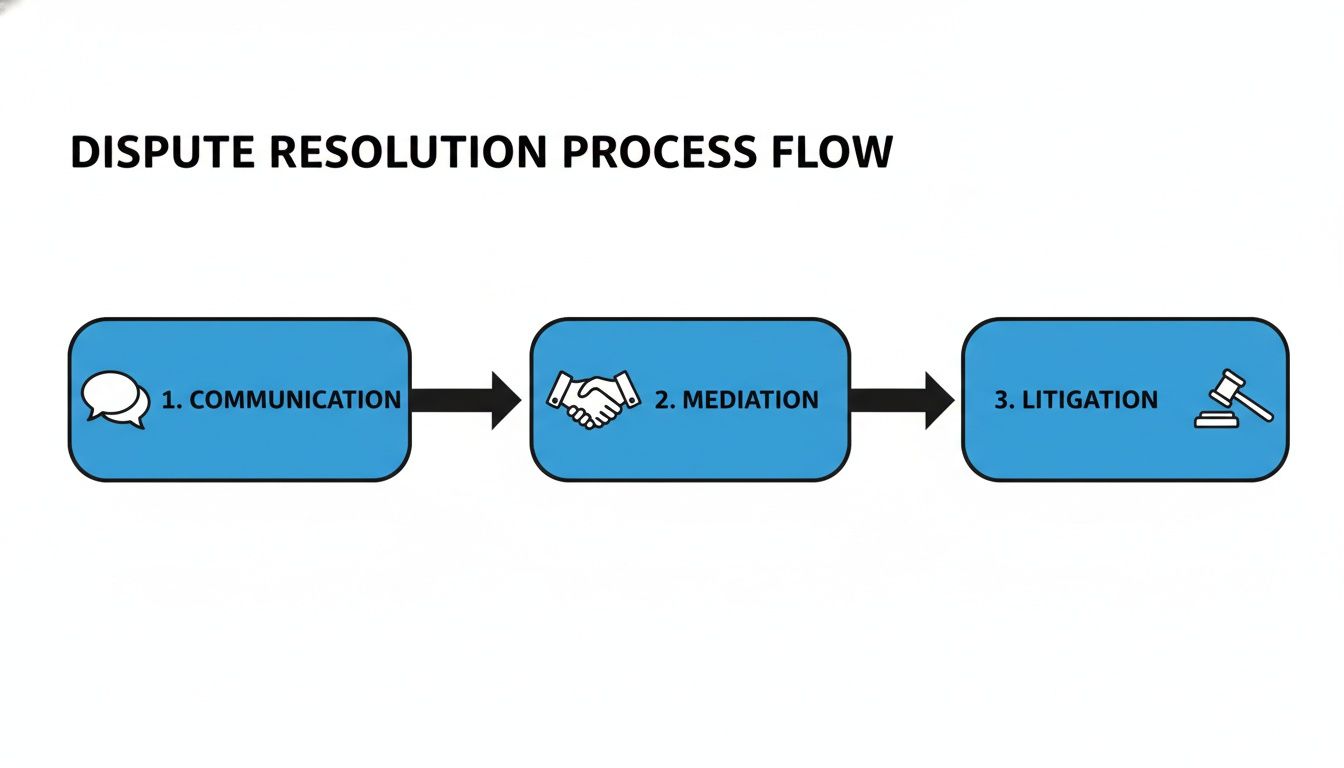
This visual makes it clear: eviction is a last resort, not a first response.
Filing and Serving the Lawsuit
What if the tenant ignores the notice? If they don't pay rent, fix the violation, or move out within the legally required timeframe, your next move is to file an Unlawful Detainer lawsuit with the court.
This involves drafting and filing a Summons and Complaint. These are the official legal documents that state your case against the tenant. Once filed, they have to be properly "served" to the tenant by a registered process server or another adult who isn't involved in the case. You can't just hand them the papers yourself.
This step formally kicks off the court case. The tenant then has a very short window—usually just five days—to file their own formal response with the court.
A common pitfall for landlords is treating the eviction process too casually. The court system takes it very seriously, and it expects procedural perfection. Any error in your paperwork or how you serve it can be used by the tenant to delay or even dismiss your case.
Navigating the Court Process
What comes next depends entirely on the tenant's actions.
If the tenant doesn't file a response within their five-day deadline, you can ask the court for a "default judgment." This means you win the case by default. The court will then issue a Writ of Possession, which authorizes the Sheriff to legally remove the tenant from your property.
But if the tenant does file a response, a trial date will be set, typically within about 20 days. This is where your hard work with documentation pays off. You'll need to present your case to a judge, armed with the lease agreement, your communication logs, photos, and proof that you served every notice correctly.
Common Landlord Mistakes to Avoid
The eviction process is littered with traps for landlords. Even if you have a rock-solid reason to evict, one of these common mistakes can sink your case:
- Improper Notice: Using the wrong form, messing up the dates, or leaving out legally required language.
- Incorrect Service: Not following the strict rules for delivering notices and court documents to the tenant.
- Accepting Partial Rent: If you accept any rent money after a notice has expired, you may legally "waive" your right to proceed with that eviction.
- Retaliatory Actions: Trying to evict a tenant because they asked for a legitimate repair or reported a code violation is illegal.
Given the complexity, it’s no surprise many property owners find the legal maze overwhelming. For a closer look at the nuts and bolts, our detailed guide on the California landlord eviction process offers more specific insights.
This is where professional help makes all the difference. A team offering Yucaipa property management or serving the greater Beaumont area ensures every step is handled with legal precision, protecting your interests and working toward a swift, successful resolution.
Knowing When to Hire a Property Manager
Let's be honest: handling landlord-tenant disputes can feel like a second job you never asked for. A simple late payment can quickly spiral into a complex, stressful situation that drains your time and energy. For many property owners, there's a clear tipping point where managing everything yourself is no longer sustainable—or profitable.

Recognizing when you've hit that wall is key to protecting your investment and your sanity. A professional property management company acts as a crucial buffer between you and your tenants, turning emotionally charged conflicts into straightforward business transactions. They are experts in landlord-tenant dispute resolution and are equipped to handle everything from late-night maintenance calls to the intricate steps of a legal eviction.
Identifying Your Tipping Point
So, how do you know when it's time to pass the baton? The signs usually show up as recurring headaches that pull your focus away from what matters most.
Here are a few common scenarios where self-management starts to become a liability:
- Recurring Late Payments: One late payment can be an oversight. Chronic delinquency, on the other hand, is a pattern that threatens your cash flow. A property manager consistently enforces lease terms and handles the uncomfortable collection process for you.
- Complex Legal Compliance: California's rental laws are notoriously strict and always changing. One misstep in serving a notice or handling a security deposit can lead to expensive legal penalties.
- Significant Property Damage: Discovering damage beyond normal wear and tear is a nightmare. Managing the fallout—from documentation and repairs to security deposit deductions—requires an expert touch to ensure it’s handled correctly.
- Constant Tenant Communication: If you’re spending your evenings and weekends fielding complaints or maintenance requests, you’ve officially lost the "passive" part of your passive income investment.
The real return on investment when hiring a property manager isn't just financial. It's the reclamation of your time, the reduction of your stress, and the confidence that your asset is being professionally protected.
The Professional Buffer in Action
A property management company does more than just collect rent; they are your frontline defense in any dispute. For investors with properties in communities like Mentone and Highland, this professional shield is invaluable.
Imagine a tenant in your Highland property reports a major plumbing leak at 2 a.m. Instead of getting a frantic call, the tenant contacts your property manager’s 24/7 maintenance line. A vetted plumber is dispatched immediately, the issue is professionally documented, and you simply receive a report the next day. The problem gets solved without ever disrupting your life.
This professional distance is also critical during more serious conflicts. If an eviction becomes necessary, the property manager handles the entire legally intensive process. They ensure every notice is served correctly and every court filing is precise, removing the emotional strain and legal risk from your shoulders. Our in-depth guide offers more insights into the benefits of hiring a property manager to navigate these challenges.
Self-Management vs. AIM Property Management
The difference between going it alone and having a professional team on your side becomes crystal clear when disputes arise. Here’s a quick comparison of how common scenarios play out.
| Dispute Scenario | Self-Management Challenge | AIM Professional Solution |
|---|---|---|
| Late Rent Payment | Awkward follow-up calls, inconsistent enforcement, potential for emotional confrontations. | Automated reminders, firm but professional communication, consistent enforcement of late fees per the lease. |
| 2 AM Maintenance Emergency | You're woken up, must find a reliable 24/7 vendor, and coordinate access and repairs yourself. | Tenant calls our 24/7 maintenance line. A vetted, trusted vendor is dispatched immediately. You're simply updated. |
| Lease Violation (e.g., unauthorized pet) | Unsure of the correct legal notice to serve, leading to delays or unenforceable actions. | Proper notice is served immediately, documented correctly, and followed up on according to California law. |
| Security Deposit Dispute | Difficulty justifying deductions, risking a small claims court battle over "wear and tear." | Detailed move-in/move-out reports with photo evidence provide clear documentation to support all deductions. |
| Eviction Process | Navigating complex legal filings, court dates, and potential procedural errors that can derail the case. | The entire eviction process is managed by our experienced team, ensuring full legal compliance from start to finish. |
As you can see, having a professional partner not only resolves issues more efficiently but also protects you from the common pitfalls that can turn a great investment into a source of constant stress.
A Growing Trend Toward Professional Resolution
The need for structured, professional dispute resolution is growing everywhere, not just in our local rental market. For example, the ICC International Court of Arbitration registered 890 new cases in 2023, its third-highest number in a century. While these cases involve massive corporate sums, the underlying trend reflects a universal shift: people are relying on experts to manage high-stakes disagreements. You can see more about these global dispute resolution statistics and how this trend mirrors what's happening in the rental market.
For a property owner in Yucaipa or Beaumont, the stakes feel just as high. Hiring an expert in Yucaipa property management or Beaumont property management ensures your disputes are handled with that same level of professionalism, protecting your asset and ensuring consistent returns. It’s a strategic business decision that pays for itself.
Common Questions About Landlord Tenant Disputes
When you own rental property, questions about tenant conflicts aren't a matter of if, but when. I've seen the same issues come up time and again for landlords in communities from Redlands, Beaumont, and Calimesa to Yucaipa, Loma Linda, Mentone, Highland, and Banning. Getting ahead of them starts with knowing what to expect.
Here are some of the most common questions we get, with practical answers grounded in years of hands-on experience and California law.
What Are the Biggest Triggers for Disputes in Beaumont and Yucaipa?
It almost always boils down to a few core issues. Non-payment of rent is, without a doubt, the number one reason things escalate. It's the issue most likely to kickstart a formal eviction if you can't get it sorted out quickly.
Right behind that are disagreements over the security deposit. I can't tell you how many times I've heard debates over what’s considered "normal wear and tear" versus what's actual, tenant-caused damage. It’s a classic gray area.
Maintenance problems are another huge flashpoint. A dispute is practically guaranteed when a tenant feels you're dragging your feet on necessary repairs. This is where proactive communication and meticulous records—like the kind our Beaumont property management team keeps—become your best defense.
How Does a Property Manager Help Me Stay Out of Legal Trouble?
Honestly, hiring a professional is one of the smartest things you can do to protect yourself. A good property manager in Redlands or the surrounding areas we serve, including Beaumont, Calimesa, Yucaipa, Loma Linda, Mentone, Highland, and Banning, lives and breathes California's dense landlord-tenant laws. This ensures your lease is rock-solid and every action you take, from serving a notice to handling that security deposit, follows the letter of the law.
They also act as a critical professional buffer between you and the tenant by:
- Screening tenants thoroughly to find reliable people from the start.
- Managing all communication professionally, which keeps emotions out of it.
- Keeping detailed, objective records of every single interaction.
This creates a protective shield that most self-managing landlords just don't have time to build, saving you from headaches and potentially devastating lawsuits.
Think of a property manager as your legal compliance officer. They don't just collect rent; they protect you from the thousands of procedural traps hidden within California's rental laws.
Is Mediation a Better Option Than Eviction Court?
In many cases, absolutely. Mediation is faster, far less confrontational, and significantly cheaper than battling it out in court. When mediation is successful, you walk away with a legally binding agreement. Maybe the tenant agrees to a payment plan, or they commit to moving out by a set date. Either way, you get a clear resolution without the cost and uncertainty of a lawsuit.
Studies have shown that a high percentage of mediated cases successfully avoid eviction. It's a powerful tool for landlord tenant dispute resolution that experienced firms offering Yucaipa property management will almost always recommend before going the legal route. If you want to dive deeper into the rules governing these situations, our guide to understanding California's landlord-tenant laws is a great resource.
What Should I Do if a Tenant Denies Access for Repairs?
First things first, make sure you've followed the law. You must provide proper written notice—typically 24 hours in California. That notice has to state the date, a reasonable time window, and the specific reason for entering.
If the tenant still refuses to let you in for a legitimate reason, like a critical repair, your next step is to document their refusal in writing immediately. Send a formal email or a letter that reminds them of their obligation under the lease and stresses the importance of the repair. If they still won't budge, this could be considered a material breach of the lease. At that point, your best move is to consult with a property management company or an attorney to figure out the next legal steps, which might involve serving a formal notice to fix the violation.
Navigating the complexities of property ownership doesn't have to be a source of constant stress. At AIM PROPERTY MANAGEMENT COMPANY, we handle the day-to-day challenges of tenant management so you can focus on the benefits of your investment. From Redlands, Beaumont, Calimesa, and Yucaipa to Loma Linda, Mentone, Highland, and Banning, we provide the professional oversight needed to protect your property and peace of mind. Contact us today to learn how we can help.