
In California, your core responsibilities as a landlord all circle back to one fundamental legal principle: the Implied Warranty of Habitability. This isn't just a friendly guideline; it's a non-negotiable promise baked into every single lease agreement. It guarantees your rental property is safe and livable from the moment your tenant moves in. This covers everything from a working heater to a home free from pests.
Your Foundational Promise: The Warranty of Habitability

Think of the Implied Warranty of Habitability as the bedrock of the landlord-tenant relationship. Whether it's written in your lease or not, the law says it’s there. You're promising to provide a home that meets basic standards for health and safety, and this legal duty is the starting point for all your repair obligations.
Let's be clear—this "promise" isn't about cosmetic upgrades like a fresh coat of paint or the latest stainless-steel appliances. It's about the essentials. Tenants are paying for more than just four walls and a roof; they’re paying for a secure, functional place to live.
What Does Habitability Mean in Practice?
For property owners in local communities like Redlands, Beaumont, Calimesa, Yucaipa, Loma Linda, Mentone, Highland, and Banning, truly understanding what makes a property "habitable" is the key to staying compliant and avoiding legal headaches. It means your rental property must consistently provide:
- Effective Weatherproofing: The roof, walls, and windows need to do their job and keep the elements out. No leaks, no major drafts.
- Functional Utilities: This means reliable plumbing with both hot and cold running water, a heating system that works when you need it, and safe, up-to-code electrical wiring.
- Safe and Clean Common Areas: If you own a multi-unit property, the hallways, stairwells, and entryways must be kept in good repair and free of hazards.
- Pest-Free Environment: You are responsible for handling infestations of rodents, cockroaches, and other vermin.
- Secure Premises: Every door and window needs a working lock. This is a non-negotiable safety requirement.
To simplify, here’s a quick overview of what California law expects from you.
California Landlord Repair Obligations at a Glance
This table breaks down the essential repair duties every California landlord must fulfill.
| Area of Responsibility | What This Includes | Why It Matters |
|---|---|---|
| Weather Protection | A leak-free roof, intact windows, and waterproofed walls. | Protects the tenant's health and the property's structural integrity. |
| Plumbing & Gas | Working toilets, sinks, and showers with hot/cold water; properly maintained gas lines. | Essential for basic sanitation, hygiene, and safety. |
| Heating & Electrical | A functional heating system and safe, properly wired electrical outlets and lighting. | Crucial for comfort during colder months and preventing fire hazards. |
| Structural Integrity | Sound floors, stairs, and railings that are free from hazards. | Prevents accidents and injuries, ensuring the building is safe to occupy. |
| Health & Sanitation | Keeping the property free from garbage and pests like rodents or cockroaches. | Protects tenants from health risks associated with unsanitary conditions. |
| Safety Features | Functioning locks on doors and windows; smoke and carbon monoxide detectors. | Provides basic security and life-saving protection against fires and gas leaks. |
Keeping your property in top shape is not just about following the law—it's good business.
A well-maintained property doesn't just meet legal standards; it's a magnet for great tenants. Homes kept in good repair attract and retain high-quality renters, command better rent, and hold their value over the long term. Cutting corners on repairs is a classic false economy that almost always leads to costly vacancies and legal battles down the road.
Turning Legal Duty into a Streamlined Process
Juggling all these responsibilities can feel like a full-time job, especially when you have multiple properties or tenants. This is where leaning on professional property management in Redlands and the surrounding areas can be a game-changer. A great property manager transforms this legal duty from a source of constant stress into a smooth, documented system.
They become the point of contact for tenants, dispatch trusted and vetted vendors for repairs, and make sure every action taken is fully compliant with California law. For a deeper dive, check out our guide on property management company responsibilities. This kind of proactive approach doesn't just keep you compliant—it protects your investment for years to come.
What Makes a California Rental Legally Habitable
That phrase, the "Implied Warranty of Habitability," might sound like something straight out of a law textbook, but it’s actually a straightforward promise you make every time you hand over the keys. It’s a guarantee that your rental—whether it's in Redlands, Beaumont, or Banning—provides a fundamental level of safety and livability. This isn't about granite countertops or fancy upgrades; we're talking about the absolute essentials.
Think about a tenant in Yucaipa shivering through a December cold snap because the heater is out. Or a family in Highland living with sparking, faulty electrical outlets. These aren't just minor inconveniences; they're direct violations of that habitability promise. A landlord's responsibility for repairs always starts with these core, non-negotiable standards defined by California law.
This is exactly why professional property management in Beaumont is so critical. A good property manager's first job is to ensure these foundational requirements are always met, which protects you from liability and ensures your tenants have a safe home.
The Pillars of a Habitable Home
California Civil Code Section 1941.1 gives us a clear checklist of what makes a rental property legally habitable. I like to think of these as the pillars holding up your rental agreement. If even one of them cracks or fails, the whole structure is at risk.
Here's what your property absolutely must have:
- Effective Weatherproofing: This means the roof, exterior walls, and windows have to be solid enough to protect tenants from rain, wind, and cold. A nagging leak or a cracked window pane isn't just an annoyance; it's a habitability issue.
- Working Plumbing and Gas Facilities: We’re talking about the basics: a functioning toilet, sinks, and a shower with both hot and cold running water. Gas lines and any gas appliances must be safe and in good working order.
- Safe Electrical Systems: All the wiring, outlets, and light fixtures need to be up to code and in good repair. Frayed wires or dead outlets are serious hazards that can't be ignored.
- Clean and Sanitary Conditions: The building and common areas must be kept clean and free from trash, filth, and pests like rodents or roaches.
Part of keeping a property secure involves the locks on the doors. This is a key part of habitability, and landlords often need professional residential locksmith services to handle lock repairs, rekeying between tenants, or security upgrades.
Beyond the Basics Essential Safety Features
Habitability isn't just about pipes and wires. It also covers crucial safety measures that protect your tenants from harm that you could reasonably foresee. A home can have perfect plumbing and a brand-new heater but still be legally uninhabitable if basic safety is overlooked.
For instance, stairs, railings, and floors must be kept in good condition to prevent trips and falls. More importantly, your property must have the legally required number of working smoke and carbon monoxide detectors. These aren't just optional extras—they are life-saving devices required by law.
A landlord's responsibility isn't just to fix what's broken, but to proactively ensure the property is fundamentally safe. This means regular checks on safety equipment and addressing structural concerns before a tenant has to report them. It's a shift from a reactive to a preventative mindset.
The Scope of Responsibility for California Landlords
Did you know that 89% of landlords worldwide are fully responsible for all property repairs? They handle an average of six repair requests per property every single year. Here in California, where AIM Property Management Company operates, that duty is amplified by our strict habitability laws. Consider this: faulty electrical systems cause 51,000 fires in the U.S. annually, leading to $1.3 billion in damages. It's stats like these that show why proactive property management in Yucaipa puts safety above all else.
This legal duty is a big one. A property management company in Redlands can help you stay on top of everything, from scheduling routine maintenance to handling those middle-of-the-night emergency calls. For a deeper dive into the legal side of things, check out our guide on landlord-tenant laws in California. At the end of the day, keeping your property legally habitable is the single best way to avoid expensive disputes and protect your investment.
Responding to Emergency and Routine Repair Requests
Not all repair requests are created equal. Knowing the difference is one of the most critical parts of your job as a landlord.
Imagine two calls on the same day. One tenant in Loma Linda reports a dripping faucet in their bathroom. Another tenant in Mentone smells gas near their stove. One is an annoyance that needs fixing; the other is a crisis that demands immediate action. Your ability to tell them apart and respond accordingly isn't just good business—it's your legal duty.
California law requires landlords to act within a "reasonable" time. But "reasonable" changes dramatically when a tenant's safety or major property damage is on the line.
What Counts as an Emergency Repair?
An emergency is any issue that poses an immediate threat to your tenant's health and safety or risks serious damage to the property itself. These are the problems that simply cannot wait. A fast response is non-negotiable, and having a plan ready is essential for property owners in places like Redlands or Yucaipa.
Common emergency repairs include:
- Gas Leaks: This is at the top of the list. A gas leak requires immediate evacuation and a call to the professionals.
- Burst Pipes or Major Flooding: Uncontrolled water can cause catastrophic damage in minutes, creating unsafe living conditions and destroying walls, floors, and foundations.
- No Hot Water: While less dramatic, losing hot water is a habitability issue. It needs to be addressed quickly, especially during the colder months.
- Complete Loss of Heat in Winter: A broken furnace during a cold snap in Beaumont or Banning is a clear emergency.
- Serious Electrical Issues: Things like exposed wiring, sparking outlets, or a total power outage (that isn't a utility company issue) pose a serious fire hazard.
For severe hazards like a gas leak, it’s critical to know who fixes gas leaks and have their number on speed dial. Dropping the ball here can lead to devastating legal and financial outcomes.
Handling Routine Maintenance Requests
Routine repairs, on the other hand, are the non-urgent issues that still need attention to keep the property in good shape and your tenants happy. Think of a dripping faucet, a loose cabinet door, or a running toilet.
While they aren’t emergencies, you can't ignore them. California law generally gives landlords 30 days to address non-emergency repairs after getting written notice from a tenant. Letting these smaller things slide not only frustrates good tenants but can also allow minor issues to grow into major, expensive problems.
A well-managed property doesn't wait for small problems to become big emergencies. A proactive approach to routine maintenance protects your investment, keeps tenants happy, and reinforces your reputation as a responsible landlord.
The Power of a Triage System
The most effective landlords have a clear, organized system for handling every request that comes in. This is where professional property management in Redlands really shines. By creating a dedicated maintenance process, every tenant call can be triaged—or sorted by urgency—and sent to the right vendor at the right time.
This organized approach ensures a burst pipe in Calimesa gets immediate attention while a cosmetic fix is scheduled for a convenient time. If you're not sure how to set up an emergency plan, you can see how we handle these situations by checking out our guide on what to do in an emergency maintenance situation. A solid system takes the guesswork out of maintenance, protects your property, and keeps you compliant with California law.
Navigating Normal Wear and Tear vs. Tenant Damage
One of the most common friction points between landlords and tenants boils down to a single question: who pays for what? Learning to tell the difference between a property's gradual decline from everyday use versus actual tenant-caused damage is a skill every landlord in communities like Calimesa and Highland must master. Getting this wrong can quickly lead to tense disputes, legal headaches, and a hit to your bottom line.
Think of normal wear and tear as the gentle aging of a home. It's the expected result of someone actually living in the space—things like paint fading from sunlight, minor scuffs on a wall where a sofa rested, or carpets thinning out in high-traffic areas after a few years. These are simply the costs of doing business as a landlord.
On the other hand, tenant damage is the direct result of negligence, carelessness, or intentional harm. This goes far beyond normal use. A large hole punched in a wall, a window shattered during an argument, or a pet staining the entire carpet aren't signs of aging; they're damages that reduce the property's value, and the repair costs almost always fall to the tenant.
Your Best Defense: Meticulous Documentation
The key to fairly—and legally—making this call is all in the documentation. Without a clear "before" picture, it’s nearly impossible to prove what changed during a tenancy. This is why detailed move-in and move-out inspections aren't just a good idea—they are absolutely essential for protecting your investment in Banning or Mentone.
A thorough move-in inspection report, packed with dated photos and signed by both you and the tenant, creates a clear baseline for the property's condition. When the tenant moves out, a side-by-side comparison makes it obvious whether an issue is simple wear and tear or new damage.
Who Is Responsible for the Repair Cost?
Let's ground this in some real-world examples you might run into at your Yucaipa or Loma Linda rental property. To make it simple, we've put together a table that breaks down who typically covers the cost for common repair issues.
| Repair Issue | Normal Wear and Tear (Landlord Pays) | Tenant-Caused Damage (Tenant Pays) |
|---|---|---|
| Paint | Minor scuffs, fading from sunlight, small nail holes from pictures. | Large holes, unapproved custom paint colors, deep gouges from moving furniture. |
| Carpets | Gentle wear in hallways, minor fading, slight thinning from foot traffic. | Major stains from spills or pets, burns, rips, or tears in the carpet. |
| Fixtures | A faucet that starts dripping due to an old washer, a wobbly doorknob from years of use. | A cracked toilet tank from something being dropped on it, a broken light fixture. |
| Flooring | Light scratches on a hardwood floor in a high-traffic area, worn finish. | Deep gouges in the wood, cracked tiles, water damage from an overflowing tub. |
| Walls | Faded wallpaper, minor stress cracks in plaster from settling. | Crayon or marker drawings on the walls, unauthorized wallpaper or alterations. |
This distinction is crucial when it comes time to handle a tenant's security deposit. In California, you can only deduct for damages that go beyond normal wear and tear. Having solid documentation from your inspections gives you the evidence you need to make those deductions legally and with confidence. To get a deeper dive into the specific rules, check out our detailed guide on California's tenant security deposit laws.
Blurred Lines in Everyday Maintenance
Even with a clear table, some maintenance tasks can fall into a gray area. Recent surveys show that landlords typically handle 76% of fixture repairs like doorknobs and faucets and 67% of furnace filter changes, but only 40% of light bulb replacements. This just goes to show how blurry the lines can get with day-to-day upkeep.
Globally, standard 'normal wear and tear'—like faded paint or worn carpets—falls on the landlord 82% of the time. It's a standard cost of doing business, which is why professional property management in Beaumont focuses so heavily on placing responsible tenants who report issues quickly, preventing small problems from turning into big ones. You can discover more insights about landlord-tenant maintenance tasks on SingleKey.com to see more data on these responsibilities.
Ultimately, the goal isn't just to win a potential dispute; it's to prevent one from happening in the first place. A clear lease, thorough inspections, and fair assessments create a foundation of trust that benefits both you and your tenant.
By mastering the difference between wear and tear and damage, you protect your investment, maintain a positive relationship with your renters, and uphold your reputation as a fair and professional landlord in Redlands and beyond.
Creating a Bulletproof Repair Request Process
A solid, well-defined repair process is your best defense against misunderstandings and potential legal headaches. When a tenant in Redlands or Beaumont reports an issue, a scattered or informal response can turn a minor problem into a major dispute. Creating a professional, consistent workflow isn’t just good business—it’s essential for protecting your investment and staying compliant.
The whole system kicks off with one simple but non-negotiable rule: require all non-emergency repair requests in writing. This single step immediately cuts through any "he said, she said" arguments and creates a clear, indisputable paper trail. A verbal request over the phone can be forgotten or misremembered, but a written one—whether it's an email or through an online portal—establishes a concrete timeline from the moment you were notified.
Think of this documentation as the backbone of your defense, proving you’re a diligent and responsive landlord.
Building a Defensible History
Once you receive a request, your process should trigger a series of documented actions. This absolutely includes providing the tenant with proper legal notice before you or a vendor needs to enter the property. Here in California, that typically means a written 24-hour notice of entry, though there are exceptions for true emergencies.
Keeping meticulous records isn't just about staying organized; it's about building a defensible history that shows you're on top of your responsibilities. Every conversation, every invoice, and every confirmation that a repair is complete should be logged. This system reinforces your professionalism and shows tenants you take your repair obligations seriously.
The infographic below breaks down a common point of confusion: the difference between normal wear and tear and actual damage.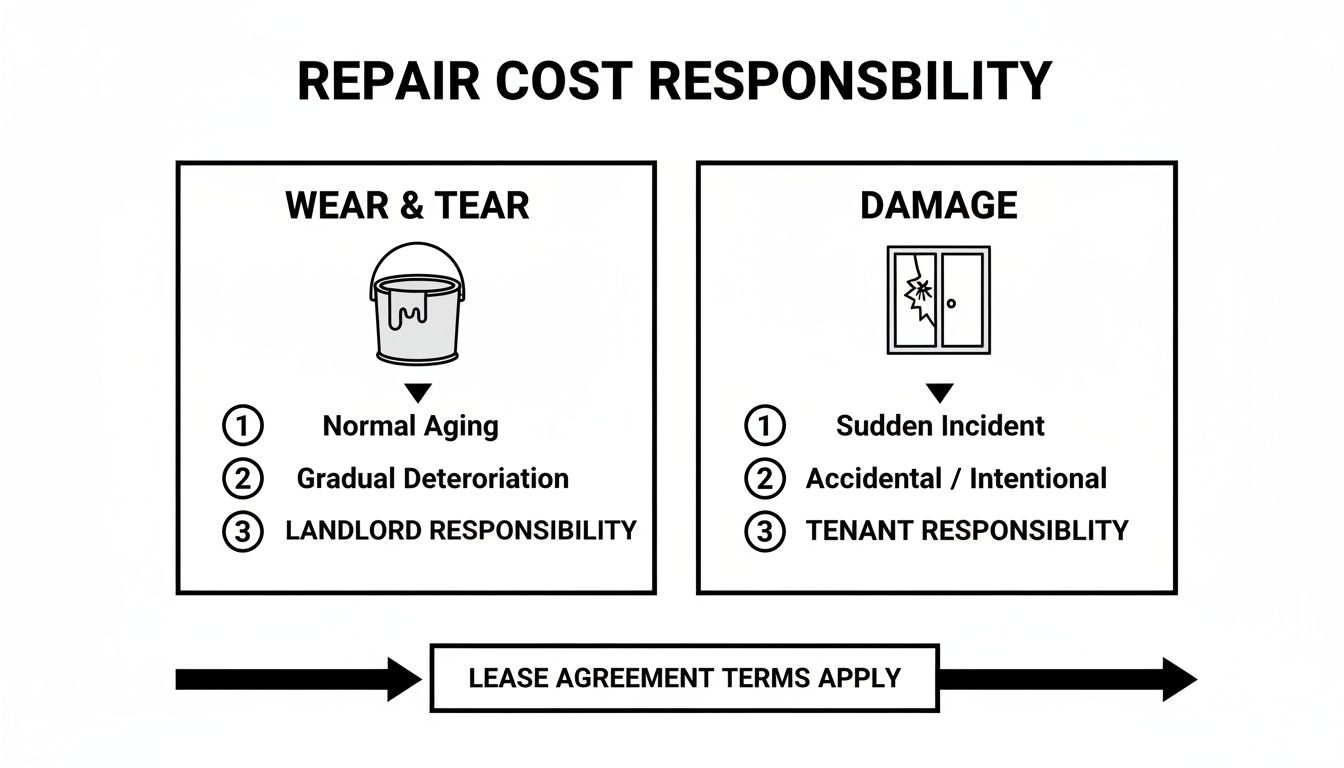
This visual is a great reminder that the gradual aging of a property is the landlord's cost to bear, while neglect, accidents, or abuse fall on the tenant's shoulders.
The Step-by-Step Workflow
A rock-solid repair process ensures nothing falls through the cracks, whether you're managing a property in Yucaipa or Highland. Following a clear sequence prevents unnecessary delays and, just as importantly, keeps your tenants in the loop. Good communication here is key to maintaining a positive landlord-tenant relationship.
Here’s a sample workflow you can adapt for your own properties:
- Written Request Received: The tenant submits a repair request through your official channel. An automated reply confirming you've received it is a great touch.
- Acknowledge and Assess: You or your property manager should personally acknowledge the request within 24 business hours. Take a moment to assess its urgency and map out the next steps.
- Schedule the Repair: Reach out to your network of trusted vendors to get the repair on the books. Then, provide the tenant with the legally required notice of entry, specifying the date and approximate time frame.
- Confirm Completion: Once the work is done, circle back with the tenant. Make sure the issue is fully resolved and that they are satisfied with the result.
- Document Everything: File it all away. The initial request, all communications back and forth, the vendor's invoice, and your final confirmation should be saved in the property's dedicated file.
Having a standardized, professional system for repairs does more than just fix problems. It communicates to your tenants that you are a responsible, organized landlord, which builds trust and encourages them to take better care of your property.
For property owners in our service areas, AIM Property Management has already perfected this entire process. We give tenants an easy-to-use online system to submit a maintenance request online, ensuring every single issue is tracked, documented, and resolved efficiently from start to finish.
Understanding Tenant Rights When Repairs Are Neglected
Knowing a tenant’s legal options is the best way to avoid them. When a serious habitability issue goes unaddressed, California law doesn’t leave tenants powerless. Understanding these rights is crucial for landlords in Redlands, Beaumont, and the surrounding areas because it highlights the immense value of staying on top of maintenance.
This isn't about minor annoyances; we're talking about situations where a landlord’s failure to act breaks the core promise of a safe, livable home. When this happens, tenants have powerful legal tools they can use, shifting control of the situation away from you, the property owner.
The Repair and Deduct Remedy
One of the most significant tenant rights in California is the “Repair and Deduct” remedy. If you neglect a serious repair affecting habitability—like a broken heater in winter or a major plumbing leak—the tenant may have the right to take matters into their own hands.
This powerful tool lets a tenant hire a qualified professional for the repair and then subtract the cost from their next rent payment. It's a big deal, but tenants can't just do it on a whim. They have to follow a strict legal process:
- Provide Written Notice: The tenant must first give you reasonable written notice about the problem, giving you a fair chance to fix it yourself.
- Reasonable Cost: The cost of the repair cannot be more than one full month's rent.
- Limited Use: A tenant can typically only use this remedy twice in any 12-month period.
If they don't follow these steps exactly, they could be in the wrong. But when done correctly, it’s a legally protected action.
By staying on top of your landlord responsibilities for repairs, you maintain control. You choose the vendor, you control the cost, and you ensure the work meets your standards. When a tenant is forced to use "Repair and Deduct," you lose all of that control.
Other Potential Consequences of Neglect
Beyond "Repair and Deduct," letting essential repairs slide can open the door to even more serious consequences. Tenants in Yucaipa or Calimesa might pursue other actions if the situation is severe enough and you remain unresponsive.
One of those options is rent withholding. In certain circumstances, tenants may be legally justified in stopping rent payments until the necessary repairs are made. This is a complex legal area, but it's a very real tool available to tenants living in substandard conditions.
In the most extreme cases, a tenant might have grounds for what’s called “constructive eviction.” This means the landlord’s failure to maintain the property has made it so unlivable that the tenant is forced to move out. If a court agrees, the tenant could legally terminate the lease and potentially sue you for damages.
The goal is always prevention. Understanding these powerful tenant rights should motivate every property owner to adopt a proactive maintenance plan that avoids these costly legal battles and keeps tenant relationships positive.
Frequently Asked Questions About Landlord Repairs
Handling property maintenance can stir up a lot of questions for rental owners. Here, we tackle some of the most common ones we hear from landlords in communities like Redlands, Yucaipa, and Beaumont, showing exactly why having an expert property management team in your corner is so valuable.
What Happens If I Don't Make Necessary Repairs?
Ignoring required repairs, particularly those that impact a tenant's health and safety, can lead to serious legal and financial trouble in California. The law gives tenants some powerful options when their landlord fails to keep the property in a livable condition.
For example, a tenant could legally use the "repair and deduct" remedy. This means they hire someone to fix the issue themselves and then subtract the cost from their next rent payment. In more serious situations, they might have grounds to stop paying rent altogether or even break their lease. On top of that, you could face hefty fines from local health and safety departments. The best defense against these risks is always proactive maintenance.
Is It Cost-Effective to Hire a Property Manager?
Absolutely. Hiring a property manager for maintenance is one of the smartest financial decisions a landlord can make. A huge benefit of professional Redlands property management is immediate access to our network of trusted, insured contractors. They often provide better rates than what an individual owner could get on their own.
But it goes beyond just cost savings. A good manager handles the entire process from start to finish—fielding 24/7 emergency calls, making sure every repair is up to California code, and documenting everything meticulously. This service frees up your time, shrinks your personal liability, and stops minor issues from blowing up into expensive disasters. Honestly, the peace of mind alone is often worth more than the management fee.
Think of a professional property manager as a shield. They insulate you from the day-to-day grind of maintenance calls while ensuring your investment is protected and growing. They turn unpredictable emergencies into a managed, predictable process.
How Does a Property Manager Handle Unreasonable Tenant Demands?
This is one of our most important jobs: acting as a professional, objective buffer between you and your tenants. We're experts at telling the difference between a legally required repair for habitability and a cosmetic request that isn't the landlord's responsibility.
When an unreasonable demand comes in, our team communicates professionally and clearly with the tenant. We refer directly to the lease agreement and relevant California landlord-tenant laws to explain what is—and what isn't—your obligation. This approach keeps the relationship respectful while protecting you from spending money you don't have to. It ensures your funds are only used for legitimate repairs, protecting your bottom line. Partnering with a Beaumont property management firm means having an expert who enforces the lease fairly and consistently every single time.
Staying on top of these responsibilities takes expertise and constant vigilance. AIM PROPERTY MANAGEMENT COMPANY offers comprehensive services to owners in Redlands, Beaumont, Calimesa, Yucaipa, Loma Linda, Mentone, Highland and Banning, turning the headaches of property maintenance into a smooth, worry-free operation. Learn more about how we can protect your investment and maximize your returns.