
Facing an eviction can be one of the toughest challenges for a property owner. For those wondering, "should I hire a property manager for my house?" navigating the landlord eviction process in California is a compelling reason to seek professional help. If you own property in areas like Redlands or Yucaipa, understanding this structured legal journey is crucial. With experienced Beaumont Property Management, you can protect your investment. A knowledgeable team for property management in Beaumont ensures every step is handled correctly, avoiding costly errors that could invalidate your entire case and force you to start over.
Understanding Your Role in the Eviction Process
If you've ever found yourself wondering, "should I hire a property manager for my house?" the maze of California's eviction laws is one of the most compelling reasons to say "yes." For landlords in communities like Redlands, Beaumont, and Yucaipa, what seems like a minor error can completely derail the process.
This is where having an experienced hand makes all the difference. Proper property management in Beaumont goes far beyond collecting rent—it's about protecting your investment with fair, compliant practices, especially when an eviction is the only option left.
Since 1997, our team has been guiding landlords through these exact situations. We focus exclusively on long-term rentals of six months or longer, a strategy that cultivates stable tenancies and provides consistent income, steering clear of the constant turnover that comes with short-term rentals.
The Foundation of a Strong Landlord Position
Your role as a landlord begins long before an eviction is even on the horizon. It all starts with setting up a clear, legally sound tenancy from day one.
The cornerstone of this foundation is a solid lease agreement. For any landlord in the state, having a reliable California Lease Agreement template is non-negotiable. This document is your first line of defense, outlining every rule, responsibility, and expectation for both you and your tenant.
A well-drafted lease should leave no room for ambiguity on critical terms, including:
- Rent Due Dates: Pinpointing the exact day rent is due and spelling out the consequences for late payments.
- Lease Violations: Clearly defining what constitutes a breach of the contract, from unauthorized pets to unapproved property alterations.
- Occupancy Rules: Stating exactly who is permitted to live in the unit to prevent issues with unauthorized occupants.
By prioritizing a comprehensive lease, you create a legal framework that can stop small disagreements from blowing up into major disputes. It serves as the go-to reference point, protecting your rights while making sure the tenant understands their obligations from the very beginning.
Long-Term Rentals: A Proactive Strategy
Our commitment to long-term leases isn't just a preference; it’s a deliberate strategy to minimize the risk of evictions. Short-term rentals often come with frequent turnover and a higher potential for property misuse. In contrast, long-term tenancies of six months or more build stability.
Tenants who see a property as their genuine home are far more likely to take care of it and follow the lease terms. This approach not only reduces wear and tear but also creates a predictable income stream with our low 7.9% monthly management fee. Our straightforward $750 placement fee, with no hidden charges, makes this stable, long-term strategy even more accessible. For a deeper dive into your legal obligations, explore our guide on landlord responsibilities in California.
Serving the Correct California Eviction Notice
The first step in any California eviction is serving the right written notice. For those considering if they should hire a property manager for my house, this step alone highlights the value of professional oversight. For landlords in communities like Beaumont, Redlands, and Calimesa, a mistake on the notice—a miscalculated rent amount or an incorrect deadline—can force you to start over. Expert Beaumont Property Management ensures accuracy from the start. Proper property management in Beaumont confirms the notice is perfect, as this legal document is the foundation for the entire case.
The right notice depends entirely on why you need to evict. Is it for unpaid rent? A lease violation? Or are you simply ending a month-to-month tenancy? Each reason requires a specific form, and using the wrong one is a fast track to having your case thrown out of court.
At-Fault vs. No-Fault Notices: Knowing the Difference
By far, the most common reason for eviction is a tenant failing to pay rent. If that's your situation, California law requires you to serve a 3-Day Notice to Pay Rent or Quit. This form must state the exact amount of rent owed and give the tenant three full business days to either pay up or move out.
For other lease violations, your approach will change based on the severity of the issue.
- Fixable Problems: If a tenant has an unauthorized pet or has let the property become unsanitary, you'll serve a 3-Day Notice to Cure or Quit. This gives them a chance to fix the problem (like rehoming the pet) within three days to avoid eviction.
- Serious Violations: For major issues like illegal activity on the premises or significant property damage, a 3-Day Notice to Quit is the way to go. This notice is final—it demands the tenant vacate without offering a chance to correct their actions.
Ending a month-to-month tenancy without a specific "fault" requires a completely different type of notice. If the tenant has lived in your property for less than a year, a 30-Day Notice to Vacate is sufficient. If they've been there for a year or more, you must provide a 60-Day Notice to Vacate. Keep in mind, these "no-fault" notices often fall under the Tenant Protection Act (TPA), which may require you to state a "just cause" and even provide relocation assistance.
To make it clearer, here's a quick breakdown of the most common notices we handle for landlords.
Types of California Eviction Notices
| Notice Type | Primary Use Case | Cure Period / Timeframe | Key Requirement |
|---|---|---|---|
| 3-Day Notice to Pay Rent or Quit | Tenant has failed to pay rent. | 3 days | Must state the exact amount of past-due rent only. |
| 3-Day Notice to Cure or Quit | Tenant has violated the lease, but it's fixable (e.g., unauthorized pet). | 3 days | Tenant has the option to correct the violation. |
| 3-Day Notice to Quit | Tenant has committed a serious, unfixable violation (e.g., illegal activity). | 3 days | No option to cure; tenant must vacate. |
| 30-Day Notice to Vacate | Ending a month-to-month tenancy for a tenant of less than one year. | 30 days | No-fault eviction; "just cause" may be needed under TPA. |
| 60-Day Notice to Vacate | Ending a month-to-month tenancy for a tenant of one year or more. | 60 days | No-fault eviction; "just cause" and relocation assistance may apply. |
Navigating these different forms and their strict requirements is where many landlords stumble. Each one serves a distinct legal purpose, and choosing the wrong one will stop an eviction in its tracks.
Mastering the Details: Why Perfection Matters
When it comes to filling out an eviction notice, accuracy is everything. You can bet a tenant's attorney will scrutinize the document for any error that could get the case dismissed. Your notice has to be perfect.
Here are the details you absolutely must get right:
- Tenant Names: List every single adult occupant who is named on the lease agreement.
- Property Address: Include the full, correct address of the rental unit, including the apartment number if applicable.
- Exact Rent Owed: On a 3-Day Notice to Pay Rent, state only the past-due rent. Do not include late fees, utilities, or other charges. This is a classic mistake.
- Clear Instructions: The notice has to spell out exactly what the tenant must do (pay, fix the violation, or move out) and give them a clear deadline.
A common pitfall we see is miscalculating the deadline. The three-day period for a notice to pay or cure excludes weekends and court holidays. If you serve a notice on a Friday, the clock doesn't actually start ticking until the following Monday. Getting this simple calculation wrong is one of the easiest ways to lose an eviction case before it even really begins.
This flow chart visualizes how a landlord should prioritize their efforts, starting with creating tenancy stability and moving through legal compliance and active management.
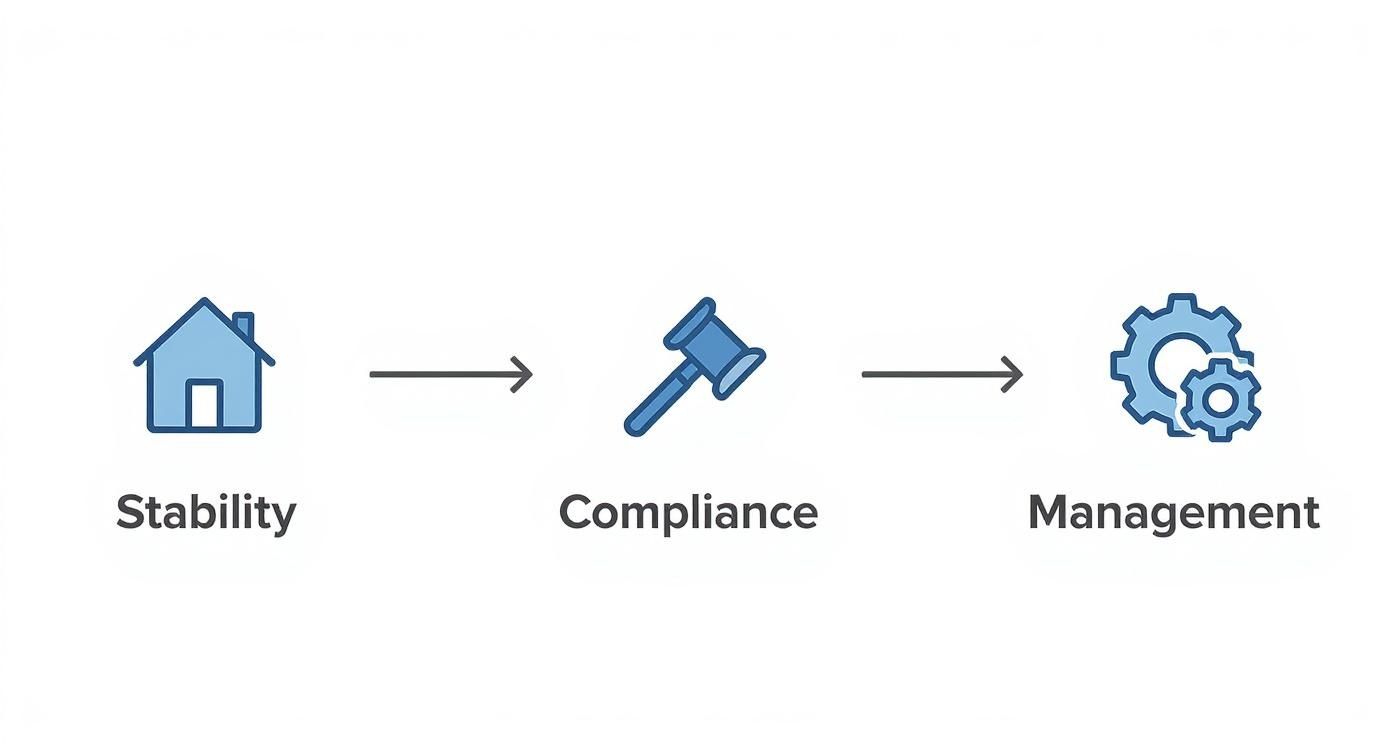
As the chart shows, successful property ownership is built on a foundation of stable, long-term tenancies. It’s why our services focus exclusively on leases of six months or longer—it’s just better for everyone involved.
The Financial and Timeline Realities
The eviction process in California isn't optional; it's a mandatory, step-by-step procedure that always starts with that written notice. If the notice period expires and the tenant hasn't complied, your next move is filing an unlawful detainer lawsuit. Court filing fees alone typically run from $385 to $435.
The entire timeline, from serving the notice to getting a final resolution, often spans 30 to 45 days or even longer. This makes getting that first step right absolutely critical to avoid dragging things out even further.
Navigating these intricate notice requirements can be daunting. Ensuring compliance with every little detail is precisely where professional management provides immense value. You can learn more about the specific regulations governing these interactions in our comprehensive guide on California landlord-tenant laws. With our deep experience managing properties in Highland, Loma Linda, and Banning since 1997, we make sure the process is handled correctly from day one.
Filing the Unlawful Detainer Lawsuit
When a tenant ignores a valid notice to pay rent, fix a problem, or move out, the situation officially moves from a simple request to a formal legal battle. This is where you have to take the next step: filing an Unlawful Detainer lawsuit with the Superior Court. This is the specific legal action in California designed to get your property back when a tenant simply won't leave.
Don't be mistaken—this isn't just about filling out a form. It's a full-blown legal proceeding where every detail matters. Even a small mistake on the paperwork can cause major delays or, worse, get your case thrown out, forcing you to start the whole eviction process from scratch.
Preparing the Essential Court Forms
To get the lawsuit started, you’ll need to prepare and file a few key documents with the court. The two most critical are the Summons (SUM-130) and the Complaint (UD-100).
Think of it this way: the Complaint is where you tell the court your side of the story—why you have the legal right to evict the tenant. The Summons is the official notice that tells the tenant they're being sued and gives them a strict deadline to respond.
Getting these forms exactly right is non-negotiable. Every detail has to be perfect, including:
- Correctly Naming All Occupants: You must list every single adult living in the unit, even if they aren't on the lease. If you only name the primary tenant, you may not be able to legally remove the other occupants later.
- Attaching Supporting Documents: Make sure to attach a copy of the lease or rental agreement and a copy of the eviction notice you served. You'll also need to include the proof of how you delivered that notice.
- Stating the Legal Reason: The Complaint must clearly state the reason for the eviction, and it has to perfectly match the reason you gave in the initial notice.
We’ve seen landlords make the common mistake of trying to sue for unpaid late fees or other utility charges in the Unlawful Detainer. This lawsuit is strictly for regaining possession of your property and, in cases of non-payment, the actual past-due rent. Adding other debts just complicates things and gives the tenant's attorney an easy opening to challenge your entire case.
The Critical Step of Serving the Lawsuit
Once you file the paperwork with the court, you can't just walk over and hand it to your tenant. California law is very strict about how a tenant must be officially notified of a lawsuit. This is called "service of process," and if it's not done by the book, the court won't have jurisdiction over your case.
You have to get the Summons and Complaint delivered to the tenant by a neutral third party who is over 18 years old and not involved in the case. Your best bets are a professional process server or the local Sheriff's Department, though a friend who understands the rules can also do it.
There are three main ways to serve the documents:
- Personal Service: The server hands the documents directly to the tenant. This is always the best and most reliable method.
- Substituted Service: If the server can't find the tenant at home, they can leave the documents with another competent adult at the property (or their workplace) and then mail a copy to the tenant.
- Posting and Mailing: This is a last resort. You can only do this with the court's permission, which involves posting the documents on the property and mailing a copy.
After the documents are delivered, the server must fill out and sign a Proof of Service form. This form gets filed with the court to prove the tenant was legally notified. Without it, your case is dead in the water.
Avoiding Common Filing and Service Errors
The filing and service stage is a minefield for landlords. One small slip-up can derail your entire eviction. For example, a landlord in Yucaipa recently had his case delayed for weeks simply because the Complaint listed the wrong expiration date for his 3-Day Notice. It was just a typo, but it was enough for the tenant’s lawyer to challenge the filing's validity.
Another landlord in Redlands tried to save a few bucks by having his son serve the papers. But since his son was also listed as a part-owner on the property, he was considered a party to the case. The service was ruled invalid, and they had to start all over again—costing them far more in lost rent than a professional server would have charged.
These stories show why paying close attention to every detail is so critical. As a property management company serving communities from Highland to Banning since 1997, we've learned that handling an Unlawful Detainer lawsuit requires experience and precision. While our focus is on building stable, long-term tenancies to avoid these situations, we know how to handle every legal step correctly when they do arise, protecting your investment and giving you peace of mind.
Navigating the Court Process to Get a Judgment
Once you've filed the Unlawful Detainer lawsuit and the tenant has been served, your case is officially in the hands of the California court system. What happens next really boils down to one simple question: does the tenant respond? This is where the path splits, and knowing what to expect can make the journey toward a judgment feel much more manageable.
Path 1: The Tenant Doesn't Respond
In my experience, a surprising number of tenants never file a formal response with the court. They have a very strict deadline to submit an "Answer"—usually just five business days after being served. If that deadline comes and goes with no word from them, you have a much faster path forward.
This is your opportunity to file for a default judgment. By failing to respond, the tenant has essentially given up their right to fight the eviction. You’ll file a couple of specific forms, including a Request for Entry of Default and a Judgment for Unlawful Detainer. Once the court clerk processes the paperwork, the judge can issue a judgment in your favor without ever needing a trial. It’s the quickest way to get a court order and regain possession of your property.
Path 2: The Tenant Fights the Eviction
On the other hand, if the tenant does file an Answer within the deadline, the case is now "contested." This simply means they plan to argue their side, and you're heading for a court trial. As soon as you receive their Answer, it's on you to formally request a trial date.
The good news is that Unlawful Detainer cases get priority in California's crowded court system, so you won’t be waiting for months. A trial is typically set within about 20 days of your request. During this time, it’s critical to understand both your obligations and the tenant's rights and responsibilities to ensure every step you take is legally sound.
Getting Your Evidence Ready for Trial
When you walk into that courtroom, winning comes down to one thing: proof. The judge needs to see clear, documented evidence that you have the legal right to evict. Your word alone isn't enough.
The moment you know a trial is on the calendar, start building your evidence binder. Think of it as your single source of truth for everything related to this tenancy.
Your evidence checklist should include:
- The Original Lease Agreement: This is the foundational contract.
- The Eviction Notice: A clean copy of the 3-Day Notice to Pay Rent or Quit (or other notice).
- Proof of Service: The signed form proving the notice was delivered correctly.
- Payment Ledger: A detailed record showing every payment received and, crucially, every payment missed.
- Communication Records: Printouts of all emails, text messages, or letters between you and the tenant.
- Photos or Videos: If the eviction is over property damage or another lease violation, visual evidence is incredibly powerful.
In court, your job is to tell a simple, factual story. Your evidence binder should walk the judge through it: the tenant signed a lease, they broke the terms, you gave them a legal notice to fix the issue, and they failed to comply. When it's well-organized, that story is easy to follow and very hard to argue with.
As a property management company serving Redlands, Beaumont, and the surrounding areas since 1997, we’ve learned that court preparation is all about the details. While our focus on stable, long-term rentals helps us avoid these situations, our experience ensures that when an eviction is necessary, every piece of evidence is perfectly prepared to secure a judgment and protect our clients' investments.
Regaining Possession of Your Property
Winning a judgment in court feels like the finish line, but there's one final, crucial phase left: legally taking back your property. This is where a court order turns into real-world action. The entire landlord eviction process in California has been leading up to this moment, and it has to be handled with the same precision as every step that came before it.
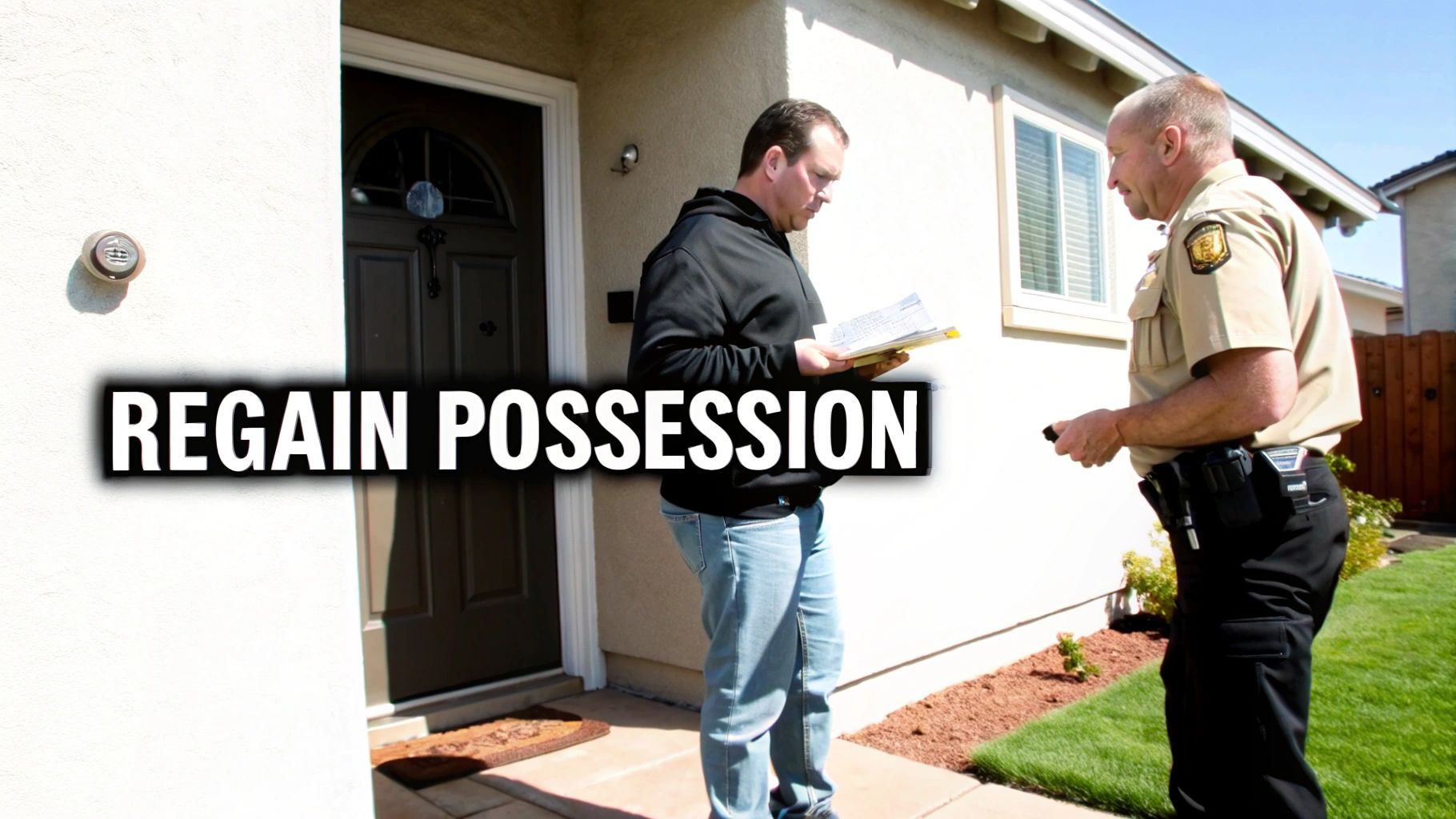
This final stage isn't handled by you—it's executed by law enforcement. A landlord can never just change the locks or toss the tenant’s belongings out after a judgment. That's an illegal "self-help" eviction, and it comes with some severe penalties.
Obtaining and Using the Writ of Possession
Your first move after the judgment is to ask the court clerk to issue a Writ of Possession. This is the official document that gives the Sheriff's Department the authority to physically remove the tenant from your property if they refuse to leave on their own. Think of it as the court's final instruction, empowering law enforcement to enforce the judge's decision.
Once the Writ is in your hand, you'll need to deliver it to the Sheriff's Department in the county where the property is located. Be prepared to pay their service fee. From this point on, the Sheriff takes over.
A Sheriff's deputy will then visit your property and post a 5-Day Notice to Vacate on the front door. This gives the tenant a final five-day window to move out. If they’re still there when time is up, the Sheriff will return to perform a physical lockout.
The Day of the Lockout
When the scheduled lockout day arrives, you or your property manager must meet the Sheriff's deputy at the property. The deputy’s job is to keep the peace and ensure the tenant leaves the premises. They will not, however, help you remove any of the tenant's personal property.
To make sure the lockout goes smoothly, you should:
- Hire a Locksmith: Have one ready to go. As soon as the deputy gives you the all-clear, your locksmith needs to change every lock on the property to secure it immediately.
- Be Present but Stay Back: Your presence is required, but it's best to let the deputy handle all interactions with the tenant. These situations can be tense, and the officer is trained to de-escalate them.
- Wait for the Go-Ahead: Don't step foot inside the unit until the Sheriff's deputy has officially given you back possession of the property.
A common mistake landlords make is getting emotionally involved on lockout day. The goal is simple: regain possession safely and legally. Let the Sheriff do their job, change the locks, and then focus on the next steps.
Handling Abandoned Personal Property
It’s incredibly common for tenants to leave personal belongings behind after being evicted. California law has very specific rules about what you must do with this abandoned property. You can't just throw it away or decide it's now yours.
If you believe the total value of the items is less than $700, you can generally dispose of them. However, if the value is $700 or more, you have to follow a formal process:
- Inventory Everything: Create a detailed list of every single item left behind.
- Send a Formal Notice: You must mail a Notice of Belief of Abandonment to the tenant's last known address. This gives them a deadline, usually 15-18 days, to come claim their property.
- Store the Property Safely: During this notice period, you are responsible for storing the items in a safe place.
- Hold a Public Auction: If the tenant doesn't claim their belongings by the deadline, your next step is to sell them at a public auction.
The money from the auction can be used to cover your costs for storage and running the sale. Any cash left over must be turned over to the county. Mishandling abandoned property or a tenant's security deposit can lead to significant financial penalties. For a detailed breakdown, it's a good idea to review our guide on California tenant security deposit laws.
The Broader Impact of Evictions in California
Running a rental property is a business, but the eviction process goes far beyond simple court filings and legal notices. These actions have real, significant effects on the communities we serve, from Redlands and Loma Linda all the way to Banning. An eviction isn't just a transaction; it's a deeply disruptive event for a tenant and a sign of instability that can ripple through an entire neighborhood.
This is exactly why our property management philosophy is built around preventing evictions before they even start. Having served this area since 1997, we’ve learned that the best approach is to prioritize proactive strategies that lead to stable, long-term tenancies of six months or more. This fosters not only financial diligence but a more human, understanding approach to managing properties.
A Community-Focused Perspective
When you look at the data from across the state, a clear pattern emerges: evictions tend to be concentrated in areas already facing economic challenges. A recent analysis in the Bay Area, for instance, revealed a telling disparity.
While only 27% of renter households live in designated Equity Priority Communities (EPCs), those same neighborhoods accounted for a staggering 39% of all sheriff lockouts. You can discover more about these regional eviction trends in the full report.
This highlights a critical point for property owners: an eviction doesn't happen in a vacuum. It impacts the broader community, and a management style that focuses on stability and communication can reduce the likelihood of reaching this last resort.
By focusing exclusively on long-term rentals, we help create a more predictable and secure environment for both landlords and tenants alike. This strategy is key to minimizing the high turnover and potential conflicts that often come with short-term arrangements.
Staying on top of shifting regulations is also crucial for fair and effective management. That’s why we always recommend property owners review our guide on what to expect from 2025 California landlord laws. A well-informed approach protects your investment while also contributing positively to the health of the community.
Common Questions About California Evictions
If you're a landlord facing a potential eviction, you've probably got a lot of questions running through your mind. The process can feel intimidating, especially when it comes to timelines, costs, and tenant rights. Let's clear up a few of the most common concerns.
How Long Will an Eviction Actually Take?
This is usually the first thing landlords want to know. While every situation has its own unique wrinkles, a straightforward, uncontested eviction in California generally wraps up in about 30 to 45 days. That’s from the moment you serve the initial notice to getting a final judgment from the court.
But what if the tenant decides to fight it? If they contest the eviction, be prepared for a longer haul. The process can easily stretch out for several months as you navigate court dates and legal back-and-forth.
What Does It Cost, and What’s the Most Common Reason?
Another big question is about the financial hit. Beyond the obvious loss of rent, you’ll need to budget for court filing fees, which typically run between $385 to $435. If you bring in an attorney, their fees will be another significant expense. And finally, there are potential costs for the Sheriff to perform the physical lockout. It all adds up fast.
So, what triggers most of these situations? Overwhelmingly, it’s about one thing: unpaid rent.
Data from the Los Angeles Housing Department paints a crystal-clear picture. Between February 2023 and April 2025, a massive 94% of the 210,901 eviction notices filed were for nonpayment. The average amount owed was around $3,987. You can dig deeper into the numbers by reviewing the Los Angeles eviction statistics.
This data really hammers home a key reality for property owners: financial disputes are the number one cause of evictions. It’s a powerful reminder of why solid tenant screening and proactive communication are so vital to heading off payment problems before they escalate into a full-blown legal battle.
While the law gives you a path to reclaim your property, the best eviction is the one you never have to file.
Navigating the complexities of tenant management and the eviction process requires expertise and experience. AIM PROPERTY MANAGEMENT COMPANY has been helping landlords in Redlands, Beaumont, Calimesa, Yucaipa, Loma Linda, Mentone, Highland and Banning California protect their investments since 1997. Our competitive 7.9% monthly management fee and straightforward $750 placement fee offer incredible value. We specialize in long-term leases of six months or more, providing stability for your investment. Learn more about our services at https://aim-properties.com.