
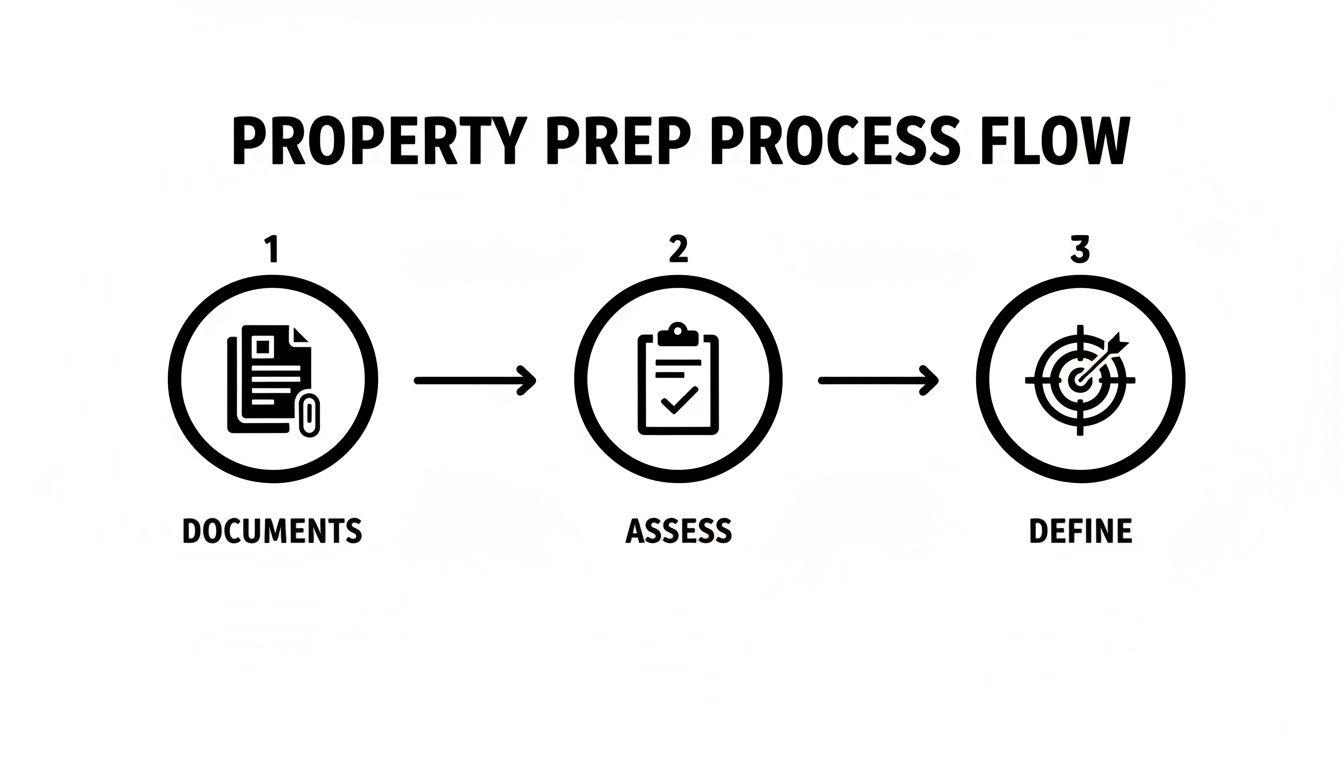
Before you even start looking for a property manager, a little prep work goes a long way. It's all about getting your property's details in order, taking an honest look at its condition, and figuring out exactly what you need from a management partner. This initial effort is what helps you attract a top-tier professional who’s a perfect match for your investment goals.
Laying The Groundwork Before You Hire
Deciding to bring in a property manager is a huge step toward protecting your investment and getting your time back. But if you jump into interviews unprepared, you risk ending up with a mismatched partnership.
The best owner-manager relationships start well before the first handshake. When you take a strategic approach from day one, you set clear expectations for potential candidates and show off your property in its best light. Think of this less as tidying up and more as a crucial business decision. Organizing your documents, assessing your property, and defining your goals will make the entire hiring process smoother. A well-prepared owner is exactly the kind of client the best property managers want to work with.
Gather Your Essential Documents
Before you pick up the phone, pull together a complete file for your rental property. Having everything in one place shows you’re a professional and allows potential managers to give you an accurate quote for their services and fees.
Your file should include:
- Property Deed and Title Information: Basic proof of ownership.
- Insurance Policies: The details on your landlord or property insurance coverage.
- Existing Lease Agreements: Absolutely essential if the property is currently occupied.
- Financial Records: A history of income and expenses, like past utility bills, property taxes, and maintenance costs.
- HOA or Community Rules: If you're in an HOA, have the governing documents and contact info ready.
Having this ready helps a firm specializing in Yucaipa property management or Redlands property management get a clear picture of your portfolio right from the start.
Conduct an Honest Property Assessment
Next up, walk through your property with a critical eye. Pretend you're a prospective tenant or the manager you're about to hire. This honest self-assessment helps you spot issues that need to be addressed before you hand over the keys. Fixing small problems now can boost your property's appeal and its potential rental income.
A property that is clean, safe, and well-maintained from the start attracts higher-quality tenants and a more dedicated property manager. First impressions matter immensely in the rental market.
Make a simple checklist as you go. Look for leaky faucets, chipped paint, appliances that aren’t working right, or overgrown landscaping. These small fixes can save you from bigger, more expensive repairs down the road. To get a better handle on this, you can learn more about what makes a good rental property and how these details really impact your bottom line.
Taking care of these things sends a strong signal to a potential manager that you're a serious, responsible partner. In competitive markets like Beaumont, Calimesa, and Loma Linda, a well-kept property can command higher rent and stay occupied longer.
Finding and Vetting Potential Property Managers
Okay, you've done your homework. With your goals defined and your property's documents organized, it’s time to find the right property manager. This isn't about a quick "property management near me" search; it’s about finding a true partner.
To find the best local experts in communities like Redlands, Beaumont, Calimesa, Yucaipa, Loma Linda, Mentone, Highland and Banning California, you need to look beyond the first page of Google. The goal here is to build a shortlist of three to five serious contenders—companies that don't just manage properties, but specialize in your type of property and have deep roots in your community. A little extra effort now saves a ton of headaches later.
Where to Find Reputable Candidates
The best leads usually come from people you already trust. While online searches are a decent starting point, nothing beats a solid, real-world referral.
- Tap Your Professional Network: Your real estate agent, mortgage broker, or CPA is an incredible resource. They work with property managers all the time and can give you the inside scoop on who’s reliable and who to avoid.
- Dig Into Online Reviews: Check out Google, Yelp, and the Better Business Bureau. Don’t just look at the star rating—read the actual reviews. You’re looking for patterns. Are tenants praising quick maintenance responses? Are owners happy with the financial reports? Consistency is key.
- Consult Local Associations: Good property managers are often members of professional groups like the California Association of Realtors or local real estate investor associations. This shows they’re committed to their craft and stay current with industry standards.
Getting these foundational steps right is what sets you up for a successful partnership.
With a clear picture of what you need, you can evaluate potential managers much more effectively.
Evaluating Their Online Presence
Think of a property manager’s website as their digital storefront. If it’s professional, informative, and easy to use, that’s a great sign of how they run the rest of their business.
As you browse, look for specifics. Can you easily find details on their services? Are their fees transparent? Do they showcase testimonials from happy clients? More importantly, does their content show they actually know the local market? Look for specific insights into Beaumont property management or the nuances of property management in Yucaipa, Redlands, or Loma Linda. A generic, outdated website is often a red flag.
Creating Your Vetting Shortlist
Now that you have a list of potential companies, it’s time to narrow it down. The goal isn’t to find the cheapest option but the best value. Remember, a slightly higher management fee is easily worth it if it means shorter vacancies, better tenants, and proactive maintenance that protects your investment.
The principles behind hiring the right person are universal, whether it's for your books or your property—you want a capable professional you can trust.
Before scheduling any interviews, a little systematic vetting goes a long way. I recommend using a simple checklist to keep your thoughts organized and ensure you're comparing everyone on the same key criteria.
| Vetting Criteria | Company A | Company B | Company C |
|---|---|---|---|
| Years in Business | |||
| Local Market Focus (Redlands, Beaumont, etc.) | |||
| Specializes in Your Property Type | |||
| Positive Online Reviews (Google/Yelp) | |||
| Professional & Informative Website | |||
| CA DRE License Verified | |||
| Proof of Insurance (Liability, E&O) | |||
| Transparent Fee Structure |
This simple exercise helps you quickly spot the strongest candidates and eliminate any that don't meet your non-negotiables.
For every single company on your list, verify they are licensed with the California Department of Real Estate and carry both general liability and errors & omissions insurance. This is non-negotiable. It protects you, your tenant, and your property.
By the end of this stage, you should have a solid shortlist of 3-5 companies you’re ready to interview. For more tips on this part of the process, our guide on https://aim-properties.com/finding-the-top-rental-property-management-companies/ is a great next step.
Asking the Right Questions in the Interview

This is where you get past the polished website and find out how a company really operates. The interview is your chance to ask direct questions that peel back the curtain on their processes, experience, and management style. A great interview goes way beyond the basics and gets into the nitty-gritty of their day-to-day.
Your goal isn't just to hear the "right" answers. You're trying to gauge their honesty, transparency, and deep-seated knowledge of the local market. Think of this as hiring a key business partner, not just another vendor. The questions you ask now will have a direct impact on your property’s performance—and your own peace of mind.
Gauging Their Tenant Management Process
The quality of your tenants is the lifeblood of your investment. A manager's approach to finding, screening, and managing them is arguably their most critical function. You need to hear about specific, documented procedures, not just vague philosophies.
Start with their screening protocol. Ask them to walk you through their entire tenant screening checklist from start to finish. What’s the minimum credit score they’ll accept? What’s their income requirement—usually 2.5 to 3 times the monthly rent? Do they actually pick up the phone and call previous landlords and employers? A fuzzy answer here is a massive red flag.
Next, find out how they handle things when they go wrong. What is their exact process for collecting late rent? Ask about the timeline. When do they send the first notice, make a phone call, or post a legal notice? This reveals how firm they are and if they actually follow California’s strict legal guidelines.
- "What's your average vacancy rate for properties like mine in Loma Linda or Highland?" This tests their real-world performance and local market knowledge.
- "Can you tell me about a time you had to handle a difficult tenant situation and what the outcome was?" This gives you a concrete example of their problem-solving skills in action.
- "What marketing channels do you use to advertise vacant properties?" You're looking for a modern, multi-channel approach that goes beyond just sticking a sign in the yard.
A strong property manager will have clear, confident answers and will probably have data to back up their claims. They should sound like they've done this a hundred times before, because they have.
Understanding Their Maintenance and Repair Workflow
How a company handles maintenance is a direct reflection of their efficiency and commitment to protecting your asset. Poorly managed maintenance leads to frustrated tenants, expensive emergency repairs, and a property that's slowly falling apart.
Ask about their network of vendors. Do they have established relationships with licensed and insured plumbers, electricians, and handymen in the Banning, Calimesa, or Mentone areas? It's also fair to ask if they mark up vendor invoices—this is a common practice, but a good partner will be transparent about it.
A well-defined maintenance plan is proactive, not reactive. The best property managers don't just fix what's broken; they have systems in place to prevent issues before they start, saving you money in the long run.
Their emergency response plan is just as important. What do they consider an "emergency"? Who answers the phone at 2 AM on a Saturday? Walk through a scenario, like a burst pipe, and have them explain their step-by-step response. Getting this clarity is essential for keeping tenants happy and minimizing damage to your property. For a deeper look into what a manager should be handling, our article on property management company responsibilities provides a detailed overview.
Clarifying Financial Reporting and Communication
Consistent, clear communication is the foundation of a good relationship with your property manager. You absolutely need to know how and when you'll get information about your property's financial performance.
Ask to see a sample owner's statement. Is it easy to read and understand? It should clearly itemize income, management fees, and any maintenance expenses for the month. Also, inquire about their process for handling owner funds and security deposits to make sure they're following California trust account regulations to the letter.
Finally, set communication expectations right from the start.
- Who will be my primary point of contact? You want a dedicated manager, not a different person every time you call.
- How often will I receive updates? A monthly financial report is standard, but you should also know how they'll communicate about maintenance issues or tenant problems.
- What is your preferred way to communicate? Whether it's phone, email, or an online portal, make sure it works for you.
By asking these targeted questions, you’ll get the insight you need to hire a property manager who not only talks a good game but has the proven systems to protect and grow your real estate investment.
Understanding Fees and the Management Agreement

After the interviews, it's time to talk numbers and contracts. This is where you really safeguard your investment's profitability. A great property manager is a partner, and the management agreement is the roadmap for that partnership—it has to be clear, fair, and completely transparent.
Navigating fee structures and contract clauses can feel daunting, but this is where your diligence truly pays off. Taking the time to understand every single line item prevents costly surprises down the road and makes sure everyone is on the same page from day one.
Breaking Down Common Fee Structures
Property management fees aren't one-size-fits-all, so you'll come across a few different models. The most common is a percentage-based fee, usually somewhere between 8% and 12% of the monthly rent collected. This model is popular for a good reason: it aligns the manager's success directly with yours. They only get paid when you do.
Another approach is a flat-rate fee, where you pay a set amount each month no matter what the rent is. This can be appealing for its predictability, especially if you own higher-rent properties in areas like Redlands, Loma Linda, or Highland. Just make sure you clarify if that fee is still due during vacancies. To budget effectively, you’ll want a detailed breakdown of the actual property management cost per month.
It’s crucial to understand these models inside and out. You can see how we handle this with our own transparent approach by reading our guide on property management fee structures.
Uncovering Potential Hidden Costs
Beyond the main management fee, other charges can pop up on your owner statement. A trustworthy company will be upfront about these, but you should always ask about them specifically. Being proactive here is the key to avoiding surprises when you get your monthly report.
Keep an eye out for these common additional fees:
- Tenant Placement or Leasing Fee: This is a one-time charge for finding and screening a new tenant, often 50% to 100% of the first month's rent.
- Lease Renewal Fee: A smaller fee for handling the paperwork and negotiations when a good tenant decides to stay.
- Maintenance Markup: Some companies add a surcharge (say, 10%) to vendor invoices for the time and effort of coordinating repairs.
- Setup Fee: A one-time cost to get your property onboarded into their systems.
- Eviction Fee: An hourly or flat fee to cover the time and legal coordination if an eviction becomes necessary.
Reviewing the Management Agreement Line by Line
The management agreement is a legally binding contract that defines your entire working relationship. Don't just skim it—read every single word. If there's something you don't understand, ask them to clarify it for you in writing.
Your management agreement should protect both you and the manager. Key clauses on termination, liability, and owner responsibilities must be crystal clear to prevent future disputes.
Pay very close attention to these critical clauses:
- Scope of Authority: This section spells out exactly what the manager can and can't do without your permission. It should specify a spending limit for repairs (e.g., $300) that they can't cross without getting your approval first.
- Termination Clause: How do you get out of the contract if you're not happy? Understand the notice period you have to give and whether there are any penalties for ending the agreement early.
- Owner Responsibilities: This part outlines your obligations, like maintaining proper insurance, funding a reserve account for repairs, and making sure the property is up to all safety codes.
By carefully dissecting the fees and the agreement, you’re taking the final, critical step toward hiring a property manager who will be a true asset to your portfolio.
Making a Confident Final Decision
You’ve done the hard work. The interviews are over, you’ve compared the fee structures, and you've read through the management agreements. Now comes the moment of truth: making the final choice.
This last stage is about more than just what looks good on paper. It's about combining your due diligence with your gut feeling to find a partner who is the right fit for your property's long-term success. A few final checks will give you the confidence to move forward, knowing you've found a professional who will protect and grow your investment.
Performing Final Due Diligence
Before you sign anything, a few non-negotiable checks are in order. Think of this as your final safety net, confirming that your top candidate isn't just talking a good game but is fully legitimate and professional.
First, verify their license with the California Department of Real Estate (DRE). It’s a simple step, but it’s critical. An unlicensed manager is a massive liability you simply can't afford.
Next, request proof of insurance. Any reputable company will have no problem providing a certificate showing they carry both general liability and Errors & Omissions (E&O) coverage. This is what protects you from financial headaches if an accident happens on the property or the management company makes a mistake.
The Power of Calling References
References offer the most honest, unfiltered look into what it's really like to work with a property manager. When you call, don't settle for a simple "Are you happy with them?" Dig deeper with specific, open-ended questions to get the full story.
Jot down a few questions before you dial:
- "Can you describe their communication style? How quickly do they usually get back to you?"
- "Could you give me an example of how they handled a tough tenant situation or a major repair?"
- "What are their monthly financial statements like? Are they clear and easy to understand?"
- "Have you run into any unexpected fees or surprise charges since you hired them?"
- "If you could change one thing about their service, what would it be?"
Pay attention to how they answer, not just what they say. If you hear genuine enthusiasm and detailed praise, that's a fantastic sign. But if you get a lot of hesitation or vague, one-word answers, it might be a hint that there are issues below the surface.
Watching for Critical Red Flags
Throughout this entire process, keep your eyes peeled for red flags. Spotting them now can save you from a world of stress and financial loss later. Remember, if a manager is difficult to work with while trying to earn your business, it will only get worse once they have it.
A lack of transparency is the biggest red flag of all. If a potential manager is evasive about their fees, processes, or references, it's a clear sign to walk away. The best partners are an open book.
Be on the lookout for these warning signs:
- Vague Communication: If they take days to return your calls or emails now, just imagine the response time when you have a burst pipe at 2 a.m.
- High-Pressure Sales Tactics: A great manager knows their value and lets their service speak for itself. If you feel like you're being rushed into signing a contract, it's a bad sign.
- Disorganized Operations: Are they struggling to find documents like a sample owner statement? Do they seem scattered or forget details from your last conversation? This reflects poorly on how they'll manage your property.
- Unwillingness to Provide References: This is a deal-breaker. A company with a solid track record of happy clients will be proud to let you speak with them.
Choosing a property manager is a major business decision. Hiring the right professional can seriously boost your rental income, especially in today's market. The U.S. property management services market is expected to grow from $4.6 billion in 2025 to over $7.6 billion by 2033.
This growth is driven by the value of expert management, particularly in areas like Beaumont, Yucaipa, Redlands, and Loma Linda. With housing affordability challenges—where 57% of U.S. households can't afford a median-priced home—the demand for quality rentals is stronger than ever. Outsourcing to a pro ensures you're positioned to capitalize on these trends. You can find more insights on this growing market from this Grand View Research report.
After all the checks are done, trust your gut. The best partner is someone who not only has the credentials but also communicates in a way that gives you complete confidence and peace of mind.
Your Manager Onboarding Checklist
Once you've made your selection and signed the agreement, a smooth transition is key. Use this checklist to ensure all the important handoff tasks are covered as you bring your new manager on board.
| Onboarding Task | Status (To Do / In Progress / Complete) | Notes / Due Date |
|---|---|---|
| Sign Management Agreement | Finalize terms and signature. | |
| Provide Property Access | Keys, garage codes, alarm info. | |
| Transfer Tenant Information | Leases, contact info, ledgers. | |
| Hand Over Vendor Contacts | Plumber, electrician, landscaper. | |
| Set Up Owner Portal Access | Confirm login credentials. | |
| Transfer Utilities (if applicable) | Ensure seamless billing transition. | |
| Schedule Initial Property Inspection | New manager's first walkthrough. | |
| Confirm First Rent Collection | Verify process for upcoming month. |
Following a structured onboarding plan helps establish a strong working relationship from day one and minimizes any potential disruptions for you and your tenants.
Common Questions About Hiring a Property Manager
Even after you've done all your homework, it’s completely normal to have a few last questions before you hand over the keys. Choosing to hire a property manager is a big decision for any owner, and you want to get it right.
Let's walk through some of the most common questions we hear from property owners in communities like Redlands, Beaumont, Yucaipa, and Calimesa. My goal here is to give you the practical clarity you need to feel confident moving forward.
What Does a Property Manager Actually Do for Me?
Think of a professional property manager as the CEO of your rental property. They take on all the day-to-day operations that can drain your time and energy. This starts with marketing your vacant property across the right channels to attract quality applicants. From there, they handle comprehensive tenant screening—and I mean everything: credit checks, background searches, and income verification—before managing all the lease paperwork.
They become the single point of contact for your tenants, handling all communication, rent collection, and those dreaded 24/7 maintenance calls through their network of trusted local vendors. Most importantly, a good manager ensures your property stays compliant with California’s complicated and constantly changing rental laws. From serving the right legal notices to managing an eviction if it ever comes to that, their professional oversight shields you from massive legal and financial risks.
How Much Does Property Management Cost in Areas Like Beaumont?
In areas like Beaumont, Yucaipa, Loma Linda, and the surrounding communities, you’ll typically find that management fees are a percentage of the monthly rent collected, usually somewhere between 8% to 12%. Some companies might offer a flat monthly fee, which can be a great deal if you have a higher-rent property.
But the monthly percentage is just one piece of the puzzle. It’s absolutely critical to ask about all potential costs. Look for things like tenant placement fees (often 50-100% of the first month's rent), lease renewal fees, or charges for coordinating maintenance. When you're comparing costs, don't just look at the fee—look at the value. A company with a slightly higher fee might save you a fortune in the long run with lower vacancy rates and proactive maintenance.
The right property manager doesn’t cost you money; they make you money. By maximizing rental income, reducing vacancies, and preventing costly mistakes, their value far outweighs their fee.
When Is the Right Time to Hire a Manager?
That tipping point is different for everyone, but there are a few common triggers that tell you it’s time. Many owners finally make the call when they buy a second property, live too far away to handle issues themselves, or just feel completely overwhelmed by the constant demands.
If you’re struggling with difficult tenants, getting late-night maintenance calls, or just stressed about keeping up with legal paperwork, that’s a huge sign. On the other hand, many savvy investors hire a manager from day one. It’s a smart strategy that keeps their investment truly passive, freeing them up to focus on their career, spend more time with family, or scout for their next real estate deal.
How Do I Find the Best Property Manager Near Me?
Start your search online, looking for companies that have a strong local footprint and a history of positive reviews. Use specific search terms like "Yucaipa property management" or "Redlands property management" to find true local experts. Beyond Google, ask for referrals from your network—local real estate agents, accountants, or other investors often have invaluable firsthand experience.
Before you sign anything, verify their license with the California Department of Real Estate and confirm they carry both liability and E&O insurance. The best fit will be a company that knows the local market inside and out, has a transparent and easy-to-understand fee structure, and a communication style that makes you feel comfortable and informed.
For more detailed guidance, feel free to explore our comprehensive property management FAQs, where we cover even more common owner concerns.
Making the right choice when you hire a property manager comes down to finding a partner you trust to protect your asset. At AIM PROPERTY MANAGEMENT COMPANY, we bring the local expertise and dedicated service you need to make your rental property a success. If you own a home in Redlands, Beaumont, Calimesa, Yucaipa, Loma Linda, Mentone, Highland and Banning California, let's talk about how we can help you reach your investment goals.