
Getting paid on time, every month, starts way before the rent is actually due. It really begins the moment you and your new tenant sign the lease. A strong, clear, and legally-sound lease agreement is your best tool for preventing late payments and heading off disputes before they even start.
Think of it this way: when you spell out exactly when rent is due, how it can be paid, and what happens if it's late, you're setting a professional tone right from the get-go.
Building Your Foundation For On-Time Rent Collection
The secret to stress-free rent collection is a rock-solid lease. This isn't just paperwork; it's a legal contract that removes all the guesswork. A vague lease is just an invitation for trouble, leaving loopholes that can lead to confusion and payment delays. This is especially critical for landlords in competitive markets like Redlands, Beaumont, and Calimesa, where clarity protects your investment.
Instead of just hoping your tenants pay on time, a well-written payment clause gives you an enforceable process to follow. For a deeper dive, this practical guide for landlords on rent collection is an excellent resource that covers the topic from A to Z.
Key Elements Of A Strong Payment Clause
To make your lease airtight, the payment section needs to be incredibly specific. You want to leave zero room for interpretation.
Your payment clause should always include:
- The Exact Rent Amount: Spell out the full monthly rent in dollars. No ambiguity.
- The Specific Due Date: Clearly state the day rent is due (e.g., "the 1st day of each month").
- Acceptable Payment Methods: List every single way you’ll accept rent, whether it’s an online portal, personal check, or money order.
- California-Compliant Grace Period: Detail the grace period, making sure it aligns with state law, before a payment is officially considered late.
In the hot rental markets of Southern California—including cities like Yucaipa, Loma Linda, and Mentone—landlords are feeling the pressure. National data shows renters are spending nearly 18% more on rent since January 2023. This is exactly why partnering with a local expert like AIM Property Management makes such a difference.
Choosing The Right Payment Options
The payment methods you offer can make a huge difference in how consistently you get paid. Old-school methods like mailing a check might feel familiar, but they come with the risk of postal delays or lost mail.
Modern online payment portals, on the other hand, are a game-changer. They offer automation, easy tracking, and a ton of convenience for both you and your tenants.
A clear, well-communicated collection process is your first and most effective tool for ensuring tenants pay on time, every time. It all ties back to the initial tenant screening and the lease they sign.
The best approach is usually to offer a few flexible but secure options. This caters to different tenant preferences while ensuring you have a reliable system in place. When you combine a great tenant with a strong lease, you've got the perfect formula for success. For more on that, check out our guide on how to find good tenants.
Comparing Popular Rent Payment Methods For Landlords
Choosing how you'll accept rent is a big decision that impacts both you and your tenants. Some methods offer convenience, while others prioritize security or low costs. The table below breaks down the most common options to help you decide what works best for your rental property.
| Payment Method | Pros for Landlord | Cons for Landlord | Best For |
|---|---|---|---|
| Online Portals | Automated reminders, recurring payments, easy tracking, high security. | May have transaction fees, requires tenant tech-savviness. | Landlords wanting a streamlined, modern, and hands-off system. |
| ACH/Bank Transfer | Direct deposit, secure, low fees (often free), reliable. | Can take 1-3 business days to process, requires setup. | Budget-conscious landlords who value security over speed. |
| Personal Check | No transaction fees, familiar to all tenants. | Risk of bounced checks, manual deposit required, mail delays. | Landlords with only one or two properties and a high trust level. |
| Cash | Instant payment, no processing fees. | No paper trail, major security risk, difficult to track for records. | Strongly discouraged; only for very specific, in-person scenarios. |
| Money Order | Guaranteed funds (no bouncing), provides a paper receipt. | Tenant must physically obtain and deliver it, risk of being lost. | Landlords who want to avoid bounced checks but don't use online systems. |
Ultimately, the goal is to make paying rent as simple and reliable as possible. Offering a primary digital method, like an online portal, with a traditional backup like money orders, often covers all your bases and keeps the rent flowing in on time.
Using Technology for Seamless Rent Payments

Still relying on paper checks? In a world where everything happens online, waiting for the mail is a recipe for delays, lost payments, and unnecessary headaches. The modern answer to collecting rent is simple: technology.
Adopting an online payment platform can turn this monthly chore into a streamlined, reliable process that helps both you and your tenants. These systems do the heavy lifting with features like recurring payments, automatic reminders, and instant notifications.
For landlords with properties in communities like Yucaipa, Highland, and Loma Linda, this means less time chasing down rent and more time focusing on your investment. The goal is to create a "set-it-and-forget-it" system that guarantees predictable cash flow.
Choosing Your Digital Payment Platform
When you're ready to move your rent collection online, you'll find a few different options. It’s important to understand the difference between simple peer-to-peer apps and software built specifically for property management.
- Peer-to-Peer (P2P) Apps (Zelle, Venmo): Tenants are already familiar with these, and they're usually free. The problem? They lack landlord-specific features like calculating late fees, blocking partial payments, or generating financial reports. They're a step up from a paper check but not a long-term solution.
- Dedicated Rent Collection Platforms: Software built for landlords offers a complete toolkit. These platforms handle everything from payment processing and tenant communication to integrating with accounting tools, giving you a clear financial picture of your property's performance.
While P2P apps might seem easy enough for one property, they become messy as you grow. For a professional operation, especially for those needing Yucaipa property management solutions, dedicated software is the way to go.
Automating your rent collection isn't just about convenience—it's about creating a professional, enforceable system that reduces late payments and protects your investment. Technology provides the structure and paper trail you need for effective management.
Putting Your New System in Place
Once you’ve picked a platform, the key to a smooth transition is clear communication. Don't just announce the change; sell the benefits to your tenants. Explain how they can set up autopay, pay from anywhere, and build a positive payment history.
Provide them with simple, step-by-step instructions for setting up their account and making that first payment. For landlords in areas like Beaumont and Banning, offering a secure, modern payment method is a real competitive advantage that attracts responsible, tech-savvy tenants.
As you weigh your options, our detailed property management software comparison can help you make a decision that fits your needs. Ultimately, the right technology streamlines your operations, improves on-time payment rates, and delivers the financial reports you need to track your investment’s success.
Managing Late Payments and Enforcing Fees Correctly
Let’s be realistic: even with the best tenants and the slickest payment systems, late payments are going to happen. The real test is how you manage them. Your response needs to be professional, legal, and consistent, turning a potential headache into a structured, predictable process. How you handle that first late payment sets the tone for the entire tenancy.
A firm, consistent late fee policy is your first line of defense. This isn't about being punitive; it's about reinforcing the importance of paying on time and covering the real administrative costs you incur chasing down that payment. Of course, this policy has to be spelled out clearly in the lease agreement, leaving absolutely no room for misunderstanding.
When a tenant does fall behind, having a clear game plan and the right communication tools is everything. For some solid advice on shaping those conversations, a comprehensive collection call scripts guide can be an incredibly useful resource.
Creating a California-Compliant Late Fee Policy
Here in California, you can't just pull a late fee out of thin air. The law is very clear: any late fee must be a "reasonable estimate" of the actual damages you suffer because of the tardy payment. This typically covers things like your administrative time, communication costs, and any lost interest.
To keep your policy on the right side of the law, stick to these guidelines:
- Calculate Your Actual Costs: You need to be able to justify the fee. Document the time and resources you genuinely spend dealing with a late payment. A good rule of thumb is a small percentage of the monthly rent, like 4-5%, but you must be able to back it up if challenged.
- Define the Grace Period: Your lease must explicitly state the grace period—how many days a tenant has after the due date before a payment is officially late and the fee kicks in.
- Be Consistent, Always: Apply your late fee policy to every tenant, every single time. Playing favorites or being inconsistent is a fast track to disputes and accusations of discrimination.
For a deeper dive into your legal obligations as a landlord, we always recommend reviewing our guide on California landlord-tenant laws.
The Right Way to Communicate
More often than not, good communication can solve a late payment issue before it spirals out of control. We find a proactive, multi-step approach works best, starting with friendly nudges and escalating to formal notices only when necessary.
A simple, automated email or text reminder a day or two before rent is due can work wonders and prevent a lot of accidental late payments. But if the grace period ends and the rent still isn't in, it's time to send a formal "Late Rent Notice." This written notice should be professional but firm, clearly stating the total amount now due (including the late fee) and the deadline to pay.
Handling these delicate interactions is key. You have to enforce the lease while trying to maintain a positive landlord-tenant relationship. For property owners in Highland and Banning, having a professional property manager in Yucaipa manage this process ensures both financial accountability and legal compliance.
Self-managing landlords often struggle with delinquency rates, but professional intervention can slash those numbers. At AIM, our Redlands property management team uses data-driven strategies for clients in Inland Empire hotspots like Highland, Mentone, and Calimesa to achieve 95%+ on-time collections—well above industry averages that have been strained by recent economic shifts. If all communication fails and you still don't have the rent, the next step is a formal legal notice, which is the required first move before any potential eviction action.
Navigating Non-Payment and the California Eviction Process
No landlord ever wants to deal with an eviction. It’s an emotionally draining, stressful, and often expensive process for everyone involved. But when a tenant stops paying rent and communication breaks down, you have to protect your investment with a clear, legal path forward.
Following California's eviction process to the letter isn't just a good idea—it's the law. A single misstep, like an incorrectly filled-out form or serving a notice the wrong way, can get your case thrown out of court. That means you’re back to square one, losing even more rent and adding a mountain of legal risk.
The First Legal Step: The Notice to Pay Rent or Quit
Before you can even think about filing an eviction lawsuit (officially called an "unlawful detainer"), you must serve the tenant with a formal legal notice. For non-payment of rent, this is the "3-Day Notice to Pay Rent or Quit." This document is the official kickoff to the legal process, and it has to be perfect.
The notice absolutely must include:
- The exact amount of rent due. Critically, do not include late fees or other charges here.
- The full name of every tenant listed on the lease.
- The complete address of the rental property.
- A clear statement that the tenant has three business days to either pay the full amount owed or move out ("quit").
Serving this notice correctly is just as important as what's written on it. California law has very specific rules for delivery, whether it's done through personal service, substitute service, or the "post and mail" method.
The chart below shows the typical flow when rent is late, starting with a simple reminder and escalating to formal legal action.
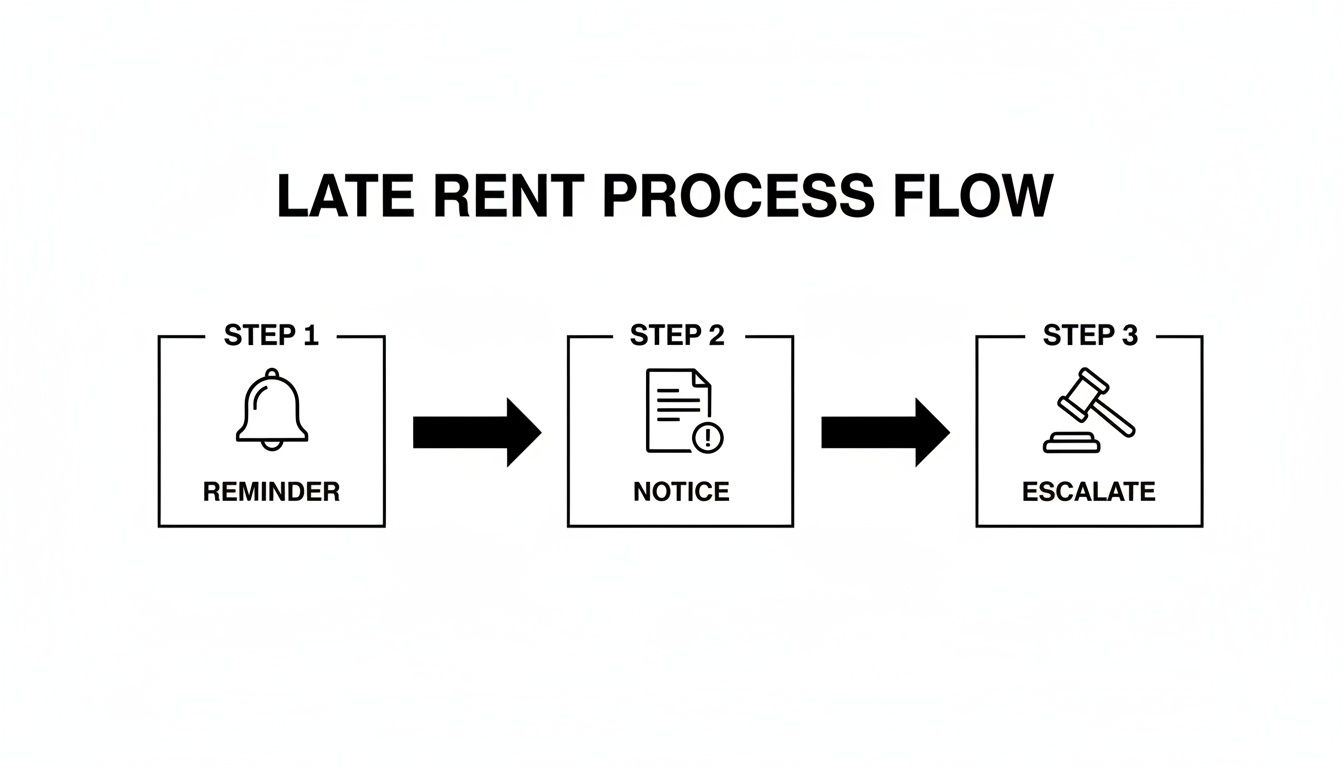
As you can see, legal action is the last resort after other attempts to resolve the situation have failed.
The Importance of Meticulous Record-Keeping
Throughout this entire ordeal, your best friend is documentation. Every text, email, phone call, notice sent, and payment received (or not received) must be logged with dates and details. This paper trail is your most critical evidence if the case ends up in court.
This is where many self-managing landlords in communities like Calimesa and Mentone run into trouble. Handling these proceedings requires a deep understanding of the law and an unemotional, professional approach. A professional Redlands property management firm shields owners from these legal risks and the direct emotional strain.
If the three days pass and the tenant hasn't paid or moved out, your next step is filing an unlawful detainer lawsuit with the court. Given the complexities, this is the point where having an expert on your side is invaluable. To get a better handle on the specifics, learn more about the landlord eviction process in California in our detailed guide. It’s all about making sure the process is handled correctly, legally, and humanely.
How a Property Manager Streamlines Your Rent Collection

Managing a rental property is so much more than just collecting a check once a month. It’s a constant cycle of enforcing lease terms, handling late-night maintenance calls, and navigating the tricky legal territory of notices and compliance. For most property owners, what starts as a smart investment can quickly become a source of never-ending stress.
This is exactly where a professional property manager changes the game. Instead of you chasing down payments, having awkward conversations about late fees, and figuring out legal paperwork, an expert team steps in to handle every last detail. At AIM Property Management, we take rent collection from a manual, often frustrating chore and turn it into a smooth, automated system designed to protect your cash flow and give you back your time.
From Proactive Screening to Consistent Enforcement
The real secret to collecting rent on time isn’t just about having a good payment system—it starts with finding the right tenants in the first place. Our entire process is built on a foundation of rigorous, data-driven tenant screening. We run comprehensive background checks, meticulously verify income, and analyze credit histories to place reliable, financially responsible people in your property.
This proactive approach dramatically cuts down on the chances of late or missed payments right from the start. But our job doesn't end when the lease is signed. We also provide:
- A Secure Online Portal: We give tenants access to a simple and secure online portal where they can set up automatic recurring payments. It's a small convenience that makes a huge difference, empowering them to pay on time, every time, without a second thought.
- Firm but Fair Enforcement: Let's be realistic—late payments can still happen. When they do, our team handles it with professionalism and in full compliance with California law. We manage all communications, apply late fees consistently, and serve the proper legal notices if the situation calls for it.
- Detailed Financial Reporting: Each month, you'll receive clear, easy-to-understand financial statements. This gives you a transparent snapshot of your property's performance without you ever having to get bogged down in the day-to-day administrative grind.
Maximizing Your ROI with Local Expertise
For landlords looking for property management in Beaumont or Loma Linda, having a team with deep local expertise is a massive advantage. Consistent, timely rent collection is one of the biggest factors in boosting your return on investment. With national effective rents reaching $1,869 in Q2—a 2.1% increase year-over-year—every single on-time payment counts, especially when 39% of tracked metro areas saw negative growth.
For our Beaumont property management and Yucaipa property management clients, our proven systems turn those potential losses into steady, predictable income.
By entrusting your property to a professional manager, you’re not just hiring someone to collect rent. You're investing in a system designed to protect your asset, maintain positive tenant relationships, and maximize your financial returns with minimal effort on your part.
Our deep understanding of the rental market across the Inland Empire—from Redlands and Calimesa to Banning and Mentone—allows us to put strategies in place that are specifically tailored for this region. We handle all the complexities of legal compliance and document management, shielding you from unnecessary risk while ensuring your investment stays profitable.
To get a better sense of how we manage every facet of your rental, check out our guide on what a property management manager does for you. We take care of the daily operations so you can enjoy the rewards of ownership without the hands-on headaches.
Your Rent Collection Questions, Answered
When you're managing a rental property, especially in California, a lot of specific questions pop up around collecting rent. Let’s tackle some of the most common things we hear from property owners, with real-world advice you can act on.
What Is The Best Way To Communicate My Rent Policy To A New Tenant?
The absolute best time to set the stage is during the lease signing. Don't just slide the papers across the table; sit down and walk your new tenant through the payment clause line by line. Point out the due date, explain the grace period, show them the late fees, and clarify every single way they can pay.
We also find it's a great practice to follow up with a welcome packet that has all this information written down. Including a simple, step-by-step guide on how to set up their online payments can make a huge difference. Clear communication from day one prevents so much confusion down the road and shows you’re a professional.
Can I Refuse A Partial Rent Payment In California?
Yes, you can, but you have to be careful here. In California, if you accept a partial rent payment, you might accidentally give up your right to evict that tenant for not paying the full amount for that month. It can reset the clock, legally speaking.
If you're already headed toward eviction, the standard advice is to refuse any partial payments and only accept the full amount owed. This is a legally tricky spot, so your safest bet is to talk with a legal expert or a team that provides professional Redlands property management to make sure you're protecting your rights.
Is It Worth It To Hire A Property Manager Just For Rent Collection?
That's a common question, but it’s a bit misleading because you're getting so much more than just a "rent collector." When you bring in a property manager, you're really investing in a complete financial management system for your property. A firm like AIM Property Management handles the entire financial lifecycle.
It all starts with screening for financially solid tenants—that's your first and best line of defense against late payments. From there, we handle the enforcement of late fees, send out all the necessary legal notices, and give you detailed financial statements so you always know where you stand. For busy property owners in Beaumont, Highland, or Calimesa, this takes all the stress, legal risk, and time-consuming follow-up off your plate.
The value of a property manager isn't just in collecting rent; it's in the systems they implement to ensure rent is paid on time, legally, and with professional documentation, protecting your asset from start to finish.
What Are The First Steps If A Tenant Payment Is Late?
First things first, pull out the lease agreement and double-check that the grace period has officially passed. Once you've confirmed it has, your first official move is to send a written late rent notice.
This notice should be professional—polite but firm. Clearly state the total amount now owed (including any late fees spelled out in the lease) and the new deadline for payment. If you don't get a response or the payment, your next step is to serve a formal "3-Day Notice to Pay Rent or Quit," which is a mandatory step under California law. This is a critical legal document, so getting it filled out and served correctly is non-negotiable if you want to protect your rights as a landlord.
Navigating the complexities of tenant screening, lease enforcement, and timely rent collection can be a full-time job. AIM PROPERTY MANAGEMENT COMPANY offers comprehensive services designed to protect your investment and provide peace of mind. We proudly serve Redlands, Beaumont, Calimesa, Yucaipa, Loma Linda, Mentone, Highland, and Banning, California. Learn more about how we can streamline your property management today.