
Tenant screening is the process landlords use to evaluate prospective tenants by reviewing their credit, criminal background, income, and rental history to assess their ability to pay rent and abide by lease terms. In practice, that process can include credit reports, rental history, eviction actions and lawsuits, employment verification, criminal history, sex offender registry checks, watchlist checks, and even a risk score, and some reporting says as many as 90% of landlords now use this technology according to the Consumer Financial Protection Bureau overview of tenant screening reports.
If you own a rental in Redlands, Beaumont, Yucaipa, Calimesa, Loma Linda, Mentone, Highland, or Banning, you already know the primary issue isn't filling a vacancy. It's filling it with the right tenant. One weak placement can turn a solid investment into months of avoidable stress, delayed rent, property damage, conflict, and legal cleanup.
That's why "what is tenant screening" isn't a beginner question. It's a business question. A proper screening process isn't just a background check. It's a structured risk-management system that helps you protect cash flow, preserve the condition of the property, and make leasing decisions consistently enough to reduce compliance problems.
Protecting Your Investment from Day One
The most expensive tenant problems usually start with a decision that felt harmless at the time.
An owner has a vacant home. Showings are active. The applicant sounds polite, says they need to move quickly, and promises the income is solid. The owner wants the property occupied, skips a few verification steps, and relies on a quick report plus a short conversation. A few months later, rent starts arriving late. Maintenance issues are ignored. Communication gets harder. Then the owner realizes the original application didn't tell the full story.
That sequence is common because many owners still think screening is just one report. It isn't. Tenant screening is the process of evaluating whether an applicant is likely to pay on time, follow lease terms, communicate responsibly, and treat the property with reasonable care. The report matters, but the decision matters more.
What screening really protects
A rental property has two pressure points. One is cash flow. The other is control. Once a tenant has possession, every mistake gets harder and more expensive to fix.
Good screening protects both by helping you answer practical questions before keys change hands:
- Can this applicant support the rent? Income and employment verification should confirm that the rent burden is realistic.
- Does the application hold together? Names, addresses, employer details, and rental history should align across records.
- Has this person rented successfully before? Prior landlord feedback often reveals patterns that don't show up in a score.
- Are there signs of avoidable conflict? Inconsistent disclosures, rushed explanations, and unverifiable references are often more useful than a polished application.
Practical rule: The lease doesn't create a good tenancy. It only defines what happens after you've already chosen the tenant.
For owners in property management Redlands, Beaumont property management, and property management Yucaipa conversations, the issue isn't whether screening should happen. It should. The issue is whether the process is consistent, documented, and strong enough to hold up when an application looks acceptable on the surface but weak under verification.
Why the first decision matters most
You can recover from a plumbing repair. You can recover from a turnover. Recovering from a bad placement is much harder.
The tenant selection stage is where owners have the most advantage. Once that window closes, your options narrow to enforcement, notices, repairs, and legal process. That's why screening remains one of the few moments in rental ownership where careful process directly reduces future trouble.
Why Rigorous Screening Is Non-Negotiable

A weak screening process doesn't just increase your chance of getting a difficult tenant. It also increases your chance of making the wrong decision for the wrong reason.
That matters because many owners now rely on automated tools without understanding the limits of the data. Shelterforce reports that the tenant screening industry is a billion-dollar business with little oversight, and reports can contain inaccurate or incomplete information. It also notes that eviction filings can appear even when they never resulted in a judgment, which can create legal risk for landlords who rely on flawed reports without proper review, as explained in this Shelterforce analysis of tenant screening accuracy and oversight.
Fast decisions aren't the same as sound decisions
In active Inland Empire rental markets, speed matters. Owners in Redlands property management and Yucaipa property management situations don't want a vacancy sitting while paperwork drags on. But fast isn't helpful if the process is sloppy.
A superficial screen often fails in one of two ways:
| Screening mistake | What usually goes wrong |
|---|---|
| Relying on one cheap report | You get incomplete context and miss contradictions |
| Applying standards loosely | One applicant gets extra leniency, another gets denied for less |
| Focusing only on credit | You ignore rental behavior and verification quality |
| Treating every red flag the same | You overreact to minor issues and underreact to meaningful ones |
What works better is a structured policy with the same core review for every applicant. If you want a practical companion on placement standards, this guide on how to find good tenants is a useful next read.
Bad data creates two kinds of risk
The first risk is obvious. You approve someone who shouldn't have been approved.
The second risk is less obvious but just as serious. You deny someone based on information you didn't properly interpret, couldn't verify, or applied inconsistently. That's where fair housing and consumer reporting exposure start to show up.
Owners get into trouble when they treat a screening report like a verdict instead of a tool.
The better approach is to use reports as evidence, not as the whole decision. If a filing appears, you need context. If income looks strong, you still verify it. If a score looks fine, you still compare it to the rest of the application.
A short video can help frame what owners should think about when reviewing applicants:
What rigorous screening actually does
Rigorous screening isn't about being harsh. It's about being deliberate.
For property management Beaumont, property management Redlands, and property management Yucaipa, that usually means three things:
- Protecting rent collection: You want applicants whose verified finances support the lease.
- Reducing avoidable wear and conflict: Prior rental behavior often predicts how the tenancy will feel.
- Reducing legal exposure: Consistent criteria and documented review help owners defend their decisions.
That's why screening isn't an admin task. It's one of the core risk controls in residential property management.
The Core Components of a Comprehensive Tenant Screen
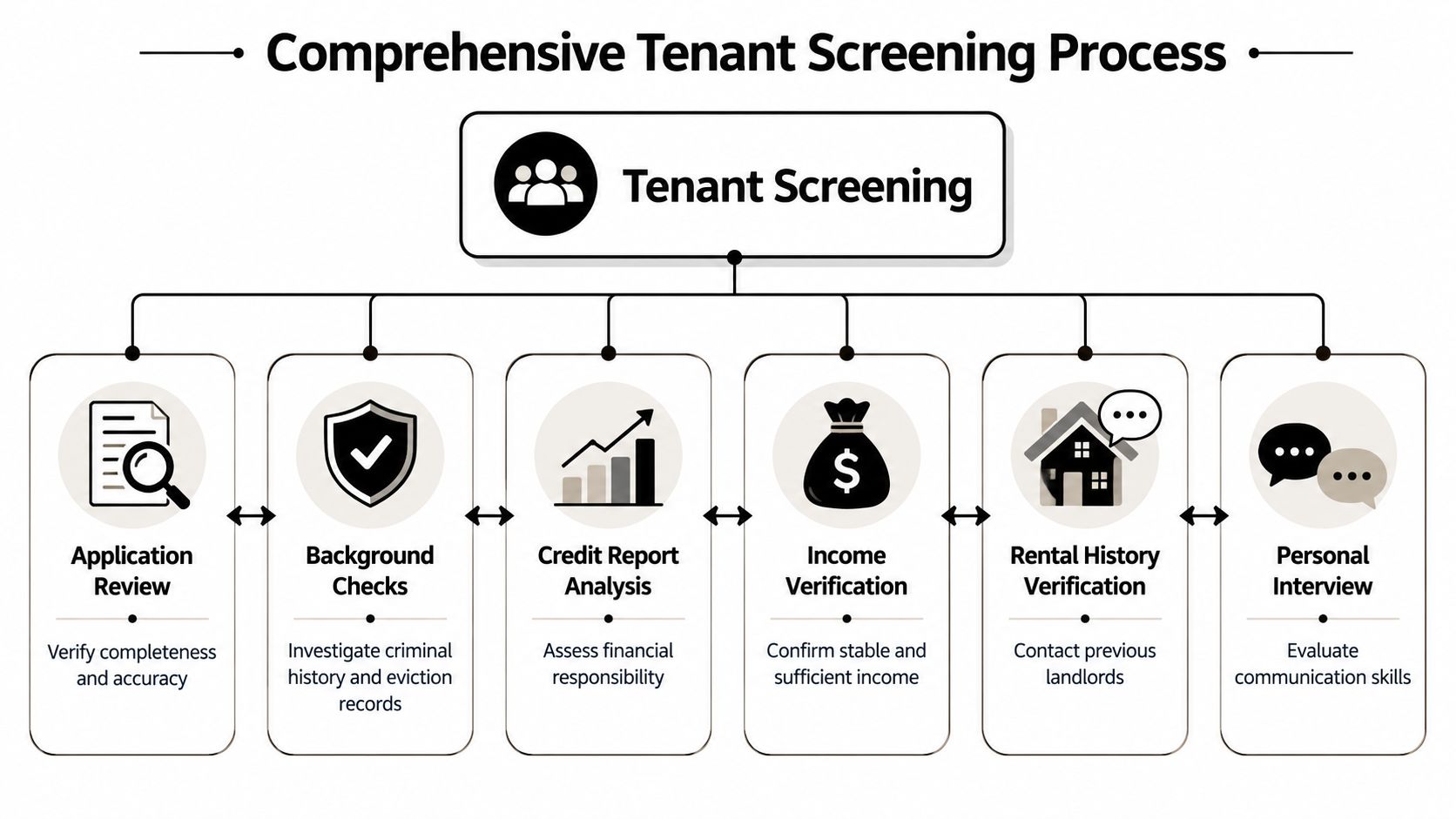
The strongest screening systems don't look at one data point and stop. They compare information across multiple sources and look for consistency. According to this SmartMove guide to tenant screening, effective screening is a risk-assessment workflow that combines identity verification, credit history, income, rental history, and references to predict reliability, and its core value comes from cross-validating those independent data sets.
Application review and identity match
The application is where the whole file starts. If the application is incomplete, rushed, or inconsistent, that matters before you even pull a report.
Look for mismatches in prior addresses, employer names, move-in dates, and claimed income. Small inconsistencies don't always mean fraud, but they do tell you where to verify more carefully.
A good first pass asks simple questions:
- Is the application complete? Missing details usually create problems later.
- Do names and addresses line up? If prior residences don't match other records, pause.
- Does the timeline make sense? Employment and housing history should read as one coherent story.
Credit review and financial behavior
Credit isn't a morality test. It's a payment behavior record.
What matters most is not a single score in isolation. It is the pattern behind the file. Repeated delinquencies, collections, judgments, or unresolved obligations can signal strain. At the same time, a limited file may require more weight on income stability and rental references.
If you're sorting through how public records and tenancy issues can interact with consumer files, this explainer on do evictions appear on credit reports gives useful context.
Income and employment verification
Many DIY landlords often cut corners. They glance at a pay stub and move on.
A proper review checks whether the income is stable, current, and consistent with what the applicant stated. You want the employer name to match the application. You want the pay information to make sense. You want to confirm that the person works where they say they do.
Verify the source, not just the document. A polished file can still contain bad information.
Inland Empire owners often focus heavily on credit because it's easy to access. Income verification is just as important, especially when an applicant has a decent report but weak actual capacity to carry the rent comfortably.
Rental history and landlord references
Previous landlord references are one of the most useful parts of screening when they're handled correctly.
The key is to ask operational questions, not vague ones. Did the tenant pay as agreed? Did they communicate about issues? Did they follow property rules? Was proper notice given? Would the landlord rent to them again?
Be cautious with references that sound rehearsed or can't confirm basics. Also be cautious with references that come only from personal contacts rather than actual housing providers.
Eviction and public record review
This area requires care. Public record information can be relevant, but it can also be misleading if you don't understand what you're reading.
A filing is not always the same as a final outcome. Dates matter. Case posture matters. Identity match matters. This is one reason owners should avoid snap decisions from bare record pulls without context.
For a broader look at tool options that landlords commonly compare, this overview of tenant screening services for landlords is worth reviewing.
Criminal background review with judgment
Criminal history is one of the easiest areas to mishandle. A record search isn't useful by itself unless the result is relevant, lawful to consider, and connected to a legitimate housing decision.
That means owners shouldn't use criminal data casually or as a blanket filter. A lawful process requires consistency, documentation, and attention to fair housing risk.
Why cross-checking beats box-checking
A thorough screen works because each part tests the others.
An applicant says they earn stable income. Employment verification confirms it. The address history matches the application. Prior landlord feedback aligns with the timeline. Credit behavior doesn't contradict the rest of the file. That is what a strong application looks like.
A weak file often falls apart in the seams. The numbers might look acceptable, but the story doesn't stay consistent. That's the difference between collecting reports and screening a tenant.
Navigating California Tenant Screening Laws
California owners can't treat screening like an informal judgment call. The legal standard is higher than that.
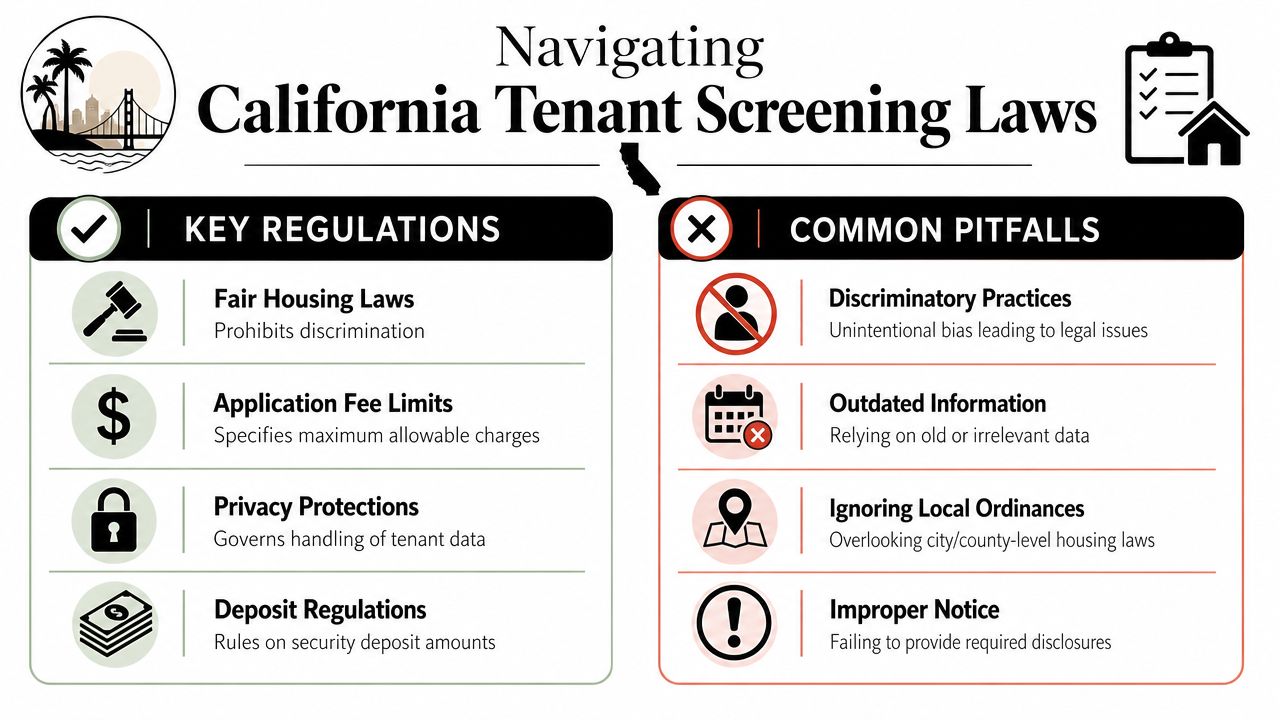
You need a process that is consistent, documented, and careful about what information is collected, how it's used, and how decisions are communicated. Federal fair housing rules apply, and California adds another layer of state requirements that make casual screening risky.
Fair housing starts with consistency
Every applicant should move through the same basic process. Same standards. Same documentation. Same review sequence.
If one applicant gets exceptions based on a conversation, a personal impression, or a rushed vacancy timeline, you've created unnecessary exposure. That is how owners drift into claims that they treated applicants differently.
At a practical level, compliant screening usually means:
- Use written criteria: Approval standards should exist before the applications arrive.
- Apply them uniformly: Don't tighten standards for one person and relax them for another.
- Document the file: Keep records showing what was reviewed and why a decision was made.
- Stay relevant: Only consider information that lawfully relates to tenancy risk.
Consumer report decisions require care
If you use a tenant screening report in a way that contributes to denial or different terms, you need to handle that step properly. Owners often underestimate this. They assume the screening company carries the whole compliance burden. It doesn't.
You still need a lawful process for evaluating the information and communicating the result when a report affects the decision. That includes avoiding vague explanations and keeping your records clear.
A consistent screening policy protects the owner as much as it screens the applicant.
California-specific caution areas
California is not the place for improvised leasing decisions. The state has strict tenant protections, and local practices can complicate matters further for owners in Redlands, Beaumont, and Yucaipa.
The most common problem areas include:
| Legal area | Why owners get tripped up |
|---|---|
| Fair housing | Informal exceptions create inconsistent treatment |
| Criminal history use | Blanket exclusions can create serious risk |
| Application practices | Poor disclosures and uneven procedures cause disputes |
| Adverse action handling | Denials based on reports are often communicated incorrectly |
If you want a broader legal reference point before building your criteria, review this guide to California landlord tenant laws.
What compliant screening looks like in real life
Compliant screening is not about collecting the most data. It's about collecting the right data, interpreting it carefully, and making the same kind of decision the same way every time.
That matters for Redlands property management, Beaumont property management, and Yucaipa property management because local owners often compete for applicants while also working under California's tenant-friendly legal framework. If your process is rushed, inconsistent, or poorly documented, the risk doesn't stay theoretical for long.
DIY Screening vs Professional Management The AIM Advantage
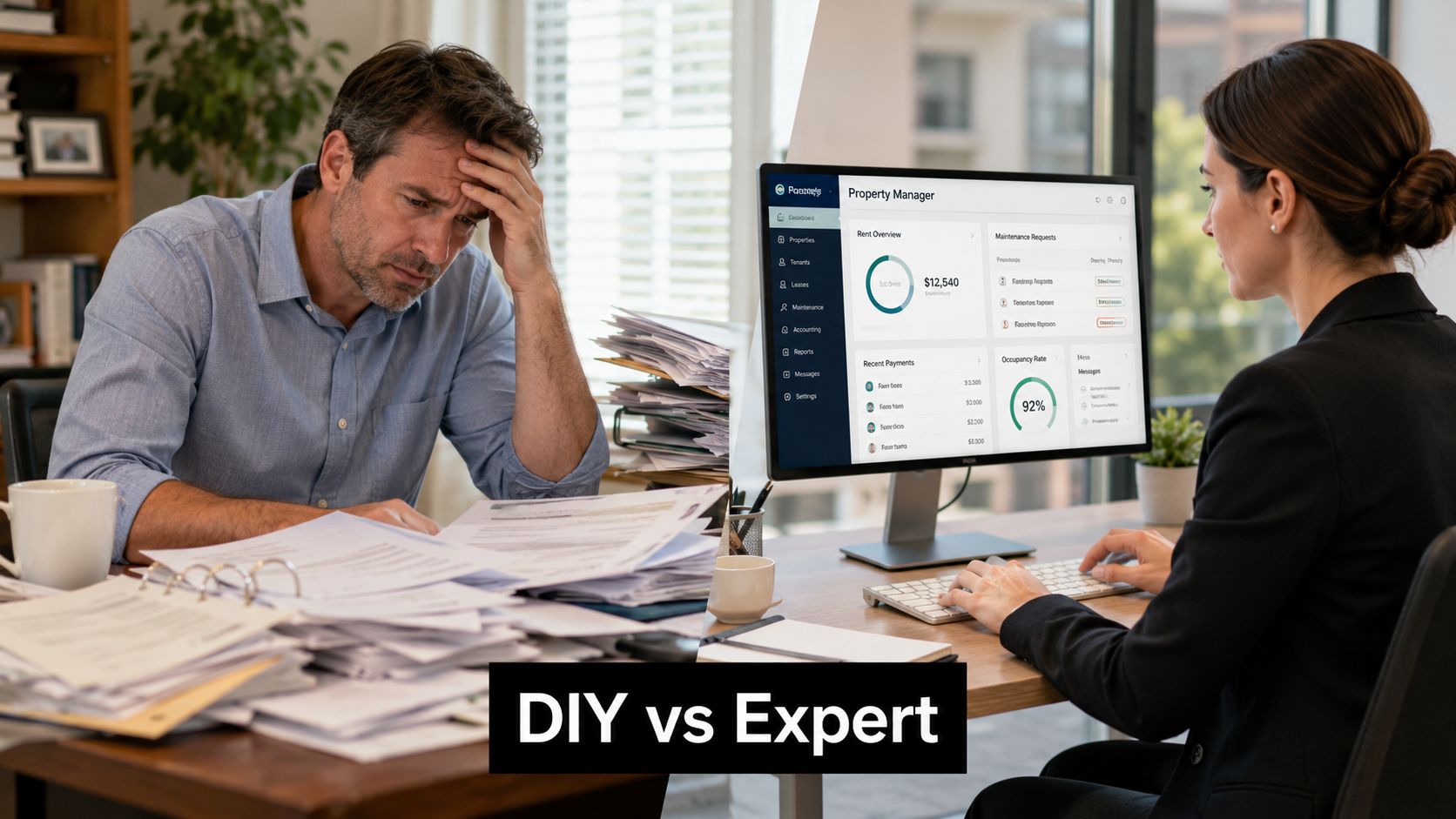
Most DIY screening problems aren't caused by bad intentions. They're caused by shortcuts.
An owner is busy. A vacancy needs to be filled. They pull an online report, review a few documents, make a couple of calls, and hope the file is solid. Sometimes that works. Sometimes it produces a tenancy that costs far more time and money than the owner expected.
Where DIY screening usually breaks down
The biggest DIY weakness is inconsistency. One applicant gets a deep review. Another gets a lighter one because the owner is tired of the vacancy. A third gets approved because they seemed trustworthy in person.
That approach creates operational and legal problems fast.
Common DIY issues include:
- Overreliance on automation: A score or recommendation gets treated like the final answer.
- Weak verification: Income documents and references are accepted at face value.
- Uneven criteria: Standards change depending on urgency or owner comfort.
- Poor recordkeeping: If the decision is challenged later, the paper trail is thin.
Modern tools can help, but only if they're used correctly. This guide to AI-powered tenant screening explains that platforms can cross-reference applicant data with credit bureaus and public records and generate a consolidated report quickly, but a risk score should be just one input rather than the sole basis for approval or denial.
What professional management changes
A professional screening process is less about having more software and more about having a repeatable system.
That system typically includes application review, identity checks, report analysis, income verification, landlord reference work, documentation, and a decision framework that doesn't shift from applicant to applicant. In day-to-day operations, that's where professional management earns its keep.
For owners comparing responsibilities, this explanation of what a property manager does is a useful baseline.
AIM PROPERTY MANAGEMENT COMPANY is one example of a local firm that handles screening as part of a broader residential management process that also includes rent collection, maintenance coordination, inspections, and compliance documentation.
The real advantage is disciplined interpretation
Good screening isn't just about gathering data faster. It's about knowing what deserves weight and what doesn't.
For example, a file can produce a respectable score while still raising concern because the employment timeline doesn't match the rental history. Another file may show an issue that needs context rather than automatic rejection. That kind of judgment takes process.
Cheap reports save money only if the placement is right. If the placement is wrong, the cheap report was expensive.
Owners who self-manage often also handle leasing visibility themselves. If you're working on the marketing side too, these actionable Google Business Profile strategies for agents offer practical ideas for improving local visibility around rental-related real estate services.
For higher-income owners with demanding schedules, professional management isn't about handing off responsibility. It's about installing a better operating system for tenant placement and property oversight.
Local Screening Expertise in Beaumont and Yucaipa
Beaumont owners need speed with control
Beaumont continues to attract renters who want space, commuter access, and newer housing options. That can create strong applicant flow, but it can also tempt owners to move too quickly when a vacancy opens.
In Property Management Beaumont work, the challenge isn't just finding an applicant. It's filtering for verified income, stable history, and consistent documentation without creating unnecessary delay. A solid Beaumont property management process should move efficiently while still checking the details that matter.
If you own a rental in Beaumont and want local leasing support tied to structured screening, review AIM's Beaumont rental services.
Yucaipa owners need consistency in a competitive market
Yucaipa has a different rhythm. Many owners are balancing long-term asset preservation with the need to keep vacancy time tight. In that setting, Yucaipa property management isn't just about collecting applications. It's about applying standards consistently so you don't trade a short vacancy for a long problem.
The same is true for property management Yucaipa decisions involving single-family homes and individually owned investment properties. The right screening process helps owners weigh financial strength, rental behavior, and verification quality without drifting into subjective decision-making.
That local discipline matters across nearby service areas too, including Redlands property management and property management Redlands, where owners often face similar trade-offs between speed, placement quality, and compliance.
Frequently Asked Questions About Tenant Screening
How do I find reliable property management near me to handle screening
Look for a company that can explain its screening process clearly, not just say it runs reports. Ask how it verifies income, how it checks landlord references, how it documents decisions, and how it handles California compliance issues.
For property management near me, local experience matters. A firm working regularly in Redlands, Beaumont, Yucaipa, Highland, Loma Linda, Calimesa, Mentone, and Banning will usually have a better sense of applicant patterns, leasing expectations, and local operating realities than a remote vendor.
Is it worth it to hire a property manager just for screening
Often, yes, but screening works best when it's part of the full leasing and management system.
A major problem in screening advice is that it often stops at data collection instead of explaining what to do with the results. As noted in this TenantCloud discussion of tenant screening decisions, more data isn't always better if it leads to inconsistent decisions or fair housing exposure. That's why many owners who want to hire a property manager end up looking for a firm that can interpret the file, document the decision, and manage the tenancy after move-in.
What are the biggest screening mistakes landlords make
The most common mistakes are predictable:
- Treating the report like the decision: Reports support judgment. They don't replace it.
- Skipping verification: Employment, income, and references need confirmation.
- Changing standards midstream: Inconsistency creates avoidable risk.
- Over-screening without a plan: Extra data isn't useful if you can't apply it fairly.
- Prioritizing speed over process: A fast approval can create a slow, expensive cleanup.
For owners in the Inland Empire, the practical answer to what is tenant screening is simple. It's the front-end control that protects the rest of the investment.
If you own a rental home in Redlands, Beaumont, Calimesa, Yucaipa, Loma Linda, Mentone, Highland, or Banning and want a consistent, compliant screening process built into full-service management, contact AIM PROPERTY MANAGEMENT COMPANY to discuss your property and leasing goals.