A great property mgmt company is more than just a vendor; they're a partner dedicated to protecting your investment, boosting its returns, and, most importantly, freeing up your time. Their job goes way beyond just cashing rent checks. They’re on the ground handling everything from intense tenant screening and lease paperwork to preventative maintenance and crystal-clear financial reporting.
This partnership lets you enjoy the upsides of owning property without getting bogged down by the day-to-day headaches.
What a Modern Property Mgmt Company Really Does

Before you can pick the right manager, you need to know what "good" actually looks like in 2024. A modern firm is a well-oiled machine, mixing old-school experience with smart, efficient systems to keep your property in top shape and performing at its best.
The best companies don't just put out fires—they prevent them. Think about it: a company that’s been around since 1997 has seen it all. They've built up a network of reliable and affordable plumbers, electricians, and handymen. That deep local history and mature relationships within the community mean better service, cheaper repairs, and an almost instinctual feel for what’s happening in the market.
Core Services That Protect Your Investment
The real value of a property manager shines through in what they do every single day. These are the absolute must-haves, the core functions that make or break the relationship:
- Financial Administration: This is the money side of things. It means getting rent in on time, every time, meticulously tracking every expense, and sending you a simple, clear financial statement each month. You should never have to guess how your investment is doing.
- Tenant Management: This is the people part. They market the property, run comprehensive background checks on applicants, handle every phone call and email, and make sure the lease is followed to the letter. They're the buffer between you and the tenants.
- Maintenance and Upkeep: Things break. A good manager coordinates all the repairs, has a plan for late-night emergencies, and regularly inspects the property to catch small issues before they become huge, expensive problems.
Here’s a key differentiator: the best property management companies focus on long-term stability, not quick profits. By sticking to long-term rentals, they create a steady income stream for you, dramatically cut down on turnover costs, and reduce the general wear and tear on your property.
The Growing Need for Professional Management
More and more property owners are seeing the light. The U.S. property management market is expected to jump from $81.52 billion in 2025 to a whopping $98.88 billion by 2029. Why the boom? Because the rental market is getting more complicated, and navigating all the legal hoops while trying to stay profitable requires a true expert.
Technology is also a huge piece of the puzzle now. For a closer look at how modern tools are changing the game, it's worth understanding property management tech. This kind of expertise is what turns a hands-on, stressful job into a genuinely passive investment.
Why Long-Term Rentals Build Lasting Wealth
Short-term vacation rentals get a lot of buzz, but if you ask seasoned investors where the real, sustainable wealth is built in real estate, they'll point you toward long-term tenants. It’s a strategy that trades volatility for stability, creating a predictable and profitable investment that grows year after year. It's the classic approach for a reason—it works, and it's a model we exclusively follow.
The biggest win here is consistent income. When you have a long-term lease in place, you know exactly what’s coming in each month. That predictable cash flow makes budgeting a breeze and is the foundation of a healthy investment. It lets you cover the mortgage, taxes, and maintenance without sweating every month.
The Power of Stability and Lower Costs
Let's be honest, the short-term rental game is a grind. It demands constant marketing, non-stop guest communication, and expensive, frequent cleanings. A long-term rental, especially one managed by a sharp property mgmt company, slashes that operational headache. Instead of a weekly scramble, turnover becomes a once-a-year event.
This translates directly into real savings:
- Fewer Vacancies: A one-year lease means 12 months of guaranteed rent, wiping out the empty nights that plague short-term listings.
- Lower Turnover Costs: You're not constantly paying for deep cleans, minor repairs, and marketing to attract the next guest.
- Less Wear and Tear: Long-term tenants tend to treat a place like their own home, which usually means less damage compared to the heavy traffic from a parade of short-stay guests.
To get a clearer picture, let's compare the two models side-by-side.
Long-Term vs Short-Term Rentals A Head-to-Head Comparison
Understanding the fundamental differences in operations, costs, and potential returns is crucial before you decide on a strategy. This table breaks down what you can expect from each approach.
| Feature | Long-Term Rentals | Short-Term Rentals |
|---|---|---|
| Income Stream | Consistent, predictable monthly payments | Variable, subject to seasonal demand and vacancies |
| Management | Low-touch; requires less frequent owner involvement | High-touch; demands daily operational attention |
| Turnover Rate | Low (typically once a year or less) | High (weekly or even daily) |
| Tenant Screening | In-depth background, credit, and employment checks | Minimal, often just a platform-based review system |
| Operating Costs | Lower; less frequent cleaning and marketing expenses | Higher; includes frequent cleaning, utilities, supplies |
| Wear and Tear | Generally lower as tenants treat it as their home | Often higher due to constant guest traffic |
| Regulation | Governed by standard landlord-tenant laws | Often subject to complex, changing local ordinances |
Ultimately, while short-term rentals can offer higher gross revenue in peak seasons, the long-term model provides a more stable, less demanding path to building equity and cash flow.
The data below visualizes the kind of improvements property owners see when they hand the reins to a professional manager who is laser-focused on long-term stability.
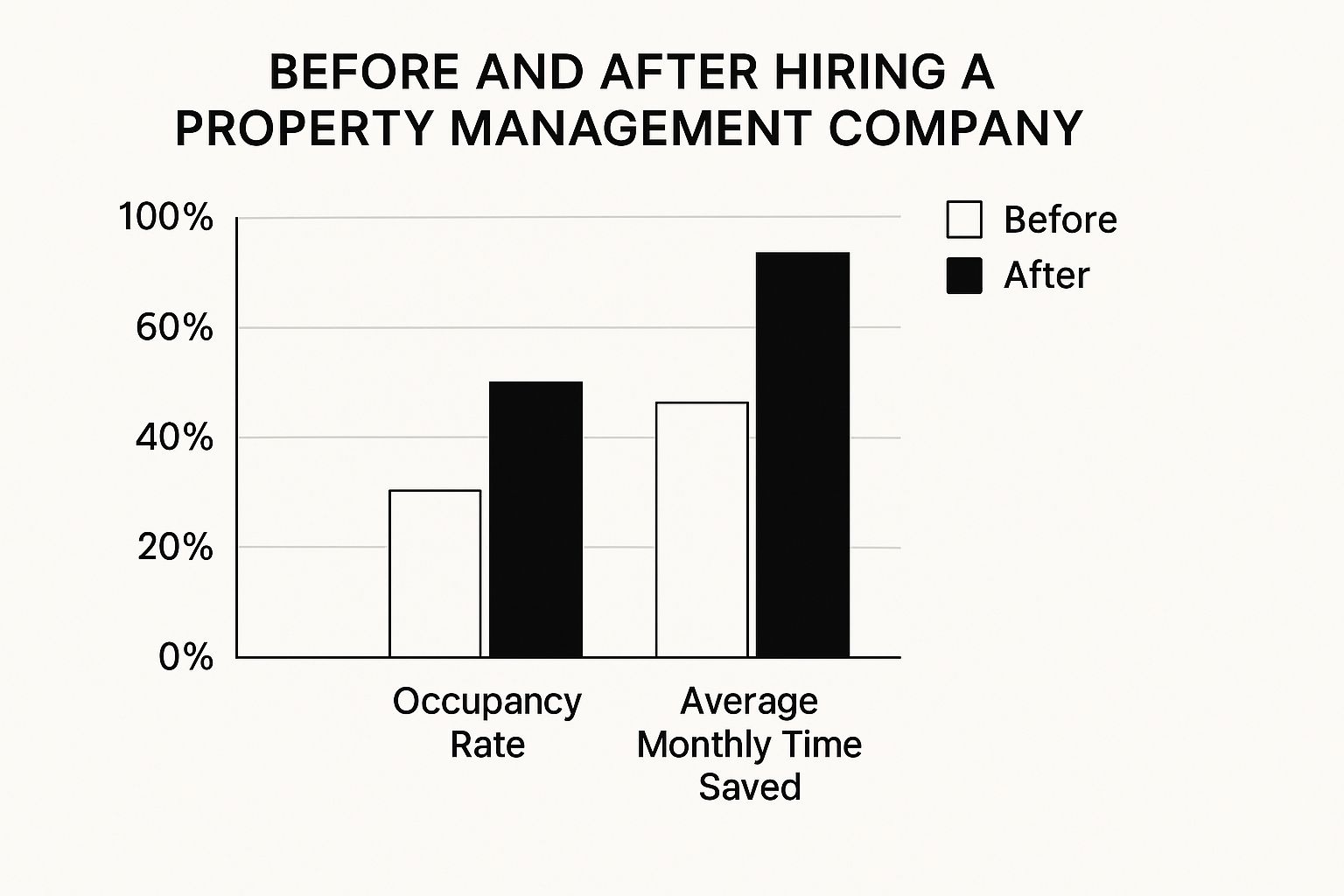
As you can see, professional management doesn't just improve occupancy and retention—it gives you back a huge chunk of your most valuable asset: your time.
Maximizing Your Financial Returns
Beyond the steady income, the long-term rental strategy comes with some powerful financial perks. That stability makes it easier to plan for capital improvements and build equity over time. Plus, you can't ignore the significant tax advantages of rental property. Deductions on things like mortgage interest, property taxes, and operating costs can seriously reduce your taxable income.
Choosing a property management partner that specializes exclusively in long-term rentals ensures their systems and expertise are perfectly aligned with maximizing these benefits. They aren’t distracted by the high-churn world of vacation stays.
Think about it this way: a firm that's been in business since 1997 has deep roots in the community. They know the market inside and out, which helps them set the right rent, find qualified tenants quickly, and manage your property with an eye on long-term value, not just short-term profit. This focused approach is simply a more secure and hands-off way to grow your real estate portfolio.
Understanding Management Fees and Hidden Costs

Let's talk about one of the most critical—and often most misleading—parts of choosing a property manager: the fees. It’s easy to get drawn in by a low monthly percentage, but that number rarely tells the whole story.
Many owners get blindsided by a complex web of extra charges that slowly eat away at their profits. To find a truly valuable partner, you have to learn how to look past the advertised rate and understand what you’re really paying for. The goal isn't just to find the cheapest option, but the one that offers the most transparent value.
Decoding the Fee Structures
Most property management pricing models look similar on the surface, usually centered around a monthly fee that's a percentage of the rent collected. But the real difference between a great deal and a financial headache is buried in the fine print.
You'd be surprised how many companies nickel-and-dime their clients. Here are some of the most common "hidden" fees to watch out for:
- Lease Renewal Fees: They charge you again just because a good tenant decided to stay. The actual work involved is minimal, making this a pure profit-padding move.
- Maintenance Markups: This one is sneaky. The company hires a plumber for $200, but your invoice shows $220. That extra 10% is their "coordination fee."
- Inspection Fees: You might get billed extra for routine property visits, which should absolutely be part of the standard service.
- Vague "Admin" Fees: This is a catch-all charge that can mean anything, giving them a way to bill you for basic operational tasks.
A trustworthy company will be upfront about their pricing. A clean, simple structure might look like a competitive 7.9% monthly management fee and a one-time $750 placement fee when they find you a new, qualified tenant. That’s it. No surprises, no confusing add-ons.
Why an All-Inclusive Model Is Better
There's a certain peace of mind that comes with a simple, all-inclusive fee. It makes budgeting predictable. When your costs are fixed, you know exactly what to expect each month.
This kind of model also aligns the manager’s interests with yours. They make their money when your property is occupied and performing well, not by tacking on extra charges whenever they get the chance.
Think about it: a firm that's been in business since 1997 has had decades to streamline its operations and build a network of reliable, affordable vendors. That kind of long-term experience often translates into more efficient management, which allows them to offer simpler, more transparent pricing.
When you're interviewing potential managers, push beyond the monthly percentage. Ask them point-blank: "What other fees could I possibly be charged for?" If they give you a long, complicated answer or start hemming and hawing, consider it a major red flag.
You want a partner whose financial success is tied directly to yours. That's the foundation of a healthy, long-term relationship built on mutual trust.
How to Vet a Company's Experience and Reputation

When you're handing over the keys to a valuable asset, a property manager's experience is more than just a number on their website. It’s a direct reflection of their stability, their reliability, and—most importantly—their deep-rooted local knowledge. A long track record tells you they’ve seen it all, from booming markets to economic downturns, and have built the relationships needed to manage your property effectively.
Think about it. A company that’s been in business since 1997 brings over two decades of hands-on expertise to the table. This kind of longevity means they’ve navigated countless tricky situations, from messy evictions to late-night emergency repairs, and have built a reputation strong enough to last.
Look Beyond the Website
Anyone can build a slick website and look like a seasoned pro. Your job is to dig a little deeper to separate the true experts from the newcomers who just look the part.
Start with their digital footprint. Hunt down genuine, detailed reviews from other property owners, not just tenants. Every business gets a few negative reviews, so don’t let that scare you off. What you're looking for is the overall pattern and, critically, how the company responds to any criticism. Do they sound professional and eager to solve the problem, or defensive?
Once you’ve done your online recon, it's time to ask for proof directly. A confident, experienced company will have no problem providing the following:
- Owner References: Ask for the contact information of a few current, long-term clients. Hearing from a fellow investor who has worked with them for years is incredibly valuable.
- Proof of Longevity: A simple "How long have you been in business?" isn't enough. Ask to see their business license and check the date it was first issued. This is a straightforward way to verify their claims.
- Community Involvement: A manager who has been around for a while will have deep roots in the community. Ask about their go-to contractors and local service providers—they should have a ready list.
The Importance of a Mature Network
This brings us to one of the biggest, yet often overlooked, benefits of experience: a well-established network of trusted vendors. A manager who started their business in 1997 isn’t frantically searching online for a plumber when a pipe bursts at 2 AM. They have a roster of reliable, fairly-priced pros on speed dial.
This network is a direct benefit to you and your wallet. It translates to faster responses for maintenance calls, higher-quality work, and often, preferred pricing that gets passed on to you. It's a key part of protecting your bottom line.
The property management industry has become incredibly crowded. In the United States alone, the number of businesses has grown by 2.5% each year on average. While this gives you more options, it also makes doing your homework more crucial than ever. You can dig into this trend and learn more about property management business statistics on ibisworld.com.
Ultimately, choosing a company with a proven history means you’re not just hiring a manager; you’re partnering with a firm that has already weathered the storms and has solid systems in place to protect your investment for years to come.
What a Seamless Onboarding Process Looks Like
You’ve done the hard work of vetting different companies and finally signed on the dotted line. So, what happens next? The transition to your new property management company should feel like a weight lifted off your shoulders, not the start of a new headache.
This handover is the first real test of their organizational skills and their promise to make your life easier. It's more than just paperwork; it’s a detailed, coordinated transfer of responsibility for one of your most valuable assets. A top-tier firm will have a well-oiled process that feels transparent, proactive, and ensures zero disruption for you or your tenants.
Kicking Off the Transition
The first phase is all about getting the essential information and assets into your new manager's hands. Think of it as building the foundation for a smooth, long-term partnership. They need everything to legally and effectively take charge.
You should be prepared to hand over a few key items right away:
- The Signed Management Agreement: The official document that gets the ball rolling.
- Existing Leases: If you have tenants, they'll need copies of all current lease documents.
- Keys and Access Codes: This includes all property keys, garage openers, and security codes. A secure transfer is a must.
- Tenant Contact Info: Your new manager needs names, phone numbers, and emails to introduce themselves and establish communication.
This shouldn't feel like a scramble. A professional company will provide a clear checklist, making the entire information exchange feel like a well-practiced routine.
A polished onboarding experience is a dead giveaway that a company has its systems dialed in. For a firm that’s been around since 1997, this process has been refined over thousands of client transitions, guaranteeing professionalism from day one.
The Property Walk-Through and Tenant Welcome
Once the paperwork is squared away, the real on-the-ground work begins. The first thing your new manager should do is a thorough initial property inspection. This isn't just a quick look-around. They should be taking detailed notes and photos to document the property's exact condition, creating a baseline for the future and flagging any immediate repairs.
At the same time, they need to reach out and introduce themselves to your tenants. This is a critical step. A professional welcome letter or email reassures residents, lets them know who their new point of contact is, and clearly explains how to pay rent and submit maintenance requests moving forward. It sets a positive tone and prevents any confusion.
This kind of proactive, systemized approach is exactly what allows the best companies to grow. In fact, with 92% of property management firms planning to expand their portfolios, having efficient systems is no longer a luxury—it's a necessity. Many are investing heavily in technology to make onboarding faster and more reliable. If you're curious about how these trends are shaping the business, you can read the full 2025 property management industry report on buildium.com. The best firms use these tools to make sure your transition is flawless, proving their commitment to operational excellence right from the start.
Questions We Hear All the Time from Owners
When you're looking to hand over the keys to your investment property, you're going to have questions. And you should. Getting straight answers is the only way to feel confident you’re making the right move.
Here are a few of the most common questions we get from property owners, along with our no-nonsense answers.
What’s This Going to Cost Me?
Let’s get right to it—the fee structure is always a top concern. We believe in keeping things simple and transparent, so you always know where you stand.
Our monthly management fee is a straightforward 7.9%. That’s it. A simple percentage keeps our interests aligned with yours; when your property performs well, so do we.
When it's time to find a new tenant, we charge a flat $750 placement fee to handle everything from marketing to lease signing. You’ll never see us tack on hidden charges, maintenance markups, or vague "administrative" costs. This keeps your budgeting clean and predictable.
Do You Work with Different Rental Strategies?
This is a smart question because not all management companies are built the same. We are specialists. Our entire operation is built around one thing: long-term rentals. We don’t get involved with short-term or vacation properties.
Why the single-minded focus? Because we believe long-term rentals are the foundation of building real, sustainable wealth in real estate. They provide consistent cash flow, drastically reduce turnover costs, and attract tenants who will care for your property like it’s their own. This approach minimizes wear and tear and delivers a much more stable return over the years—something the constant churn of a short-term model just can't offer.
By dedicating 100% of our energy and resources to the long-term market, we've fine-tuned a superior service. Our processes, from tenant screening to lease enforcement, are all geared toward one goal: finding and keeping great, long-term residents for your property.
What Does Your Experience Really Mean for Me?
In property management, experience isn't just a talking point—it's everything. We’ve been managing properties since 1997. That number represents decades of navigating economic cycles, building an airtight network of local vendors, and truly getting to know the communities we serve.
What does that history get you? It means we have long-standing relationships with the most reliable and affordable contractors in the area. When your property needs a repair, we aren't just scrolling through online listings. We’re making one call to a trusted partner we’ve worked with for years.
This translates into faster service, higher-quality work, and better pricing for you. It’s how we protect your bottom line and give you genuine peace of mind.
Ready for a property management experience built on transparency, deep expertise, and a genuine commitment to your long-term success? Partner with AIM PROPERTY MANAGEMENT COMPANY and see how our focused approach can maximize your investment's potential. Learn more and get started today!
Article created using Outrank