
Owning a rental in Redlands can look simple from the outside. The property is valuable, demand is steady, and the rent checks should arrive every month. But then the actual management begins. A late-night repair call, a lease violation that needs documentation, an applicant who looks solid until the screening file tells a different story, or a rent increase decision that has to fit California rules exactly.
That’s where many high-income owners lose time and margin at the same time.
If you earn well, manage multiple obligations, or hold real estate as part of a broader investment strategy, self-managing a rental often becomes an expensive distraction. The issue isn’t whether you’re capable of doing it. The issue is whether your time should be spent coordinating vendors, tracking notices, and handling tenant friction on an asset that should be producing predictable returns.
Your Redlands Investment Deserves Expert Management
Redlands isn’t a generic rental market. It supports premium pricing, and that changes the stakes for owners. The local rental market carries a 13% premium over the national average, with average monthly rent at $2,307 as of 2026, according to AIM’s Redlands market overview. For owners of single-family homes, townhomes, and condos, that premium creates opportunity. It also creates more downside if the property is priced poorly, marketed weakly, or placed with the wrong tenant.
A common owner profile in property management redlands looks like this. You have a strong career or business, the property has appreciated, and you’d rather hold than sell. But each month brings small decisions that pile up into management work: rent strategy, maintenance approvals, lease renewals, inspection follow-up, and tenant communication that can’t wait until the weekend.
Where self-management starts to leak value
The biggest problem with self-management isn’t usually one catastrophic mistake. It’s the steady erosion of control.
- Pricing drift can leave a quality property underperforming.
- Slow response times can turn a minor repair into a tenant satisfaction issue.
- Loose documentation makes enforcement harder when something goes wrong.
- Inconsistent screening raises the odds of turnover, damage, or payment issues.
Owners who want a clearer framework for how rental businesses attract qualified traffic online often review resources on best real estate keywords, because lead quality starts with how the property is presented and positioned.
A premium property needs premium operations. High rent only helps if the process behind it is disciplined.
Professional management is a business decision. It protects the income stream, the physical asset, and your time. Owners who value stable operations tend to care less about doing every task themselves and more about whether the system produces clean reporting, strong tenant quality, and fewer surprises. That’s one reason many landlords prioritize firms with a long renewal history and consistent client retention, as reflected in why owners stay with the same management team year after year.
The AIM Method for Maximizing Rental Property Performance
The strongest management systems aren’t built around isolated tasks. They’re built around sequence. Screening works better when pricing is right. Maintenance gets cheaper when inspections are routine. Reporting becomes useful when rent collection, repairs, and lease enforcement all feed into one operating rhythm.
Here is the operating model:
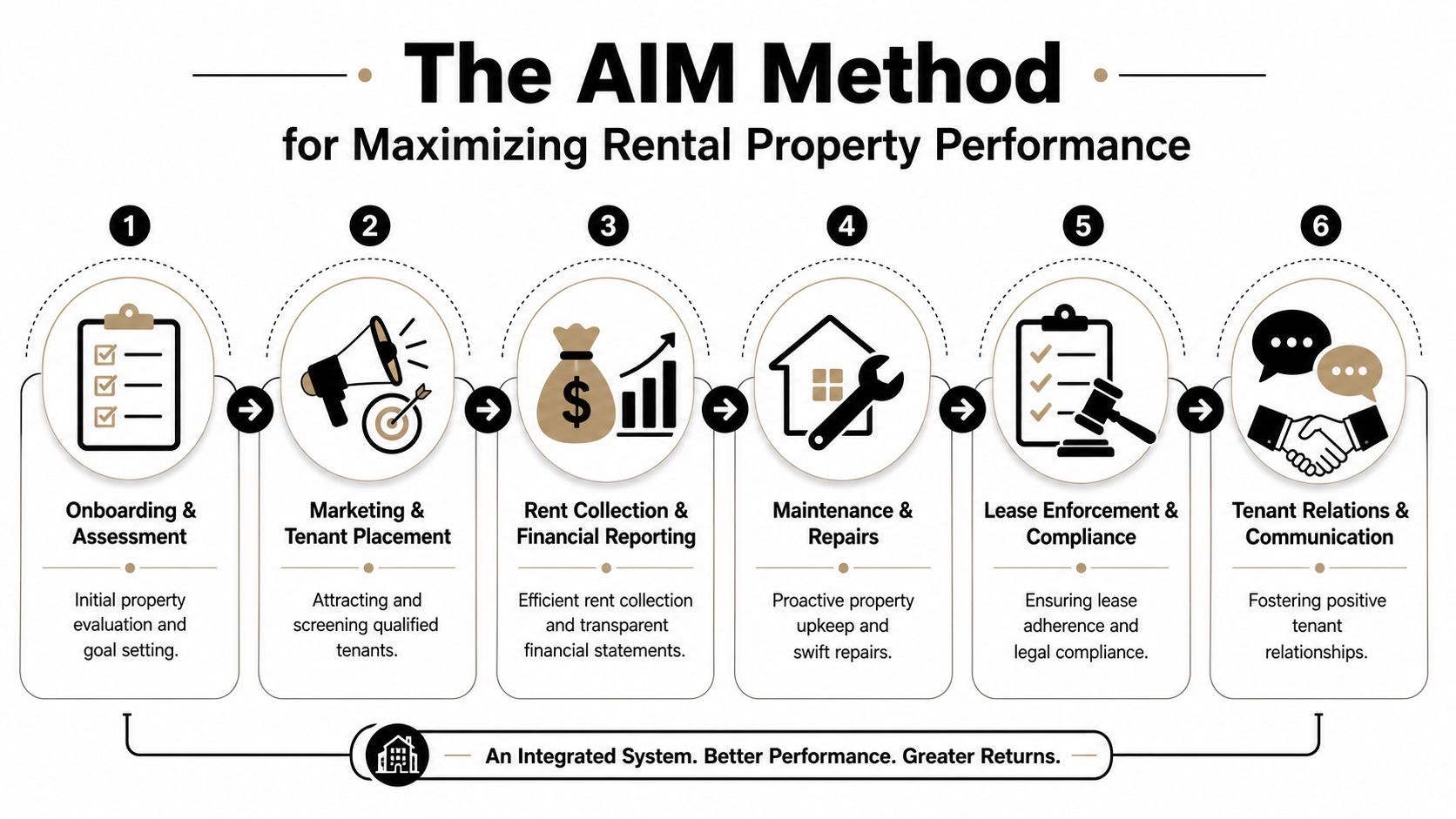
Step one through step three
Onboarding and assessment
Management starts with the asset, not the advertisement. The property has to be evaluated for rent position, condition, likely tenant profile, and any compliance or deferred maintenance issues that could create problems later.Marketing and tenant placement
Good marketing does more than fill a vacancy. It filters. The listing quality, showing process, response speed, and application standards determine the kind of applicants you attract.Rent collection and financial reporting
Owners need a clean system for payment processing, expense tracking, and monthly statements. If reporting is late or unclear, you can’t evaluate performance properly.
Step four through step six
| Stage | What matters most | What owners should expect |
|---|---|---|
| Maintenance and repairs | Fast handling for urgent issues and disciplined vendor coordination | Problems get resolved without the owner acting as dispatcher |
| Lease enforcement and compliance | Consistent notices, documented communication, current lease administration | Fewer gray areas when rules need to be enforced |
| Tenant relations and communication | Clear expectations and prompt responses | Better tenant experience without sacrificing standards |
The point isn’t convenience alone. It’s operational continuity. If one step breaks, the next step gets harder. A sloppy turnover affects pricing. Weak lease administration complicates collections. Deferred maintenance hurts both retention and resale value.
What works and what doesn’t
What works in Redlands property management is a repeatable system with documented actions, regular owner reporting, and clear decision points. What doesn’t work is reactive management where each issue is handled in isolation.
Operating principle: Treat the rental like a business unit, not a side project.
For owners comparing management approaches, AIM’s overview of vital property management functions is useful because it outlines how day-to-day operations connect to performance over time. AIM PROPERTY MANAGEMENT COMPANY is one option in this category, handling residential management for individually owned homes, condos, townhomes, and investment properties across the Inland Empire.
Placing Qualified Tenants in Your Redlands Rental
The tenant you place determines most of the management experience that follows. Owners often focus on speed, which matters, but speed without discipline is expensive. A vacancy can be solved in a month. A bad placement can affect the property for much longer.

In Redlands, rigorous screening has a direct operating payoff. Rentix reports that strong screening in Redlands property management supports tenant placement within 30 days and results in 20% to 30% fewer evictions and maintenance calls. That matters because the owner doesn’t just avoid legal trouble. The owner also avoids the softer costs that destroy returns, such as repeated vendor visits, unpaid balances, and accelerated wear.
The screening stack that actually reduces risk
A serious screening process should test more than one variable. A clean application alone doesn’t tell you enough.
- Income verification checks whether the applicant can realistically carry the rent without strain.
- Credit review helps reveal payment behavior and debt pressure.
- Background screening identifies issues that can affect safety, compliance, or lease stability.
- Rental history shows whether the applicant has a track record of paying, communicating, and respecting the property.
Owners building better intake workflows often look at tools that create digital rental applications, because digital applications can standardize the information you collect before underwriting the applicant.
Why weak screening costs more than vacancy
There’s a common mistake in property management Redlands. An owner sees an empty property and lowers standards to reduce downtime. That usually feels efficient in the moment. It rarely is.
A weaker tenant profile can trigger several avoidable problems:
| Risk area | What weak screening leads to | Why it hurts owners |
|---|---|---|
| Collections | Unstable payment patterns | Cash flow becomes unpredictable |
| Maintenance | More avoidable service calls | Operating costs rise |
| Turnover | Early lease breaks or conflict | Re-leasing costs return sooner |
| Property condition | Poor housekeeping or misuse | Make-ready costs climb |
The best tenant isn’t always the first one who applies. It’s the one who fits the property, the lease terms, and the owner’s risk tolerance.
That’s why disciplined underwriting matters. For owners who want to understand how a structured approval process protects the asset, AIM’s tenant screening process is a practical reference point.
Preserving Property Value with Proactive Maintenance
Reactive maintenance is one of the fastest ways to lose money on a quality rental. It creates tenant frustration, forces rushed vendor decisions, and lets small defects spread into larger repairs. High-net-worth owners usually understand this instinctively in other investments. Real estate should be handled the same way.
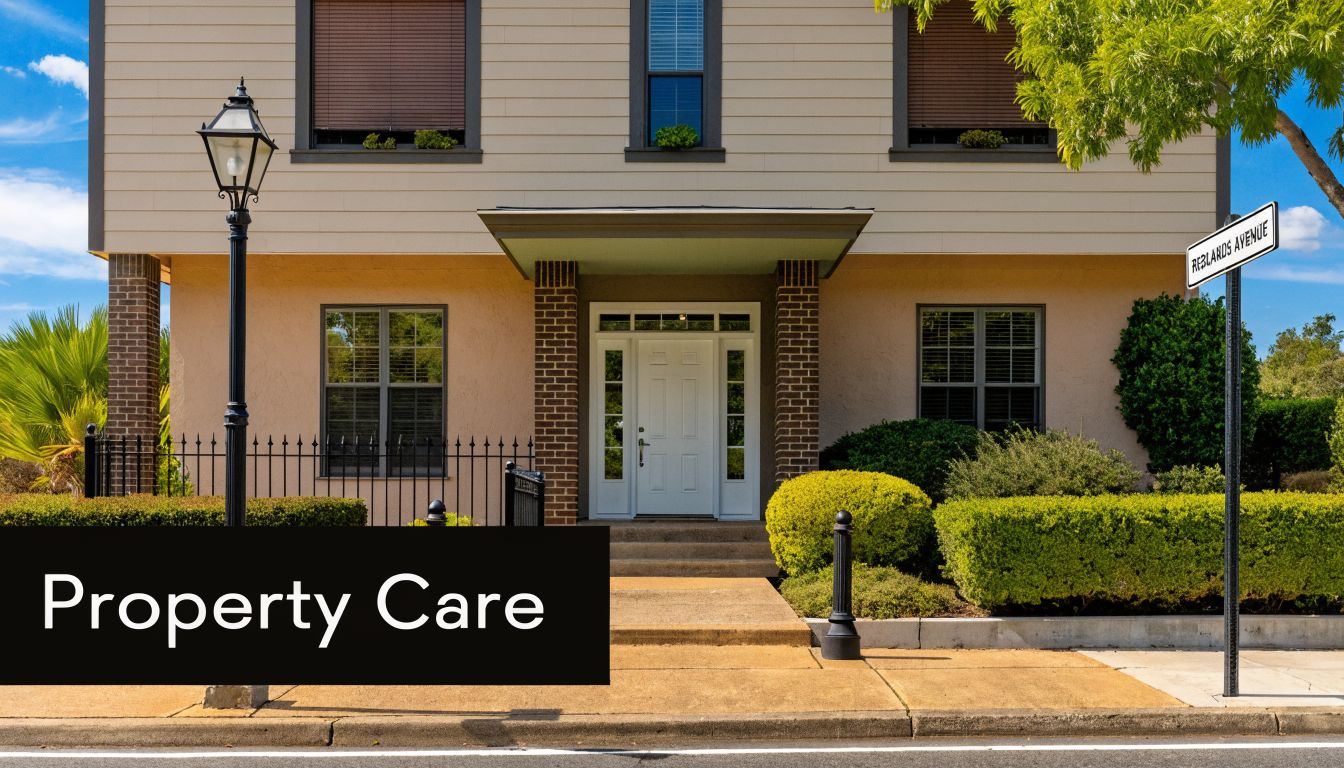
In the Redlands area, firms that perform regular inspections can materially reduce repair volatility. WSR notes that recurring inspections can cut emergency repair costs by 25% to 40% and extend the lifespan of roofing systems by 5 to 7 years through timely maintenance. That’s the difference between managing cost and merely reacting to it.
What proactive maintenance looks like in practice
A solid maintenance program has two tracks. One is responsive. The other is scheduled.
The responsive side covers urgent tenant issues. Water intrusion, electrical concerns, lockouts tied to habitability or security, and other immediate problems need fast coordination. Delays don’t just frustrate tenants. They raise the chance of secondary damage and documentation disputes.
The scheduled side is where value is protected. That usually includes:
- Annual inspections to document condition and identify developing issues
- Turnover evaluations before marketing begins
- Vendor follow-up so recommended work is completed properly
- Lease compliance checks tied to housekeeping, unauthorized occupants, or pet issues
Why inspections matter more on higher-value homes
Luxury and near-luxury rentals often have more expensive finishes, more complex systems, and owners who care about preservation, not just occupancy. That means the cost of neglect is higher.
A neglected roof edge, minor plumbing seep, or drainage issue rarely stays minor. It affects drywall, flooring, paint, cabinetry, or exterior materials. By the time a tenant reports visible damage, the owner is already paying for delay.
Field rule: The cheapest repair is usually the one handled before the tenant sees a symptom.
This is also where documentation matters. An inspection with photo records gives the owner a clear view of property condition and gives the manager a better basis for enforcement or repair decisions. For landlords who want a closer look at that process, A to Z inspections from AIM outlines how routine inspections support maintenance planning and lease oversight.
Ensuring Legal Compliance for Your California Rental
California compliance is where many self-managed rentals become vulnerable. The issue usually isn’t bad intent. It’s timing, documentation, and execution. A notice delivered incorrectly, a lease clause that doesn’t align with current rules, or a rent increase handled without full legal review can turn a manageable issue into a costly dispute.
In Redlands, that risk is especially important for owners of premium homes and condos. TrueDoor’s Redlands overview notes that California’s 2026 Tenant Protection Act amendments expanded just-cause eviction protections and set rent caps at 5% plus CPI, up to 10%, while luxury segments face 15% vacancy risks from over-regulation. Those aren’t abstract policy points. They affect leasing strategy, renewal decisions, and how an owner responds when a tenancy stops performing.
The compliance areas owners can’t treat casually
Legal exposure usually shows up in a handful of places:
Lease drafting and updates
Lease language has to fit current California rules and the specific property type.Notice procedures
Timing, form, and delivery matter. A valid concern can still fail if the process is flawed.Rent increases and renewals
Owners need to know what limits apply and how to document the change.Eviction readiness
If a tenancy deteriorates, the paper trail has to support the action from the beginning.
Why legal discipline protects returns
A lot of owners think about compliance only when there’s conflict. That’s late. Compliance starts before the lease is signed and continues through inspections, communication logs, maintenance records, and enforcement decisions.
For high-income owners, legal mistakes carry a second cost beyond money. They consume attention. They drag a straightforward investment into weeks or months of avoidable management stress.
In California, the owner who documents carefully has more options than the owner who improvises.
That’s why legal process should be built into management, not bolted on when trouble appears. Owners who want a grounded reference for the state framework can review California landlord-tenant law guidance as part of evaluating how a manager handles notices, leases, and compliance records.
Your Local Partner in Redlands Beaumont and Yucaipa
Regional knowledge matters because tenant pools, property types, and owner goals don’t stop at one city line. An owner with a Redlands home may also hold property in Beaumont, Yucaipa, Highland, or Banning. The management standards should stay consistent even when the submarket changes.

Redlands remains a key anchor for long-term planning. The city’s home sales market reached a median sale price of about $693,000 as of March 2026, according to Redfin’s Redlands housing market data. For owners thinking beyond this year’s rent roll, that matters because rental management and asset appreciation planning should work together.
Redlands property management
Redlands property management requires close attention to tenant quality, maintenance documentation, and compliance discipline because the asset values are substantial and tenant expectations are higher. Owners here often care about preserving finish quality and limiting avoidable wear just as much as they care about monthly cash flow.
Property Management Beaumont
Property Management Beaumont often means helping owners operate efficiently in a growing Inland Empire corridor while keeping leasing strategy grounded in local demand. Beaumont property management also tends to require practical coordination for single-family rentals where owner expectations are high and turnover costs need to stay controlled.
Yucaipa property management
Yucaipa property management calls for a slightly different read of tenant profile, neighborhood positioning, and renewal strategy. Property management Yucaipa works best when the manager understands how to market stable residential housing while still protecting the owner’s long-term equity and operating margin.
The broader service footprint also matters. Owners across Calimesa, Loma Linda, Mentone, Highland, and Banning usually want one management relationship that can scale with their portfolio. Firms refining local landing pages or service area visibility often review how to find local SEO keywords, since local search intent often mirrors how owners shop for management city by city.
Answering Your Property Management Questions
Owners usually reach out when a pain point has already surfaced. A tenant issue, an upcoming vacancy, a compliance concern, or a property that has started taking too much time. These are the questions that come up most often.
How do I evaluate property management near me
Start with operating discipline, not sales language. Ask how the manager handles screening, inspections, maintenance coordination, lease enforcement, reporting, and legal documentation. If the answers are vague, the management will be too.
Look for local experience in property management redlands and surrounding cities, including Property Management Beaumont and Yucaipa property management. A manager should be able to explain how they handle different property types and different owner goals without falling back on generic promises.
When should I hire a property manager
Hire a property manager when the property has become a recurring operational burden, or when the legal and financial downside of self-management has outgrown the savings. That often happens sooner for owners with demanding careers, multiple properties, or higher-value homes.
If you’re asking whether you should hire a property manager, you probably already see the pressure points. Delayed responses, vendor coordination, lease tracking, and tenant communication are all manageable until they begin pulling your attention away from work, family, or larger investment decisions.
Can a manager help with short-term rental decisions in Redlands
Yes, and that’s increasingly important. A major challenge in Redlands is the post-2025 short-term rental framework that limited permits to 500 citywide, as outlined in Hemlane’s Redlands property management overview. If you own a property that could operate as a short-term rental, a manager should be able to assess whether a compliant hybrid approach makes sense or whether conversion to a long-term rental is the cleaner path for cash flow stability.
What should I expect from reporting and communication
Expect clear monthly financial statements, prompt notice of material issues, and documented approval paths for repairs or lease decisions. You shouldn’t have to chase your manager for basic information. A good system gives you visibility without forcing you into daily involvement.
Does one company need to cover every city I own in
Not always, but there’s a real advantage when one management team understands Redlands property management, Beaumont property management, and property management Yucaipa under a consistent process. That reduces communication gaps and gives you a cleaner operating standard across the portfolio.
If you own rental property in Redlands, Beaumont, Yucaipa, Calimesa, Loma Linda, Mentone, Highland, or Banning and want cleaner operations, lower management friction, and stronger protection for your asset, contact AIM PROPERTY MANAGEMENT COMPANY . A practical review of your property, tenant situation, and management goals can show whether professional oversight will improve both your returns and your time.