
When you hear "multifamily management company," it's easy to picture someone who just collects checks and calls a plumber. But in reality, they're a strategic partner responsible for the complete operational health of your rental property. This means handling everything from tenant screening and rent collection to maintenance coordination and legal compliance, freeing you up from the daily grind.
The True Value of a Multifamily Management Company
Owning multifamily properties in booming California communities like Redlands, Beaumont, or Yucaipa is a fantastic opportunity, but it’s not for the faint of heart. Many owners start out managing properties themselves, thinking they’ll save a few bucks on fees. Before they know it, they're drowning in late-night tenant calls, emergency maintenance requests, and a tangled web of legal paperwork.
This is the exact moment a professional management company stops being a "cost" and becomes a critical investment in your sanity and your portfolio's future.
Their real value isn't just in making sure rent gets paid. It's about protecting your time, maximizing your property's potential, and acting as a buffer between you and the day-to-day chaos. A great firm lets you focus on the big picture—like finding your next investment—instead of fixing leaky faucets.
Beyond the Basic Checklist
If you're just looking at a management company as a task-doer, you're missing the point. Their true impact hits your bottom line in a few key ways:
- Financial Optimization: They’re not just collecting rent. They’re setting competitive rates based on real-time market data in places like Loma Linda and Highland, ensuring you're not leaving money on the table. Consistent cash flow is the name of the game.
- Asset Protection: Those small, nagging issues? A dripping sink, a flickering light. A good manager spots and fixes these things before they turn into budget-destroying catastrophes. It’s all about preserving your property’s long-term value.
- Risk Mitigation: Keeping up with California's constantly changing landlord-tenant laws is practically a full-time job. A professional firm ensures every lease, notice, and procedure is buttoned up and legally sound, shielding you from costly disputes.
Thinking about the benefits of outsourcing accounting services is a great parallel here; you're bringing in specialized expertise to handle a complex function more efficiently than you could on your own.
To give you a clearer picture, here's a quick breakdown of what a solid multifamily management company brings to the table.
Core Responsibilities of a Multifamily Management Company
| Service Area | What They Handle | Benefit for the Property Owner |
|---|---|---|
| Tenant Management | Screening, leasing, communication, and retention | Higher-quality tenants, lower turnover, and fewer headaches. |
| Financial Oversight | Rent collection, expense tracking, and monthly reporting | Consistent cash flow and clear visibility into your ROI. |
| Maintenance & Repairs | Routine upkeep, emergency calls, and vendor coordination | Preserves property value and keeps tenants happy. |
| Legal Compliance | Lease enforcement, eviction proceedings, and regulation adherence | Protects you from lawsuits and costly legal mistakes. |
Ultimately, their job is to turn your property into a well-oiled machine, letting you reap the rewards without getting bogged down in the operational details.
Navigating a Booming Market
The rental market is hotter than ever. Recent data shows that in 2025, the U.S. multifamily rental market ballooned to 22.4 million households. This surge is fueled by economic shifts and a housing shortage that’s keeping great tenants in the rental pool longer.
With national rent growth staying strong and apartment sales hitting $154.1 billion last year, the opportunity for owners is undeniable—but so is the competition. In high-demand areas like Banning or Mentone, this climate makes professional management an absolute necessity if you want to capitalize on trends without getting steamrolled.
A seasoned management company doesn't just manage buildings; it manages your investment strategy. They turn market data into smart decisions that reduce vacancies, boost tenant retention, and grow your asset's worth.
For owners in a place like Beaumont, having a partner with deep Beaumont property management experience is a game-changer. They know the local tenant pool, what the market will bear for rent, and which local vendors do quality work without overcharging. The same is true for Yucaipa property management—that localized knowledge is often the secret sauce that separates a struggling property from a thriving one. It's this dedication to local expertise that explains why our clients renew with us year after year.
Vetting Your Next Management Partner
Once you've decided to bring on a multifamily management company, the real work begins. Choosing the right partner is one of the most critical decisions you'll make for your investment, and it goes far beyond just finding someone to collect rent.
You're entrusting your asset to a team that will protect and grow its value. This is especially true in the unique real estate markets of Redlands, Beaumont, and Loma Linda. A flimsy management process can quickly lead to costly vacancies, tenant disputes, and a string of unforeseen expenses that eat into your bottom line.
The vetting process is your chance to look under the hood and see how a company really operates, moving past the polished sales pitch.
For many property owners, the decision to hire help comes when the stress of self-management simply becomes too much. This simple flowchart is a great way to visualize that decision point.
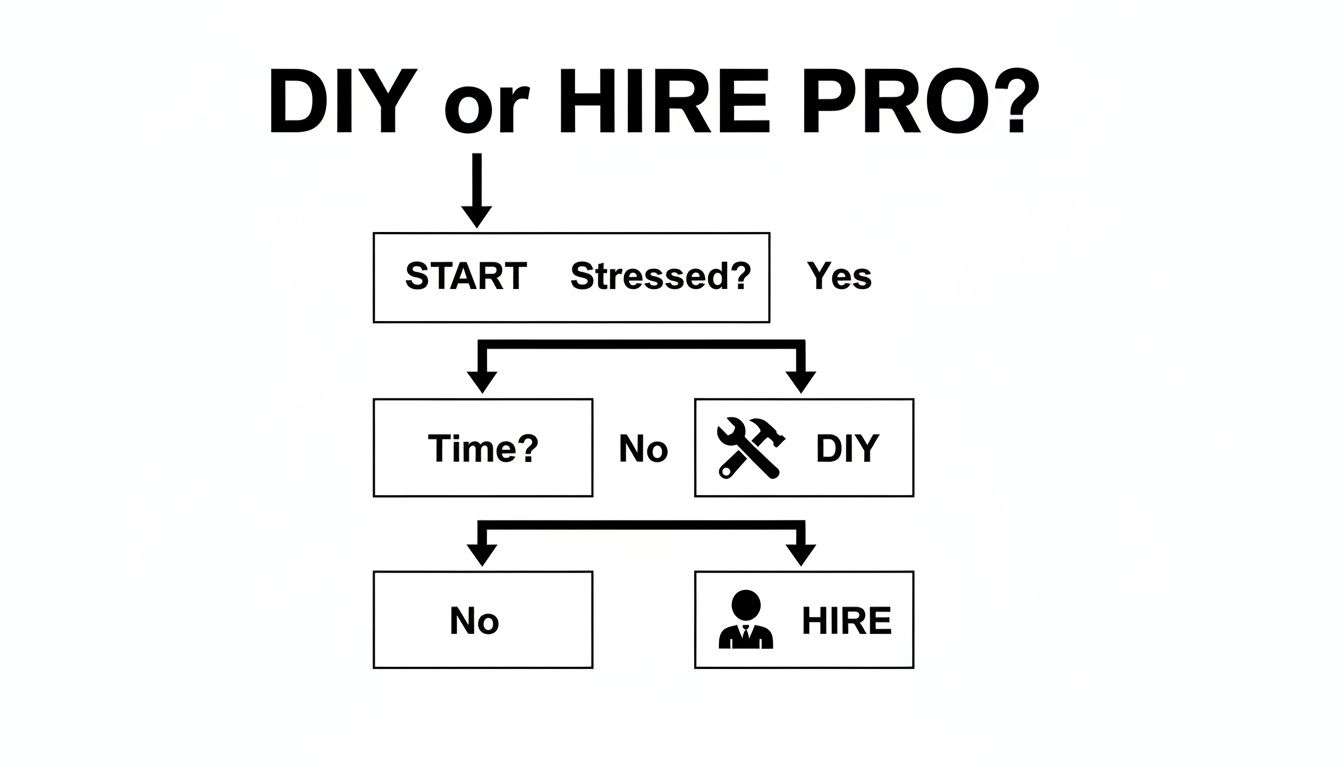
As you can see, the core factors are often stress and time. If you're running low on either, professional management becomes the clear path forward.
Analyzing Tenant Screening and Placement
A company’s tenant screening process is the single best defense for your property. A vacant unit is a problem, but a bad tenant is a catastrophe waiting to happen. Ask potential managers to walk you through their exact screening protocol.
What should you be looking for?
- Comprehensive Background Checks: This needs to include national criminal history, eviction records, and full credit reports. A simple credit score just doesn't cut it.
- Rigorous Income Verification: How do they actually confirm a prospect's ability to pay? Ask if they require pay stubs, bank statements, or even call employers. A solid industry standard is requiring an income of 2.5 to 3 times the monthly rent.
- Past Landlord References: This is huge. Do they actually pick up the phone and call previous landlords? This step provides priceless insight into a tenant's history of paying on time and caring for a property.
A truly thorough process minimizes your risk and sets the stage for a stable, long-term tenancy. If you want to see what a best-in-class system looks like, you can learn more about our tenant screening process and how it protects your investment.
Scrutinizing Financial Transparency and Reporting
You need a clear, real-time view of your property’s financial health—no excuses. A great multifamily management company provides detailed, easy-to-understand financial statements every single month.
When you're interviewing candidates, make sure to ask for a sample owner's statement. Is it clear and concise? Does it itemize all income and expenses, or is it a jumbled mess? You should also dig into their systems for rent collection and paying bills. Modern firms use secure online portals that let tenants pay electronically and give you 24/7 access to financial records. This level of transparency is non-negotiable.
A management partner who is vague about finances during the vetting process will likely be a source of frustration later. Demand clarity from day one.
Evaluating Maintenance and Vendor Management
Proactive maintenance is the key to preserving your property's value and keeping your tenants happy. The way a company handles repairs—both the routine stuff and the 3 a.m. emergencies—speaks volumes about their competence.
Ask pointed questions about their maintenance procedures. Do they have a 24/7 hotline for emergencies? What’s their typical response time for non-urgent requests? A critical factor, especially in areas like Banning and Calimesa, is their network of local contractors. A well-connected manager has a list of reliable, vetted plumbers, electricians, and handymen who do quality work at fair prices. This is what keeps you from getting overcharged in a crisis.
The property management industry is booming, with revenues projected to hit $136.9 billion by the end of 2025. This growth is fueled by strong rental demand, as many people find homeownership out of reach. With a company like AIM Property Management, owners in markets like Beaumont property management and Yucaipa property management can capitalize on this trend. As portfolios grow, expert handling of rent collection, maintenance, and compliance becomes essential, which is why hiring a proven property manager is a top priority for savvy investors.
What Happens After You Sign the Contract
So you've signed the management agreement. Contrary to what some might think, this isn't the finish line—it's the starting gun. This is the moment a truly organized multifamily management company steps up and shows its worth, turning promises on paper into a clear, actionable plan.
A chaotic handover can create immediate friction with your tenants and set a negative tone for the entire partnership. On the other hand, a smooth, professional transition builds confidence right from day one. The goal is simple: a seamless transfer of responsibility with zero disruption to you or the people living in your property. It's about more than just getting the keys; it's about absorbing every critical detail of your building.

Kicking Off the Onboarding Process
The first order of business is a deep dive into your property’s nuts and bolts. This almost always starts with a thorough property inspection, where your new manager walks through each unit and all the common areas. They’re not just looking for obvious problems; they're documenting the property's current condition, flagging potential preventative maintenance needs, and just getting a feel for the building's unique character.
At the same time, the team will start gathering all the essential documents. This is a non-negotiable step that ensures they can operate on your behalf without hitting any legal or administrative snags down the road.
We'll typically need to get our hands on:
- Existing Leases: We review every current lease to understand the terms, renewal dates, and any special clauses or addendums.
- Tenant Information: This means compiling contact details, security deposit records, and any existing communication history.
- Vendor Contracts: We'll look at your current contracts for services like landscaping or trash removal to assess their quality and cost-effectiveness.
- Property Keys and Access Codes: We create a master set of keys and document all access information for security and maintenance purposes.
Establishing Financial Transparency
Once the administrative groundwork is laid, the focus shifts to the financials. Any reputable multifamily management company will set up a dedicated trust account specifically for your property. This is a huge deal for transparency—it guarantees your funds are never commingled with the company's own money or that of other clients.
From that point on, all rent collection will be directed to this new account. The management team will also work with you to set up a clear protocol for paying property-related bills, like utilities, maintenance invoices, and property taxes. This system creates a clean, auditable trail of all income and expenses, which you'll see reflected in your monthly owner statements.
The onboarding process is the foundation of your long-term partnership. A company that is meticulous, communicative, and organized during this phase is likely to manage your property with the same level of care.
Communicating the Change to Tenants
This is probably the most delicate part of the transition: letting your tenants know what's happening. An abrupt or poorly worded announcement can cause a lot of unnecessary confusion and anxiety. A professional management firm handles this with a carefully planned communication strategy.
We will draft a formal introduction letter to be sent to all residents. This letter introduces the new management team, provides all necessary contact info, and clearly explains how and where to pay rent moving forward. It also details the new procedures for submitting maintenance requests. The tone is always professional and reassuring, designed to make tenants feel supported and informed, not like their world is being turned upside down.
This initial communication is vital for maintaining positive tenant relations from the very start. For a more detailed breakdown, you can learn more about our transition process and see exactly how we ensure a smooth handover for everyone involved. By managing this step effectively, a good company sets the stage for a successful relationship with both you and your residents, ensuring continuity and building trust right away.
How Great Management Maximizes Your ROI
Hiring a multifamily management company isn’t about just handing off the annoying tasks; it's a strategic move to maximize your return on investment. While getting the day-to-day operations off your plate is a huge relief, the real financial magic happens when a manager actively boosts your property's bottom line.
A top-tier firm acts as a strategic asset, constantly looking for ways to increase revenue while cutting down on unnecessary expenses. It’s a complete shift from a reactive mindset—fixing things as they break—to a proactive strategy that anticipates problems, jumps on market trends, and builds real, long-term value for you.
Proactive Maintenance And Strategic Inspections
One of the fastest ways to kill your ROI is with a sudden, expensive emergency repair. A burst pipe or a dead HVAC unit can instantly erase months of profit. A great management company sidesteps these disasters with a solid system of proactive maintenance and regular property inspections.
Instead of just waiting for a tenant to report a leak, a proactive manager is already scheduling routine checks on the plumbing, electrical systems, and roofing. These inspections catch the small stuff—a tiny drip, a frayed wire—before they explode into five-figure emergencies. This simple shift doesn't just save you a ton of money; it keeps your tenants happy by minimizing disruptions.
Proactive maintenance is all about asset preservation. It’s the difference between replacing a worn-out part for $100 and replacing an entire system for $10,000. It's one of the most direct ways a management company protects your investment.
Data-Driven Rent Setting For Peak Performance
Are you positive your rental rates are dialed in for today's market? So many self-managing owners just base their rent on what they charged last year or what a property down the street was asking for six months ago. That "gut feeling" approach almost always leaves money on the table.
A professional multifamily management company throws guesswork out the window and brings in the data. They are constantly analyzing real-time market stats in specific communities like Yucaipa and Highland, tracking everything from comparable rents and vacancy rates to local demand trends. This lets them pinpoint the perfect rent for your units—high enough to maximize your income but competitive enough to attract great tenants without delay.
This scientific approach means your property is always performing at its peak potential, adjusting to market shifts to keep your cash flow strong and steady.
Proven Tenant Retention Strategies
Every single time a tenant moves out, it costs you money. You’ve got marketing expenses, the time spent showing the unit, and worst of all, the lost rental income while it sits empty. High tenant turnover is a silent killer of ROI.
Seasoned managers know that keeping a good tenant is far more profitable than finding a new one. They put proven retention strategies to work, creating a positive living experience that encourages residents to sign that lease renewal, year after year.
These strategies aren't complicated, but they are effective:
- Responsive Communication: Getting back to tenants quickly and professionally, whether it's a simple question or a maintenance request.
- Community Building: Fostering a sense of community with clean, inviting common areas or even small resident events.
- Fair and Transparent Practices: Clearly communicating lease terms, renewal options, and any building updates.
By focusing on tenant satisfaction, a management company can slash your turnover rate, leading to lower vacancy losses and a much more stable, predictable income stream for you. As you think about your investment goals, understanding the full scope of professional property management in the Inland Empire can open your eyes to new opportunities for growth.
The table below really highlights the financial trade-offs between professional management and doing it all yourself. It shows how that management fee is often a small price to pay for some pretty significant long-term gains.
Management Fees vs. Long-Term Value
| Challenge | Cost of Self-Management (Time & Money) | How a Management Company Solves It |
|---|---|---|
| Vacancy Loss | Days or weeks of lost rent while finding a new tenant; marketing costs. | Markets the property effectively to minimize vacancy time, often having a waitlist of qualified tenants. |
| Emergency Repairs | Paying premium "emergency" rates for a plumber at 2 AM; potential for extensive property damage. | Uses a network of vetted, affordable vendors; prevents emergencies with proactive maintenance schedules. |
| Legal Issues | Thousands in legal fees from a wrongful eviction or non-compliance with fair housing laws. | Stays current on all local and state landlord-tenant laws, ensuring full legal compliance and risk mitigation. |
| Incorrect Rent | Setting rent too low and losing hundreds each month, or too high and struggling with long vacancies. | Uses real-time market data to set optimal rent, balancing maximum income with low vacancy rates. |
| High Turnover | Frequent costs for painting, cleaning, and repairs between tenants; constant marketing efforts. | Improves tenant satisfaction through responsive service and communication, encouraging long-term renewals. |
Ultimately, the right management partner doesn't just collect rent; they protect and grow the value of your asset, turning a simple expense into a powerful driver of your financial success.
Attracting Tenants with Local Digital Marketing
A top-notch multifamily management company does a lot more than just collect rent and fix leaky faucets. They’re your dedicated marketing engine, making sure your units don't sit empty for long. The days of sticking a "For Rent" sign in the yard and hoping for the best are long gone. Today, finding high-quality tenants means building a powerful online presence that targets the right people in the right places.
For properties in communities like Redlands, Beaumont, and Yucaipa, this requires a focused, local digital marketing game plan. An experienced manager knows that a generic online listing just gets lost in the digital noise. The real secret is creating a digital footprint that speaks directly to renters looking for a home in your specific area.
This isn’t about just throwing a few pictures online. It's a deliberate strategy designed to fill vacancies fast with reliable tenants, protecting your cash flow and getting the most out of your investment.

Building Compelling Local Service Pages
One of the most effective tools a modern manager has is the hyper-local service page. Think of these as digital billboards custom-built for specific towns. A page titled "Property Management Beaumont" shouldn't be a cookie-cutter list of services. It needs to feel like it was created just for someone searching for a home in Beaumont.
To really work, these pages need a few key ingredients:
- Local Market Insights: This shows a deep understanding of the Beaumont rental market, from average rent prices to unique neighborhood perks.
- Community-Specific Keywords: It's about naturally weaving in phrases people actually search for, like "rental homes near Beaumont High School" or "apartments in Calimesa."
- Authentic Testimonials: Nothing builds trust faster than reviews from current property owners and tenants right there in the area.
- Clear Calls-to-Action: Make it incredibly simple for a potential tenant to see what’s available or book a tour.
The same approach is critical for a "Yucaipa Property Management" page. It should spotlight what makes Yucaipa special, from its beautiful views to its local events, creating an instant connection with people already looking to move there. To pull this off, multifamily management companies need solid strategies for marketing rental properties that fill vacancies quickly.
Mastering Local SEO for Maximum Visibility
Having great local pages is only half the job; people have to find them. That’s where local search engine optimization (SEO) comes in. Local SEO is the art and science of getting your properties to the top of Google when someone types in "apartments for rent in Mentone" or "townhomes in Highland."
A savvy management company uses a whole toolbox of tactics to boost local visibility. They make sure your property listings are perfectly optimized and consistent across all the important online directories, from a Google Business Profile to the major apartment-hunting websites. This consistency tells search engines that your properties are legitimate and highly relevant to local searchers.
A sharp local SEO strategy ensures your vacancies are seen by the most qualified audience—the people who are already looking to move into your community. It’s the difference between waiting for tenants to find you and actively putting your property right in front of them.
This goes way beyond just keywords. It involves managing online reviews, posting high-quality photos and virtual tours, and triple-checking that all contact info is accurate everywhere. Every single one of these details strengthens your online presence, driving more qualified leads straight to your door. For a deeper dive into how this all works, check out our guide on how to advertise a rental property effectively.
Ultimately, a proactive approach to digital marketing is the signature of a first-rate management firm. By creating targeted local content and mastering local SEO, they ensure your properties—whether in Banning or Loma Linda—stand out in a crowded market, keeping vacancies low and your investment profitable.
Answering Your Top Management Questions
Choosing to partner with a multifamily management company is a big step, so it’s completely normal to have a few questions. Getting straight answers is key to feeling confident about your decision. We’ve put together some of the most common questions we hear from property owners in places like Redlands, Beaumont, Calimesa, Yucaipa, Loma Linda, Mentone, Highland and Banning.
Think of this as the final run-through before you sign on the dotted line. It’s the practical stuff you need to know to feel totally prepared to hire the right team for your investment.
How Are Management Fees Typically Structured?
This is usually the first question on every owner's mind, and for good reason. Fee structures can vary, but the most common model you'll see is a percentage of the monthly collected rent, which typically lands somewhere between 6% and 10%. This approach is popular because it ties our success directly to yours—if you don't get paid, we don't either.
Some companies might pitch a flat-fee structure, where you pay a fixed amount each month no matter what. That can sound great for budgeting, but you have to dig into what's included. Always ask about extra charges for things like leasing a vacant unit, handling an eviction, or coordinating a major repair.
Transparency is non-negotiable here. Before you sign anything, ask for a complete, itemized breakdown of every possible fee. A great partner will be upfront about all costs, so there are no nasty surprises on your monthly statement.
What Should I Look For in the Management Contract?
The management agreement is the legal foundation of your entire partnership. It’s a document you need to review with a fine-tooth comb. Don’t just skim it—read every single line and don't hesitate to ask for clarification on anything that seems ambiguous.
Here are a few key clauses to really focus on:
- Term Length and Termination: How long are you locked in, and what does it take to get out? A one-year term is pretty standard, but look for a termination clause that lets you exit the agreement with reasonable notice (usually 30-60 days) if you aren’t happy with their performance.
- Owner Responsibilities: The contract should spell out exactly what's expected of you. This usually includes things like maintaining proper insurance and funding a reserve account for repairs and unforeseen costs.
- Scope of Services: This is where the company details exactly what they’ll do for their fee. It should cover everything from tenant screening and rent collection to maintenance coordination and financial reporting.
How Are Tenant Issues and Emergencies Handled?
The real measure of a great management company often reveals itself at 2 a.m. on a Saturday when a pipe bursts. You absolutely need to know their protocol for handling tenant issues, from the routine to the urgent.
For everyday maintenance requests, most modern firms use an online portal where tenants can submit a ticket. This is great because it creates a clear paper trail and lets you see the status of the repair. For after-hours emergencies, a 24/7 support line is a must-have. This ensures a fast response to critical problems like flooding or a broken furnace, which protects your property from more damage and keeps your tenants safe.
In areas like Yucaipa property management or Beaumont property management, having a manager with a deep bench of trusted local contractors is a huge plus. It means they can get a qualified plumber or electrician to the property in a hurry, regardless of the time.
What Kind of Communication Can I Expect?
Clear, consistent communication is the glue that holds a great owner-manager relationship together. Before you hire a property manager, set clear expectations for how you'll be kept in the loop. You should expect a detailed financial statement every month that breaks down all income and expenses for your property.
Beyond that monthly report, you should have a dedicated point of contact at the company. Ask them how they prefer to communicate—is it by phone, email, or through a dedicated owner portal? A proactive manager will also reach out for your approval on any major expenses that go over a pre-approved limit. This keeps you in the driver's seat of your finances. This open line of communication is crucial, whether you're just searching "property management near me" or you already have a specific firm in mind.
Ready to protect your investment and free up your time? At AIM PROPERTY MANAGEMENT COMPANY, we offer personalized, transparent management services for property owners throughout Redlands, Beaumont, Calimesa, Yucaipa, Loma Linda, Mentone, Highland and Banning. Let us show you the difference professional management can make. Learn more and get in touch with our team today.