
A rental owner learns the value of inspections the hard way.
It starts with something small. A tenant mentions a slow drain, a loose handrail, or a bathroom fan that “doesn’t seem to do much.” Those issues sit for a while because rent is coming in, the property looks fine from the street, and nothing feels urgent. Then one repair turns into several. Water finds drywall. Moisture gets behind a cabinet. A safety issue becomes a liability issue.
That is why serious rental owners in the Inland Empire do not treat a to z inspections as a one-time event tied only to purchase, move-in, or move-out. They use them as an operating discipline.
In markets like Redlands, Beaumont, Yucaipa, Calimesa, Loma Linda, Mentone, Highland, and Banning, profitability comes from controlling avoidable loss. A strong lease matters. Good tenants matter. Timely rent collection matters. But if you do not know the actual condition of the asset, you are managing blind. That is where a full inspection process earns its place.
The Hidden Costs of Skipping Property Inspections
A landlord gets a maintenance call about a damp area under the kitchen sink. The tenant says it is minor. The owner puts it off because the unit is occupied and the month is already busy.
By the time someone opens the cabinet and checks the wall, the issue is no longer a loose fitting. The base cabinet has absorbed water, the drywall is soft, and the smell tells you moisture has been sitting there for longer than anyone thought. What looked like a small plumbing repair is now a property condition problem.
That pattern shows up everywhere in rental housing. Small roof penetrations become ceiling stains. Poor caulking around tubs becomes damaged subfloor. A weak exterior gate latch turns into a habitability complaint after a security concern. Owners rarely lose money because of one dramatic event alone. They lose it because no one caught the early warning signs.
What owners miss
A set-it-and-forget-it approach creates blind spots in three areas:
- Deferred maintenance: Minor defects stay hidden until the repair scope expands.
- Lease compliance: Unauthorized occupants, pets, or neglected housekeeping show up only when the property is already stressed.
- Documentation gaps: If a dispute starts, the owner may have no dated record showing the property’s true condition.
For higher-income owners focused on cash flow, inspections stop being a line-item expense and start acting like asset protection. A clean rent roll does not guarantee a healthy property. Owners who track both income and condition make better operating decisions, when they understand how repairs affect rental property cash flow.
Practical takeaway: Most expensive rental repairs begin as ordinary maintenance issues that were visible earlier but never documented or escalated.
Why this matters in the Inland Empire
Inland Empire rentals face a mix of wear factors. Summer heat stresses roofing and HVAC systems. Hard water shortens the life of fixtures. Turnovers can happen fast, which tempts owners to rely on quick visual checks instead of real inspection work.
That shortcut costs money. A true a to z inspection process catches the issues that a casual walkthrough misses and gives the owner a record of what was found, what needs action now, and what should be budgeted next.
What A to Z Inspections Really Mean for Your Property
Most owners hear “a to z inspections” and think of a broad promise. In practice, it should mean something more defined. It is a whole-property evaluation, not a basic checklist and not a quick turnover glance.
Consider it an annual physical for a rental house. A basic visual look can tell you whether the property appears clean and occupied. A real inspection tells you how the structure, systems, safety items, and tenant-use patterns are affecting the long-term condition of the asset.
More than a move-in checklist
A move-in or move-out checklist has a narrow purpose. It records visible condition for deposits, cleaning, and turnover work. That matters, but it is not enough for an operating rental.
A true a to z inspection asks different questions:
- Is the property staying habitable and safe?
- Are the major systems performing as they should?
- Is there evidence of hidden moisture, deferred maintenance, or improper tenant use?
- What is likely to require repair or replacement next?
That is why experienced owners separate routine condition reviews from purchase inspections and turnover documentation. Each serves a different job.
What gets reviewed
A thorough inspection includes the property envelope and the systems owners spend the most money maintaining.
That means looking at:
- Roofing and drainage: not just visible damage, but how water is moving away from the structure
- Plumbing: supply lines, drains, fixtures, signs of active or past leaks
- Electrical: outlets, panels, visible hazards, and function
- HVAC: performance, airflow concerns, filter condition, visible wear
- Interior surfaces: floors, walls, ceilings, doors, windows, smoke and carbon monoxide devices
- Exterior areas: stucco, paint, grading, fencing, walkways, garage, and common wear points
Some firms operate at a larger scale and show what a broad inspection model can look like. A-Z Home Inspections LLC reports annual revenue of $6 million, which reflects the kind of capacity needed to handle wide-ranging services from radon testing to pest inspections in demanding markets, according to ZoomInfo’s company profile for A-Z Home Inspections LLC.
What works and what does not
What works is a process that combines on-site observation with documentation and follow-up decisions.
What does not work is a “looks good to me” walkthrough done in ten minutes between other appointments. That kind of pass may spot obvious damage, but it will not help an owner in Highland, Loma Linda, or Beaumont plan maintenance or defend decisions later.
Key distinction: A checklist records condition. A full inspection interprets condition and connects it to risk, repair timing, and owner decision-making.
The Financial Benefits of Thorough Inspections
Owners ask the right question first. If inspections cost money, how do they improve returns?
The answer is simple. They reduce avoidable loss, protect the income stream, and support smarter timing on repairs.

A property owner does not make more money because an inspection exists. The owner makes more money because the inspection catches the right issue early enough to keep it cheap, contained, and documented.
Early detection protects net operating income
Here is the clearest financial case for a to z inspections.
Regular property inspections can reduce maintenance costs by up to 15% through proactive issue detection, according to Angi’s A to Z Inspections LLC listing. The same source notes that specialized commercial-grade roof inspections can identify 20-30% more potential failures early compared to traditional visual checks.
For rental owners, that means fewer ugly surprises mid-lease and fewer repair chains where one uncorrected problem damages several building components.
Good reports improve decision quality
A proper inspection report also helps owners choose where to spend maintenance dollars first.
Not every defect deserves the same response. Some items are urgent because they affect safety, active leaks, or habitability. Others should be scheduled and budgeted before they get worse. The report matters because it helps separate:
- Immediate risk
- Near-term repair planning
- Longer-range capital budgeting
That is a better way to manage ownership than reacting to tenant calls one at a time. It also supports cleaner accounting when owners review deductible expenses and repair timing alongside landlord tax write-offs.
Stronger condition supports stronger tenancy
Tenants may never see the full report, but they do experience the outcome. Units that are maintained, checked, and repaired promptly create fewer disputes over livability and less friction over recurring maintenance issues.
Owners in Property Management Beaumont and Beaumont property management focus on rent collection first. They should also focus on condition control. A property that performs well mechanically is easier to lease, easier to keep occupied, and easier to turn without hidden damage emerging at the worst time.
In Yucaipa property management and property management Yucaipa, inspection discipline also helps owners avoid the common mistake of delaying service on systems that “kind of work.” That logic is expensive with plumbing, HVAC, and roofing.
A quick visual explanation can help frame the ROI mindset:
Documentation has financial value too
Owners overlook the value of evidence. Time-stamped photos, written observations, and repair recommendations can help support chargebacks, clarify vendor scope, and reduce arguments over who knew what and when.
That matters in Redlands property management and property management Redlands, where owners want both asset preservation and clean records. When maintenance, leasing, and inspections all point to the same documented condition history, owners gain an advantage and reduce confusion.
Bottom line: Inspections pay when they change action. The report is not the asset. The informed repair decision is.
The Complete A to Z Inspection Workflow Step by Step
A good inspection feels organized from the owner’s side. You should know when it is happening, what is being checked, and what you will receive afterward.
That does not happen by accident. It comes from a repeatable workflow.
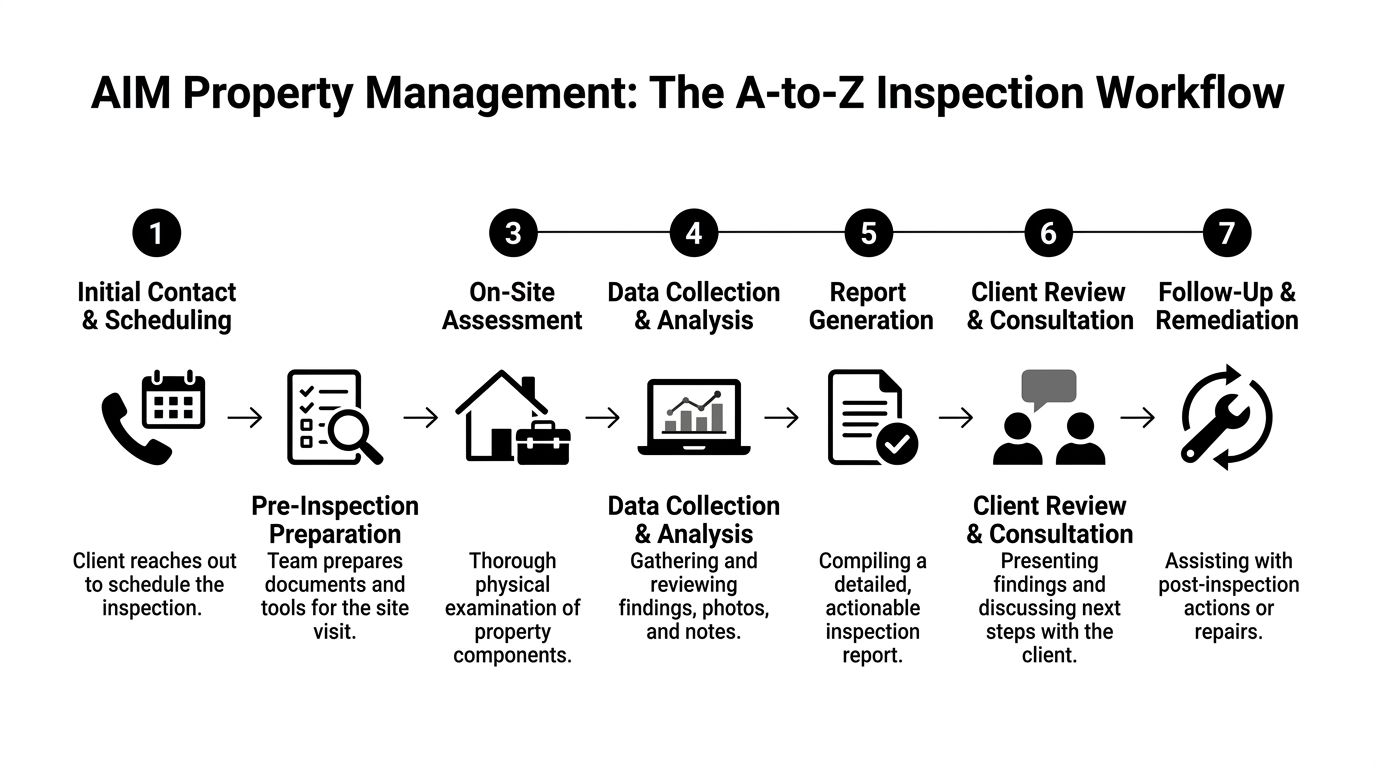
Step one through three on site readiness matters
The process starts before anyone arrives at the property.
Scheduling and notice
The inspection gets scheduled with enough lead time to notify the tenant properly and reduce access problems. This protects the owner and keeps the visit professional.File review
Before the site visit, a good operator checks prior work orders, known problem areas, age of major systems, and any recurring complaints. A roof leak that showed up once before deserves extra scrutiny. So does a bathroom with repeated moisture complaints.Tool preparation
Basic inspection gear should be ready before arrival. That includes a flashlight, ladder as appropriate, moisture meter, camera, and thermal imaging equipment when available.
For plumbing-heavy properties or older homes with recurring leak history, I like having a trade-specific reference on hand. A detailed thorough plumbing inspection checklist is useful because it forces attention to the small items owners often skip, such as shutoff access, fixture seepage, and drain performance.
Step four on site assessment
At this point, a true a to z inspection separates itself from a casual walkthrough.
The inspector moves systematically through exterior and interior areas, then checks the major systems. The sequence matters because it reduces missed items and creates cleaner reporting later.
A thorough on-site review includes:
- Exterior envelope: roofline from visible vantage points, drainage, stucco or siding, windows, doors, fences, hardscape, garage
- Interior rooms: ceilings, walls, flooring, windows, doors, signs of leaks, odors, ventilation, unauthorized alterations
- Wet areas: kitchens, baths, laundry, water heater area, cabinet bases, plumbing penetrations
- Safety items: smoke alarms, carbon monoxide devices, handrails, trip hazards, visible electrical issues
Step five data capture and analysis
Modern inspection methods go beyond what the eye can catch.
According to 6Sigma’s quality inspection overview, AI-driven systems can surpass human accuracy by 95% in defect detection. The same source states that machine vision and thermal imaging can identify issues such as foundation settling and HVAC inefficiencies, which can lead to 15-25% utility savings and help prevent 35% of long-term structural claims.
In rental housing, the practical takeaway is not that every owner needs a high-tech lab. It is that thermal imaging, structured photo capture, and systematic review can reveal hidden moisture, insulation gaps, and performance issues that basic walkthroughs miss.
Step six reporting and owner review
After the site visit, the findings need to become actionable.
A useful report sorts issues into categories such as:
- Immediate attention
- Repair soon
- Monitor and budget
- Lease compliance concerns
This is also the point where owners should receive photos, written observations, and clear next steps. If a follow-up repair is needed, the owner should have a simple path to approve work or route it through an existing maintenance request process.
Tip: The report should tell you what to do next, not just what was seen.
Step seven remediation and recheck
The workflow is not complete when the PDF is sent.
Strong operators track whether repairs were approved, whether the vendor corrected the issue, and whether a re-inspection is needed. That final step is where a lot of owners lose control. They authorize the job but never verify the result.
A to z inspections work best when they feed an operating loop. Inspect, document, repair, confirm, and update the property record.
Key Areas Covered in a Thorough Report
A professional report should answer a simple owner question. What exactly was checked, and why does it matter for a rental?
The strongest reports are not generic homebuyer summaries. They are built around ongoing rental performance, tenant safety, and preservation of the owner’s asset.
Rental inspections are different from buyer inspections
A buyer wants to know whether to close and what defects exist right now. A rental owner needs something broader.
The owner needs to know whether the home is being maintained, whether tenant use is creating unusual wear, and whether the property is likely to generate avoidable repair expense if left alone. That is why ongoing inspection programs matter. A source cited by Your A to Z Home notes that a 2025 National Apartment Association report found properties with bi-annual inspections reduce maintenance costs by 18% on average, which highlights the gap between one-time buyer inspections and recurring rental compliance checks, as summarized at Your A to Z Home.
Sample A-to-Z Rental Inspection Checklist
| System/Area | Key Checkpoints | Importance for Rental |
|---|---|---|
| Roof and drainage | Visible wear, flashing concerns, drainage path, signs of prior intrusion | Helps prevent leaks that can damage ceilings, insulation, and interiors |
| Plumbing | Supply lines, drains, fixture operation, cabinet bases, water heater area | Finds active leaks and moisture before they spread into finishes or framing |
| Electrical | Panel visibility, outlet condition, switches, exposed wiring, fixture safety | Reduces safety risk and supports reliable occupancy |
| HVAC | Airflow, filter status, visible wear, thermostat response, vent condition | Protects comfort, efficiency, and system life |
| Interior surfaces | Ceiling stains, wall damage, flooring condition, doors, windows | Distinguishes ordinary wear from neglected damage or unresolved leaks |
| Bathrooms and laundry | Caulking, exhaust function, moisture staining, fixture stability | Wet rooms are frequent sources of hidden damage |
| Exterior and site | Fencing, gates, walkways, grading, garage, exterior finishes | Supports security, drainage, curb appeal, and liability control |
| Safety and compliance items | Smoke alarms, carbon monoxide devices, handrails, trip hazards | Documents habitability-related basics and risk exposure |
| Occupancy and lease compliance | Cleanliness level, unauthorized pets, visible misuse, alterations | Flags tenant issues before they become turnover problems |
Areas owners should pay extra attention to
Some systems deserve more scrutiny because they create disproportionate expense when they fail.
- Moisture-prone areas: Kitchens, bathrooms, laundry rooms, and water heater locations.
- Mechanical systems: HVAC and plumbing because they affect both comfort and repair budgets.
- Ventilation and air quality: Especially after leak history or repeated condensation complaints.
If mold is a concern, a structured field reference like this ultimate mold inspection checklist can help owners understand what signs should trigger closer review.
Key point: The best report does not just note defects. It helps the owner prioritize risk by showing where damage spreads fastest and where neglect becomes expensive.
For owners in Banning, Mentone, and Calimesa, this level of reporting makes budgeting more practical. You stop guessing about the property and start managing it from evidence.
Navigating California Legal and Compliance Requirements
Owning a rental in California means more than collecting rent and approving repairs. The owner has ongoing legal duties tied to safety, habitability, and proper response when issues arise.
Inspections are one of the clearest ways to show that those duties are being taken seriously.
Documentation is part of compliance
Many owners think compliance starts when a complaint arrives. In practice, it starts well before.
A dated inspection record helps establish that the owner checked the property, identified conditions, and acted on issues affecting habitability or safety. That can matter if a tenant later claims a defect was ignored for months. It also matters when the owner needs to show a pattern of reasonable maintenance.
For California landlords, that should include familiarity with core rules affecting notices, access, habitability, and documentation. This overview of California landlord-tenant laws is a practical baseline for understanding how inspection records fit into broader compliance.
Where liability exposure often hides
Some of the most expensive legal and repair problems come from features owners do not think about until something goes wrong.
According to Expert Summit Anchors on roof anchor inspections and compliance, unaddressed anchor deficiencies are found in 25-30% of aging structures and can increase repair costs by 5-10 times when left unresolved. The same source notes that a proper Property Condition Assessment can identify ADA compliance gaps in up to 60% of multi-family units.
Those figures matter because they show what routine ownership misses. A rental may look operational and contain conditions that create serious liability.
How this applies to Inland Empire rentals
In Property Management Beaumont and Beaumont property management, owners focus on visible wear, deferred paint, or appliance age. Those matter, but they are not the full legal picture.
In Yucaipa property management and property management Yucaipa, inspections should also help document:
- Safety devices such as smoke and carbon monoxide alarms
- Ventilation concerns that may support moisture or habitability complaints
- Handrails, trip hazards, and exterior conditions
- Signs of pest, moisture, or access-related issues
- Conditions in common or shared areas for multi-unit properties
For Redlands property management and property management Redlands, the biggest legal advantage is the paper trail. When an owner can show inspection dates, condition photos, repair decisions, and follow-up action, the position is much stronger than relying on memory or casual text messages.
Practical rule: If a condition could become a complaint, it should be inspectable, documentable, and traceable to an owner response.
A to z inspections are not legal advice. They are operational proof that the owner is actively managing risk rather than waiting for a dispute to define the record.
The AIM Property Management Inspection Advantage
Not all inspection processes are built for rental ownership. Some are designed for homebuyers. Some are designed for insurance. Some are little more than photo sets with vague comments.
Rental owners need something narrower and more useful. They need a process that reflects actual leasing, maintenance, tenant behavior, and local operating conditions.
Why local context changes the inspection
An Inland Empire rental does not age the same way as a property in a cooler or wetter region.
In Redlands, Beaumont, Yucaipa, Calimesa, Loma Linda, Mentone, Highland, and Banning, inspectors need to pay attention to issues such as hard water wear, heat impact on roofing materials, HVAC strain during hot months, exterior sun exposure, and the way irrigation can affect foundations and stucco.
That local pattern recognition is one of the biggest differences between a generic inspection vendor and a rental-focused management process.
What owners should expect from a rental-focused inspection partner
The advantage is not just finding defects. It is integrating inspection findings into daily management.
A strong process should include:
- Clear scheduling and tenant communication
- Consistent photo documentation
- Attention to lease compliance as well as condition
- Actionable repair recommendations
- Fast owner communication after the visit
- Coordination with maintenance and vendors when needed
Owners searching property management near me or trying to hire a property manager compare fees first. A better comparison is process quality. Ask how inspections are handled, how findings are categorized, and how repair follow-through is documented.
The difference between activity and control
Some companies perform inspections as isolated events. A better model ties inspection findings to maintenance decisions, tenant communication, and owner records.
That is what owners should look for in Property Management Beaumont, Beaumont property management, Yucaipa property management, property management Yucaipa, Redlands property management, and property management Redlands. The inspection should not sit on its own. It should support the whole management system.
If you are weighing management options in the Inland Empire, this overview of why homeowners should choose AIM Property Management gives a practical sense of what a full-service approach looks like.
What works best: Inspection, maintenance coordination, tenant oversight, and documentation all need to speak the same language. When they do, owners get control instead of just updates.
Frequently Asked Questions About Property Inspections
How often should a rental property be inspected
At minimum, owners should think in terms of recurring inspections rather than one-time event inspections. Annual reviews are common for occupied properties, and some owners prefer more frequent checks when the property has older systems, prior leak history, or tenant compliance concerns.
The right timing depends on the asset, tenant profile, and maintenance history. What matters most is consistency.
Are a to z inspections only for older properties
No. Newer rentals need inspections too.
A newer home may have fewer age-related defects, but it can develop plumbing leaks, drainage issues, HVAC performance problems, or tenant-caused damage. New construction does not remove the need for documentation.
Is this different from a move-in or move-out inspection
Yes. A move-in or move-out inspection records visible condition for possession, damages, and deposit issues.
A full a to z inspection is broader. It looks at systems, safety, property performance, and risk areas that affect long-term ownership.
I am searching for property management near me. Should inspection quality affect who I hire
Absolutely.
If you plan to hire a property manager, ask how they inspect occupied properties, how they document findings, how they notify tenants, and how they track repairs after the visit. A management company that cannot explain its inspection workflow clearly is reacting instead of managing.
Do inspections help with tenant disputes
They can help significantly because they create a dated record of condition.
Photos, written findings, and documented follow-up can support owner decisions if there is a disagreement about maintenance response, damage responsibility, or the condition of the home during tenancy.
What should I ask before approving an inspection service
Start with operational questions:
- What is inspected
- How are findings categorized
- Will I receive photos and written recommendations
- How quickly will I get the report
- How are repairs handled after the report
- Will lease compliance issues be noted
Those answers tell you more than a marketing phrase ever will.
AIM PROPERTY MANAGEMENT COMPANY helps rental owners in Redlands, Beaumont, Calimesa, Yucaipa, Loma Linda, Mentone, Highland, Banning, and nearby Inland Empire communities protect their properties with hands-on management, annual inspections, maintenance coordination, tenant screening, rent collection, and compliance-focused documentation. If you want a practical partner who understands how to preserve cash flow and reduce avoidable risk, reach out to discuss your rental and see whether AIM is the right fit.